Results by title
35 books match the query 'Great Depression'

A Little Rock Boyhood
Growing Up in the Great DepressionA. Cleveland Harrison
Butler Center for Arkansas Studies, 2010
A Nickel's Worth of Skim Milk
A Boy's View of the Great DepressionRobert J. Hastings
Southern Illinois University Press, 1986
Told from the point of view of a young boy, this account shows how a family “faced the 1930s head on and lived to tell the story.” It is the story of growing up in southern Illinois, specifically the Marion, area during the Great Depression. But when it was first published in 1972 the book proved to be more than one writer’s memories of depression-era southern Illinois.
“People started writing me from all over the country,” Hastings notes. “And all said much the same: ‘You were writing about my family, as much as your own. That’s how I remember the 1930s, too.’”
As he proves time and again in this book, Hastings is a natural storyteller who can touch upon the detail that makes the tale both poignant and universal. He brings to life a period that marked every man, woman, and child who lived through it even as that national experience fades into the past.
A Penny's Worth of Minced Ham
Another Look at the Great DepressionRobert J. Hastings
Southern Illinois University Press, 1986
Hastings experienced the rural and small town side of an event that touched all who weathered it—the economic crash of 1929 and its 10-year aftermath.
The author grew up in Marion, Illinois, entering the first grade in 1930, the start of the Great Depression. This book, which recalls memorable episodes in the life of that boy, is a sequel to the popular ANickel’s Worth of Skim Milk.
What Hastings experienced as a child was typical of depression-era life. Those who were young then can relive lost youth in Hastings’ books. And there were moments worth reliving: Hastings tells of “laughter and love and tears in the midst of hunger and cold and deprivation.” Those too young to have experienced the economic devastation can see those hard days through the eyes of a trained storyteller reporting from the point of view of a child.

An Appalachian New Deal
West Virginia in the Great DepressionJerry Bruce Thomas
West Virginia University Press, 2011
In this paperback edition of An Appalachian New Deal: West Virginia in the Great Depression, Jerry Bruce Thomas examines the economic and social conditions of the state of West Virginia before, during, and after the Great Depression. Thomas’s exploration of personal papers by leading political and social figures, newspapers, and the published and unpublished records of federal, state, local, and private agencies, traces a region’s response to an economic depression and a presidential stimulus program. This dissection of federal and state policies implemented under Franklin D. Roosevelt’s New Deal program reveals the impact of poverty upon political, gender, race, and familial relations within the Mountain State—and the entire country. Through An Appalachian New Deal, Thomas documents the stories of ordinary citizens who survived a period of economic crisis and echoes a message from our nation’s past to a new generation enduring financial hardship and uncertainty.

Anti-Imperialist Modernism
Race and Transnational Radical Culture from the Great Depression to the Cold WarBenjamin Balthaser
University of Michigan Press, 2015
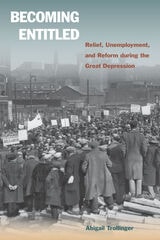
Becoming Entitled
Relief, Unemployment, and Reform during the Great DepressionAbigail Trollinger
Temple University Press, 2020
In the 1930s, the unemployed were organizing. Jobless workers felt they were “entitled" to a new kind of government protection—the protection from undeserved unemployment and the financial straits that such unemployment created. They wanted dignified forms of relief (including work relief) during the Depression, and unemployment insurance after.
Becoming Entitled artfully chronicles the emergence of this worker entitlement and the people who cultivated it. Abigail Trollinger focuses largely on Chicago after the Progressive Era, where the settlement house and labor movements both flourished. She shows how reformers joined workers and relief officials to redeem the unemployed and secure government-funded social insurance for them. Becoming Entitled also offers a critical reappraisal of New Deal social and economic changes, suggesting that the transformations of the 1930s came from reformers in the “middle,” who helped establish a limited form of entitlement for workers.
Ultimately, Trollinger highlights the achievements made by reformers working on city- and nation-wide issues. She captures the moment when some people shed the stigma that came with unemployment and demanded that the government do the same.
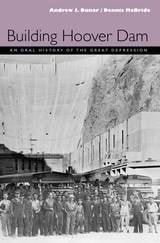
Building Hoover Dam
An Oral History Of The Great DepressionAndrew J. Dunar
University of Nevada Press, 2001
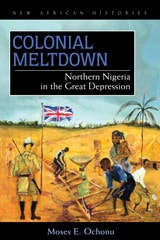
Colonial Meltdown
Northern Nigeria in the Great DepressionMoses E. Ochonu
Ohio University Press, 2009
Historians of colonial Africa have largely regarded the decade of the Great Depression as a period of intense exploitation and colonial inactivity. In Colonial Meltdown, Moses E. Ochonu challenges this conventional interpretation by mapping the determined, at times violent, yet instructive responses of Northern Nigeria’s chiefs, farmers, laborers, artisans, women, traders, and embryonic elites to the British colonial mismanagement of the Great Depression. Colonial Meltdown explores the unraveling of British colonial power at a moment of global economic crisis.
Ochonu shows that the economic downturn made colonial exploitation all but impossible and that this dearth of profits and surpluses frustrated the colonial administration which then authorized a brutal regime of grassroots exactions and invasive intrusions. The outcomes were as harsh for Northern Nigerians as those of colonial exploitation in boom years.
Northern Nigerians confronted colonial economic recovery measures and their agents with a variety of strategies. Colonial Meltdown analyzes how farmers, women, laborers, laid-off tin miners, and NorthernNigeria’s emergent elite challenged and rebelled against colonial economic recovery schemes with evasive trickery, defiance, strategic acts of revenge, and criminal self-help and, in the process, exposed the weak underbelly of the colonial system.
Combined with the economic and political paralysis of colonial bureaucrats in the face of crisis, these African responses underlined the fundamental weakness of the colonial state, the brittleness of its economicmission, and the limits of colonial coercion and violence. This atmosphere of colonial collapse emboldened critics of colonial policies who went on to craft the rhetorical terms on which the anticolonial struggle of the post–World War II period was fought out.
In the current climate of global economic anxieties, Ochonu’s analysis will enrich discussions on the transnational ramifications of economic downturns. It will also challenge the pervasive narrative of imperial economic success.

Corporate Dreams
Big Business in American Democracy from the Great Depression to the Great RecessionHoopes, James
Rutgers University Press, 2011
Public trust in corporations plummeted in the wake of the 2008 financial crisis, when “Lehman Brothers” and “General Motors” became dirty words for many Americans. In Corporate Dreams, James Hoopes argues that Americans still place too much faith in corporations and, especially, in the idea of “values-based leadership” favored by most CEOs. The danger of corporations, he suggests, lies not just in their economic power, but also in how their confused and undemocratic values are infecting Americans’ visions of good governance.
Corporate Dreams proposes that Americans need to radically rethink their relationships with big business and the government. Rather than buying into the corporate notion of “values-based leadership,” we should view corporate leaders with the same healthy suspicion that our democratic political tradition teaches us to view our political leaders. Unfortunately, the trend is moving the other way. Corporate notions of leadership are invading our democratic political culture when it should be the reverse.
To diagnose the cause and find a cure for our toxic attachment to corporate models of leadership, Hoopes goes back to the root of the problem, offering a comprehensive history of corporate culture inAmerica, from the Great Depression to today’s Great Recession. Combining a historian’s careful eye with an insider’s perspective on the business world, this provocative volume tracks changes in government economic policy, changes in public attitudes toward big business, and changes in how corporate executives view themselves.
Whether examining the rise of Leadership Development programs or recounting JFK’s Pyrrhic victory over U.S. Steel, Hoopes tells a compelling story of how America lost its way, ceding authority to the policies and values of corporate culture. But he also shows us how it’s not too late to return to our democratic ideals—and that it’s not too late to restore the American dream.

Democratic Sports
Men's and Women's College Athletics during the Great DepressionBrad Austin
University of Arkansas Press, 2015
University leaders used their athletic programs to combat this crisis and to preserve “traditional” American values and institutions, prescribing different models for men and women. Educators emphasized the competitive nature of men’s athletics, seeking to inculcate male college athletes (and their audiences) with individualistic, masculine values in order to reinforce the existing American political and economic systems.
In stark contrast, the prevailing model of women’s college athletics taught a communal form of democracy. Strongly supported by almost all female athletic leaders, this “a girl for every game, and a game for every girl” model had replaced the more competitive model that had been popular until the 1920s. The new programs denied women individual attention and high-level competition, and they promoted the development of what was considered proper femininity.
Whatever larger purposes these programs were intended to serve, they could not have survived without vocal supporters. Democratic Sports tells the important story of how men’s and women’s college athletic programs survived, and even thrived, during the most challenging decade of the twentieth century.
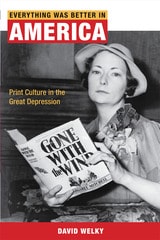
Everything Was Better in America
Print Culture in the Great DepressionDavid Welky
University of Illinois Press, 2007
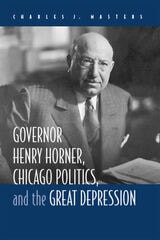
Governor Henry Horner, Chicago Politics, and the Great Depression
Charles J. Masters
Southern Illinois University Press, 2007

Hard Luck Blues
Roots Music Photographs from the Great DepressionRich Remsberg
University of Illinois Press, 2010
Showcasing American music and music making during the Great Depression, Hard Luck Blues presents more than two hundred photographs created by the New Deal's Farm Security Administration photography program. With an appreciation for the amateur and the local, FSA photographers depicted a range of musicians sharing the regular music of everyday life, from informal songs in migrant work camps, farmers' homes, barn dances, and on street corners to organized performances at church revivals, dance halls, and community festivals. Captured across the nation from the northeast to the southwest, the images document the last generation of musicians who learned to play without the influence of recorded sound, as well as some of the pioneers of Chicago's R & B scene and the first years of amplified instruments. The best visual representation of American roots music performance during the Depression era, Hard Luck Blues features photographs by Jack Delano, Dorothea Lange, Russell Lee, Arthur Rothstein, Ben Shahn, Marion Post Wolcott, and others.
Photographer and image researcher Rich Remsberg breathes life into the images by providing contextual details about the persons and events captured, in some cases drawing on interviews with the photographers' subjects. Also included are a foreword by author Nicholas Dawidoff and an afterword by music historian Henry Sapoznik.
Published in association with the Library of Congress.
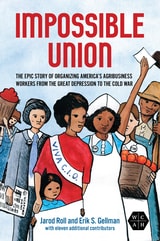
Impossible Union
The Epic Story of Organizing America’s Agribusiness Workers from the Great Depression to the Cold WarJarod Roll and Erik S. Gellman
University of Illinois Press, 2027
Workers of many racial, ethnic, and social identities united under the UCAPAWA-FTA banner. Their grassroots activism and bold national leadership fueled the union’s success despite opposition from employers, the government, and other labor groups. The union’s common sense anti-fascist ideology empowered workers to forge solidarities across their vast differences and linked workers’ rights to campaigns against racism and inequality. UCAPAWA-FTA advocated for an inclusive American democracy that can inform today’s struggles for dignity and security. This unique volume includes a special collection of essays by affiliated scholars that explore specific aspects of the union’s larger history.
Expansive and monumental, Impossible Union chronicles the labor organization that brought personhood and power to America’s marginal yet essential workers.
Additional contributors: Benjamin Makani Fortun, Dorothy Fujita-Rony, Robert Korstad, Bernadette Pérez, Michael Pierce, Charles Romney, Vicki L. Ruiz, Dan Sidorick, Dwana Waugh, John Weber, and Lane Windham
In Hock
Pawning in America from Independence through the Great DepressionWendy A. Woloson
University of Chicago Press, 2009
Kansas in the Great Depression
Work Relief, the Dole, and RehabilitationPeter Fearon
University of Missouri Press, 2007
No part of the United States escaped the ravages of the Great Depression, but some coped with it better than others. This book examines New Deal relief programs in Kansas throughout the Depression, focusing on the relationship between the state and the federal government to show how their successful operation depended on the effectiveness of that partnership.
Ranging widely over all of Kansas’s 105 counties, Peter Fearon provides a detailed analysis of the key relief programs for both urban and rural areas and shows that the state’s Republican administration—led by FDR’s later presidential opponent Governor Alf Landon—effectively ran New Deal welfare policies. As early as 1933, federal officials reported the Kansas central relief administration to be one of the most efficient in the country, and funding for farm policies was generous enough to keep many Kansas farm families off the relief rolls. Indeed, historically high levels of social spending ensured that New Deal initiatives were radical for their day, but Fearon shows that, especially in Kansas, fears of the debilitating effects of the dole and the insistence on means testing and work relief served as conservative balances to the threat of a dependency culture.
Drawing on extensive research at the county level, Fearon examines relief problems from the perspective of recipients, social workers, and poor commissioners, all of whom had to cope with inadequate and fluctuating funding. He plumbs the sometimes volatile relationships between social workers and their clients to illustrate the formidable difficulties faced by the former and explain reasons for—and effects of—strikes and riots by the latter. He also investigates the operation of work relief, considers the treatment of women and blacks in the distribution of welfare resources, and assesses the effects of the WPA on employment—showing that the majority of those eligible were unable to secure positions and were forced to fall back on county relief.
Kansas in the Great Depression is an insightful look at how federal, state, and local authorities worked together to deal with a national emergency, revealing the complexities of policy initiatives not generally brought to light in studies at the national level while establishing important links between pre-Roosevelt policies and the New Deal. It reaffirms the virtues of government programs run by dedicated public officials as it opens a new window on Americans helping Americans in their darkest hours.
Ladies of the Ticker
Women and Wall Street from the Gilded Age to the Great DepressionGeorge Robb
University of Illinois Press, 2017
George Robb’s pioneering study explores the financial methods, accomplishments, and careers of three generations of women. Plumbing sources from stock brokers’ ledgers to media coverage, Robb reveals the many ways women invested their capital while exploring their differing sources of information, approaches to finance, interactions with markets, and levels of expertise. He also rediscovers the forgotten women bankers, brokers, and speculators who blazed new trails--and sparked public outcries over women’s unsuitability for the predatory rough-and-tumble of market capitalism.
Entertaining and vivid with details, Ladies of the Ticker sheds light on the trailblazers who transformed Wall Street into a place for women’s work.
Making Choices, Making Do
Survival Strategies of Black and White Working-Class Women during the Great DepressionLois Rita Helmbold
Rutgers University Press, 2023
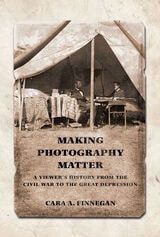
Making Photography Matter
A Viewer's History from the Civil War to the Great DepressionCara Finnegan
University of Illinois Press, 2017
Cara A. Finnegan analyzes a wealth of newspaper and magazine articles, letters to the editor, trial testimony, books, and speeches produced by viewers in response to specific photos they encountered in public. From the portrait of a young Lincoln to images of child laborers and Depression-era hardship, Finnegan treats the photograph as a locus for viewer engagement and constructs a history of photography's viewers that shows how Americans used words about images to participate in the politics of their day. As she shows, encounters with photography helped viewers negotiate the emergent anxieties and crises of U.S. public life through not only persuasion but action, as well.
Monetary Interpretations of the Great Depression
Frank G. Steindl
University of Michigan Press, 1996

No Money, No Beer, No Pennants
The Cleveland Indians and Baseball in the Great DepressionScott H. Longert
Ohio University Press, 2016
The Cleveland Indians of 1928 were a far cry from the championship team of 1920. They had begun the decade as the best team in all of baseball, but over the following eight years, their owner died, the great Tris Speaker retired in the face of a looming scandal, and the franchise was in terrible shape. Seeing opportunity in the upheaval, Cleveland real estate mogul Alva Bradley purchased the ball club in 1927, infused it with cash, and filled its roster with star players such as Bob Feller, Earl Averill, and Hal Trosky. He aligned himself with civic leaders to push for a gigantic new stadium that—along with the team that played in it—would be the talk of the baseball world.
Then came the stock market crash of 1929. Municipal Stadium was built, despite the collapse of the industrial economy in Rust Belt cities, but the crowds did not follow. Always the shrewd businessman, Bradley had engineered a lease agreement with the city of Cleveland that included an out clause, and he exercised that option after the 1934 season, leaving the 80,000-seat, multimillion-dollar stadium without a tenant.
In No Money, No Beer, No Pennants, Scott H. Longert gives us a lively history of the ups and downs of a legendary team and its iconic players as they persevered through internal unrest and the turmoil of the Great Depression, pursuing a pennant that didn’t come until 1948. Illustrated with period photographs and filled with anecdotes of the great players, this book will delight fans of baseball and fans of Cleveland.

One Third of a Nation
Lorena Hickok Reports on the Great DepressionLorena Hickok
University of Illinois Press, 1981
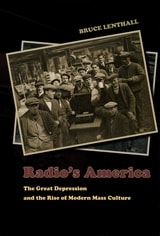
Radio's America
The Great Depression and the Rise of Modern Mass CultureBruce Lenthall
University of Chicago Press, 2007
Orson Welles’s greatest breakthrough into the popular consciousness occurred in 1938, three years before Citizen Kane, when his War of the Worlds radio broadcast succeeded so spectacularly that terrified listeners believed they were hearing a genuine report of an alien invasion—a landmark in the history of radio’s powerful relationship with its audience. In Radio’s America, Bruce Lenthall documents the enormous impact radio had on the lives of Depression-era Americans and charts the formative years of our modern mass culture.
Many Americans became alienated from their government and economy in the twentieth century, and Lenthall explains that radio’s appeal came from its capability to personalize an increasingly impersonal public arena. His depictions of such figures as proto-Fascist Charles Coughlin and medical quack John Brinkley offer penetrating insight into radio’s use as a persuasive tool, and Lenthall’s book is unique in its exploration of how ordinary Americans made radio a part of their lives. Television inherited radio’s cultural role, and as the voting tallies for American Idol attest, broadcasting continues to occupy a powerfully intimate place in American life. Radio’s America reveals how the connections between power and mass media began.
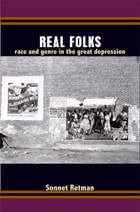
Real Folks
Race and Genre in the Great DepressionSonnet H. Retman
Duke University Press, 2011

Stories of Survival
Arkansas Farmers during the Great DepressionWilliam Downs Jr.
University of Arkansas Press, 2015
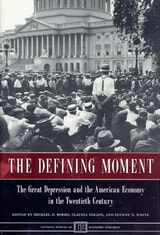
The Defining Moment
The Great Depression and the American Economy in the Twentieth CenturyEdited by Michael D. Bordo, Claudia Goldin, and Eugene N. White
University of Chicago Press, 1997
The essays consider whether New Deal-style legislation continues to operate today as originally envisioned, whether it altered government and the economy as substantially as did policies inaugurated during World War II, the 1950s, and the 1960s, and whether the legislation had important precedents before the Depression, specifically during World War I. Some chapters find that, surprisingly, in certain areas such as labor organization, the 1930s responses to the Depression contributed less to lasting change in the economy than a traditional view of the time would suggest. On the whole, however, these essays offer testimony to the Depression's legacy as a "defining moment." The large role of today's government and its methods of intervention—from the pursuit of a more active monetary policy to the maintenance and extension of a wide range of insurance for labor and business—derive from the crisis years of the 1930s.
The Great Depression in Eastern Europe
Klaus Richter
Central European University Press, 2025

The Great Depression in Latin America
Paulo Drinot and Alan Knight, eds.
Duke University Press, 2014
Contributors. Marcelo Bucheli, Carlos Contreras, Paulo Drinot, Jeffrey L. Gould, Roy Hora, Alan Knight, Gillian McGillivray, Luis Felipe Sáenz, Angela Vergara, Joel Wolfe, Doug Yarrington

The Great Depression
An International Disaster of Perverse Economic PoliciesThomas E. Hall and J. David Ferguson
University of Michigan Press, 1998
The Money Doctor in the Andes
U.S. Advisors, Investors, and Economic Reform in Latin America from World War I to the Great DepressionPaul W. Drake
Duke University Press, 1988
Drake links the Kemmerer missions to vital developments in the political economic history of the Andean republics in the interwar period. He analyzes the domestic interest groups and political forces whose convergent strategies gave the Kemmerer missions their remarkable record in achieving local success for the reforms proposed. Second, Drake situates the Kemmerer missions at the center of a process of political modernization that created new institutions and policy agencies in each of the five countries; the missions thereby contributed to the expansion of the central government as an agent of development in ways that later differed sharply from Kemmerer's orthodox policies. Finally, The Money Doctor in the Andes regards developments in the Andean countries in the context of the region's developing economic ties to the United States. Expectations that Kemmerer's plans would simultaneously attract foreign capital and control inflation drew support from sectors as diverse as trade unions and landowners. When the Depression deepened, Kemmerer's policies proved counterproductive and the fragile consensus that had installed them fell apart, but the political and administrative reforms endured—with far-reaching consequences.
The Path to a Modern South
Northeast Texas between Reconstruction and the Great DepressionBy Walter L. Buenger
University of Texas Press, 2001
The forces that turned Northeast Texas from a poverty-stricken region into a more economically prosperous area.
Winner, Texas State Historical Association Coral H. Tullis Memorial Award for best book on Texas history, 2001
Federal New Deal programs of the 1930s and World War II are often credited for transforming the South, including Texas, from a poverty-stricken region mired in Confederate mythology into a more modern and economically prosperous part of the United States. By contrast, this history of Northeast Texas, one of the most culturally southern areas of the state, offers persuasive evidence that political, economic, and social modernization began long before the 1930s and prepared Texans to take advantage of the opportunities presented by the New Deal and World War II.
Walter L. Buenger draws on extensive primary research to tell the story of change in Northeast Texas from 1887 to 1930. Moving beyond previous, more narrowly focused studies of the South, he traces and interconnects the significant changes that occurred in politics, race relations, business and the economy, and women's roles. He also reveals how altered memories of the past and the emergence of a stronger identification with Texas history affected all facets of life in Northeast Texas.
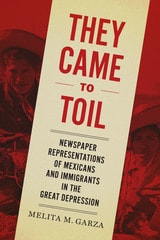
They Came to Toil
Newspaper Representations of Mexicans and Immigrants in the Great DepressionBy Melita M. Garza
University of Texas Press, 2018
As the Great Depression gripped the United States in the early 1930s, the Hoover administration sought to preserve jobs for Anglo-Americans by targeting Mexicans, including long-time residents and even US citizens, for deportation. Mexicans comprised more than 46 percent of all people deported between 1930 and 1939, despite being only 1 percent of the US population. In all, about half a million people of Mexican descent were deported to Mexico, a “homeland” many of them had never seen, or returned voluntarily in fear of deportation.
They Came to Toil investigates how the news reporting of this episode in immigration history created frames for representing Mexicans and immigrants that persist to the present. Melita M. Garza sets the story in San Antonio, a city central to the formation of Mexican American identity, and contrasts how the city’s three daily newspapers covered the forced deportations of Mexicans. She shows that the Spanish-language La Prensa not surprisingly provided the fullest and most sympathetic coverage of immigration issues, while the locally owned San Antonio Express and the Hearst chain-owned San Antonio Light varied between supporting Mexican labor and demonizing it. Garza analyzes how these media narratives, particularly in the English-language press, contributed to the racial “othering” of Mexicans and Mexican Americans. Adding an important new chapter to the history of the Long Civil Rights Movement, They Came to Toil brings needed historical context to immigration issues that dominate today’s headlines.
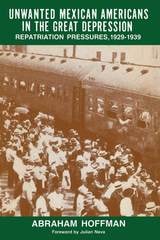
Unwanted Mexican Americans in the Great Depression
Repatriation Pressures, 1929–1939Abraham Hoffman; Foreword by Julian Nava
University of Arizona Press, 1973
Prior to 1931, many Mexican Americans left the United States voluntarily, prompted by homesickness, unemployment, and the Mexican government’s offer of free small land parcels. As the Great Depression deepened, repatriation pressures increased. Anglo groups lobbied for laws that excluded aliens from jobs and welfare benefits. Many businessmen, government officials, and social workers believed that removing Mexican Americans would open up jobs for U.S. citizens and alleviate some of the burden placed on relief agencies.
The Department of Labor’s federal deportation drive, launched in 1931, created an atmosphere of fear and tension in Mexican American communities. Immigration agents conducted surprise searches for people who had entered the country illegally, and Mexicans who had crossed the border before restrictive legislation was passed became prime targets of the deportation campaign.
Welfare agencies throughout the United States organized repatriation programs. The Los Angeles County Welfare Bureau, with the most extensive program, was responsible for the removal of more than thirteen thousand Mexican Americans. A few well-publicized deportations had frightened Mexicans who were unsure of their immigration status. Many chose repatriation over possible deportation.
Using much archival material and many previously unpublished government documents, Hoffman focuses on the repatriation experience in Los Angeles. The city’s large Mexican American population provides an excellent case study of the entire movement. He also surveys the process of Mexican repatriation throughout the entire United States.

Wall To Wall America
Post Office Murals in the Great DepressionKaral Ann Marling
University of Minnesota Press, 2000
A revealing cultural history of this American art form.
In her intriguing and heavily illustrated look at post office murals of the 1930s, Karal Ann Marling examines these unique government-sponsored works of art not only as paintings but as part of American cultural history. Depicting scenes from the farm, the frontier, and the factories, these murals were commissioned by the Treasury Department during the administration of Franklin D. Roosevelt. Placed in the building where everyone in town had reason to stop, the thousand-odd paintings discussed here were truly intended to hold appeal for everyone. This spirited and often irreverent discussion offers a close look at the murals and what they represented to small-town America during the Great Depression.
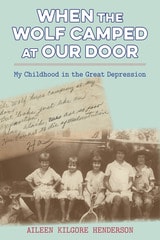
When the Wolf Camped at Our Door
My Childhood in the Great DepressionAileen Kilgore Henderson
University of Alabama Press, 2022
Recounts the hardships and joys the Kilgore family and their neighbors experienced in a close-knit southern rural community during the Great Depression
As the Great Depression tightened its grip on the world, six members of the Kilgore family were living in a cramped farmhouse in Brookwood, Alabama. Crops didn’t grow well, food was scarce, shoes were in short supply, and the few clothes they had were all hand-me-downs. The Kilgores struggled to make ends meet, cobbling together odd jobs and working the land by hand.
Despite all of this, young Aileen thought life was full of hope. She longed to hold on to it and scribbled down daily events on whatever odds and ends of paper she could find. In her new memoir, When the Wolf Camped at Our Door, Aileen Kilgore Henderson creates a vivid portrait of what life was like for so many living in the rural South during the Depression. The book begins when Aileen is ten years old and follows her into her teenage years over the course of twenty-seven episodic chapters. Drawing on her girlhood diaries and told through the charismatic voice of her younger self, Henderson’s nuanced storytelling sheds light on the common struggle for survival during a time when people were at their most vulnerable.
Against the backdrop of a world where hard work and harsh conditions like hunger, privation, sickness, and early death were everyday realities, Henderson’s stories are nevertheless tinged with young Aileen’s lively sense of humor and optimistic faith in people and in the promise of life despite trying circumstances. We follow her rambles in the woods, her visits with friends, a trip to a fortune teller, and a search for the Howton Horror, a mysterious monster rumored to live deep in the Alabama backwoods.