Results by title
10 books match the query 'Great Salt Lake'

Exploring the Great Salt Lake
The Stansbury Expedition of 1849-50Brigham D. Madsen
University of Utah Press, 1989
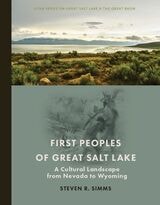
First Peoples of Great Salt Lake
A Cultural Landscape from Nevada to WyomingSteven R. Simms
University of Utah Press, 2023
Great Salt Lake is a celebrated, world-recognized natural landmark. It, and the broader region bound to it, is also a thoroughly cultural landscape; generations of peoples made their lives there. In an eminently readable narrative, Steven Simms, one of the foremost archaeologists of the region, traces the scope of human history dating from the Pleistocene, when First Peoples interacted with the lapping waters of Lake Bonneville, to nearly the present day. Through vivid descriptions of how people lived, migrated, and mingled, with persistence and resilience, Simms honors the long human presence on the landscape.
First Peoples of Great Salt Lake takes a different approach to understanding the ancients than is typical of archaeology. De-emphasizing categories and labels, it traces changing environments, climates, and peoples through the notion of place. It challenges the "Pristine Myth," the cultural bias that Indigenous peoples were timeless, changeless, primitive, and the landscapes they lived in sparsely populated and perpetually pristine. First Peoples and their descendants modified the forests and understory vegetation, shaped wildlife populations, and adapted to long-term climate change. Native Americans of Great Salt Lake were very much part of their world, and the story here is one of long continuity through dramatic cultural change.
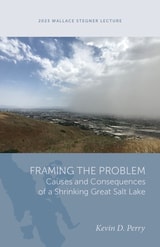
Framing the Problem
Causes and Consequences of a Shrinking Great Salt LakeKevin D. Perry
University of Utah Press, 2024

Great Salt Lake
A Perspective from the Church of Jesus Christ of Latter-day SaintsBishop W. Christopher Waddell
University of Utah Press, 2024
Howard Stansbury's Survey of the Great Salt Lake, 1850
Brigham D. Madsen
University of Utah Press, 2027

Spiral Jetta Summer
Swimming in the Great Salt LakeErin Hogan
University of Chicago Press, 2008

The Great Salt Lake
Dale L. Morgan
University of Utah Press, 2002
Approached as history, geography, geology, or high adventure, The Great Salt Lake is fascinating reading. From the first Americans, through mountain men, religious empires, railroads, and resorts, the remnant of ancient Lake Bonneville has been a nexus for human history, uniting a haunting beauty with raw desolation, 'strangely removed from common experience.'

The Great Salt Lake Food Chains
Fragility and ResiliencyBonnie K. Baxter
University of Utah Press, 2024
The Salt Lake Papers
From the Years in the Earthscapes of UtahEd Lueders
University of Utah Press, 2018
The Salt Lake Papers is divided into two sections by location and time. Book One reflects the central geophysical presence of the Great Salt Lake, in view from Leuders’s home and the University of Utah campus where he studied and taught. Researched and composed during the 1980s, it is published here for the first time. Book Two begins with his retirement to the “earthscapes” of the Torrey–Capitol Reef area of southern Utah and contemplates the Colorado River system. Hydrology thus provides both the physical and the metaphysical basis for the author’s reflective insights and for the natural flow of his advancing thought.
Beautifully written, The Salt Lake Papers, in varied ways, speaks to the necessity of the humanities in the modern age. At its heart, Lueders’s small book of intellectual musings explores place and the ways landscape shapes what is observant in each of us.
Hear Ed Lueders talk about his book on Utah Conversations with Ted Capener on KUED

The Spiral Jetty Encyclo
Exploring Robert Smithson's Earthwork through Time and PlaceHikmet Sidney Loe
University of Utah Press, 2017
Copublished with the Tanner Trust Fund, J. Willard Marriott Library.
Robert Smithson’s earthwork, Spiral Jetty (1970), an icon of the Land Art movement of the 1960s and 1970s, is located on the northern shores of Utah’s Great Salt Lake. Smithson built a masterpiece from local materials, one that spirals counterclockwise into the lake and appears or is submerged with fluctuations in the lake’s locally red, saline water.
The Spiral Jetty Encyclo draws on Smithson’s writings for encyclopedic entries that bring to light the context of the earthwork and Smithson’s many points of reference in creating it. Visitors and armchair travelers, too, will discover how much significance Smithson placed on regional considerations, his immersion in natural history, his passion for travel, and his ability to use diverse mediums to create a cohesive and lasting work of art. Containing some 220 images, most of them in color, with some historical black and whites, The Spiral Jetty Encyclo lets readers explore the construction, connections, and significance of Smithson’s 1,500-foot-long curl into Great Salt Lake, created, in Smithson’s words, of “mud, salt crystals, rocks, water.”
Winner of 15 Bytes Book Award for Art Book.
Finalist for the Utah State Historical Society Best Book Award.