Results by title
3 books match the query 'Guides'

Between Worlds
Interpreters, Guides, and SurvivorsFrances Karttunen
Rutgers University Press, 1994
Spanning the globe and the centuries, Frances Karttunen tells the stories of sixteen men and women who served as interpreters and guides to conquerors, missionaries, explorers, soldiers, and anthropologists. These interpreters acted as uncomfortable bridges between two worlds; their own marginality, the fact that they belonged to neither world,underscores the complexity and tension between cultures meeting for the first time. The interpreters include:
o Do–a Marina (La Malinche), who interpreted for Cortes in the conquest of Mexico
o Sacajawea, who accompanied Lewis and Clark on their expedition
o Sarah Winnemucca, a U.S. army scout and Washington lobbyist for the Northern Paiutes
o Gaspar Antonio Chi, Maya Interpreter General for Yucatan
o Guaman Poma de Ayala, eyewitness reporter of the destruction of Inca culture
o Charles Eastman, a Sioux physician at Wounded Knee
o Larin Paraske, an informant for Finnish ethnographers
o Do–a Luz Jimenez, Diego Rivera’s model and a native informant to anthropologists
o Mar’a Sabina, the Mazatec mushroom shaman who became a celebrity in the drug culture of the 1960s
o Ishi, the last surviving Yahi Indian.

Father Nature
Fathers as Guides to the Natural WorldPaul S. & Stan Piper & Tag
University of Iowa Press, 2003
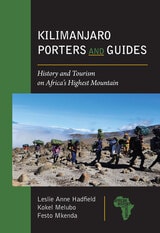
Kilimanjaro Porters and Guides
History and Tourism on Africa's Highest MountainLeslie Anne Hadfield
Michigan State University Press, 2026
Mt. Kilimanjaro, Africa’s tallest mountain, draws tens of thousands of tourists annually. Many attempt to climb its nineteen thousand feet snow-covered peak, an arduous trek that can span several days. Like the climbers who scale Everest, they are aided by local porters, cooks, and guides. But unlike Everest’s Sherpas, who have been extensively documented and profiled, the Chagga people of the Kilimanjaro mountain crews remain nearly anonymous.
The Chagga people, who were the first settlers near Kilimanjaro, have been an essential part of the climbing industry that has developed since the colonial period. Kilimanjaro Porters and Guidesreveals the history of these porters, cooks, and guides. The book takes us from early Chagga settlement, through European colonialism and African independence, to today. It argues that while the Kilimanjaro climbing industry developed in a colonial context, local Tanzanian actors have played an integral role in determining access to and understanding of the mountain. They also have been central to climbers’ successes, mountain crew culture, and the evolution of key industry features—even as they have struggled in the postcolonial period.