Results by title
12 books match the query 'Guitarists'
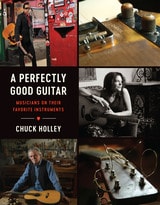
A Perfectly Good Guitar
Musicians on Their Favorite InstrumentsBy Chuck Holley
University of Texas Press, 2017
Ask guitar players about their instruments, and you’re likely to get a story—where the guitar came from, or what makes it unique, or why the player will never part with it. Most guitarists have strong feelings about their primary tool, and some are downright passionate about their axes. Chuck Holley is a professional photographer and writer who loves music and listening to musicians talk about their trade. For several years, he has been photographing guitarists with their prized instruments and collecting their stories. This beautifully illustrated book presents these stories in revelatory photographs and words.
The guitarists included in this book range from high-profile performers, including Rosanne Cash, Guy Clark, Laurence Juber, Jorma Kaukonen, JD Souther, Bill Frisell, Dave Alvin, and Kelly Willis, to renowned studio musicians and band members. Holley’s beautifully composed photographs portray them with their favorite guitar, including detail shots of the instrument. Accompanying the photographs are the musicians’ stories about the Gibsons, Fenders, Martins, and others that have become the guitar in their lives, the one that has a special lineage or intangible qualities of sustain, tone, clarity, and comfort that make it irreplaceable. Several musicians talk about how the guitar chose them, while others recount stories of guitars lost or stolen and then serendipitously recovered. Together, these photographs and stories underscore the great pleasure of performing with an instrument that’s become a trusted friend with a personality all its own.
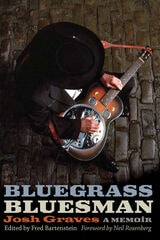
Bluegrass Bluesman
A MemoirJosh Graves; Edited by Fred Bartenstein; Foreword by Neil Rosenberg
University of Illinois Press, 2012
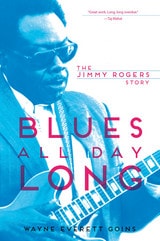
Blues All Day Long
The Jimmy Rogers StoryWayne Everett Goins, foreword by Kim Wilson
University of Illinois Press, 2014
In Blues All Day Long, Wayne Everett Goins mines seventy-five hours of interviews with Rogers' family, collaborators, and peers to follow a life spent in the blues. Goins' account takes Rogers from recording Chess classics and barnstorming across the South to a late-in-life renaissance that included new music, entry into the Blues Hall of Fame, and high profile tours with Eric Clapton and the Rolling Stones. Informed and definitive, Blues All Day Long fills a gap in twentieth century music history with the story of one of the blues' eminent figures and one of the genre's seminal bands.
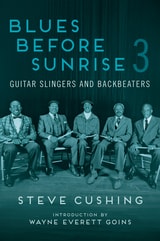
Blues Before Sunrise 3
Guitar Slingers and BackbeatersSteve Cushing. Introduction by Wayne Everett Goins
University of Illinois Press, 2025
Steve Cushing’s third volume of interviews from Blues Before Sunrise puts fans face-to-face with music legends and industry figures. The volume kicks off with a roundtable featuring drumming all-stars Earl Phillips, S.P. Leary, Odie Payne, Clifton James, and Fred Below discussing their lives and craft. Cushing segues to one-on-one interviews with Howlin’ Wolf sideman Phillips; Leary, a fellow Wolf alum and player with Sonny Boy Williamson II; Payne, known for his kick drum technique; longtime Muddy Waters drummer Willie “Big Eyes” Smith; next-generation standard bearer and session mainstay Casey Jones; and King Records house drummer Phillip Paul.
Interviews with guitarists include talks with Honeyboy Edwards, whose friendships with innumerable Chicago blues legends (and Robert Johnson) predated the Great Migration; jazz player turned bluesman Guitar Shorty; and figures like Texas native Roy Gaines, Johnny Heartsman of Oakland, and Memphis-born Floyd Murphy. A final section offers interviews with vocalists, record label founders, and other figures. Music scholar Wayne Everett Goins provides an introduction on blues history, blues style, and the careers of the featured artists.
Interviews: Joel Dorn, Honeyboy Edwards, Slim Gaillard, Roy Gaines, Johnny Heartsman, Franz Jackson, Casey Jones, S.P. Leary, Floyd Murphy, Jimmy “T-99” Nelson, Johnny Parth, Phillip Paul, Odie Payne, Earl Phillips, Art Sheridan, Guitar Shorty, Willie “Big Eyes” Smith, and Norvel Taborn
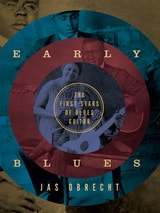
Early Blues
The First Stars of Blues GuitarJas Obrecht
University of Minnesota Press, 2015
Winner of the 2016 Living Blues Award for Blues Book of the Year
The complete history of early blues guitar, with portraits of its first stars—now in paperback
Since the early 1900s, blues and the guitar have traveled side by side. This book tells the story of their pairing from the first reported sightings of blues musicians, to the rise of nationally known stars, to the onset of the Great Depression, when blues recording virtually came to a halt.
Like the best music documentaries, Early Blues: The First Stars of Blues Guitar interweaves musical history, quotes from celebrated musicians (B.B. King, John Lee Hooker, Ry Cooder, and Johnny Winter, to name a few), and a spellbinding array of life stories to illustrate the early days of blues guitar in rich and resounding detail. In these chapters, you’ll meet Sylvester Weaver, who recorded the world’s first guitar solos, and Paramount Records artists Papa Charlie Jackson, Blind Lemon Jefferson, and Blind Blake, the “King of Ragtime Blues Guitar.” Blind Willie McTell, the Southeast’s superlative twelve-string guitar player, and Blind Willie Johnson, street-corner evangelist of sublime gospel blues, also get their due, as do Lonnie Johnson, the era’s most influential blues guitarist; Mississippi John Hurt, with his gentle, guileless voice and syncopated fingerpicking style; and slide guitarist Tampa Red, “the Guitar Wizard.”
Drawing on a deep archive of documents, photographs, record company ads, complete discographies, and up-to-date findings of leading researchers, this is the most comprehensive and complete account ever written of the early stars of blues guitar—an essential chapter in the history of American music.
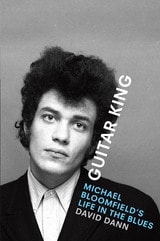
Guitar King
Michael Bloomfield's Life in the BluesBy David Dann
University of Texas Press, 2021
Named one of the world’s great blues-rock guitarists by Rolling Stone, Mike Bloomfield (1943–1981) remains beloved by fans forty years after his untimely death. Taking readers backstage, onstage, and into the recording studio with this legendary virtuoso, David Dann tells the riveting stories behind Bloomfield’s work in the seminal Paul Butterfield Blues Band and the mesmerizing Electric Flag, as well as on the Super Session album with Al Kooper and Stephen Stills, Bob Dylan’s Highway 61 Revisited, and soundtrack work with Peter Fonda and Jack Nicholson.
In vivid chapters drawn from meticulous research, including more than seventy interviews with the musician’s friends, relatives, and band members, music historian David Dann brings to life Bloomfield’s worlds, from his comfortable upbringing in a Jewish family on Chicago’s North Shore to the gritty taverns and raucous nightclubs where this self-taught guitarist helped transform the sound of contemporary blues and rock music. With scenes that are as electrifying as Bloomfield’s solos, this is the story of a life lived at full volume.

Guitars, Bars, and Motown Superstars
Dennis Coffey
University of Michigan Press, 2009
---Edwin Starr
"There can never be enough stories told from the vantage point of Motown's fabled Snake Pit, from one of the journeyman musicians working behind the scenes. Guitars, Bars, and Motown Superstars also shows just how frenetic and creative the Detroit music scene was in the '60s and '70s. But it's Dennis Coffey's personal story that's most gripping: the journey from Motown, to Billboard's Top Ten, to working the line at Chevrolet."
---Susan Whitall, Detroit News; author of Women of Motown
Under Berry Gordy, Motown was a place where studio musicians usually stood in the shadows, unlike the solo stars whose names appeared on the albums. Gordy held a tight rein on his musicians, forbidding them from playing for other record companies and denying them credit on his records.
In Guitars, Bars, and Motown Superstars, author and guitarist Dennis Coffey tells how he slipped Gordy's draconian rules and went on to success as both a Motown musician and a million-selling solo artist. He offers a fascinating backstage look at the Detroit, L.A., and New York music scenes in the '60s and '70s, with side trips to the smoky clubs and funky studios where the Motown sound was born.
Coffey is credited with creating a lot of that sound, including the famous guitar intro to the Temptations' classic "Cloud Nine." He played on hundreds of Motown albums, and introduced such innovations as the Wah Wah pedal into the Motown recording studio.
Guitars, Bars, and Motown Superstars is an entertaining and amusing memoir of one of the most dynamic and influential periods in contemporary pop culture, and a unique insight into the ups and downs of the studio guitar-for-hire. It's also a look at the dizzying rags-to-riches-and-back-again career of a rock musician who went from million-seller with a house in the Hollywood Hills, and ultimately back to his roots in the Detroit area. A must for fans of Motown, rock, and you-are-there pop-culture history.

Les Paul
Guitar WizardBob Jacobson
Wisconsin Historical Society Press, 2012
This addition to the Badger Biographies series for young readers tells the story of Les Paul, the legendary “Wizard of Waukesha,” who pioneered the solid body electric guitar, multi-track recording, and many other musical inventions. Fascinated since boyhood with musical technology, the young Les moved from experimenting with his mother’s player piano and phonograph to developing his own amplifier and tinkering with crystal radios.
After leaving his hometown of Waukesha at age 17 to pursue a musical career—a decision his mother supported—the budding jazz guitarist lived in Chicago, New York, and Los Angeles, in each city finding a new audience and new musical partnerships. A regular on the radio, Les became a fixture in early television, appearing on the Ed Sullivan Show, and later, a show of his own with partner Mary Ford. Along the way, he overcame numerous physical challenges, including recovery from electric shock and rehabilitation after a horrific car accident—both of which threatened his musical career. And yet, Les Paul pushed musical technology forward more than any other musician of the twentieth century. This Grammy Hall of Fame inductee died in 2009, making Les Paul: Guitar Wizard a timely addition to the series. This lively story is rounded out with sidebars on radio call letters and how an electric guitar works, a full discography, and over 60 historic photographs.

Los Romeros
Royal Family of the Spanish GuitarWalter Aaron Clark
University of Illinois Press, 2018

One Long Tune
The Life and Music of Lenny BreauRon Forbes-Roberts
University of North Texas Press, 2006

Say No to the Devil
The Life and Musical Genius of Rev. Gary DavisIan Zack
University of Chicago Press, 2015
The first biography of Davis, Say No to the Devil restores “the Rev’s” remarkable story. Drawing on extensive research and interviews with many of Davis’s former students, Ian Zack takes readers through Davis’s difficult beginning as the blind son of sharecroppers in the Jim Crow South to his decision to become an ordained Baptist minister and his move to New York in the early 1940s, where he scraped out a living singing and preaching on street corners and in storefront churches in Harlem. There, he gained entry into a circle of musicians that included, among many others, Lead Belly, Woody Guthrie, and Dave Van Ronk. But in spite of his tremendous musical achievements, Davis never gained broad recognition from an American public that wasn’t sure what to make of his trademark blend of gospel, ragtime, street preaching, and the blues. His personal life was also fraught, troubled by struggles with alcohol, women, and deteriorating health.
Zack chronicles this remarkable figure in American music, helping us to understand how he taught and influenced a generation of musicians.

The Devil Is in It
A History of the American Acoustic GuitarJohn Stubbings
University of Texas Press, 2025
The rich history of the acoustic guitar and its impact on the music world.
In 2020, guitar expert John Stubbings released a limited-edition book on the American acoustic guitar that sold out in days. Now, The Devil Is in It returns with additional research and subject matter for a new generation of readers. Stubbings traveled the country and met with guitar makers, players, collectors, and historians to unravel the long and rich history of the acoustic guitar, its evolution, and the music it has made over the last hundred years.
Starting with the eighteenth-century European classical guitar, luthiers altered the instrument, changing the way musicians played them, and in turn the music they made. This slow but steady transformation created the iconic American flat-top that became influential across genres and rooted itself in cultural significance. The guitar developed from an obscure instrument into a superstar of the musical world, rivaling then overshadowing its competition. Tied to artists from Gillian Welch and Tracy Chapman to Taylor Swift and Ed Sheeran, the acoustic guitar maintains its eminence in American music and culture. The story of an alluring instrument that shaped the music of the twentieth century, The Devil Is in It is a must-read for lovers of the acoustic guitar and the music it has made.