Results by title
39 books match the query 'Communists'

"The Most Dangerous Communist in the United States"
A Biography of Herbert ApthekerMurrell Gary
University of Massachusetts Press, 2015
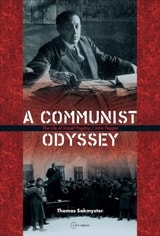
A Communist Odyssey
The life of József Pogány/John PepperThomas Sakmyster
Central European University Press, 2012
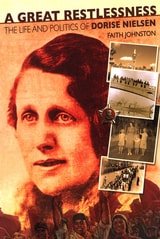
A Great Restlessness
The Life and Politics of Dorise NielsenFaith Johnston
University of Manitoba Press, 2006
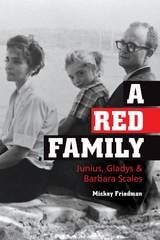
A Red Family
Junius, Gladys, and Barbara ScalesMickey Friedman. Afterword by Barbara Scales. Historical Essay by Gail O'Brien.
University of Illinois Press, 2008
Through the distinct perspectives of Junius, his wife Gladys, and his daughter Barbara, this book deepens and personalizes the story of American radicalism. Conversational, intimate, and exceptionally accessible, A Red Family offers a unique look at the American communist experience from the inside out.
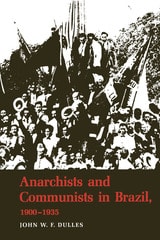
Anarchists and Communists in Brazil, 1900-1935
By John Dulles
University of Texas Press, 1973
In providing a detailed account of the leftist opposition and its bloody repression in Brazil during the Old Republic and the early years of the Vargas regime, John W. F. Dulles gives considerable attention to the labor movement, generally neglected by historians. This study focuses on the formation and activities of anarchists and Communists, the two most important radical groups working within Brazilian labor. Relying on a wide variety of sources, including interviews and personal papers, Dulles supplies information that for the most part is unavailable in English and not easily accessible in Portuguese.
The struggles of Brazilian workers—usually against an alliance of company owners, state and federal troops, and state and federal governments—suffered reverses in 1920 and 1921. These setbacks were cited by Astrogildo Pereira and other admirers of Bolshevism as reasons for the proletariat to forsake anarchism and adhere to the Communist Party, Brazilian Section of the Communist International.
Anarchists and Communists, struggling against each other in the labor unions in the mid 1920’s, joined opposition journalists and politicians in supporting military rebels in a romantic uprising marked by adventure and suffering, jailbreaks and long marches, and death in the backlands.
Slowly, Brazilian Communism gained strength during the latter part of the 1920’s, but 1930 brought the beginnings of failure. Worse for the Party than the government crackdown and the Trotskyite dissidence was the growing attraction of the Aliança Liberal, the oppositionist political movement that brought Getúlio Vargas to power. While workers and Party members flocked to the Aliança in defiance of Party orders, sectarian edicts from Moscow resulted in the expulsion or demotion of the Party’s former leaders and in the condemnation of intellectuals.
Luís Carlos Prestes, “the Cavalier of Hope” who had led the military rebels in the mid-1920’s, turned to Communism—only to find himself not welcome in the Party. Taken to Russia by the Communist International in 1931, he was finally accepted into the Brazilian Party in absentia in 1934. Later that year, misled in Moscow by optimistic reports brought by Brazilian Communists, he agreed to lead a rebellion in Brazil. That decision and its consequences in 1935 were disastrous to Brazilian Communism.
The struggles among anarchists, Stalinists, and Trotskyites in Brazil were reflections of a worldwide struggle. This study discloses and assesses the effects of Moscow policy changes on Communism in Brazil and contributes to an understanding of Moscow’s policies throughout Latin America during this period.
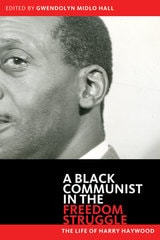
Black Communist in the Freedom Struggle
The Life of Harry HaywoodHarry Haywood
University of Minnesota Press, 2012
Mustering out of the U.S. army in 1919, Harry Haywood stepped into a battle that was to last the rest of his life. Within months, he found himself in the middle of one of the bloodiest race riots in U.S. history and realized that he’d been fighting the wrong war—the real enemy was right here at home. This book is Haywood’s eloquent account of coming of age as a black man in twentieth-century America and of his political awakening in the Communist Party.
For all its cultural and historical interest, Harry Haywood’s story is also noteworthy for its considerable narrative drama. The son of parents born into slavery, Haywood tells how he grew up in Omaha, Nebraska, found his first job as a shoeshine boy in Minneapolis, then went on to work as a waiter on trains and in restaurants in Chicago. After fighting in France during the war, he studied how to make revolutions in Moscow during the 1920s, led the Communist Party’s move into the Deep South in 1931, helped to organize the campaign to free the Scottsboro Boys, worked with the Sharecroppers’ Union, supported protests in Chicago against Mussolini’s invasion of Ethiopia, fought with the International Brigades in Spain, served in the Merchant Marines during World War II, and continued to fight for the right of self-determination for the Afro-American nation in the United States until his death in 1985.
This new edition of his classic autobiography, Black Bolshevik, introduces American readers to the little-known story of a brilliant thinker, writer, and activist whose life encapsulates the struggle for freedom against all odds of the New Negro generation that came of age during and after World War I.
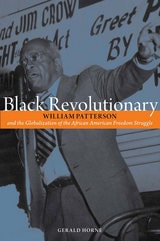
Black Revolutionary
William Patterson and the Globalization of the African American Freedom StruggleGerald Horne
University of Illinois Press, 2013

Caliban's Freedom
The Early Political Thought of C.L.R. JamesAnthony Bogues
Pluto Press, 1997
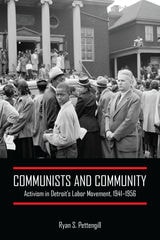
Communists and Community
Activism in Detroit's Labor Movement, 1941-1956Ryan S. Pettengill
Temple University Press, 2020
Communists and Community seeks to reframe the traditional chronology of the Communist Party in the United States as a means to better understand the change that occurred in community activism in the mid-twentieth century. Ryan Pettengill argues that Popular Front activism continued to flourish throughout the war years and into the postwar period. In Detroit, where there was a critical mass of heavy industry, Communist Party activists mobilized support for civil rights and affordable housing, brought attention to police brutality, sought protection for the foreign-born, and led a movement for world peace.
Communists and Community demonstrates that the Communist Party created a social space where activists became effective advocates for the socioeconomic betterment of a multiracial work force. Pettengill uses Detroit as a case study to examine how communist activists and their sympathizers maintained a community to enhance the quality of life for the city’s working class. He investigates the long-term effects of organized labor’s decision to force communists out of the unions and abandon community-based activism. Communists and Community recounts how leftists helped workers, people of color, and other under-represented groups became part of the mainstream citizenry in America.
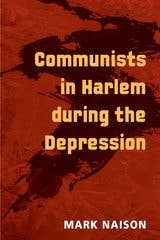
Communists in Harlem during the Depression
Mark Naison
University of Illinois Press, 2004
Winner of the Ralph Bunche Award, American Political Science Association
No socialist organization has ever had a more profound effect on black life than the Communist Party did in Harlem during the Depression. Mark Naison describes how the party won the early endorsement of such people as Adam Clayton Powell Jr. and how its support of racial equality and integration impressed black intellectuals, including Richard Wright, Langston Hughes, and Paul Robeson.
This meticulously researched work, largely based on primary materials and interviews with leading black Communists from the 1930s, is the first to fully explore this provocative encounter between whites and blacks. It provides a detailed look at an exciting period of reform, as well as an intimate portrait of Harlem in the 1920s and 30s, at the high point of its influence and pride.
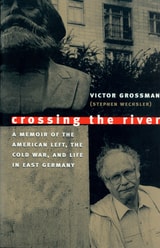
Crossing the River
A Memoir of the American Left, the Cold War, and Life in East GermanyVictor Grossman
University of Massachusetts Press, 2003
What could possibly impel a relatively privileged twenty-four-year-old American-serving in the U.S. Army in Germany in 1952 to swim across the Danube River to what was then referred to as the Soviet Zone? How are we to understand his decision to forsake the land of his birth and build a new life in the still young German Democratic Republic? These are the questions at the core of this memoir by Victor Grossman, who was born Stephen Wechsler but changed his name after defecting to the GDR.
A child of the Depression, Grossman witnessed firsthand the dislocations wrought by the collapse of the U.S. economy during the 1930s. Widespread unemployment and poverty, CIO sit-down strikes, and the fight to save Republican Spain from fascism-all made an indelible impression as he grew up in an environment that nurtured a commitment to left-wing causes. He continued his involvement with communist activities as a student at Harvard in the late 1940s and after graduation, when he took jobs in two factories in Buffalo, New York, and tried to organize their workers.
Fleeing McCarthyite America and potential prosecution, Grossman worked in the GDR with other Western defectors and eventually became, as he notes, the “only person in the world to attend Harvard and Karl Marx universities.” Later, he was able to establish himself as a freelance journalist, lecturer, and author. Traveling throughout East Germany, he evaluated the failures as well as the successes of the GDR's “socialist experiment.” He also recorded his experiences, observations, and judgments of life in East Berlin after reunification, which failed to bring about the post-Communist paradise so many had expected.
Written with humor as well as candor, Crossing the River provides a rare look at the Cold War from the other side of the ideological divide.
Mark Solomon, a distinguished historian of the American left, provides a historical afterword that places Grossman's experiences in a larger Cold War context.
Dangerous Friendship
Stanley Levison, Martin Luther King Jr., and the Kennedy BrothersBen Kamin
Michigan State University Press, 2014
Deeper Ground, Darker Shadows
The Making of a Mindanao RebelEddie L. Quitoriano
University of Wisconsin Press, 2025
Quitoriano finds revolutionary life thrilling but dangerous, with secretly arranged meetings and drops, doctored passports, and hastily planned plastic surgery. He wrestles with the global implications of his work, experiences daily struggles to survive in always-changing political circumstances, and is profoundly human in his love and concern for the family he has left behind in the Philippines. What emerges is a view of international revolutionary movements that only an insider could write. Quitoriano provides an essential and unique missing piece of twentieth-century Philippine and leftist history.
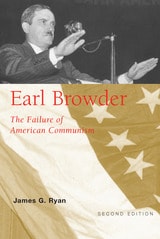
Earl Browder
The Failure of American CommunismJames G. Ryan
University of Alabama Press, 2005
Earl Browder, the preeminent 20th-century Communist party leader in the United States, steered the CPUSA through the critical years of the Great Depression and World War II. A Kansas native and veteran of numerous radical movements, he was peculiarly fitted by circumstance and temperament to head the cause during its heyday.
Serving as a bridge between American Communism’s secret and public worlds, Browder did more than anyone to attempt to explain the Soviet Union’s shifting policies to the American people in a way that would serve the interests of the CPUSA. A proud and loyal follower of Joseph Stalin, Browder nevertheless sought to move the party into the U.S. political mainstream. He used his knowledge of domestic politics to persuade the Communist International to modify Popular Front (1935-1939) tactics for the United States.
Despite his rise in the hierarchy, he possessed an independent streak that ultimately proved his undoing. Imprisonment as he neared age 50 left permanent psychological damage. After being released with the approval of President Franklin D. Roosevelt, Browder lost his perspective and began entertaining delusions of grandeur about his status in American politics and in the world Communist movement. Still, he could never quite bring legitimacy to the CPUSA because he lacked the vision and moral courage to separate himself totally from the Soviet Union. Ryan concludes that Browder was not so much insincere as deluded. His failure contributed to the demise of the popularity of the Communist party in the United States.
In preparation for this book, the author consulted the Browder Papers at Syracuse University and U.S. Government documents, particularly the F.B.I. files. In addition, he traveled to Russia for research in the Soviet Archives when recently opened to Western scholars, including the records of the former Communist International and a collection of American Communist party files, 1919-1944, shipped secretly to Moscow long ago. Indeed, until 1992, the existence of the CPUSA collection was only rumored.
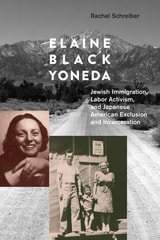
Elaine Black Yoneda
Jewish Immigration, Labor Activism, and Japanese American Exclusion and IncarcerationRachel Schreiber
Temple University Press, 2022
During World War II, Elaine Black Yoneda, the daughter of Russian Jewish immigrants, spent eight months in a concentration camp—not in Europe, but in California. She did this voluntarily and in solidarity, insisting on accompanying her husband, Karl, and their son, Tommy, when they were incarcerated at the Manzanar Relocation Center. Surprisingly, while in the camp, Elaine and Karl publicly supported the United States’ decision to exclude Japanese Americans from the coast.
Elaine Black Yoneda is the first critical biography of this pioneering feminist and activist. Rachel Schreiber deftly traces Yoneda’s life as she became invested in radical politics and interracial and interethnic activism. In her work for the International Labor Defense of the Communist Party, Yoneda rose to the rank of vice president. After their incarceration, Elaine and Karl became active in the campaigns to designate Manzanar a federally recognized memorial site, for redress and reparations to Japanese Americans, and in opposition to nuclear weapons.
Schreiber illuminates the ways Yoneda’s work challenged dominant discourses and how she reconciled the contradictory political and social forces that shaped both her life and her family’s. Highlighting the dangers of anti-immigrant and anti-Asian xenophobia, Elaine Black Yoneda recounts an extraordinary life.
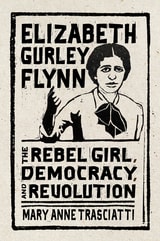
Elizabeth Gurley Flynn
The Rebel Girl, Democracy, and RevolutionMary Anne Trasciatti
Rutgers University Press, 2025
International Labor History Association Honorable Mention Book Award for 2025
Elizabeth Gurley Flynn was involved in almost every major campaign of the U.S. Left in the first two thirds of the twentieth century. An outstanding orator, writer, and tactician, Flynn is one of the most important figures in the history of the American labor movement. Inspired by the Irish freedom struggle and appalled by the exploitation and grinding poverty she saw around her, she devoted her life to the advancement of civil liberties. Here, Mary Anne Trasciatti traces Flynn’s personal and political life to explore the broader social issues of a fraught era.
Born in 1890, Flynn began her activist career by joining the Industrial Workers of the World (IWW) when she was just sixteen, and she ended it as the first female chair of the American Communist Party, a position she held from 1961 until her death in 1964. In the intervening years she organized workers into unions, led strikes, championed women’s rights, supported anti-imperialist movements around the globe, protested deportation, advocated for prison reform, and fought for Black liberation. Above all, she showed absolute devotion to workers and their struggles.
Slandered as an “un-American” in the anticommunist fervor of the 1940s and 1950s, Flynn was eventually ousted from the very organization she helped found, the American Civil Liberties Union, and imprisoned for two years. Though her own movement abandoned her, her commitment to the cause never wavered. This stirring biography illuminates Flynn’s inspiring life and worldview and returns her to her rightful place at the heart of labor and civil liberties history.
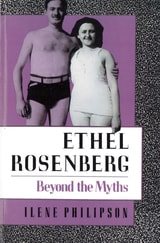
Ethel Rosenberg
Beyond the MythsPhilipson, Ilene
Rutgers University Press, 1992
Ilene Philipson's biography of Ethel Rosenberg, only the second woman in U.S. history to be executed for treason, is now available in paperback for the first time.
"Contributes to women's history and biography and to radical history, particularly to our understanding of family, gender relations, and feminine identity of women radicals. . . . Ilene Philipson has produced a fascinating book"--Nancy Chodorow
"Tells the story of Ethel . . . from a woman's point of view. . . . Philipson, whose literary style has the clean exactitude of a tracer bullet, has produced a heart-rending masterpiece. If you read only one book a year, make it this one."
--Florence King, Newsday
"[Ethel Rosenberg's] stoicism on the witness stand, her unflinching response to the guilty verdict and death sentence, and her seeming indifference to the ordeal of her two children shocked the nation. . . . Concerned with rehabilitating not only Ethel Rosenberg's name, but also her image, the author creates a moving portrait of a human and ordinary woman."--John Patrick Diggins, New York Times Book Review
From Jail to Jail
Mis Sea#83 Tpg#8Tan Malaka
Ohio University Press, 1991
From Jail to Jail is the political autobiography of Sutan Ibrahim gelar Tan Malaka, an enigmatic and colorful political thinker of twentieth-century Asia, who was one of the most influential figures of the Indonesian Revolution. Variously labeled a communist, Trotskyite, and nationalist, Tan Malaka managed to run afoul of nearly every political group and faction involved in the Indonesian struggle for independence. During his decades of political activity, he spent periods of exile and hiding in nearly every country in Southeast Asia. As a Marxist who was expelled from and became a bitter enemy of his country’s Communist Party and as a nationalist who was imprisoned and murdered by his own government’s forces as a danger to its anticolonial struggle, Tan Malaka was and continues to be soaked in contradiction and controversy.
Gerrard Winstanley
The Digger's Life and LegacyJohn Gurney
Pluto Press, 2012
John Gurney reveals the hidden history of Winstanley and his movement. As part of the radical ferment which swept England at the time of the civil war, Winstanley led the Diggers in taking over land and running it as 'a common treasury for all' – provoking violent opposition from landowners. Gurney also guides us through Winstanley's writings, which are among the most remarkable prose writings of his age.
Gerrard Winstanley: The Digger's Life and Legacy is a must read for students of English history and all those seeking to re-claim the commons today.
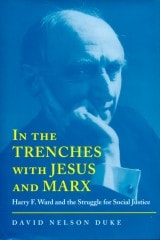
In the Trenches with Jesus and Marx
Harry F. Ward and the Struggle for Social JusticeDavid Duke
University of Alabama Press, 2006
The story of a Social Gospel leader who brought faith, activism, and social justice into the heart of modern American politics.
Radical religious and political leader Harry F. Ward started life quietly enough in a family of Methodist shopkeepers and butchers in London. But his relentless pursuit of social justice would lead him to the United States and a long career of religious activism. Ward served as professor of Christian ethics at the Union Theological Seminary and chairman of the board of the American Civil Liberties Union for two decades. He also became a leader in labor groups, Protestant activist organizations, and New York intellectual circles.
David Duke builds his comprehensive story of this fiery leader from extensive archival sources, including FBI files and private correspondence, sermons, class notes, and other unpublished material. Duke skillfully charts Ward's rise from an idealistic Methodist minister in a Chicago stockyard parish to a prominent national religious leader and influential political figure. Ultimately, Ward's lifelong attempt to synthesize the beliefs of Jesus and Marx and his role as an admirer of the Soviet Union put him on a collision course with McCarthyism in Cold War America. Viewed by some as a prophet and by others as a heretic, traitor, and communist, Ward became increasingly marginalized as he stubbornly maintained his radical positions. Even in his own circle, he went from being a figure of unquestioned integrity who eloquently spoke his convictions to a tragically short-sighted idealogue whose unwavering pro-Soviet agenda blinded him to the horrors of Stalinist oppression.
Harry Ward's long, colorful career intersected nearly every intellectual current in American culture for more than a half century. This biography will be important for scholars of American religious history, students of liberalism and politics, social Christians, and general readers who enjoy a compelling tour into the private and public lives of notable figures of history.
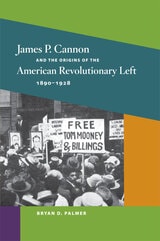
James P. Cannon and the Origins of the American Revolutionary Left, 1890-1928
Bryan D. Palmer
University of Illinois Press, 2010
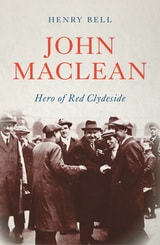
John Maclean
Hero of Red ClydesideHenry Bell
Pluto Press, 2018
Feared by the government, adored by workers, celebrated by Lenin and Trotsky. The head of British Military Intelligence called John Maclean (1879–1923) “the most dangerous man in Britain.”
This new biography explores the events that shaped the life of a momentous man—from the Great War and the Great Unrest to the Rent Strike and the Russian Revolution. It examines his work as an organizer and educator, his imprisonment and hunger strike, and his rise to the position of Britain’s most famous revolutionary. At a moment when radical politics is drawing renewed attention and support, Maclean’s example of activism and commitment is as timely as ever.
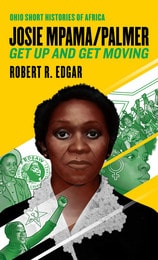
Josie Mpama/Palmer
Get Up and Get MovingRobert R. Edgar
Ohio University Press, 2020
While African National Congress narratives dominate much of the scholarship on South Africa’s freedom struggle, Josie Mpama/Palmer’s political life offers a different perspective. Highly critical of the patriarchal attitudes that hindered black women from actively participating in politics, Mpama/Palmer was an outspoken advocate for women’s social equality and encouraged black women to become more involved in national conversations. The first black woman to join the Communist Party of South Africa and an antiapartheid activist, Josie Mpama/Palmer remained involved in critical issues all her life, especially protests against Bantu Education and other forms of racial and sexist discrimination. She was an integral figure in establishing the Federation of South African Women, an organization open to women of all races. Mpama/Palmer’s activism and political legacy would become an inspiring example for women in South Africa and around the world to get up and get moving.
Legacy of a False Promise
A Daughter's ReckoningMargaret Fuchs Singer
University of Alabama Press, 2009
Margaret Fuchs was thirteen in June 1955 when she learned that her parents had been Communists while working for the U.S. government in the 1930s and '40s. This book chronicles the years during which her parents were exposed and her father was subpoenaed before the House Un-American Activities Committee. Eventually he named names, and subsequently lost his job as a law professor at American University, and was blacklisted from teaching ever again. Legacy of a False Promise also details the author's quest as an adult to learn whether or not her parents ever spied for the Soviet Union.
Based on eight years of research using family records, FBI files, American University archives, personal interviews, and the recently declassified Venona cables, Legacy of a False Promise offers unique insights into the McCarthy Era. Most "red-diaper babies" who have written on the subject had parents who refused to give in to HUAC's demands. Singer's work instead recounts the shame and series of betrayals that her father's decision to name names brought to her family. Furthermore, it explores the campaign of the liberal anti-Communist movement to publicize its political position while defending a fired ex-Communist professor, the nature and activities of secret Communist underground cells, and the motivation of New Deal government workers who spied for the Soviets.
This is a poignant meditation on family secrets, father-daughter relationships in times of crisis, teenage loneliness in the midst of trauma, and the effects of parents' actions on the lives of their children. It also serves as a timely reminder of the dangers of sacrificing civil liberties in the name of national security.
Miguel Mármol
Roque Dalton
Northwestern University Press, 1995
Mobilizing Youth
Communists and Catholics in Interwar FranceSusan B. Whitney
Duke University Press, 2009
Moving back and forth between the constantly shifting tactics devised to mobilize young people and the circumstances of their lives, Whitney gives special consideration to the context in which the youth movements operated and in which young people made choices. She traces the impact of the First World War on the young and on the formulation of generation-based political and religious identities, the role of work and leisure in young people’s lives and political mobilization, the impact of the Depression, the importance of Soviet ideas and intervention in French Communist youth politics, and the state’s attention to youth after the victory of France’s Popular Front government in 1936. Mobilizing Youth concludes by inserting the era’s youth activists and movements into the complicated events of the Second World War.
Now More Than Ever
By Aldous Huxley
University of Texas Press, 2000
Over the course of his career, British writer Aldous Huxley (1894-1963) shifted away from elitist social satires and an atheistic outlook toward greater concern for the masses and the use of religious terms and imagery. This change in Huxley's thinking underlies the previously unpublished play Now More Than Ever.
Written in 1932-1933 just after Brave New World, Now More Than Ever is a response to the social, economic, and political upheavals of its time. Huxley's protagonist is an idealistic financier whose grandiose schemes for controlling the means of production drive him to swindling and finally to suicide. His fate allows Huxley to expose the evils he perceives in free-market capitalism while pleading the case for national economic planning and the rationalization of Britain's industrial base.
This volume contains the full text of Now More Than Ever, which was believed to be lost until 1976, when a copy was found at the Harry Ransom Humanities Research Center of the University of Texas at Austin. A "thinker's play" that has never been produced on stage, it is the last previously unpublished piece of Huxley's major writings and immensely important to understanding his development as a writer. The editors of this volume have annotated the play for contemporary readers. Their introduction sets the play in the context of Huxley's intellectual life.
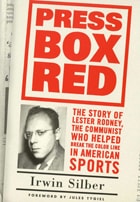
Press Box Red
The Story Of Lester Rodney,Irwin Silber
Temple University Press, 2003
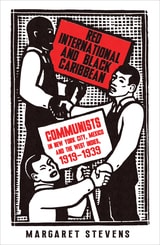
Red International and Black Caribbean
Communists in New York City, Mexico and the West Indies, 1919-1939Margaret Stevens
Pluto Press, 2017
Challenging dominant accounts, Red International and Black Caribbean debunks the “great men” narrative, emphasizes the role of women in their capacity as laborers, and paints the true struggles of black peasants and workers in Communist parties.
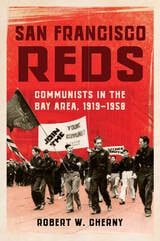
San Francisco Reds
Communists in the Bay Area, 1919-1958Robert W. Cherny
University of Illinois Press, 2024
Founded in 1919, the Communist Party (CP) in San Francisco survived an ineffectual early period to become a force in the trade union heyday of the 1930s. Robert Cherny uses the lives and careers of more than fifty members to tell the story of the city’s CP from its founding through 1958.
Cherny draws on FBI files, the records of the CP at the Russian State Archive for Social and Political History, interviews, and memoirs to follow male and female party and union leaders, rank-and-file members, and others. His history reveals why people joined the CP while charting the frequent changes in policy, constant member turnover, and disruptive factionalism that limited party aims and successes. Cherny also follows his subjects through their resignations, expulsions, or other reasons for departure and looks at the CP’s influence on their lives in subsequent years.
Vivid and exhaustively researched, San Francisco Reds is a long view account of the personal motivations and activism of an Old Left generation in a West Coast city.

TITO
Yugoslavia’s Great Dictator, A ReassessmentStevan K. Pavlowitch
The Ohio State University Press, 1992
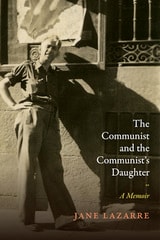
The Communist and the Communist's Daughter
A MemoirJane Lazarre
Duke University Press, 2017
Soon after immigrating to the United States as a young man, Lazarre began a long career as a radical activist, being convicted of sedition, holding leadership positions in the American Communist Party, fighting in the Spanish Civil War, organizing labor unions, testifying in front of the House Un-American Activities Committee, and resisting the FBI’s efforts to recruit him as an informant. Through periods of heroism and deep despair Lazarre never abandoned his ideals or his sustained faith in the fundamental goodness of people.
This is also the story of Jane as she grew up, married an African American civil rights activist, and became a mother and a writer while coming to terms with her father’s legacy. She recounts her arguments with her father over ideology, but also his profound influence on her life. Throughout this poignant and beautifully written work, Jane examines memory, grief, love, and conscience while detailing the sacrifices, humanity, and unwavering convictions of a man who worked tirelessly to create a brighter future for us all.

The Great Midland
Alexander Saxton
University of Illinois Press, 1997
The book vividly depicts the multiracial and multiethnic alliances that developed as Chicago railroad workers struggled to organize. It presents some of its narrative through the complex consciousness of Stephanie Koviak, a young, first-generation Polish-American.
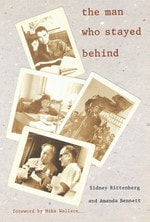
The Man Who Stayed Behind
Sidney Rittenberg and Amanda Bennett
Duke University Press, 2001
Both a memoir and a documentary history of the Chinese revolution from 1949 through the Cultural Revolution, The Man Who Stayed Behind provides a human perspective on China’s efforts to build a new society. Critical of both his own mistakes and those of the Communist leadership, Rittenberg nevertheless gives an even-handed account of a country that is now free of internal war for the first time in a hundred years.
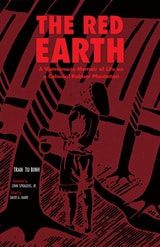
The Red Earth
A Vietnamese Memoir of Life on a Colonial Rubber PlantationBinh Tu Tran
Ohio University Press, 1985
Phu Rieng was one of many French rubber plantations in colonial Vietnam; Tran Tu Binh was one of 17,606 laborers brought to work there in 1927, and his memoir is a straightforward, emotionally searing account of how one Vietnamese youth became involved in revolutionary politics. The connection between this early experience and later activities of the author becomes clear as we learn that Tran Tu Binh survived imprisonment on Con Son island to help engineer the general uprising in Hanoi in 1945.
The Red Earth is the first of dozens of such works by veterans of the 1924–45 struggle in Vietnam to be published in English translation. It is important reading for all those interested in the many-faceted history of modern Vietnam and of communism in the non-Western world.
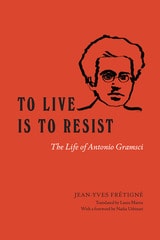
To Live Is to Resist
The Life of Antonio GramsciJean-Yves Frétigné
University of Chicago Press, 2021
One of the most influential political thinkers of the twentieth century, Antonio Gramsci (1891–1937) has left an indelible mark on philosophy and critical theory. His innovative work on history, society, power, and the state has influenced several generations of readers and political activists, and even shaped important developments in postcolonial thought. But Gramsci’s thinking is scattered across the thousands of notebook pages he wrote while he was imprisoned by Italy’s fascist government from 1926 until shortly before his death.
To guide readers through Gramsci’s life and works, historian Jean-Yves Frétigné offers To Live Is to Resist, an accessible, compelling, and deeply researched portrait of an extraordinary figure. Throughout the book, Frétigné emphasizes Gramsci’s quiet heroism and his unwavering commitment to political practice and resistance. Most powerfully, he shows how Gramsci never surrendered, even in conditions that stripped him of all power—except, of course, the power to think.
William Z. Foster and the Tragedy of American Radicalism
James R. Barrett
University of Illinois Press, 1999
A self-educated wage earner raised in the slums of a large industrial city, William Z. Foster became a brilliant union organizer who helped build the American Federation of Labor and, later, radical Trade Union Educational League. Embracing socialism, syndicalism, and communism in turn, Foster rose through the ranks of the American Communist Party to stand at the forefront of labor politics throughout the 1920s. Yet by the time he died in 1961, in a Moscow hospital far from the meat-packing plants and steel mills where he had built his reputation, Foster's political marginalism stood as a symbol for the isolation of American labor radicalism in the postwar era.
Integrating both the indigenous and the international factors that determined the fate of American communism, William Z. Foster and the Tragedy of American Radicalism provides a new understanding of the basis for radicalism among twentieth-century American workers.
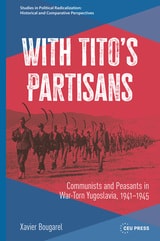
With Tito’s Partisans
Communists and Peasants in War-Torn Yugoslavia, 1941–1945Xavier Bougarel
Central European University Press, 2026
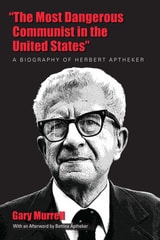
“The Most Dangerous Communist in the United States”
A Biography of Herbert ApthekerGary Murrell
University of Massachusetts Press, 2015
When J. Edgar Hoover declared Herbert Aptheker “the most dangerous Communist in the United States,” the notorious FBI director misconstrued his true significance. In this first book-length biography of Aptheker (1915–2003), Gary Murrell provides a balanced yet unflinching assessment of the controversial figure who was at once a leading historian of African America, radical political activist, literary executor of W. E. B. Du Bois, and lifelong member of the American Communist Party. Although blacklisted at U.S. universities, Aptheker published dozens of books, including the groundbreaking American Negro Slave Revolts (1943) and the monumental seven-volume Documentary History of the Negro People (1951–1994). He also edited four volumes of the correspondence and unpublished writings of Du Bois, an achievement that Eric Foner, writing in the New York Times Book Review, called “a milestone in the coming of age of Afro-American history.”
As Murrell shows, Aptheker the historian was inseparable from Aptheker the leading Communist Party intellectual, polemicist, and agitator. During the 1960s, his ability to rouse and inspire both black and white student radicals made him one of the few Old Leftists accepted by the New Left. Aptheker had joined the CPUSA during its heyday in the 1930s, convinced that only through the party's leadership could fascism be defeated and true liberation be achieved: he ended his affiliation five decades later in 1991 after the collapse of socialism in the Soviet Union and Eastern Europe.
In an afterword, Bettina Aptheker adds to Murrell's narrative by illuminating her mother Fay's vital contributions to her father's work and by affirming the particularly devastating challenges of life in a family dedicated to radical political and social change.