Results by title
40 books match the query 'Harlem Renaissance'
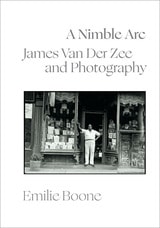
A Nimble Arc
James Van Der Zee and PhotographyEmilie Boone
Duke University Press, 2023
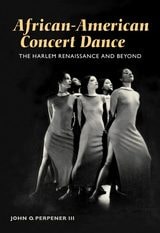
African-American Concert Dance
THE HARLEM RENAISSANCE AND BEYONDJohn O. Perpener III
University of Illinois Press, 2001
Perpener begins with Hemsley Winfield, a versatile performer and director whose company, the New Negro Art Theatre, launched the careers of Edna Guy, Randolph Sawyer, and Ollie Burgoyne, among many others. Also profiled are Charles Williams, who directed the Hampton Creative Dance Group at the Hampton Institute in Virginia, and Asadata Dafora Horton, a native African who established himself as the preeminent purveyor of African dance and culture in America during the 1930s. Dafora's African Dance Troupe, which at one point came under the umbrella of the WPA Federal Theatre Project, was a focal point of the famous "voodoo" Macbeth, an all-black production set in Haiti and directed by the young Orson Welles.
Stepping onto the path cleared by these early innovators, two important artists combined dance with anthropology to expand the reach and scope of African-American dance. Katherine Dunham and Pearl Primus both studied anthropology and engaged in extensive fieldwork that infused their dances with Caribbean and African influences. Dunham founded two ambitious training schools, one in New York and one in East St. Louis, while Primus's projects included an African Arts Center in Monrovia, Liberia, dedicated to collecting dance material, teaching, and organizing professional performances.
Perpener examines the politics of racial and cultural difference and their impact on these early African-American dance leaders. In particular he documents the critical reception of their work, detailing the rigid preconceptions of African-American dance that white critics imposed on black artists. He also surveys important black dancers and choreographers since 1950, including Talley Beatty, Donald McKayle, Alvin Ailey, Eleo Pomare, Rod Rodgers, and Dianne McIntyre, and discusses how they have extended and diverged from traditions established by their predecessors.
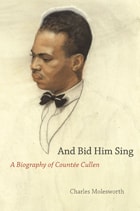
And Bid Him Sing
A Biography of Countée CullenCharles Molesworth
University of Chicago Press, 2012
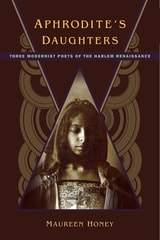
Aphrodite's Daughters
Three Modernist Poets of the Harlem RenaissanceHoney, Maureen
Rutgers University Press, 2016
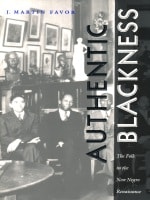
Authentic Blackness
The Folk in the New Negro RenaissanceJ. Martin Favor
Duke University Press, 1999
Authentic Blackness looks at the place of the “folk”—those African Americans “furthest down,” in the words of Alain Locke—and how the representation of the folk and the black middle class both spurred the New Negro Movement and became one of its most serious points of contention. Drawing on vernacular theories of African American literature from such figures as Henry Louis Gates Jr. and Houston Baker as well as theorists Judith Butler and Stuart Hall, Favor looks closely at the work of four Harlem Renaissance fiction writers: James Weldon Johnson, Nella Larsen, George Schuyler, and Jean Toomer. Arguing that each of these writers had, at best, an ambiguous relationship to African American folk culture, Favor demonstrates how they each sought to redress the notion of a fixed black identity. Authentic Blackness illustrates how “race” has functioned as a type of performative discourse, a subjectivity that simultaneously builds and conceals its connections with such factors as class, gender, sexuality, and geography.
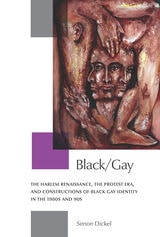
Black/Gay
The Harlem Renaissance, the Protest Era, and the Constructions of Black Gay Identity in the 1980s and 90sSimon Dickel
Michigan State University Press, 2011
This book explores key texts of the black gay culture of the 1980s and ’90s. Starting with an analysis of the political discourse in anthologies such as In the Life and Brother to Brother, it identifies the references to the Harlem Renaissance and the Protest Era as common elements of black gay discourse. This connection to African American cultural and political traditions legitimizes black gay identity and criticizes the construction of gay identity as white. Readings of Isaac Julien’s Looking for Langston, Samuel R. Delany’s “Atlantis: Model 1924” and The Motion of Light in Water, Melvin Dixon’s Vanishing Rooms, Randall Kenan’s A Visitation of Spirits, and Steven Corbin’s No Easy Place to Be demonstrate how these strategies of signifying are used in affirmative, humorous, and ironic ways.
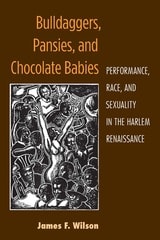
Bulldaggers, Pansies, and Chocolate Babies
Performance, Race, and Sexuality in the Harlem RenaissanceJames F. Wilson
University of Michigan Press, 2011
—David Krasner, author of A Beautiful Pageant: African American Theatre, Drama, and Performance in the Harlem Renaissance, 1910-1927
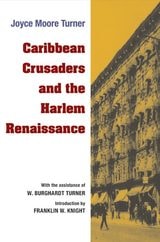
Caribbean Crusaders and the Harlem Renaissance
Joyce Moore Turner
University of Illinois Press, 2005
To explore the roots of the Caribbean emigres' radical ideology and the strategies used to extend agitation from Harlem to national and international platforms, the study draws on the papers and writings of Hermina Huiswoud, Cyril Briggs, the Reverend E. Ethelred Brown, Langston Hughes, and Richard B. Moore, as well as from interviews and biographies of related contemporary figures. It also incorporates census records, FBI files, and hundreds of documents from the recently opened Russian Archive.
Through a focus on Otto Huiswoud, the sole African American charter member of the Communist Party, and his wife, Hermina, Turner exposes the complex developments within the socialist and communist parties on the question of race. The account ranges beyond Harlem to Europe, Africa, and the Soviet Union to reveal the breadth, depth, and nearly global reach of the Afro-Caribbean activists' activities.
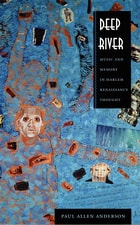
Deep River
Music and Memory in Harlem Renaissance ThoughtPaul Allen Anderson
Duke University Press, 2001
Deep River elucidates how spirituals, African American concert music, the blues, and jazz became symbolic sites of social memory and anticipation during the Harlem Renaissance. Anderson traces the roots of this period’s debates about music to the American and European tours of the Fisk Jubilee Singers in the 1870s and to W. E. B. Du Bois’s influential writings at the turn of the century about folk culture and its bearing on racial progress and national identity. He details how musical idioms spoke to contrasting visions of New Negro art, folk authenticity, and modernist cosmopolitanism in the works of Du Bois, Alain Locke, Zora Neale Hurston, Langston Hughes, Jean Toomer, Sterling Brown, Roland Hayes, Paul Robeson, Carl Van Vechten, and others. In addition to revisiting the place of music in the culture wars of the 1920s, Deep River provides fresh perspectives on the aesthetics of race and the politics of music in Popular Front and Swing Era music criticism, African American critical theory, and contemporary musicology.
Deep River offers a sophisticated historical account of American racial ideologies and their function in music criticism and modernist thought. It will interest general readers as well as students of African American studies, American studies, intellectual history, musicology, and literature.
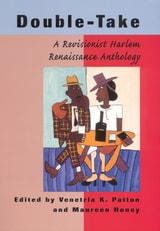
Double-Take
A Revisionist Harlem Renaissance AnthologyPatton, Venetria K
Rutgers University Press, 2001
The editors have included works from a wide variety of genres-poetry, short stories, drama, and essays-allowing readers to understand the true interdisciplinary quality of this cultural movement. Biographical sketches of the authors are provided and most of the pieces are included in their entirety. Double-Take also includes artwork and illustrations, many of which are from original journals and have never before been reprinted. Significantly, Double-Take is the first Harlem Renaissance title to include song lyrics to illustrate the interrelation of various art forms.
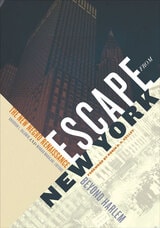
Escape from New York
The New Negro Renaissance beyond HarlemDavarian L. Baldwin
University of Minnesota Press, 2013
In the midst of vast cultural and political shifts in the early twentieth century, politicians and cultural observers variously hailed and decried the rise of the “New Negro.” This phenomenon was most clearly manifest in the United States through the outpouring of Black arts and letters and social commentary known as the Harlem Renaissance. What is less known is how far afield of Harlem that renaissance flourished—how much the New Negro movement was actually just one part of a collective explosion of political protest, cultural expression, and intellectual debate all over the world.
In this volume, the Harlem Renaissance “escapes from New York” into its proper global context. These essays recover the broader New Negro experience as social movements, popular cultures, and public behavior spanned the globe from New York to New Orleans, from Paris to the Philippines and beyond. Escape from New York does not so much map the many sites of this early twentieth-century Black internationalism as it draws attention to how New Negroes and their global allies already lived. Resituating the Harlem Renaissance, the book stresses the need for scholarship to catch up with the historical reality of the New Negro experience. This more comprehensive vision serves as a lens through which to better understand capitalist developments, imperial expansions, and the formation of brave new worlds in the early twentieth century.
Contributors: Anastasia Curwood, Vanderbilt U; Frank A. Guridy, U of Texas at Austin; Claudrena Harold, U of Virginia; Jeannette Eileen Jones, U of Nebraska–Lincoln; Andrew W. Kahrl, Marquette U; Shannon King, College of Wooster; Charlie Lester; Thabiti Lewis, Washington State U, Vancouver; Treva Lindsey, U of Missouri–Columbia; David Luis-Brown, Claremont Graduate U; Emily Lutenski, Saint Louis U; Mark Anthony Neal, Duke U; Yuichiro Onishi, U of Minnesota, Twin Cities; Theresa Runstedtler, U at Buffalo (SUNY); T. Denean Sharpley-Whiting, Vanderbilt U; Michelle Stephens, Rutgers U, New Brunswick; Jennifer M. Wilks, U of Texas at Austin; Chad Williams, Brandeis U.
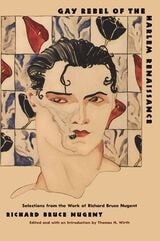
Gay Rebel of the Harlem Renaissance
Selections from the Work of Richard Bruce NugentRichard Bruce Nugent
Duke University Press, 2002
Thomas H. Wirth, a close friend of Nugent’s during the last years of the artist’s life, has assembled a selection of Nugent’s most important writings, paintings, and drawings—works mostly unpublished or scattered in rare and obscure publications and collected here for the first time. Wirth has written an introduction providing biographical information about Nugent’s life and situating his art in relation to the visual and literary currents which influenced him. A foreword by Henry Louis Gates Jr. emphasizes the importance of Nugent for African American history and culture.
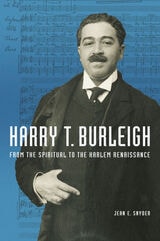
Harry T. Burleigh
From the Spiritual to the Harlem RenaissanceJean E. Snyder
University of Illinois Press, 2021
Hearing the Hurt
Rhetoric, Aesthetics, and Politics of the New Negro MovementEric King Watts
University of Alabama Press, 2012
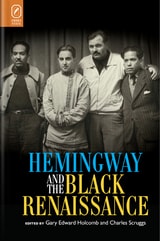
Hemingway and the Black Renaissance
Edited by Gary Edward Holcomb and Charles Scruggs
The Ohio State University Press, 2012
Hemingway and the Black Renaissance, edited by Gary Edward Holcomb and Charles Scruggs, explores a conspicuously overlooked topic: Hemingway’s wide-ranging influence on writers from the Harlem Renaissance to the present day. An observable who’s who of black writers—Ralph Ellison, James Baldwin, Langston Hughes, Claude McKay, Wallace Thurman, Chester Himes, Alex la Guma, Derek Walcott, Gayl Jones, and more—cite Hemingway as a vital influence. This inspiration extends from style, Hemingway’s minimalist art, to themes of isolation and loneliness, the dilemma of the expatriate, and the terrifying experience of living in a time of war. The relationship, nevertheless, was not unilateral, as in the case of Jean Toomer’s 1923 hybrid, short-story cycle Cane, which influenced Hemingway’s collage-like 1925 In Our Time.
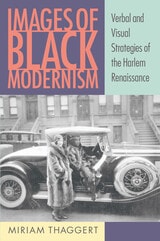
Images of Black Modernism
Verbal and Visual Strategies of the Harlem RenaissanceMiriam Thaggert
University of Massachusetts Press, 2010
Focusing on the years from 1922 to 1938, this book revisits an important moment in black cultural history to explore how visual elements were used in poems, novels, and photography to undermine existing stereotypes. Miriam Thaggert identifies and analyzes an early form of black American modernism characterized by a heightened level of experimentation with visual and verbal techniques for narrating and representing blackness. The work of the writers and artists under discussion reflects the creative tension between the intangibility of some forms of black expression, such as spirituals, and the materiality of the body evoked by other representations of blackness, such as “Negro” dialect.
By paying special attention to the contributions of photographers and other visual artists who have not been discussed in previous accounts of black modernism, Thaggert expands the scope of our understanding of the Harlem Renaissance and contributes to a growing recognition of the importance of visual culture as a distinct element within, and not separate from, black literary studies.
Thaggert trains her critical eye on the work of James Weldon Johnson, Nella Larsen, George Schuyler, Carl Van Vechten, James Van Der Zee, and Aaron Siskind—artists who experimented with narrative and photographic techniques in order to alter the perception of black images and to question and reshape how one reads and sees the black body. Examining some of the more problematic authors and artists of black modernism, she challenges entrenched assumptions about black literary and visual representations of the early to mid twentieth century.
Thaggert concludes her study with a close look at the ways in which Harlem and the Harlem Renaissance were reimagined and memorialized in two notable texts—Wallace Thurman's 1932 satire Infants of the Spring and the Metropolitan Museum of Art's controversial 1969 exhibition “Harlem on My Mind: The Cultural Capital of Black America, 1900–1968.”
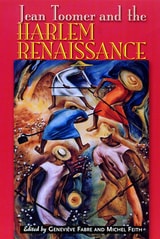
Jean Toomer & Harlem Renaissance
Edited by Geneviève Fabre and Michel Feith
Rutgers University Press, 2000
Jean Toomer's novel Cane has been hailed as the harbinger of the Harlem Renaissance and as a model for modernist writing, yet it eludes categorization and its author remains an enigmatic and controversial figure in American literature. The present collection of essays by European and American scholars gives a fresh perspective by using sources made available only in recent years, highlighting Toomer's bold experimentations, as well as his often ambiguous responses to the questions of his time.
Some of the essays achieve this through close readings of the text, leading to new and challenging interpretations of Toomer's transcendence of genres and styles. Others show how the publication of Cane and his later writings placed Toomer at the heart of contemporary ideological and artistic debates: race and identity, the negro writer and the white literary world, primitivism and modernism.
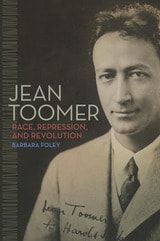
Jean Toomer
Race, Repression, and RevolutionBarbara Foley
University of Illinois Press, 2019
The 1923 publication of Cane established Jean Toomer as a modernist master and one of the key literary figures of the emerging Harlem Renaissance. Though critics and biographers alike have praised his artistic experimentation and unflinching eyewitness portraits of Jim Crow violence, few seem to recognize how much Toomer's interest in class struggle, catalyzed by the Russian Revolution and the post–World War One radical upsurge, situate his masterwork in its immediate historical context. In Jean Toomer: Race, Repression, and Revolution, Barbara Foley explores Toomer's political and intellectual connections with socialism, the New Negro movement, and the project of Young America. Examining his rarely scrutinized early creative and journalistic writings, as well as unpublished versions of his autobiography, she recreates the complex and contradictory consciousness that produced Cane. Foley's discussion of political repression runs parallel with a portrait of repression on a personal level. Examining family secrets heretofore unexplored in Toomer scholarship, she traces their sporadic surfacing in Cane. Toomer's text, she argues, exhibits a political unconscious that is at once public and private.
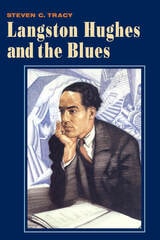
Langston Hughes and the Blues
Steven C. Tracy
University of Illinois Press, 2024
Literary Sisters
Dorothy West and Her Circle, A Biography of the Harlem RenaissanceMitchell, Verner D
Rutgers University Press, 2012
Harlem Renaissance writer Dorothy West led a charmed life in many respects. Born into a distinguished Boston family, she appeared in Gershwin’s Porgy and Bess, then lived in the Soviet Union with a group that included Langston Hughes, to whom she proposed marriage. She later became friends with Jacqueline Kennedy Onassis, who encouraged her to finish her second novel, The Wedding, which became the octogenarian author’s first bestseller.
Literary Sisters reveals a different side of West’s personal and professional lives—her struggles for recognition outside of the traditional literary establishment, and her collaborations with talented African American women writers, artists, and performers who faced these same problems. West and her “literary sisters”—women like Zora Neale Hurston and West’s cousin, poet Helene Johnson—created an emotional support network that also aided in promoting, publishing, and performing their respective works. Integrating rare photos, letters, and archival materials from West’s life, Literary Sisters is not only a groundbreaking biography of an increasingly important author but also a vivid portrait of a pivotal moment for African American women in the arts.
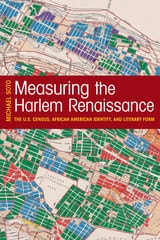
Measuring the Harlem Renaissance
The U.S. Census, African American Identity, and Literary FormMichael Soto
University of Massachusetts Press, 2016
In this provocative study, Michael Soto examines African American cultural forms through the lens of census history to tell the story of how U.S. officialdom—in particular the Census Bureau—placed persons of African descent within a shifting taxonomy of racial difference, and how African American writers and intellectuals described a far more complex situation of interracial social contact and intra-racial diversity. What we now call African American identity and the literature that gives it voice emerged out of social, cultural, and intellectual forces that fused in Harlem roughly one century ago.
Measuring the Harlem Renaissance sifts through a wide range of authors and ideas—from W. E. B. Du Bois, Rudolph Fisher, and Nella Larsen to Zora Neale Hurston, Langston Hughes, and Wallace Thurman, and from census history to the Great Migration—to provide a fresh take on late nineteenth—and twentieth—century literature and social thought. Soto reveals how Harlem came to be known as the “cultural capital of black America,” and how these ideas left us with unforgettable fiction and poetry.
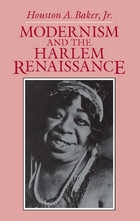
Modernism and the Harlem Renaissance
Houston A. Baker Jr.
University of Chicago Press, 1989
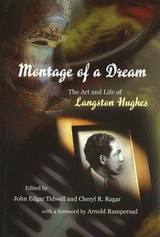
Montage of a Dream
The Art and Life of Langston HughesEdited by John Edgar Tidwell & Cheryl R. Ragar, Foreword by Arnold Rampersad
University of Missouri Press, 2007
Over a forty-six-year career, Langston Hughes experimented with black folk expressive culture, creating an enduring body of extraordinary imaginative and critical writing. Riding the crest of African American creative energy from the Harlem Renaissance to the onset of Black Power, he commanded an artistic prowess that survives in the legacy he bequeathed to a younger generation of writers, including award winners Alice Walker, Paule Marshall, and Amiri Baraka.
Montage of a Dream extends and deepens previous scholarship, multiplying the ways in which Hughes’s diverse body of writing can be explored. The contributors, including such distinguished scholars as Steven Tracy, Trudier Harris, Juda Bennett, Lorenzo Thomas, and Christopher C. De Santis, carefully reexamine the significance of his work and life for their continuing relevance to American, African American, and diasporic literatures and cultures.
Probing anew among Hughes’s fiction, biographies, poetry, drama, essays, and other writings, the contributors assert fresh perspectives on the often overlooked “Luani of the Jungles” and Black Magic and offer insightful rereadings of such familiar pieces as “Cora Unashamed,” “Slave on the Block,” and Not without Laughter. In addition to analyzing specific works, the contributors astutely consider subjects either lightly explored by or unavailable to earlier scholars, including dance, queer studies, black masculinity, and children’s literature. Some investigate Hughes’s use of religious themes and his passion for the blues as the fabric of black art and life; others ponder more vexing questions such as Hughes’s sexuality and his relationship with his mother, as revealed in the letters she sent him in the last decade of her life.
Montage of a Dream richly captures the power of one man’s art to imagine an America holding fast to its ideals while forging unity out of its cultural diversity. By showing that Langston Hughes continues to speak to the fundamentals of human nature, this comprehensive reconsideration invites a renewed appreciation of Hughes’s work—and encourages new readers to discover his enduring relevance as they seek to understand the world in which we all live.
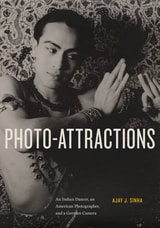
Photo-Attractions
An Indian Dancer, an American Photographer, and a German CameraAjay Sinha
Rutgers University Press, 2022
Art historian Ajay Sinha uses these hitherto unpublished photographs and archival research to raise provocative and important questions about photographic technology, colonial histories, race, sexuality and transcultural desires. Challenging the assumption that Gopal was merely objectified by Van Vechten’s Orientalist gaze, he explores the ways in which the Indian dancer co-authored the photos. In Sinha’s reading, Van Vechten’s New York studio becomes a promiscuous contact zone between world cultures, where a “photo-erotic” triangle is formed between the American photographer, Indian dancer, and German camera.
A groundbreaking study of global modernity, Photo-Attractions brings scholarship on American photography, literature, race and sexual economies into conversation with work on South Asian visual culture, dance, and gender. In these remarkable historical documents, it locates the pleasure taken in cultural difference that still resonates today.
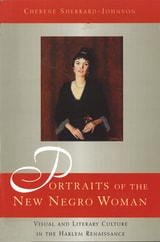
Portraits of the New Negro Woman
Visual and Literary Culture in the Harlem RenaissanceCherene M. Sherrard-Johnson
Rutgers University Press, 2007
Of all the images to arise from the Harlem Renaissance, the most thought-provoking were those of the mulatta. For some writers, artists, and filmmakers, these images provided an alternative to the stereotypes of black womanhood and a challenge to the color line. For others, they represented key aspects of modernity and race coding central to the New Negro Movement. Due to the mulatta’s frequent ability to pass for white, she represented a variety of contradictory meanings that often transcended racial, class, and gender boundaries.
In this engaging narrative, Cherene Sherrard-Johnson uses the writings of Nella Larsen and Jessie Fauset as well as the work of artists like Archibald Motley and William H. Johnson to illuminate the centrality of the mulatta by examining a variety of competing arguments about race in the Harlem Renaissance and beyond.

Regina Anderson Andrews, Harlem Renaissance Librarian
Ethelene Whitmire
University of Illinois Press, 2015
Andrews also played a key role in the Harlem Renaissance, supporting writers and intellectuals with dedicated workspace at her 135th Street Branch Library. After hours she cohosted a legendary salon that drew the likes of Langston Hughes and Zora Neale Hurston. Her work as an actress and playwright helped establish the Harlem Experimental Theater, where she wrote plays about lynching, passing, and the Underground Railroad.
Ethelene Whitmire's new biography offers the first full-length study of Andrews's activism and pioneering work with the NYPL. Whitmire's portrait of her sustained efforts to break down barriers reveals Andrews's legacy and places her within the NYPL's larger history.
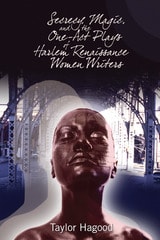
Secrecy, Magic, and the One-Act Plays of Harlem Renaissance Women Writers
Taylor Hagood
The Ohio State University Press, 2010
Exploring secrecy from the standpoints of poststructuralist language theory and game theory as well as dramatic performance, Taylor Hagood argues that the secret—a thing visible for its very invisibility—is a fundamental cog in the machinery of society, employed as a tool for both oppression and subversion. The many facets of secrecy have been particularly salient in African American culture, informing everything from the Underground Railroad to the subtle coding of Signifying. Most devastatingly, people on both sides of the color line are caught within a web of secrecy that is the result of centuries of distrust, doubt, and fear, a fact that is powerfully manifest not only in these one-act plays but in the reader’s/spectator’s interactions with them.
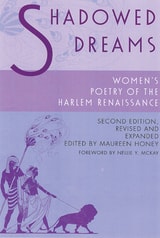
Shadowed Dreams
Women's Poetry of the Harlem RenaissanceMcKay, Nellie
Rutgers University Press, 2006
The first edition of Shadowed Dreams was a groundbreaking anthology that brought to light the contributions of women poets to the Harlem Renaissance. This revised and expanded version contains twice the number of poems found in the original, many of them never before reprinted, and adds eighteen new voices to the collection to once again strike new ground in African American literary history. Also new to this edition are nine period illustrations and updated biographical introductions for each poet.
Shadowed Dreams features new poems by Gwendolyn Bennett, Anita Scott Coleman, Mae Cowdery, Blanche Taylor Dickinson, Alice Dunbar-Nelson, Jessie Fauset, Angelina Weld Grimké, Gladys Casely Hayford (a k a Aquah Laluah), Virginia Houston, Georgia Douglas Johnson, Helene Johnson, Effie Lee Newsome, Esther Popel, and Anne Spencer, as well as writings from newly discovered poets Carrie Williams Clifford, Edythe Mae Gordon, Alvira Hazzard, Gertrude Parthenia McBrown, Beatrice Murphy, Lucia Mae Pitts, Grace Vera Postles, Ida Rowland, and Lucy Mae Turner, among others.
Covering the years 1918 through 1939 and ranging across the period’s major and minor journals, as well as its anthologies and collections, Shadowed Dreams provides a treasure trove of poetry from which to mine deeply buried jewels of black female visions in the early twentieth century.
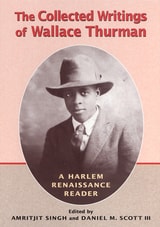
The Collected Writings of Wallace Thurman
A Harlem Renaissance ReaderSingh, Amritjit
Rutgers University Press, 2003
This book is the definitive collection of the writings of Wallace Thurman (1902-1934), providing a comprehensive anthology of both the published and unpublished works of this bohemian, bisexual writer. Widely regarded as the enfant terrible of the Harlem Renaissance scene, Thurman was a leader among a group of young artists and intellectuals that included, among others, Langston Hughes, Zora Neale Hurston, Richard Bruce Nugent, Gwendolyn Bennett, and Aaron Douglas. Through the publication of magazines such as FIRE!! and Harlem: A Forum of Negro Life, Thurman tried to organize the opposition of the younger generation against the programmatic and promotional ideologies of the older generation of black leaders and intellectuals such as W.E.B. Du Bois and Benjamin Brawley. Thurman also left a permanent mark on the period through his prolific work as a novelist, playwright, short story writer, and literary critic, as well as by claiming for himself a voice as a public intellectual.
The Collected Writings of Wallace Thurman is divided into eight sections to highlight the variety of genres and styles Thurman practiced as he courageously pursued controversial subjects throughout his short and brilliant career. It includes Essays on Harlem, Social Essays and Journalism, Correspondence, Literary Essays and Reviews, Poetry and Short Fiction, Plays, and Excerpts from Novel.
Filling an important gap in Harlem Renaissance literature, this collection brings together all of Thurman’s essays, nearly all of his letters to major black and white figures of the 1920s, and three previously unpublished major works. These books are Aunt Hagar’s Children, which is a collection of essays and two full-length plays, Harlem, and Jeremiah the Magnificent. The introduction to the volume, along with the carefully researched introductory notes to each of the eight sections, provides a challenging new reevaluation of Thurman and the Harlem Renaissance for both the general reader and scholar.
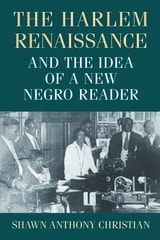
The Harlem Renaissance and the Idea of a New Negro Reader
Shawn Anthony Christian
University of Massachusetts Press, 2016
Many scholars have written about the white readers and patrons of the Harlem Renaissance, but during the period many black writers, publishers, and editors worked to foster a cadre of African American readers, or in the poet Sterling Brown's words, a “reading folk.” Black newspapers featured columns that reviewed the latest African American fiction. Magazines held writing contests to urge black readers to participate in the literary culture. Through newspapers, journals, and anthologies, writers such as James Weldon Johnson, Jessie Fauset, and Gwendolyn Bennett spoke directly to their fellow African Americans to cultivate interest in literature and the intellectual tools for reading it.
In The Harlem Renaissance and the Idea of a New Negro Reader, Shawn Anthony Christian argues that print-based addresses to African Americans are a defining but understudied component of the Harlem Renaissance. Especially between 1919 and 1930, these writers promoted diverse racial representation as a characteristic of “good literature” both to exhibit black literacy and to foster black readership. Drawing on research from print culture studies, histories of racial uplift, and studies of modernism, Christian demonstrates the importance of this focus on the African American reader in influential periodicals such as The Crisis and celebrated anthologies such as The New Negro. Christian illustrates that the drive to develop and support black readers was central in the poetry, fiction, and drama of the era.
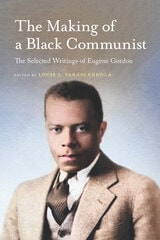
The Making of a Black Communist
The Selected Writings of Eugene GordonLouis J. Parascandola, Editor
University of Massachusetts Press, 2025
Eugene Gordon (1891–1974) was a major writer involved in the development of the burgeoning Black literary scene in Boston in the 1920s, an active player in the Harlem Renaissance, and a longtime member of the Communist Party. Despite his credentials as a reporter, editor, fiction writer, and political activist, he is rarely mentioned in studies of the Harlem Renaissance or Marxist politics. Here, Louis J. Parascandola has pulled together Gordon’s journalism, autobiographical writing, and fiction. This new collection, featuring both previously published pieces from a wide variety of publications as well as material that has never before been published, demonstrates his range and his skill while establishing his importance as a critical voice of his time.
Gordon was born and raised in the South but made his way north at a young age. In Boston, he founded the Saturday Evening Quill Club, an African American literary group that included other notable writers such as Helene Johnson and Dorothy West. He later became editor of and contributor to two major publications coming out of the era: the Messenger and Opportunity: A Journal of Negro Life. As he grew more political, he joined the Communist Party in the 1930s and became editor of and contributor to the New Masses. Scholars looking to research him have struggled to find disparate writings to get a fuller sense of his literary stylings as well as his political commitments. This welcome new volume establishes Gordon as a significant, understudied figure.
The Muse is Music
Jazz Poetry from the Harlem Renaissance to Spoken WordMeta DuEwa Jones
University of Illinois Press, 2013
This wide-ranging, ambitiously interdisciplinary study traces jazz's influence on African American poetry from the Harlem Renaissance to contemporary spoken word poetry. Examining established poets such as Langston Hughes, Ntozake Shange, and Nathaniel Mackey as well as a generation of up-and-coming contemporary writers and performers, Meta DuEwa Jones highlights the intersections of race, gender, and sexuality within the jazz tradition and its representation in poetry. Applying prosodic analysis to emphasize the musicality of African American poetic performance, she examines the gendered meanings evident in collaborative performances and in the criticism, images, and sounds circulating within jazz cultures.
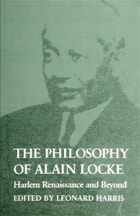
The Philosophy of Alain Locke
Harlem Renaissance and Beyondedited by Leonard Harris
Temple University Press, 1991
This collection of essays by American philosopher Alain Locke (1885-1954) makes readily available for the first time his important writings on cultural pluralism, value relativism, and critical relativism. As a black philosopher early in this century, Locke was a pioneer: having earned both undergraduate and doctoral degrees at Harvard, he was a Rhodes scholar at Oxford, studied at the University of Berlin, and chaired the Philosophy Department at Howard University for almost four decades. He was perhaps best known as a leading figure in the Harlem Renaissance.
Locke’s works in philosophy—many previously unpublished—conceptually frame the Harlem Renaissance and New Negro movement and provide an Afro-American critique of pragmatism and value absolutism, and also offer a view of identity, communicative competency, and contextualism. In addition, his major works on the nature of race, race relations, and the role of race-conscious literature are presented to demonstrate the application of his philosophy. Locke’s commentaries on the major philosophers of his day, including James, Royce, Santayana, Perry, and Ehrenfels help tell the story of his relationship to his former teachers and his theoretical affinities.
In his substantial Introduction and interpretive concluding chapter, Leonard Harris describes Locke’s life, evaluates his role as an American philosopher and theoretician of the Harlem Renaissance, situates him in the pragmatist tradition, and outlines his affinities with modern deconstructionist ideas. A chronology of the philosopher’s life and bibliography of his works are also provided. Although much has been written about Alain Locke, this is the first book to focus on his philosophical contributions.
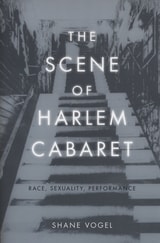
The Scene of Harlem Cabaret
Race, Sexuality, PerformanceShane Vogel
University of Chicago Press, 2009
Harlem’s nightclubs in the 1920s and ’30s were a crucible for testing society’s racial and sexual limits. Normally tacit divisions were there made spectacularly public in the vibrant, but often fraught, relationship between performer and audience. The cabaret scene, Shane Vogel contends, also played a key role in the Harlem Renaissance by offering an alternative to the politics of sexual respectability and racial uplift that sought to dictate the proper subject matter for black arts and letters. Individually and collectively, luminaries such as Duke Ellington, Lena Horne, Langston Hughes, Claude McKay, Wallace Thurman, and Ethel Waters expanded the possibilities of blackness and sexuality in America, resulting in a queer nightlife that flourished in music, in print, and on stage.
Deftly combining performance theory, literary criticism, historical research, and biographical study, The Scene of Harlem Cabaret brings this rich moment in history to life, while exploring the role of nightlife performance as a definitive touchstone for understanding the racial and sexual politics of the early twentieth century.
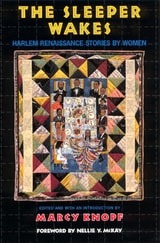
The Sleeper Wakes
Harlem Renaissance Stories by WomenKnopf-Newman, Marcy
Rutgers University Press, 1993
In recent years there has been an explosion of interest in the art and culture of the Harlem Renaissance. Yet this significant collection is the first definitive edition of Harlem Renaissance stories by women. The writers include Gwendolyn Bennett, Jessie Redmon Fauset, Angelina Weld Grimké, Zora Neale Hurston, Nella Larsen, Alice Dunbar-Nelson, and Dorothy West.
Published originally in periodicals such as The Crisis, Fire!!, and Opportunity, these twenty-seven stories have until now been virtually unavailable to readers. These stories are as compelling today as they were in the 1920s and 1930s. In them, we find the themes of black and white racial tension and misunderstanding, economic deprivation, passing, love across and within racial lines, and the attempt to maintain community and uplift the race.
Marcy Knopf's introduction surveys the history of the Harlem Renaissance, the periodicals and books it generated, and describes the rise to prominence of these women writers and their later fall from fame. She also includes a brief biography of each of the writers. Nellie Y. McKay's foreword analyzes the themes and concerns of the stories.
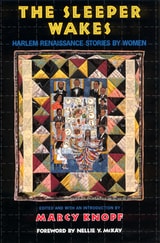
The Sleeper Wakes
Harlem Renaissance Stories by WomenKnopf-Newman, Marcy
Rutgers University Press, 1993
In recent years there has been an explosion of interest in the art and culture of the Harlem Renaissance. Yet this significant collection is the first definitive edition of Harlem Renaissance stories by women. The writers include Gwendolyn Bennett, Jessie Redmon Fauset, Angelina Weld Grimké, Zora Neale Hurston, Nella Larsen, Alice Dunbar-Nelson, and Dorothy West.
Published originally in periodicals such as The Crisis, Fire!!, and Opportunity, these twenty-seven stories have until now been virtually unavailable to readers. These stories are as compelling today as they were in the 1920s and 1930s. In them, we find the themes of black and white racial tension and misunderstanding, economic deprivation, passing, love across and within racial lines, and the attempt to maintain community and uplift the race.
Marcy Knopf's introduction surveys the history of the Harlem Renaissance, the periodicals and books it generated, and describes the rise to prominence of these women writers and their later fall from fame. She also includes a brief biography of each of the writers. Nellie Y. McKay's foreword analyzes the themes and concerns of the stories.
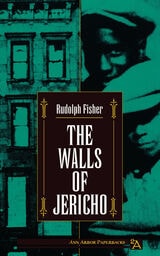
The Walls of Jericho
Rudolph Fisher
University of Michigan Press, 1994
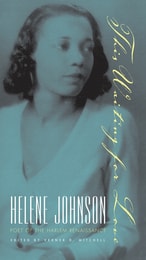
This Waiting for Love
Helene Johnson, Poet of the Harlem RenaissanceVerner D. Mitchell
University of Massachusetts Press, 2000
This volume brings together all of the known poetry and a selection of correspondence by an enormously talented but underappreciated poet of the Harlem Renaissance. Cousin of novelist Dorothy West and friend of Zora Neale Hurston, Helene Johnson (1905–1995) first gained literary prominence when James Weldon Johnson and Robert Frost selected three of her poems for prizes in a 1926 competition. During the late 1920s and early 1930s her poetry appeared in various small magazines, such as the Saturday Evening Quill, Palms, Opportunity, and Harlem. In 1933 Johnson married, and two years later her last published poem, “Let Me Sing My Song,” appeared in Challenge, the journal West had founded to revive the spirit of the Harlem Renaissance.
In his well-researched introduction, Verner D. Mitchell reconstructs Johnson's life, the details of which have long been veiled from public view, and places her in the context of a vital literary tradition. In addition to discussing her relationship with West, Hurston, and other black women writers, he explores the distinctive, at times radical, qualities of her work. Ever willing to defy the genteel conventions that governed women's writing, Johnson wrote poems on erotic themes and engaged the aesthetic, gender, and racial politics of her time.
Cheryl A. Wall's foreword also celebrates Johnson's talent, particularly the ease with which she moved among various verse forms—from the rigor of the sonnet to the improvisational creativity of free black vernacular. “An unexpected and most welcome gift,” This Waiting for Love, Wall writes, is “an enduring tribute” to “the vibrant poetry of Helene Johnson.”
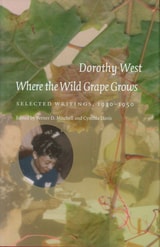
Where the Wild Grape Grows
Selected Writings, 1930–1950Dorothy West. Edited by Cynthia Davis and Verner D. Mitchell
University of Massachusetts Press, 2026
When Where the Wild Grape Grows was published in 2005 by the University of Massachusetts Press, it was the first book-length critical study of Dorothy West. Since then, the publication of more volumes on West and her circle testify to popular and academic interest in under-represented artists of the Harlem Renaissance, many of whom appeared first in West’s literary magazine, Challenge (1934-1937). Challenge included poems by West’s cousin Helene Johnson as well as by her friends Lucia Mae Pitts, Waring Cuney, Pauli Murray, Grace Walker, Mae Cowdery, Marcia Prendergast, and Bessie Calhoun Bird. West also published work by her romantic partner Marian Minus and by Juanita DeShields (the first Black Canadian graduate of McGill University) and the Trinidadian author Alfred Mendes. She included artwork by Mildred Jones and journalism by Eslanda Robeson and Dorothy Peterson. In addition to her editorial activities, West corresponded with important African American musicians including Maud Cuney Hare, Alberta Hunter, and Henry T. Burleigh, and with sculptors Augusta Savage and Richmond Barthé. Just as West mentored others, she was encouraged by such academic luminaries as Columbia Professors Blanche Colton Williams and Dorothy Scarborough, and by the controversial novelist Erskine Caldwell.
The new Introduction to Wild Grape will include fresh research on these individuals, many of whom formed part of West’s social and artistic circle. Lucia Pitts, for example, was a poet who served in the famous WAC (Women’s Army Corps) 6888th Battalion. The work of Marian Minus and Mae Cowdery has received critical attention recently and they also merit closer investigation. The Boston writer and musicologist Maud Cuney Hare was an artistic mentor to West; her cousin Waring Cuney was a close friend: both will receive more attention in the paperback edition. The artist Mildred Jones accompanied West and twenty other young African Americans to Russia in 1932 as participants in an ultimately aborted propaganda film on race relations in America; Jones studied with the important Russian Modernist painter Aleksandr Deyneka.
The original edition of Wild Grape cites two stories about West’s Russian experiences (penned under the pseudonym Mary Christopher in 1934), “Room in Red Square” and “Russian Correspondence,” but the volume does not include the actual stories. The stories are interesting because they shed light on West’s unrequited romance with Langston Hughes and her relationships with other members of the group, and they offer a unique perspective on daily life in the U.S.S.R. Both stories will be published in the new edition, along with a detailed discussion of new research about West’s visit to Russia.
A third uncollected story, “Cook” (1934), written by West under the pseudonym Jane Isaac will also be included. This story is extremely important to West’s oeuvre and her artistic development; it includes characters, themes, tropes, and plot lines that she expanded and developed in her two novels, The Living Is Easy (1948) and The Wedding (1995).
Since 2005, new material has been added to the West archive in Harvard’s Schlesinger Library. The section of Wild Grape devoted to West’s correspondence will include additional unpublished letters which underscore West’s dedication to African American art and culture.
The book includes the Benson-West family tree in Appendix II. Several scholars have expressed appreciation for this information which has not been published elsewhere; the chart will be updated to include the birth of several of West’s descendants.
Within the Circle
An Anthology of African American Literary Criticism from the Harlem Renaissance to the PresentAngelyn Mitchell
Duke University Press, 1994
The essays in this collection—many of which are not widely available today—either initiated or gave critical definition to specific periods or movements of African American literature. They address issues such as integration, separatism, political action, black nationalism, Afrocentricity, black feminism, as well as the role of art, the artist, the critic, and the audience. With selections from Langston Hughes, Sterling Brown, W. E. B. DuBois, Zora Neale Hurston, Richard Wright, James Baldwin, Toni Morrison, Barbara Smith, Alice Walker, Henry Louis Gates, Jr., and many others, this definitive collection provides a dynamic model of the cultural, ideological, historical, and aesthetic considerations in African American literature and literary criticism.
A major contribution to the study of African American literature, this volume will serve as a foundation for future work by students and scholars. Its importance will be recognized by all those interested in modern literary theory as well as general readers concerned with the African American experience.
Selections by (partial list): Houston A. Baker, Jr., James Baldwin, Sterling Brown, Barbara Christian, W. E. B. DuBois, Ralph Ellison, LeRoi Jones, Sarah Webster Fabio, Henry Louis Gates, Jr., W. Lawrence Hogue, Langston Hughes, Zora Neale Hurston, Alain Locke, Deborah E. McDowell, Toni Morrison, J. Saunders Redding, George Schuyler, Barbara Smith, Valerie Smith, Hortense J. Spillers, Robert B. Stepto, Alice Walker, Margaret Walker, Mary Helen Washington, Richard Wright