Results by title
40 books match the query 'Health Care'

American Bloodlands
Race and the Making of the Plasma EconomyKelsey Johnson
Duke University Press, 2027
Big Med
Megaproviders and the High Cost of Health Care in AmericaDavid Dranove and Lawton Robert Burns
University of Chicago Press, 2021
Drawing on decades of combined expertise in health care consolidation, Dranove and Burns trace Big Med’s emergence in the 1990s, followed by its swift rise amid false promises of scale economies and organizational collaboration. In the decades since, megaproviders have gobbled up market share and turned independent physicians into salaried employees of big bureaucracies, while delivering on none of their early promises. For patients this means higher costs and lesser care. Meanwhile, physicians report increasingly low morale, making it all but impossible for most systems to implement meaningful reforms.
In Big Med, Dranove and Burns combine their respective skills in economics and management to provide a nuanced explanation of how the provision of health care has been corrupted and submerged under consolidation. They offer practical recommendations for improving competition policies that would reform megaproviders to actually achieve the efficiencies and quality improvements they have long promised.
This is an essential read for understanding the current state of the health care system in America—and the steps urgently needed to create an environment of better care for all of us.
Big Med
Megaproviders and the High Cost of Health Care in AmericaDavid Dranove and Lawton Robert Burns
University of Chicago Press, 2021
This is an auto-narrated audiobook edition of this book.
There is little debate that health care in the United States is in need of reform. But where should those improvements begin? With insurers? Drug makers? The doctors themselves? In Big Med, David Dranove and Lawton Robert Burns argue that we’re overlooking the most ubiquitous cause of our costly and underperforming system: megaproviders, the expansive health care organizations that have become the face of American medicine. Your local hospital is likely part of one. Your doctors, too. And the megaproviders are bad news for your health and your wallet.
Drawing on decades of combined expertise in health care consolidation, Dranove and Burns trace Big Med’s emergence in the 1990s, followed by its swift rise amid false promises of scale economies and organizational collaboration. In the decades since, megaproviders have gobbled up market share and turned independent physicians into salaried employees of big bureaucracies, while delivering on none of their early promises. For patients this means higher costs and lesser care. Meanwhile, physicians report increasingly low morale, making it all but impossible for most systems to implement meaningful reforms.
In Big Med, Dranove and Burns combine their respective skills in economics and management to provide a nuanced explanation of how the provision of health care has been corrupted and submerged under consolidation. They offer practical recommendations for improving competition policies that would reform megaproviders to actually achieve the efficiencies and quality improvements they have long promised.
This is an essential read for understanding the current state of the health care system in America—and the steps urgently needed to create an environment of better care for all of us.
COVID-19 and Public Health
Global Responses to the PandemicCaroline Kingori
Ohio University Press, 2024

Catholic Witness in Health Care
Practicing Medicine in Truth and LoveJohn M. Travaline
Catholic University of America Press, 2017
Catholic Witness in Health Care integrates the theoretical presentation of Catholic medical ethics with real life practice. It begins with fundamental elements of Catholic care, touching upon Scripture, moral philosophy, theology, Christian anthropology, and pastoral care. The second part features Catholic clinicians illuminating authentic Catholic medical care in their various medical disciplines: gynecology and reproductive medicine, fertility, pediatrics, geriatrics, critical care, surgery, rehabilitation, psychology, and pharmacy. Part three offers unique perspectives concerning medical education, research, and practice, with an eye toward creating a cultural shift to an authentically Catholic medical ethos.
Readers of this book will learn essential elements upon which the ethics of Catholic medical practice is founded and gain insights into practicing medicine and caring for others in an authentically Catholic way.
Developing to Scale
Technology and the Making of Global HealthHeidi Morefield
University of Chicago Press, 2023
In 1973, economist E. F. Schumacher published Small Is Beautiful, which introduced a mainstream audience to his theory of “appropriate technology”: the belief that international development projects in the Global South were most sustainable when they were small-scale, decentralized, and balanced between the traditional and the modern. His theory gained widespread appeal, as cuts to the foreign aid budget, the national interests of nations seeking greater independence, postcolonial activism, and the rise of the United States’ tech sector drove stakeholders across public and private institutions toward cheaper tools. In the ensuing decades, US foreign assistance shifted away from massive modernization projects, such as water treatment facilities, toward point-of-use technologies like village water pumps and oral rehydration salts. This transition toward the small scale had massive implications for the practice of global health.
Developing to Scale tells the history of appropriate technology in international health and development, relating the people, organizations, and events that shaped this consequential idea. Heidi Morefield examines how certain technologies have been defined as more or less “appropriate” for the Global South based on assumptions about gender, race, culture, and environment. Her study shows appropriate technology to be malleable, as different constituencies interpreted its ideas according to their own needs. She reveals how policymakers wielded this tool to both constrain aid to a scale that did not threaten Western interests and to scale the practice of global health through the development and distribution of technical interventions.
Developing to Scale
Technology and the Making of Global HealthHeidi Morefield
University of Chicago Press, 2023
The first critical book on “appropriate technology,” Developing to Scale shows how global health came to be understood as a problem to be solved with the right technical interventions.
In 1973, economist E. F. Schumacher published Small Is Beautiful, which introduced a mainstream audience to his theory of “appropriate technology”: the belief that international development projects in the Global South were most sustainable when they were small-scale, decentralized, and balanced between the traditional and the modern. His theory gained widespread appeal, as cuts to the foreign aid budget, the national interests of nations seeking greater independence, postcolonial activism, and the rise of the United States’ tech sector drove stakeholders across public and private institutions toward cheaper tools. In the ensuing decades, US foreign assistance shifted away from massive modernization projects, such as water treatment facilities, toward point-of-use technologies like village water pumps and oral rehydration salts. This transition toward the small scale had massive implications for the practice of global health.
Developing to Scale tells the history of appropriate technology in international health and development, relating the people, organizations, and events that shaped this consequential idea. Heidi Morefield examines how certain technologies have been defined as more or less “appropriate” for the Global South based on assumptions about gender, race, culture, and environment. Her study shows appropriate technology to be malleable, as different constituencies interpreted its ideas according to their own needs. She reveals how policymakers wielded this tool to both constrain aid to a scale that did not threaten Western interests and to scale the practice of global health through the development and distribution of technical interventions.

Doctors and the State
The Politics of Health Care in France and the United StatesDavid Wilsford
Duke University Press, 1991
In France, Wilsford shows, the state is strong in the health policy domain, while organized medicine is weak and divided. Consequently, physicians exercise little influence over health care policymaking. By contrast, in the United States the state is weak, the employers and insurers who pay for health care are fragmented, and organized medicine is strong and well financed. As a result, medical professionals are able to exert a greater influence on policymaking, thus making cost control more difficult.
Wilsford extends his comparison to health care systems in the United Kingdom, West Germany, Italy, Canada, and Japan. Whether the private or public sector finances health care, he discovers, there is now an important trend in all of the advanced industrial countries toward controlling escalating costs by curbing both the medical profession’s clinical autonomy and physicians’ incomes.

Doctors and the State
The Politics of Health Care in France and the United StatesDavid Wilsford
Duke University Press, 0
In France, Wilsford shows, the state is strong in the health policy domain, while organized medicine is weak and divided. Consequently, physicians exercise little influence over health care policymaking. By contrast, in the United States the state is weak, the employers and insurers who pay for health care are fragmented, and organized medicine is strong and well financed. As a result, medical professionals are able to exert a greater influence on policymaking, thus making cost control more difficult.
Wilsford extends his comparison to health care systems in the United Kingdom, West Germany, Italy, Canada, and Japan. Whether the private or public sector finances health care, he discovers, there is now an important trend in all of the advanced industrial countries toward controlling escalating costs by curbing both the medical profession’s clinical autonomy and physicians’ incomes.

Evaluating Public Health Interventions
Edited by Tim Colbourn and James Hargreaves
University College London, 2026
An authoritative student guide for how to evaluate complex public health interventions.
Public health interventions include any effort or policy that attempts to improve the well-being of individuals or an entire population. They can be run by governmental health departments or non-governmental organizations and can include educational programs, screening programs, vaccination programs, environmental improvements, and health promotion campaigns. Interventions that include multiple independent or interacting components are referred to as complex. Evaluating and predicting the efficacy of any public health intervention, as well as calculating the cost effectiveness, is essential. Using examples from multiple published studies conducted around the world, this textbook shows readers how to evaluate public health interventions in real-world settings. It will enable readers to understand how to investigate whether a public health intervention works, for whom, when, where, how, and why. It provides a comprehensive introduction to key areas of evaluation, including understanding complex interventions, developing program theories, community engagement in evaluation, and the main methods used in process, impact, and economic evaluation. It explains how different methods can be used individually and in combination to answer different kinds of evaluation questions and at different phases in an evaluation cycle and considers how the results of evaluations can be brought together to inform action.
Evidence
Its Meanings in Health Care and in Law, Volume 26Mark Peterson, ed.
Duke University Press, 0

From Monastery to Hospital
Christian Monasticism and the Transformation of Health Care in Late AntiquityAndrew T. Crislip
University of Michigan Press, 2005
From Monastery to Hospital traces the origin of the late Roman hospital to the earliest groups of Christian monastics. Often characterized as holy men and miracle-workers who transformed late antique spirituality, monks held an equally significant impact on the development of medicine in Late Antiquity. Andrew Crislip illuminates the innovative approaches to health care within the earliest monasteries that provided the model for the greatest medical achievement of Late Antiquity: the hospital.
From Monastery to Hospital draws on some of the most vibrant areas of scholarship of the ancient world, including asceticism, the study of the body, history of the family, and the history of medicine. The book will be of interest to scholars and students of early Christianity, Roman History, the history of medicine, and Catholic, Coptic, and Eastern Orthodox history and theology. It will also be of interest to the broader field of history of Christianity, especially with its connections to charitable traditions in the church through the modern period.
Andrew Crislip is Assistant Professor of Religion at the University of Hawaii.
Health Care and Gender
Charlotte Muller
Russell Sage Foundation, 1990
Health Extension
Community-Based Healthcare and the Future of Cooperative ExtensionCheryl L. Eschbach
Michigan State University Press, 2024

How to Respond Better to the Next Pandemic
Remedying Institutional FailuresAllen Buchanan, with contributions by Cécile Fabre and Sir Paul Tucker
University of Utah Press, 2024
In How to Respond Better to the Next Pandemic Allen Buchanan argues that, contrary to widespread opinion, the primary cause of flawed COVID-19 policy was not defective leadership, but rather institutional failure. Decisions were made through processes that lacked the most basic safeguards against the large-institution “yes-man” and group-think phenomena and included virtually no provisions for holding decision makers accountable. More fundamentally, policy makers did not fulfill the crucial duty to provide plausible public justifications for their decisions. They disguised the fact that scientific opinion was divided on the appropriateness of the policies they endorsed and labeled those who disagreed with them as anti-scientific. In some cases, they responded to criticism, not by engaging it on the issues, but by branding their critics as quacks.

Indigenous Health and Justice
Edited by Karen Jarratt-Snider and Marianne O. Nielsen
University of Arizona Press, 2024
Junctures in Women's Leadership
Health Care and Public HealthMary E. O'Dowd
Rutgers University Press, 2021
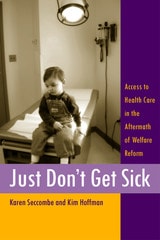
Just Don't Get Sick
Access to Health Care in the Aftermath of Welfare ReformSeccombe, Karen
Rutgers University Press, 2007
Drawing upon statistical data and in-depth interviews with over five hundred families in Oregon, Karen Seccombe and Kim Hoffman assess the ways in which welfare reform affects the well-being of adults and children who leave the program for work. We hear of asthmatic children whose uninsured but working mothers cannot obtain the preventive medicines to keep them well, and stories of pregnant women receiving little or no prenatal care who end up in emergency rooms with life-threatening conditions.
Representative of poor communities nationwide, the vivid stories recounted here illuminate the critical relationship between health insurance coverage and the ability to transition from welfare to work.
Kenneth Arrow and the Changing Economics of Health Care, Volume 26
Mark A. Peterson, ed.
Duke University Press, 0
Now the Journal of Health Politics, Policy and Law examines this legacy, opening with a foreword by Mark V. Pauly, one of the first to publish a response to Arrow’s original article and a major voice in health economics today. A reprint of the article itself serves as a springboard from which contributors assess the accuracy of Arrow’s portrayal of the United States health care system in the early sixties and evaluate how the system has progressed since that time. The contributors to this remarkable collection include some of the most distinguished scholars in the health policy field.
Designed to be an effective reference tool, this issue sets Arrow’s original article apart from the rest by printing it on tinted paper. The contributors’ responses to Arrow are divided into four parts—Part 1: Supply, Demand, and Health Care Competition; Part 2: Risk, Insurance, and Redistribution; Part 3: Information, Knowledge, and Medical Markets; Part 4: Social Norms and Professionalism.
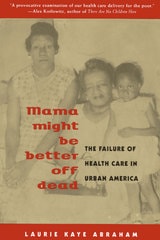
Mama Might Be Better Off Dead
The Failure of Health Care in Urban AmericaLaurie Kaye Abraham
University of Chicago Press, 1993
The story takes place in North Lawndale, a neighborhood that lies in the shadows of Chicago's Loop. Although surrounded by some of the city's finest medical facilities, North Lawndale is one of the sickest, most medically underserved communities in the country. Headed by Jackie Banes, who oversees the care of a diabetic grandmother, a husband on kidney dialysis, an ailing father, and three children, the Banes family contends with countless medical crises. From visits to emergency rooms and dialysis units, to trials with home care, to struggles for Medicaid eligibility, Abraham chronicles their access (or lack of access) to medical care.
Told sympathetically but without sentimentality, their story reveals an inadequate health care system that is further undermined by the direct and indirect effects of poverty. When people are poor, they become sick easily. When people are sick, their families quickly become poorer.
Embedded in the family narrative is a lucid analysis of the gaps, inconsistencies, and inequalities the poor face when they seek health care. This book reveals what health care policies crafted in Washington, D. C. or state capitals look like when they hit the street. It shows how Medicaid and Medicare work and don't work, the Catch-22s of hospital financing in the inner city, the racial politics of organ transplants, the failure of childhood immunization programs, the vexed issues of individual responsibility and institutional paternalism. One observer puts it this way: "Show me the poor woman who finds a way to get everything she's entitled to in the system, and I'll show you a woman who could run General Motors."
Abraham deftly weaves these themes together to make a persuasive case for health care reform while unflinchingly presenting the complexities that will make true reform as difficult as it is necessary. Mama Might Be Better Off Dead is a book with the power to change the way health care is understood in America. For those seeking to learn what our current system of health care promises and what it delivers, it offers a place for the debate to begin.
Mama Might Be Better Off Dead
The Failure of Health Care in Urban AmericaLaurie Kaye Abraham
University of Chicago Press, 1994
Mama Might Be Better Off Dead immerses readers in the lives of four generations of a poor, African-American family in the neighborhood, who are beset with the devastating illnesses that are all too common in America’s inner-cities. Headed by Jackie Banes, who oversees the care of a diabetic grandmother, a husband on kidney dialysis, an ailing father, and three children, the Banes family contends with countless medical crises. From visits to emergency rooms and dialysis units, to trials with home care, to struggles for Medicaid eligibility, Laurie Kaye Abraham chronicles their access—or more often, lack thereof—to medical care. Told sympathetically but without sentimentality, their story reveals an inadequate health care system that is further undermined by the direct and indirect effects of poverty.
Both disturbing and illuminating, Mama Might Be Better Off Dead is an unsettling, profound look at the human face of health care in America. Published to great acclaim in 1993, the book in this new edition includes an incisive foreword by David Ansell, a physician who worked at Mt. Sinai Hospital, where much of the Banes family’s narrative unfolds.

Medicine, Health Care, & Ethics
Catholic VoicesJohn F. Morris
Catholic University of America Press, 2007
Navigating the Cultures of Health Care and Health Insurance
Highly Skilled Migrants in the U.S.Nina Zeldes
University College London, 2023
What are the barriers preventing migrants from accessing and successfully using health care in their new home country? Do these barriers vary based on the migrants’ country of origin? And are they a problem for highly skilled migrants, who often have well-paid jobs and health insurance provided by their employers? Based on field research conducted in the Washington DC area, Navigating the Cultures of Health Care and Health Insurance brings together mixed methods, qualitative, and quantitative approaches to the study of foreign patients’ utilization and assessment of health care in the United States. Through interviews with both health care providers and patients, attitudes toward health insurance and medical treatment are compared for migrants from three countries with very different cultural backgrounds and health insurance systems: Germany, India, and Japan.

No Longer Patient
Feminist Ethics and Health CareSusan Sherwin
Temple University Press, 1992
Not Going Back
Public Opinion on Abortion in Post-Dobbs AmericaLaurel Elder, Steven Greene, and Mary-Kate Lizotte
Temple University Press, 2026
Despite intense political debate, attitudes on abortion were remarkably stable for decades. However, after the 2022 Dobbs decision, Americans’ opinions began to change. Not Going Back explores the shifts in public opinion on this hot-button issue from the landmark passing of Roe v. Wade in 1973 through the 2024 election and into 2025.
The authors ask, “What role do Americans want their government to play in protecting, regulating, or restricting abortion access?” and, “How will changing attitudes on abortion reshape American politics?” They offer cohesive, theoretically grounded explanations for both the continuity and the change in Americans’ attitudes on this contentious topic. Using national data, they take a deep dive into the personal experiences and social forces behind these changes.
Not Going Back ends with an examination of the consequences of these changes for election outcomes. While there has been a striking reversal in the prioritization of abortion as an issue among Democrats and Republicans, the full impact of this shift in thinking will be influenced by future policies, court decisions, and party reactions.

Organizing Locally
How the New Decentralists Improve Education, Health Care, and TradeBruce Fuller
University of Chicago Press, 2015
Fuller first untangles the economic and cultural currents that have eroded the efficacy of—and our trust in—large institutions over the past half century. From there we meet intrepid leaders who have been doing things differently. Traveling from a charter school in San Francisco to a veterans service network in Iowa, from a Pennsylvania health-care firm to the Manhattan branch of a Swedish bank, he explores how creative managers have turned local staff loose to craft inventive practices, untethered from central rules and plain-vanilla routines. By holding their successes and failures up to the same analytical light, he vividly reveals the key cornerstones of social organization on which motivating and effective decentralization depends. Ultimately, he brings order and evidence to the often strident debates about who has the power—and on what scale—to structure how we work and live locally.
Written for managers, policy makers, and reform activists, Organizing Locally details the profound decentering of work and life inside firms, unfolding across postindustrial societies. Its fresh theoretical framework explains resurging faith in decentralized organizations and the ingredients that deliver vibrant meaning and efficacy for residents inside. Ultimately, it is a synthesizing study, a courageous and radical new way of conceiving of American vitality, creativity, and ambition.

Pandemic Power
The Covid Response and the Erosion of Democracy - A Liberal CritiqueMuriel Blaive
Central European University Press, 2025
Pandemic Solidarity
Mutual Aid during the Coronavirus CrisisMarina Sitrin
Pluto Press, 2020
“Helps us to rethink and re-imagine an egalitarian society where no one is left behind”—London School of Economics Review of Books
In times of crisis, when institutions of power are laid bare, people turn to one another. Pandemic Solidarity collects firsthand experiences from around the world of people creating their own narratives of solidarity and mutual aid in the time of the global crisis of COVID-19.
The world's media was quick to weave a narrative of selfish individualism, full of empty supermarket shelves and con-men. However, if you scratch the surface, you find a different story of community and self-sacrifice.
Looking at thirteen countries and regions, including India, Rojava, China and the US, the personal accounts in the book weave together to create a larger picture, revealing a universality of experience - a housewife in Istanbul supports her neighbor in the same way as a punk in Portland, and a grandmother in Italy does. Moving beyond the present, these stories reveal what an alternative society could look like, and reflect the skills and relationships we already have to create that society, challenging institutions of power that have already shown their fragility. Chapters include:
*Capitalism Kills, Solidarity Gives Life": A Glimpse of Solidarity Networks from Turkey
*Solidarity Network in Iraq During Covid-19: This Time the Enemy is Invisible
*Sharing Spaces and Crossing Borders: Voices from Taiwan
*Rethinking Minority and Mainstream in India
*Confronting State Authoritarianism: Civil Society and Community-Based Solidarity in Southern Africa
*On Intersectional Solidarity in Portugal
*Solidarity Networks in Greece
*Argentina: Injustices Magnified; Memories of Resistance Reactivated
*On Grassroots Organizing: Excerpts from Brazil
What happens to society when we are not held back by the neoliberal narrative? What can we do, to protect ourselves and one another, when we organize and act collectively? From the stories told here, maybe more than we expect.

Principles of Green Bioethics
Sustainability in Health CareCristina Richie
Michigan State University Press, 2019
Rural Pain, Republican Gain
How the Republican Party Is Killing Rural America and Why Democrats Are BlamedMichael E. Shepherd
University of Chicago Press, 2026
An eye-opening look at how Republican policies have affected health outcomes in rural communities and why poor, rural white voters are turning to the Republican Party—not despite this harm, but because of it.
Over the last four decades, the health of rural Americans has been in free fall. Just as opioid and gun deaths have ripped apart rural communities, hospitals have closed at alarming rates, leaving millions desperately far from care. At the same time, voters in struggling rural communities have increasingly come to vote for the Republican Party.
In Rural Pain, Republican Gain, Michael E. Shepherd demonstrates that these two trends are closely connected. At both the federal and state levels, the Republican Party has increasingly enacted policies that worsen rural health. Rural voters are not indifferent to this development (quite the contrary), but they misassign blame, in part, because the Democratic Party is more commonly associated with health-related policy initiatives and has ownership of health as an issue area. Republican politicians can reap rewards from their own destructive policies by appealing to the shared grievances of rural people.
Shepherd draws on new, wide-ranging data, including in-depth studies of the opioid epidemic, hospital closures, and COVID-19. In so doing, he quantifies the harm of Republican policymaking and its disproportionate effect on rural communities, recasting how readers understand growing Republican support among less healthy, lower-income rural white Americans.
Salud Latina
Structural Inequality and the Social Determinants of Latino Health in the United StatesYoshira D. Macías Mejía
Michigan State University Press, 2027
Latinos living in the United States continue to face institutional racism and systemic oppression in many aspects of their lives. This volume focuses on discriminatory policies and practices in the health sector and reveals how they compound contemporary health inequities among Latinos. Through a combination of rigorous data analysis and personal narratives, the contributors explore critical dimensions of Latino health, including systemic disparities in healthcare access and insurance, the effects of state immigration policies on health outcomes, unique challenges facing undocumented immigrants, adolescent socio-emotional development, aging populations, Latina women’s physical and mental health, farmworker occupational hazards, and pathways toward health equity. Together, the chapters show that Latinos in the United States continue to face four fundamental barriers to health equity, namely immigrant legal status restrictions, anti-immigrant policies, inadequate quality care from healthcare systems lacking cultural competency, and limited occupational protections. This timely work provides essential evidence for policymakers, public health practitioners, and researchers seeking to understand and address persistent health disparities affecting America's largest ethnic minority population.
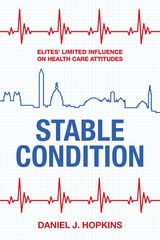
Stable Condition
Elites' Limited Influence on Health Care AttitudesDaniel J. Hopkins
Russell Sage Foundation, 2023
Hopkins finds that although personal experience with the ACA’s Medicaid expansion increased favorability among low-income Americans, it did not have a broader overall impact on public opinion. Personal experience with the Health Insurance Marketplace did not increase wider support for the ACA either. Due to the complex nature of the law, users of the Marketplace often did not realize they were benefiting from the ACA. Therefore, perceptions of the Marketplace were shaped by high-profile issues with the enrollment website and opposition to the individual mandate. These experiences ultimately offset one another, resulting in little discernable change in public opinion overall. Hopkins argues that political polarization was also responsible for elite’s limited influence and that public opinion on the ACA was largely determined by partisanship and political affiliation. Americans quickly aligned with their party’s stance on the law and were resistant to changing their beliefs despite the efforts of political elites.
Stable Condition is an illuminating examination of the limits of elites’ influence and the forces that shaped public opinion about the Affordable Care Act.

Technological Change in Health Care
A Global Analysis of Heart AttackMark B. McClellan and Daniel P. Kessler, Editors
University of Michigan Press, 2002
The comparisons presented here confirm that the use of medical technology in treatment for heart attack is strongly related to incentives, and that technological change is an important cause of medical expenditure growth in all developed countries. Each participating research team reviewed the economic and regulatory incentives provided by their country's health system, and major changes in those incentives over the 1980s and 1990s, according to a commonly used framework. Such incentives include: the magnitude of out-of-pocket costs to patients, the generosity of reimbursement to physicians and hospitals, regulation of the use of new technologies or the supply of physicians, regulation of competition, and the structure of hospital ownership. Each team also reviewed how care for heart attacks has changed in their country over the past decade.
The book will be of enormous importance to health economists, medical researchers and epidemiologists, and policymakers.
Mark McClellan is Associate Professor of Economics and of Medicine and, by courtesy, of Health Research and Policy, Stanford University. He is a National Fellow, the Hoover Institution. Daniel P. Kessler is Associate Professor of Economics, Law, and Policy in the Graduate School of Business, Stanford University, and a Research Fellow, the Hoover Institution.

The Cancer Within
Reproduction, Cultural Transformation, and Health Care in RomaniaCristina A. Pop
Rutgers University Press, 2022

The Political Geographies of Pregnancy
Laura R. Woliver
University of Illinois Press, 2002
A searing study of how modern reproductive politics shapes women's bodily agency
Pregnancy indisputably takes place within a woman's body. But as reproductive power finds its way into the hands of medical professionals, lobbyists, and policymakers, the geographies of pregnancy are shifting, and the boundaries need to be redrawn, argues Laura R. Woliver. The Political Geographies of Pregnancy is a vigorous analysis of the ways modern reproductive politics are shaped by long-standing debates on abortion and adoption, surrogacy arrangements, new reproductive technologies, medical surveillance, and the mapping of the human genome.
Across a politically charged backdrop of reproductive issues, Woliver exposes strategies that claim to uphold the best interests of children, families, and women but in reality complicate women's struggles to have control over their own bodies. Utilizing feminist standpoint theory and promoting a feminist ethic of care, Woliver looks at abortion politics, modern adoption laws that cater to male-headed families, regulations that allow the state to monitor pregnant women but not always provide care for them, and the power structures behind the seemingly benign world of egg-selling and surrogate parenting. She also considers the potentially staggering political implications of mapping the human genome, and the exclusion of women's perspectives in discussions about legislation and advancements in reproductive technologies.

Tissue Economies
Blood, Organs, and Cell Lines in Late CapitalismCatherine Waldby and Robert Mitchell
Duke University Press, 2006
Waldby and Mitchell pull together a prodigious amount of research—involving policy reports and scientific papers, operating manuals, legal decisions, interviews, journalism, and Congressional testimony—to offer a series of case studies based on particular forms of tissue exchange. They examine the effect of threats of contamination—from HIV and other pathogens—on blood banks’ understandings of the gift/commodity relationship; the growth of autologous economies, in which individuals bank their tissues for their own use; the creation of the United Kingdom’s Stem Cell bank, which facilitates the donation of embryos for stem cell development; and the legal and financial repercussions of designating some tissues “hospital waste.” They also consider the impact of different models of biotechnology patents on tissue economies and the relationship between experimental therapies to regenerate damaged or degenerated tissues and calls for a legal, for-profit market in organs. Ultimately, Waldby and Mitchell conclude that scientific technologies, the globalization of tissue exchange, and recent anthropological, sociological, and legal thinking have blurred any strict line separating donations from the incursion of market values into tissue economies.
Uncertain Times
Kenneth Arrow and the Changing Economics of Health CarePeter J. Hammer, Deborah Haas-Wilson, Mark A. Peterson, and William M. Sage, eds.
Duke University Press, 2003
Coming from diverse backgrounds—economics, law, political science, and the health care industry itself—the contributors use Arrow’s article to address a range of present-day health-policy questions. They examine everything from health insurance and technological innovation to the roles of charity, nonprofit institutions, and self-regulation in addressing medical needs. The collection concludes with a new essay by Arrow, in which he reflects on the health care markets of the new millennium. At a time when medical costs continue to rise, the ranks of the uninsured grow, and uncertainty reigns even among those with health insurance, this volume looks back at a seminal work of scholarship to provide critical guidance for the years ahead.
Contributors
Linda H. Aiken
Kenneth J. Arrow
Gloria J. Bazzoli
M. Gregg Bloche
Lawrence Casalino
Michael Chernew
Richard A. Cooper
Victor R. Fuchs
Annetine C. Gelijns
Sherry A. Glied
Deborah Haas-Wilson
Mark A. Hall
Peter J. Hammer
Clark C. Havighurst
Peter D. Jacobson
Richard Kronick
Michael L. Millenson
Jack Needleman
Richard R. Nelson
Mark V. Pauly
Mark A. Peterson
Uwe E. Reinhardt
James C. Robinson
William M. Sage
J. B. Silvers
Frank A. Sloan
Joshua Graff Zivin
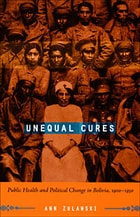
Unequal Cures
Public Health and Political Change in Bolivia, 1900–1950Ann Zulawski
Duke University Press, 2007
Drawing on hospital and cemetery records, censuses, diagnoses, newspaper accounts, and interviews, Zulawski describes the major medical problems that Bolivia faced during the first half of the twentieth century, their social and economic causes, and efforts at their amelioration. Her analysis encompasses the Rockefeller Foundation’s campaign against yellow fever, the almost total collapse of Bolivia’s health care system during the disastrous Chaco War with Paraguay (1932–35), an assessment of women’s health in light of their socioeconomic realities, and a look at Manicomio Pacheco, the national mental hospital.
Vaccination Politics
The Comparative Politics and Policy of COVID-19 VaccinationEdited by Scott L. Greer, Elize Massard da Fonseca, Holly Jarman, and Elizabeth J. King
University of Michigan Press, 2027
COVID-19 vaccines were a historic triumph, with less than a year between the initial identification of the microbe and effective vaccines being administered. They were also a public administration challenge, demanding that governments of the world procure and administer billions of doses in widely different contexts. In many countries they were intensely polarizing, catalyzing a rise in anti-vaccination politics.
Vaccination Politics brings together public health and political science expertise for a global, systematic comparison of vaccination politics. The authors look at 32 countries’ experiences—from Austria to Malawi and the United States to Hong Kong—to understand how trust, wealth, pharmaceutical industries, regulators, international organizations, and health systems succeeded or failed at acquiring vaccines and vaccinating citizens. It shows how different governments and populations navigated challenges. Global inequality, political trust, contestation over health system priorities, and opportunistic politicians all played roles in shaping the subsequent politics of health and vaccination around the world. A conclusion brings together lessons for policy and key issues for further research. While the next pandemic is unknown to us today, the response to it will be shaped by the positive and negative legacies of COVID-19 vaccination politics.
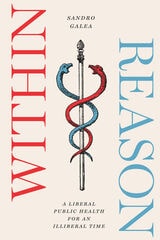
Within Reason
A Liberal Public Health for an Illiberal TimeSandro Galea
University of Chicago Press, 2023
A provocative chronicle of how US public health has strayed from its liberal roots.
The Covid-19 response was a crucible of politics and public health—a volatile combination that produced predictably bad results. As scientific expertise became entangled with political motivations, the public-health establishment found itself mired in political encampment.
It was, as Sandro Galea argues, a crisis of liberalism: a retreat from the principles of free speech, open debate, and the pursuit of knowledge through reasoned inquiry that should inform the work of public health.
Across fifty essays, Within Reason chronicles how public health became enmeshed in the insidious social trends that accelerated under Covid-19. Galea challenges this intellectual drift towards intolerance and absolutism while showing how similar regressions from reason undermined social progress during earlier eras. Within Reason builds an incisive case for a return to critical, open inquiry as a guiding principle for the future public health we want—and a future we must work to protect.