Results by title
73 books match the query 'Health Care Delivery' and 7 start with a
A Plague of Paradoxes
AIDS, Culture, and Demography in Northern TanzaniaPhilip W. Setel
University of Chicago Press, 1999
The AIDS epidemic has forced Africans to reflect upon the meaning of traditional ideas and practices related to sexuality and fertility, and upon modernity and biomedicine. In A Plague of Paradoxes, anthropologist Philip Setel observes Tanzania's Chagga people and their attempts to cope with and understand AIDS—the latest in a series of crises over which they feel they have little, if any, control.
Timely and well-researched, A Plague of Paradoxes is an extended case study of the most serious epidemic of the twentieth century and the cultural circumstances out of which it emerged. It is a unique book that brings together anthropology, demography, and epidemiology to explain how a particular community in Africa experiences AIDS.
AIDS TV
Identity, Community, and Alternative VideoAlexandra Juhasz
Duke University Press, 1995
An AIDS videomaker herself, Juhasz writes from the standpoint of an AIDS activist and blends feminist film critique with her own experience. She offers a detailed description of alternative AIDS video, including her own work on the Women’s AIDS Video Enterprise (WAVE). Along with WAVE, Juhasz discusses amateur video tapes of ACT UP demonstrations, safer sex videos produced by Gay Men’s Health Crisis, public access programming, and PBS documentaries, as well as network television productions.
From its close-up look at camcorder AIDS activism to its critical account of mainstream representations, AIDS TV offers a better understanding of the media, politics, identity, and community in the face of AIDS. It will challenge and encourage those who hope to change the course of this crisis both in the ‘real world’ and in the world of representation.
AIDS and the National Body
Thomas E. Yingling
Duke University Press, 1997
Contemplating the contradictions of individual identity from within a human body adapting to and living within a collective national culture, Yingling delves into such issues as canon formation, poetic theory, and the rhetoric of the body in American popular culture. In addition to Wiegman’s illuminating introduction, the conversation is joined by four other scholars—Michael Awkward, Robert L. Caserio, Stephen Melville, and David Román—whose critical and personal responses to Yingling’s writing weigh in throughout the volume. What emerges is a collection that embodies the particular difficulties of living with AIDS, of outliving someone who has died of AIDS, and of losing prematurely an important thinker.
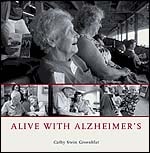
Alive with Alzheimer's
Cathy Stein Greenblat
University of Chicago Press, 2004
This small, tender volume of 85 photographs and accompanying discussion powerfully shows the limitations of this view. Cathy Stein Greenblat, an internationally respected sociologist and photographer, demonstrates in Alive with Alzheimer's that, while the ravages of the disease are real, Alzheimer's sufferers can do more than survive, they can thrive. Her images, interviews, and observations attest to the possibility of their being "alive" with Alzheimer's far beyond the expectations of the general public and even of many physicians with long experience with the disease.
Greenblat offers a new vision, taking us into a world of life-enhancing institutional care. Nursing homes and similar facilities don't have to be a last resort; as Greenblat shows, with a dedicated and experienced staff and an enriched environment (that includes respect, choices, pets, and music), extraordinary changes can be effected in Alzheimer's patients. Alive with Alzheimer's, the first photographic book on the disease, offers hope and inspiration. Moreover, its vivid, impressive evidence that ongoing stimulation in a good institutional setting can sustain Alzheimer's patients at a far higher level than is generally believed has significant implications for personal and policy decisions.
The new standard of care chronicled in Alive with Alzheimer's will provide hope and inspiration to those touched by the disease. As Dr. Enid Rockwell writes in her Afterword to Greenblat's moving book, "These photographs are extraordinary for practitioners, for family members, for everyone to see what's going on with these people. The stimulation pictured in this book is more powerful than any medication that we will have in our lifetime. . . . They so vividly show us that there are people inside these bodies, people with personalities, who experience emotion, and they show that there is life after Alzheimer's."

America's Healthcare Transformation
Strategies and InnovationsPhillips, Robert A.
Rutgers University Press, 2016
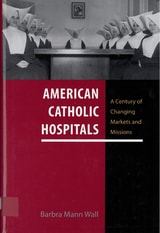
American Catholic Hospitals
A Century of Changing Markets and MissionsWall, Barbra Mann
Rutgers University Press, 2016
In American Catholic Hospitals, Barbra Mann Wall chronicles changes in Catholic hospitals during the twentieth century, many of which are emblematic of trends in the American healthcare system.
Wall explores the Church's struggle to safeguard its religious values. As hospital leaders reacted to increased political, economic, and societal secularization, they extended their religious principles in the areas of universal health care and adherence to the Ethical and Religious Values in Catholic Hospitals, leading to tensions between the Church, government, and society. The book also examines the power of women--as administrators, Catholic sisters wielded significant authority--as well as the gender disparity in these institutions which came to be run, for the most part, by men. Wall also situates these critical transformations within the context of the changing Church policy during the 1960s. She undertakes unprecedented analyses of the gendered politics of post-Second Vatican Council Catholic hospitals, as well as the effect of social movements on the practice of medicine.
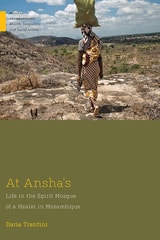
At Ansha's
Life in the Spirit Mosque of a Healer in MozambiqueDaria Trentini
Rutgers University Press, 2021