Results by title
34 books match the query 'Health Care Issues'
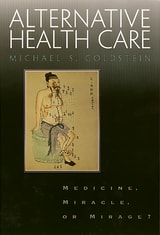
Alternative Health Care
Michael S. Goldstein
Temple University Press, 1999
Michael S. Goldstein's Alternative Health Care is the first comprehensive account of the growing presence of alternative medicine in American society. Beginning with the basic premises of alternative medicine, Goldstein's book examines the clinical, economic, and political realities of the broad range of alternative care options and practices in the United States and explains why alternative medicine has become a viable choice for so many people who are ill or who seek to remain healthy.
Bringing history, policy, practice, personal experience, and in-depth sociological analysis together into one comprehensive volume, Goldstein -- one of the first recipients of funding from the National Institute of Health for research on alternative medicine -- also studies the complexities of the relationship between spirituality and alternative medicine and the changing role of alternative medicine in the larger context of American health care. Probing such issues as the corporatization of medicine, the role of alternative medicine in health care, and the dynamic relationship between conventional and alternative treatments, Goldstein's Alternative Health Care is more than the long-awaited introduction to the many forms of alternative medicine. It is also the measure of the implications of such care for practitioners, businesses, policymakers, and patients alike.
Alternative Health Care is the definitive guide for the millions of Americans interested in alternative medicine and treatment, American health care, the sociology of medicine, and American social issues.

Art as Research
Opportunities and ChallengesEdited by Shaun McNiff
Intellect Books, 2013
Beyond Method
Philosophical Conversations in Healthcare Research and ScholarshipEdited by Pamela M. Ironside
University of Wisconsin Press, 2005
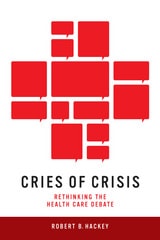
Cries of Crisis
Rethinking the Health Care DebateRobert B. Hackey
University of Nevada Press, 2015
In Cries of Crisis, Robert B. Hackey analyzes media coverage, political speeches, films, and television shows to demonstrate the role that language and symbolism have played in framing the health care debate, shaping policy making, and influencing public perceptions of problems in the health care system. He demonstrates that the idea of crisis now means so many different things to so many different groups that it has ceased to have any shared meaning at all. He argues that the ceaseless talk of “crisis,” without a commonly accepted definition of that term, has actually impeded efforts to diagnose and treat the chronic problems plaguing the American health care system. Instead, he contends, reformers must embrace a new rhetorical strategy that links proposals to improve the system with deeply held American values like equality and fairness.
Cross-Cultural Design for Healthy Ageing
Edited by Lisa Scharoun, Danny Hills, Carlos Montana Hoyos, Fanke Peng, and Vivien Sung
Intellect Books, 2020
This book examines some of the challenges associated with ageing in multicultural societies. Worldwide, ageing presents a profound potential shift in design for society. The impact of the change in population balance challenges designers, planners, and health care professionals to develop solutions to better meet the needs of older citizens. Different disciplinary and cultural perspectives allow for new approaches to issues of housing, community interaction and cooperation, health and well-being, and the integration of new technologies.
Drawing from case studies, interviews with key practitioners in design and health, and practical pedagogical experience, the authors provide a framework for engaging designers, planners, and health professionals in the process of creating new design solutions for the growing global ageing population.

Demanding Medical Excellence
Doctors and Accountability in the Information AgeMichael L. Millenson
University of Chicago Press, 2000
"If you read only one book this year, read Demanding Medical Excellence. It's that good, and the revolution it describes is that important."—Health Affairs
"Millenson has done yeoman's work in amassing and understanding that avalanche of data that lies beneath most of the managed-care headlines. . . . What he finds is both important and well-explained: inconsistency, overlap, and inattention to quality measures in medical treatment cost more and are more dangerous than most cost-cutting measures. . . . [This book] elevates the healthcare debate to a new level and deserves a wide readership."—Library Journal
"An involving, human narrative explaining how we got to where we are today and what lies ahead."—Mark Taylor, Philadelphia Inquirer
"Read this book. It will entertain you, challenge, and strengthen you in your quest for better accountability in health care."—Alex R. Rodriguez, M.D., American Journal of Medical Quality
"Finally, a health-care book that doesn't wring its hands over the decline of medicine at the hands of money-grubbing corporations. . . . This is a readable account of what Millenson calls a 'quiet revolution' in health care, and his optimism makes for a refreshing change."—Publishers Weekly
"With meticulous detail, historical accuracy, and an uncommon understanding of the clinical field, Millenson documents our struggle to reach accountability."—Saty Satya-Murti, M.D., Journal of the American Medical Association

Dementia Caregivers Share Their Stories
A Support Group in a BookLynda A. Markut
Vanderbilt University Press, 2005
Highlighting the ingenuity and resourcefulness of caregivers, the book brims with inspirational stories, practical advice, and creative approaches to problem-solving. Among the issues addressed are:
Becoming a caregiver, whether for a spouse or parent
Dealing with the personality changes caused by dementia, from anxiety and paranoia to hallucinations and impulsive behavior
Keeping dementia sufferers meaningfully involved in life
Handling the emotions and stresses of caregiving
Seeking help through support groups and other sources, including medical professionals, clergy, and other family members The authors, who have both been caregivers themselves, augment their interviewees' stories with connective commentary and their own personal stories. A useful resource section is included to refer readers to associations and help-lines.

Dying Green
A Journey through End-of-Life Medicine in Search of Sustainable Health CareChristine Vatovec
Rutgers University Press, 2023
In Dying Green, award-winning educator Christine Vatovec offers an engaging study that asks us to consider the broader environmental sustainability of health care. Through a comparative analysis of the care provided to terminally ill patients in a conventional cancer ward, a palliative care unit, and an acute-care hospice facility, she shows how decisions made at a patient’s bedside govern the environmental footprint of the healthcare industry. Likewise, Dying Green offers insights on the many opportunities that exist for reducing the ecological impacts of medical practices in general, while also enhancing care for the dying in particular. By envisioning a more sustainable approach to care, this book offers a way forward that is better for both patients and the planet.
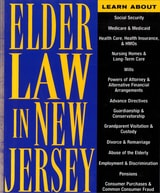
Elder Law in New Jersey
Finding Solutions for Legal ProblemsDueker, Alice K.
Rutgers University Press, 1999
In New Jersey, one in five residents is over the age of 65. The Garden State’s legal and healthcare systems are becoming increasingly complex, making it more difficult than ever for seniors to understand their rights and take advantage of available assistance and services.
Elder Law in New Jersey provides important, practical information to New Jersey residents, especially older adults who have become entangled in an incomprehensible web of healthcare and social security bureaucracies, younger adults who are caregivers to elderly parents, and middle-class citizens who fear the debilitating physical and financial effects of chronic illness.
The legal problems most often encountered by seniors can involve frustrating losses of control over nearly all aspects of their lives. Attorney Alice Dueker, who specializes in elder law, explains complex legal issues in easily understood language. She looks at:
· various ways to obtain and pay for healthcare, including nursing home care
· how to create a will
· how to address and avoid internal family disputes, including child custody, marriage, divorce, grandparent visitation rights, and elder abuse
· employment issues such as age and disability discrimination, as well as pensions
· problems of consumer fraud
· housing issues for both tenants and homeowners
She provides contact information for agencies and programs that provide free or low cost services for seniors, and resources for locating attorneys.
Elder law is state specific, so New Jersey residents will find this book especially helpful and applicable to their own lives.

For Love or Money
Care Provision in the United StatesNancy Folbre
Russell Sage Foundation, 2013

Healing by Heart
Clinical and Ethical Case Stories of Hmong Families and Western ProvidersKathleen A. Culhane-Pera
Vanderbilt University Press, 2003
Ranging in age from young infants to older adults, the patients in the stories present a wide range of health problems. The clinicians are from family practice, internal medicine, pediatrics, emergency medicine, surgery, obstetrics-gynecology, psychiatry/psychology, and hospice.
Each of the fourteen case stories is accompanied by discussion questions as well as two or three commentaries. The commentaries--written by patients, family members, shaman, Western clinicians (including Hmong physicians, nurses, and social workers), medical anthropologists, health care ethicists, social workers, psychologists, and clergy--are rich in personal reflections on cross-cultural health care experiences. Readers are rewarded with a combination of perspectives, including those of Hmong authors who have not previously published in English and scholars with years of professional experience working with the Hmong in Laos, Thailand, and the United States.
The editors offer a model for delivering culturally responsive health care with special attention to matters of cross-cultural health care ethics. The model identifies questions health care providers can focus on as they seek to understand the health-related moral commitments and practices prevalent in the cultural groups they serve, ethical questions that arise frequently and with great poignancy in cross-cultural health care relationships, and points to consider when a patient's treatment wish challenges the provider's professional integrity.
By sharing stories of suffering, confusion, and success, Healing by Heart couples an accessible method of learning about others with concrete recommendations about how to enhance cross-cultural health care relationships.

Health Care Issues in the United States and Japan
Edited by David A. Wise and Naohiro Yashiro
University of Chicago Press, 2006
Recent data show wide disparity between Japan and the United States in the effectiveness of their health care systems. Japan spends close to the lowest percentage of its gross domestic product on health care among OECD countries, the United States spends the highest, yet life expectancies in Japan are among the world’s longest. Clearly, a great deal can be learned from a comprehensive comparative analysis of health care issues in these two countries.
In Health Care Issues in the United States and Japan, contributors explore the structural characteristics of the health care systems in both nations, the economic incentives underlying the systems, and how they operate in practice. Japan’s system, they show, is characterized by generous insurance schemes, a lack of gatekeepers, and fee-for-service mechanisms. The United States’ structure, on the other hand, is distinguished by for-profit hospitals, privatized health insurance, and managed care. But despite its relative success, an aging population and a general shift from infectious diseases to more chronic maladies are forcing the Japanese to consider a model more closely resembling that of the United States.
In an age when rising health care costs and aging populations are motivating reforms throughout the world, this timely study will prove invaluable.
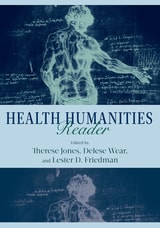
Health Humanities Reader
Jones, Therese
Rutgers University Press, 2014
In Health Humanities Reader, editors Therese Jones, Delese Wear, and Lester D. Friedman have assembled fifty-four leading scholars, educators, artists, and clinicians to survey the rich body of work that has already emerged from the field—and to imagine fresh approaches to the health humanities in these original essays. The collection’s contributors reflect the extraordinary diversity of the field, including scholars from the disciplines of disability studies, history, literature, nursing, religion, narrative medicine, philosophy, bioethics, medicine, and the social sciences.
With warmth and humor, critical acumen and ethical insight, Health Humanities Reader truly humanizes the field of medicine. Its accessible language and broad scope offers something for everyone from the experienced medical professional to a reader interested in health and illness.
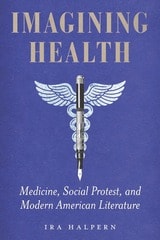
Imagining Health
Medicine, Social Protest, and Modern American LiteratureIra Halpern
University of Massachusetts Press, 2026
In the United States, a deep suspicion of professional medical expertise is becoming increasingly prominent. Meanwhile, many arguments for health justice take a highly critical view of medical authority, even rejecting it entirely. In the early to mid-twentieth century, alternatively, as medicine rapidly professionalized, Americans came to hold the medical establishment in a particularly high regard, while many saw how it could play a crucial role in progressive politics. In this period, technologies developed, specializations grew, and medical education became standardized. With this process came inequities, as marginalized populations struggled to access the highest levels of care. Literary writers confronting social ills through their work included critiques of this new system in their writing, Ira Halpern argues. Without abandoning professional medicine, they called for alternative systems of care that could better serve diverse populations.
Halpern examines the work of several writers—including Robert Herrick, Wallace Thurman, Frank Slaughter, Charles Chesnutt, Walter White, Ralph Ellison, Charlotte Perkins Gilman, Upton Sinclair, Stephen Crane, and Edith Wharton—to demonstrate how American writing from this period embedded a critical look at healthcare within other elements of progressive politics, from racial protest and women’s rights to disability justice and counter-capitalist viewpoints. Placing this writing into historical context, in terms of medical and scientific developments as well as traditions of social protest, Halpern reveals the efforts of these writers to envision better alternative trajectories for a quickly evolving medical establishment that left too many Americans without reliable care.

Imagining Illness
Public Health and Visual CultureDavid Serlin
University of Minnesota Press, 2010
Contributors to this volume examine historical and contemporary visual practices-Chinese health fairs, documentary films produced by the World Health Organization, illness maps, fashions for nurses, and live surgery on the Internet-in order to delve into the political and epidemiological contexts underlying their creation and dissemination.

It Shouldn't Be This Way
The Failure of Long-Term CareRobert L. Kane
Vanderbilt University Press, 2005
Part memoir, part practical guide, part prescription for change, It Shouldn't Be This Way is a unique look at the problems of long-term care. Robert L. Kane, a highly experienced physician and gerontologist, and his sister, Joan C. West, tell the painful story of what happened to their mother after she suffered a debilitating stroke and spent the last years of her life in rehabilitation, assisted-living facilities, and finally a nursing home. Along the way, her adult children encountered some professionals who were kind and considerate but also many frustrations—inadequate care and the need to hire private duty aides, as well as poor communication and lack of coordination throughout the system. The situation, they found, proved far more difficult than it needed to be.
As the authors recount their mother's story, they impart various lessons they learned from each phase of the experience. They alert those who are confronting such situations for the first time about what they will likely face and how to approach the problems. Closing with a broader look at why long-term care is the way it is, they propose steps to make necessary reforms, including the development of national organizations to work for change. Their message to families, care professionals, and policy-makers could not be more urgent.
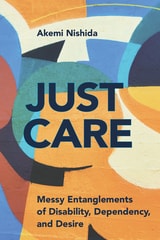
Just Care
Messy Entanglements of Disability, Dependency, and DesireAkemi Nishida
Temple University Press, 2022
Just Care is Akemi Nishida’s thoughtful examination of care injustice and social justice enabled through care. The current neoliberal political economy has turned care into a business opportunity for the healthcare industrial complex and a mechanism of social oppression and control. Nishida analyzes the challenges people negotiate whether they are situated as caregivers, receivers, or both. Also illuminated is how people with disabilities come together to assemble community care collectives and bed activism (resistance and visions emerging from the space of bed) to reimagine care as a key element for social change.
The structure of care, Nishida writes, is deeply embedded in and embodies the cruel social order—based on disability, race, gender, migration status, and wealth—that determines who survives or deteriorates. Simultaneously, many marginalized communities treat care as the foundation of activism. Using interviews, focus groups, and participant observation with care workers and people with disabilities, Just Care looks into lives unfolding in the assemblage of Medicaid long-term care programs, community-based care collectives, and bed activism. Just Care identifies what care does, and asks: How can we activate care justice or just care where people feel cared affirmatively and care being used for the wellbeing of community and for just world making?
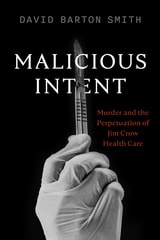
Malicious Intent
Murder and the Perpetuation of Jim Crow Health CareDavid Barton Smith
Vanderbilt University Press, 2023
Race-related disparities in American death rates, exacerbated once again by the COVID-19 pandemic, have persisted since the birth of the modern US medical system a century ago. A unique but perpetually unequal history has prevented the United States from providing the kind of health care assurances that are taken for granted in other industrialized nations. The underlying story is one of political, medical, and bureaucratic machinations, all motivated by a deliberate Jim Crow systemic design. In Malicious Intent, David Barton Smith traces the Jean Cowsert story and the cold case of her death as a through line to explain the construction and fulfillment of an unequal health care system that would rather sacrifice many than provide for Black Americans.
Cowsert’s suspicious death came at a key moment in the struggle for universal health care in the wealthiest country on earth. Malicious Intent is a history of those failed efforts and a story of selective amnesia about one doctor’s death and the movement she fought for.
Managing Sickle Cell Disease
In Low-Income FamiliesShirley A. Hill
Temple University Press, 2003

Ordinary Medicine
Extraordinary Treatments, Longer Lives, and Where to Draw the LineSharon R. Kaufman
Duke University Press, 2015

Professionalism and Healthcare Ethics for Kinesiologists
Danny Rosenberg
FiT Publishing, 2024
A first-of-its-kind text for students entering a career in kinesiology, Professionalism and Healthcare Ethics for Kinesiologists provides a thorough explanation of professionalism and ethical theories, a method and many examples for making ethical decisions in kinesiology workplaces, and an exploration into accountability, governance topics, and the scope of professional misconduct in kinesiology, as well as the possible future of professional kinesiology education and ethics.

Quinine and Quarantine
Missouri Medicine through the YearsLoren Humphrey
University of Missouri Press, 2000
Presenting a fascinating overview of medicine in Missouri from the early days of epidemics to present-day technological advances, Quinine and Quarantine approaches the history of medicine as an integral part of the state's development.
Examining the changing environmental risks and diseases that threatened Missouri over the years and the role of the Missouri and Mississippi Rivers as prime routes for the spread of diseases and innovations, Loren Humphrey discusses the efforts of citizens, legislators, and health officials confronting various medical challenges. He offers intriguing medical details of the past two centuries interspersed with the stories of significant historical figures and Missourians' personal accounts. He tells of the pioneers' struggles to use natural remedies acquired from Native Americans, the gory and unsanitary attempts to treat early gunshot wounds, and the common afflictions and diseases such as "swamp fever," measles, mumps, consumption, dysentery, smallpox, and typhoid that seemed beyond medicine's effects. Humphrey also discusses the significance of the discovery and reluctant acceptance of the "antifever" breakthrough now famous as quinine, as well as the lessons learned as a result of Civil War medical techniques.
Quinine and Quarantine takes readers on a remarkable journey that concludes in the present, arguably the most exciting and controversial era for medical advances. Humphrey explores new imaging techniques, laparoscopic surgery, and research on ways to overcome bacterial resistance to antibiotics. He challenges the reader to consider such compelling issues as the escalating cost of health care and the threats posed by environmental hazards. He also identifies topics over which Missourians will likely struggle well into the next century, such as transplants, managed care, abortion, and assisted suicide.
Organized chronologically in fifty-year segments and written in language free of jargon, Quinine and Quarantine offers readers a broad historical view of the medical problems and solutions faced by the people of Missouri, preparing them to cope with medical issues of the new millennium.
Radical Health
Unwellness, Care, and Latinx Expressive CultureJulie Avril Minich
Duke University Press, 2023

Rhetoric of Health and Medicine As/Is
Theories and Approaches for the FieldEdited by Lisa Melonçon, S. Scott Graham, Jenell Johnson, John A. Lynch, and Cynthia Ryan
The Ohio State University Press, 2020
With a foreword by Judy Segal and in sections that address interdisciplinary perspectives, representations of health and illness in online spaces, and health activism and advocacy, this volume proceeds in a unique format: essays tackle these key topic areas through case studies ranging from food and its relation to public health, to apps that track fertility, to mental health and disability, to racial disparities that exist in public health campaigns about sudden infant death syndrome (SIDS). The essays within each section are then followed by responses from prominent scholars in the rhetoric of health and medicine—including John Lyne, J. Blake Scott, and Lisa Keränen—who take on the central theme and discuss how the theory or concept under study can and should evolve in the next stages of research. Unifying the essays is a consideration of RHM as a theoretical construct guiding research and thinking alongside the conceptual parameters that constitute what RHM is and can be in practice. In asking questions about the role of rhetoric—both as analytic and productive framework—in health and medicine, this volume engages with broader theoretical and ethical concerns about our current healthcare system and how healthcare and medical issues circulate in all the social, cultural, economic, and political aspects of our world.
Rx for Health Care Reform
Ken Terry
Vanderbilt University Press, 2007
Sex, Shame, and Violence
A Revolutionary Practice of Public Storytelling in Poor CommunitiesKathleen Cash
Vanderbilt University Press, 2016
For more than three decades, Kathleen Cash has lived and worked with impoverished people, learning about their lives. Listening to them talk about their feelings of shame, Cash heard how people suffered from being unable to change what was happening to them--HIV infection, sexual and domestic violence, violence toward children, and environmental degradation. She saw that many interventions lacked emotional and cultural integrity and thus did little to alleviate these hardships. So Cash went outside the conventional approaches to health promotion and social justice and devised a community narrative practice, a strategy for engaging people through storytelling. From numerous ethnographic interviews, she pieced together cultural stories in a way that resonated with community people and revealed the paradoxes in their suffering. Cash recruited local artists to illustrate the stories in a form resembling a graphic novel and distributed these booklets for community discussion. (This book includes excerpts from these illustrated stories.)
In Thailand, Bangladesh, Haiti, Uganda, and the United States, people learned to talk about forbidden subjects and say what they could never say before. They stood up to each other, reconciled, and made health-seeking decisions. By helping others, they repaired themselves. In cathartic conversations they acknowledged shame, which led to acts of courage and generosity.
Social Aspects of Applied Human Genetics
James R. Sorenson
Russell Sage Foundation, 1971
Symptoms of Unknown Origin
A Medical OdysseyClifton K. Meador
Vanderbilt University Press, 2005
Recounting a series of fascinating case studies, Meador shows in this book how he came to reject a strict adherence to the prevailing biomolecular model of disease and its separation of mind and body. He studied other theories and approaches—George Engel's biopsychosocial model of disease, Michael Balint's study of physicians as pharmacological agents—and adjusted his practice accordingly to treat what he called "nondisease." He had to retool, learn new and more in-depth interviewing and listening techniques, and undergo what Balint termed a "slight but significant change in personality."
In chapters like "The Woman Who Believed She Was a Man" and "The Diarrhea of Agnes," Meador reveals both the considerable harm that can result from wrong diagnoses of nonexistent diseases and the methods he developed to help patients with chronic symptoms not defined by a medical disease. Throughout the book, he recommends subsequent studies to test his observations, and he urges full application of the scientific method to the doctor-patient relationship, pointing out that few objective studies of these all-important interactions have ever been done.

Symptoms of Unknown Origin
A Medical OdysseyClifton K. Meador
Vanderbilt University Press, 2005
Recounting a series of fascinating case studies, Meador shows in this book how he came to reject a strict adherence to the prevailing biomolecular model of disease and its separation of mind and body. He studied other theories and approaches--George Engel's biopsychosocial model of disease, Michael Balint's study of physicians as pharmacological agents--and adjusted his practice accordingly to treat what he called "nondisease." He had to retool, learn new and more in-depth interviewing and listening techniques, and undergo what Balint termed a "slight but significant change in personality."
In chapters like "The Woman Who Believed She Was a Man" and "The Diarrhea of Agnes," Meador reveals both the considerable harm that can result from wrong diagnoses of nonexistent diseases and the methods he developed to help patients with chronic symptoms not defined by a medical disease. Throughout the book, he recommends subsequent studies to test his observations, and he urges full application of the scientific method to the doctor-patient relationship, pointing out that few objective studies of these all-important interactions have ever been done.
Taking Care of Time
Cortney Davis
Michigan State University Press, 2018

Teaching the Practitioners of Care
New Pedagogies for the Health ProfessionsEdited by Nancy L. Diekelmann
University of Wisconsin Press, 2003
Nancy L. Diekelmann
Karin Dahlberg
Margaretha Ekebergh
Pamela M. Ironside
Kathryn Hopkins Kavanagh
Melinda M. Swenson
Sharon L. Sims
Rosemary A. McEldowney
Jan D. Sinnott

TennCare, One State's Experiment with Medicaid Expansion
Christina Juris Bennett
Vanderbilt University Press, 2014
While many states cut back on their Medicaid enrollments from 1993 to 2001, TennCare grew from 750,000 to 1.47 million enrollees. The state was less successful in controlling costs, however. Each major stakeholder group (the state, the managed care organizations, the providers, and the enrollees and their advocates) pushed back against parts of the state's strategy that adversely affected their interests, and they eventually dismantled the mechanisms of cost constraint.
The author lays out the four stakeholder perspectives for each period in the history of TennCare and provides a link to difficult-to-access primary documents.

The Gold Standard
The Challenge Of Evidence-Based MedicineStefan Timmermans and Marc Berg
Temple University Press, 2003
Vital Signs
The Deadly Costs of Health InequalityLee Humber
Pluto Press, 2019