Results by title
28 books match the query 'Health care reform'
Beyond Obamacare
Life, Death, and Social PolicyJames S. House is Angus Campbell Distinguished University Professor Emeritus of Survey Research, Public Policy, and Sociology at the University of Michigan, Ann Arbor.
Russell Sage Foundation, 2015
Cultivating Health
Los Angeles Women and Public Health ReformKoslow, Jennifer
Rutgers University Press, 2009
Cultivating Health, an interdisciplinary chronicle, details women's impact on remaking health policy, despite the absence of government support. Combining primary source and municipal archival research with comfortable prose, Jennifer Lisa Koslow explores community nursing, housing reform, milk sanitation, childbirth, and the campaign against venereal disease in late nineteenth and early twentieth century Los Angeles. She demonstrates how women implemented health care reform and civic programs while laying the groundwork for a successful transition of responsibility back to government.
Koslow highlights women's home health care and urban policy-changing accomplishments and pays tribute to what would become the model for similar service-based systems in other American centers.
Financing Medicaid
Federalism and the Growth of America's Health Care Safety NetShanna Rose
University of Michigan Press, 2013
Conventional wisdom holds that programs for the poor are vulnerable to instability and retrenchment. Medicaid, however, has grown into the nation’s largest intergovernmental grant program, accounting for nearly half of all federal funding to state and local governments. Medicaid’s generous open-ended federal matching grants have given governors a powerful incentive to mobilize on behalf of its maintenance and expansion, using methods ranging from lobbying and negotiation to creative financing mechanisms and waivers to maximize federal financial assistance. Perceiving federal retrenchment efforts as a threat to states’ finances, governors, through the powerful National Governors’ Association, have repeatedly worked together in bipartisan fashion to defend the program against cutbacks.
Financing Medicaidengagingly intertwines theory, historical narrative, and case studies, drawing on sources including archival materials from the National Governors’ Association and gubernatorial and presidential libraries, Centers for Medicare and Medicaid Services data, the Congressional Record, and interviews.

Flatlined
Resuscitating American MedicineClifton, Guy L
Rutgers University Press, 2008
Flatlined lifts the veil of secrecy on twenty-first century health care and delves into the realities of good people caught in a bad medical system. Dr. Guy L. Clifton, a practitioner as well as a policy advocate, reveals first-hand accounts of needless tragedy, such as the young man who died after a car wreck for lack of a bed in a qualified hospital and the surgeon who was dejected by the scarcity of resources needed to enable him to perform heart surgery on an uninsured man.
Arguing that a lack of coordinated care and quality medical practice benchmarks result in high levels of redundancy and ineffectiveness, Clifton proposes that the key to reducing health care costs, improving quality, and financially protecting the uninsured, is to reduce wastefulness, and offers a solution for achieving success.
Flatlined sounds the warning call: By 2018 Medicare and Medicaid will consume about one-third of the federal budget. American businesses now pay three times as much of their payroll for health care as global competitors, expected to worsen as health care grows at twice the rate of the U.S. economy. Based on his years of experience in policy and medicine, Clifton offers an attainable solution through the development of an American Medical Quality System.

Health Care Reform and the Battle for the Body Politic
Dan Beauchamp
Temple University Press, 1996

Health Care at Risk
A Critique of the Consumer-Driven MovementTimothy Stoltzfus Jost
Duke University Press, 2007
In this concise, straightforward analysis, Jost challenges the historical and theoretical assumptions on which the consumer-driven health care movement is based and reexamines the empirical evidence that it claims as support. He traces the histories of both private health insurance in the United States and the CDHC movement. The idea animating the drive for consumer-driven health care is that the fundamental problem with the American health care system is what economists call “moral hazard,” the risk that consumers overuse services for which they do not bear the cost. Jost reveals moral hazard as an inadequate explanation of the complex problems plaguing the American health care system, and he points to troubling legal and ethical issues raised by CDHC. He describes how other countries have achieved universal access to high-quality health care at lower cost, without relying extensively on cost sharing, and he concludes with a proposal for how the United States might do the same, incorporating aspects of CDHC while recognizing its limitations.
Just Don't Get Sick
Access to Health Care in the Aftermath of Welfare ReformSeccombe, Karen
Rutgers University Press, 2007
Drawing upon statistical data and in-depth interviews with over five hundred families in Oregon, Karen Seccombe and Kim Hoffman assess the ways in which welfare reform affects the well-being of adults and children who leave the program for work. We hear of asthmatic children whose uninsured but working mothers cannot obtain the preventive medicines to keep them well, and stories of pregnant women receiving little or no prenatal care who end up in emergency rooms with life-threatening conditions.
Representative of poor communities nationwide, the vivid stories recounted here illuminate the critical relationship between health insurance coverage and the ability to transition from welfare to work.
Markets and Medicine
The Politics of Health Care Reform in Britain, Germany, and the United StatesSusan Giaimo
University of Michigan Press, 2002
Medicaid And The Limits of State Health Reform
Michael S. Sparer
Temple University Press, 1996
With the defeat of national health reform, many liberals have looked to the states as the source of health policy innovation. At the same time, many in the new Republican majority and several governors also support increased state control. In contrast, Michael S. Sparer convincingly argues that states by themselves can neither satisfy the liberal hope for universal coverage nor the conservative hope for cost containment. He also points to two critical drawbacks to a state-dominated health care system: the variation in coverage among states and the intergovernmental tension that would inevitably accompany such a change.
Supporting his arguments, Sparer analyzes the contradictions in operations and policies between the New York and California Medicaid programs. For instance, why does New York spend an average of $7,286 on its Medicaid beneficiaries and California an average of $2,801? The answer, the author suggests, is rooted in bureaucratic politics. California officials enjoy significant bureaucratic autonomy, while the system in New York is fragmented, decentralized, and interest-group dominated. The book supports this conclusion by exploring nursing home and home care policy, hospital care policy, and managed care policy in the two states. Sparer's dissection of the consequences of state-based reform make a persuasive case for national health insurance.

Medicare Reform
Issues and AnswersEdited by Andrew J. Rettenmaier and Thomas R. Saving
University of Chicago Press, 1999
Medicare Reform—the first volume in a new series sponsored by the George Bush School of Government and Public Policy at Texas A&M University—tackles the current Medicare predicament head-on, delving into the fundamental issues surrounding the reorganization of the system: whether to allocate Medicare's growing financial load to current workers in the form of higher taxes, shift the onus to future generations, or shortchange both the expectations and care of present recipients by substantially cutting benefits. This volume assembles a group of the most highly respected analysts of health issues to consider the economic forces impacting the surging health care market.
Written for the general reader and offering innovative ideas for policy revision along with critical new data on health care economics, this comprehensive volume provides a timely and thoughtful deliberation on the precarious future of Medicare.
"Because, as Richard Weaver once said, 'ideas have consequences,' this book is important. It will not end the debate on Medicare, but it will begin it."—Phil Gramm, from the foreword

Medicine, Health Care, & Ethics
Catholic VoicesJohn F. Morris
Catholic University of America Press, 2007

National Health Care
Lessons for the United States and CanadaJonathan Lemco, Editor
University of Michigan Press, 1994
Policy Challenges in Modern Health Care
Edited by David Mechanic, Lynn B. Rogut, David Colby, and James R. Knickman
Rutgers University Press, 2005
Health care delivery in the United States is an enormously complex enterprise, and its $1.6 trillion annual expenditures involve a host of competing interests. While arguably the nation offers among the most technologically advanced medical care in the world, the American system consistently under performs relative to its resources. Gaps in financing and service delivery pose major barriers to improving health, reducing disparities, achieving universal insurance coverage, enhancing quality, controlling costs, and meeting the needs of patients and families.
Bringing together twenty-five of the nation’s leading experts in health care policy and public health, this book provides a much-needed perspective on how our health care system evolved, why we face the challenges that we do, and why reform is so difficult to achieve. The essays tackle tough issues including: socioeconomic disadvantage, tobacco, obesity, gun violence, insurance gaps, the rationing of services, the power of special interests, medical errors, and the nursing shortage.
Linking the nation’s health problems to larger political, cultural, and philosophical contexts, Policy Challenges in Modern Health Care offers a compelling look at where we stand and where we need to be headed.

Progressive Mothers, Better Babies
Race, Public Health, and the State in Brazil, 1850-1945By Okezi T. Otovo
University of Texas Press, 2016
In Bahia, Brazil, the decades following emancipation saw the rise of reformers who sought to reshape the citizenry by educating Bahian women in methods for raising “better babies.” The idealized Brazilian would be better equipped to contribute to the labor and organizational needs of a modern nation. Backed by many physicians, politicians, and intellectuals, the resulting welfare programs for mothers and children mirrored complex debates about Brazilian nationality. Examining the local and national contours of this movement, Progressive Mothers, Better Babies investigates families, medical institutions, state-building, and social stratification to trace the resulting policies, which gathered momentum in the aftermath of abolition (1888) and the declaration of the First Republic (1889), culminating during the administration of President Getúlio Vargas (1930–1945).
Exploring the cultural discourses on race, gender, and poverty that permeated medical knowledge and the public health system for almost a century, Okezi T. Otovo draws on extensive archival research to reconstruct the implications for Bahia, where family patronage politics governed poor women’s labor as the mothers who were the focus of medical interventions were often the nannies and nursemaids of society’s wealthier families. The book reveals key transition points as the state of Bahia transformed from being a place where poor families could expect few social services to becoming the home of numerous programs targeting the poorest mothers and their children. Negotiating crucial questions of identity, this history sheds new light on larger debates about Brazil’s past and future.

Protecting American Health Care Consumers
Eleanor DeArman Kinney
Duke University Press, 2002
To promote and ensure consumer protection in an increasingly adversarial and complicated health-care culture, Kinney first analyzes the procedures by which consumer concerns are presently discerned and resolved and then explains why these systems are unsatisfactory. She also discusses problematic procedures for making coverage policy and quality standards and proposes reforms in a variety of processes that would enable all consumers, including the uninsured, to influence key policies and standards and also to raise concerns and obtain appropriate remedies.
As the first comprehensive treatment of administrative procedures in American health plans and other such institutions, Protecting American Health Care Consumers will be welcomed by state and federal policymakers, managed care executives, and lawyers charged with designing and implementing protections for consumers in public and private health plans.
Rx for Health Care Reform
Ken Terry
Vanderbilt University Press, 2007
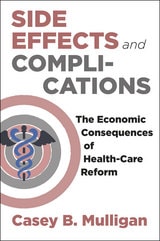
Side Effects and Complications
The Economic Consequences of Health-Care ReformCasey B. Mulligan
University of Chicago Press, 2015
Looking specifically at the labor market, Mulligan reveals how the costs of health care under the ACA actually create implicit taxes on individuals, and how increased costs to employers will be passed on to their employees. Mulligan shows how, as a result, millions of workers will find themselves in a situation in which full-time work, adjusted for the expense of health care, will actually pay less than part-time work or even not working at all. Analyzing the incentives—or lack thereof—for people to earn more by working more, Mulligan offers projections on how many hours people will work and how productively they will work, as well as how much they will spend in general. Using the powerful tools of economics, he then illustrates the detrimental consequences on overall employment in the near future.
Drawing on extensive knowledge of the labor market and the economic theories at its foundation, Side Effects and Complications offers a crucial wake-up call about the risks the ACA poses for the economy. Plainly laying out the true costs of the ACA, Mulligan’s grounded and thorough predictions are something that workers and policy makers cannot afford to ignore.

Stable Condition
Elites' Limited Influence on Health Care AttitudesDaniel J. Hopkins
Russell Sage Foundation, 2023
Hopkins finds that although personal experience with the ACA’s Medicaid expansion increased favorability among low-income Americans, it did not have a broader overall impact on public opinion. Personal experience with the Health Insurance Marketplace did not increase wider support for the ACA either. Due to the complex nature of the law, users of the Marketplace often did not realize they were benefiting from the ACA. Therefore, perceptions of the Marketplace were shaped by high-profile issues with the enrollment website and opposition to the individual mandate. These experiences ultimately offset one another, resulting in little discernable change in public opinion overall. Hopkins argues that political polarization was also responsible for elite’s limited influence and that public opinion on the ACA was largely determined by partisanship and political affiliation. Americans quickly aligned with their party’s stance on the law and were resistant to changing their beliefs despite the efforts of political elites.
Stable Condition is an illuminating examination of the limits of elites’ influence and the forces that shaped public opinion about the Affordable Care Act.
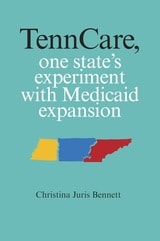
TennCare, One State's Experiment with Medicaid Expansion
Christina Juris Bennett
Vanderbilt University Press, 2014
While many states cut back on their Medicaid enrollments from 1993 to 2001, TennCare grew from 750,000 to 1.47 million enrollees. The state was less successful in controlling costs, however. Each major stakeholder group (the state, the managed care organizations, the providers, and the enrollees and their advocates) pushed back against parts of the state's strategy that adversely affected their interests, and they eventually dismantled the mechanisms of cost constraint.
The author lays out the four stakeholder perspectives for each period in the history of TennCare and provides a link to difficult-to-access primary documents.
The Dilemma of Federal Mental Health Policy
Radical Reform or Incremental Change?Grob, Gerald N
Rutgers University Press, 2006
For nearly two centuries Americans have grappled with the question of how to serve individuals with severe disorders. During the second half of the twentieth century, mental health policy advocates reacted against institutional care, claiming that community care and treatment would improve the lives of people with mental disorders. Once the exclusive province of state governments, the federal government moved into this policy arena after World War II. Policies ranged from those focused on mental disorders, to those that focused more broadly on health and social welfare.
In this book, Gerald N. Grob and Howard H. Goldman trace how an ever-changing coalition of mental health experts, patients' rights activists, and politicians envisioned this community-based system of psychiatric services. The authors show how policies shifted emphasis from radical reform to incremental change. Many have benefited from this shift, but many are left without the care they require.
The Five Health Frontiers
A New Radical BlueprintChristopher Thomas
Pluto Press, 2022
Covid-19 has exposed the limits of a neoliberal public health orthodoxy. But instead of imagining radical change, the left is stuck in a rearguard action focused on defending the NHS from the wrecking ball of privatization.
Public health expert Christopher Thomas argues that we must emerge from Covid-19 on the offensive - with a bold, new vision for our health and care. He maps out five new frontiers for public health and imagines how we can move beyond safeguarding what we have to a radical expansion of the principles put forward by Aneurin Bevan, the founder of the NHS, over 70 years ago.
Beyond recalibrating our approach to healthcare services, his blueprint includes a fundamental redesign of our economy through Public Health Net Zero; a bold new universal public health service fit to address the real causes of ill health; and a major recalibration in the efforts against the epidemiological reality of an era of pandemics.
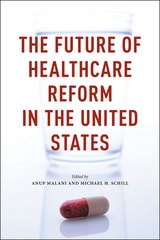
The Future of Healthcare Reform in the United States
Edited by Anup Malani and Michael H. Schill
University of Chicago Press, 2015
In the years since the passage of the Patient Protection and Affordable Care Act (PPACA, or, colloquially, Obamacare), most of the discussion about it has been political. But as the politics fade and the law's many complex provisions take effect, a much more interesting question begins to emerge: How will the law affect the American health care regime in the coming years and decades?
This book brings together fourteen leading scholars from the fields of law, economics, medicine, and public health to answer that question. Taking discipline-specific views, they offer their analyses and predictions for the future of health care reform. By turns thought-provoking, counterintuitive, and even contradictory, the essays together cover the landscape of positions on the PPACA's prospects. Some see efficiency growth and moderating prices; others fear a strangling bureaucracy and spiraling costs. The result is a deeply informed, richly substantive discussion that will trouble settled positions and lay the groundwork for analysis and assessment as the law's effects begin to become clear.

The Healthiest City
Milwaukee and the Politics of Health ReformJudith W. Leavitt
University of Wisconsin Press, 1996
Between 1850 and 1900, Milwaukee’s rapid population growth also gave rise to high death rates, infectious diseases, crowded housing, filthy streets, inadequate water supplies, and incredible stench. The Healthiest City shows how a coalition of reform groups brought about community education and municipal action to achieve for Milwaukee the title of “the healthiest city” by the 1930s. This highly praised book reminds us that cutting funds and regulations for preserving public health results in inconvenience, illness, and even death.
“A major work. . . . Leavitt focuses on three illustrative issues—smallpox, garbage, and milk, representing the larger areas of infectious disease, sanitation, and food control.”—Norman Gevitz, Journal of the American Medical Association
“Leavitt’s research provides additional evidence . . . that improvements in sanitation, living conditions, and diet contributed more to the overall decline in mortality rates than advances in medical practice. . . . A solid contribution to the history of urban reform politics and public health.”—Jo Ann Carrigan, Journal of American History

The Medical Delivery Business
Health Reform, Childbirth, and the Economic OrderPerkins, Barbara Bridgman
Rutgers University Press, 2004
Americans at the end of the twentieth century worried that managed care had fundamentally transformed the character of medicine. In The Medical Delivery Business, Barbara Bridgman Perkins uses examples drawn from maternal and infant care to argue that the business approach in medicine is not a new development. Health care reformers throughout the century looked to industrial, corporate, and commercial enterprises as models for the institutions, specialties, and technological strategies that defined modern medicine.
In the case of perinatal care, the business model emphasized specialized over primary care, encouraged the use of surgical and technological procedures, and unnecessarily turned childbirth into an intensive care situation. Active management techniques, for example, encouraged obstetricians to accelerate labor with oxytocin to augment their productivity. Despite the achievements of the childbirth and women’s health movement in the 1970s, aggressive medical intervention has remained the birth experience for millions of American women (and their babies) every year.
The Medical Delivery Business challenges the conventional view that a dose of the market is good for medicine. While Perkins is sympathetic to the goals of progressive and feminist reformers, she questions whether their strategies will succeed in making medicine more equitable and effective. She argues that the medical care system itself needs to be fundamentally "re-formed," and the reforms must be based on democracy, caring, and social justice as well as economics.

The Politics of Health Care Reform
Lessons from the Past, Prospects for the FutureJames A. Morone and Gary S. Belkin, eds.
Duke University Press, 1994
The Politics of Health Care Reform explains how successful reforms occur in the United States and shows what is unique about health care issues. Theoretically informed, politically astute, historically nuanced, this volume takes an inventory of our health policy infrastructure. Here is an account of the institutions, ideas, and interests that shape health policy in the 1990s: Congress, the federal courts, interest groups, state governments, the public bureaucracy, business (large and small), the insurance industry, the medical profession. The volume offers a fresh look at such critical matters as public opinion, the politics of race and gender, and the lessons we can draw from other nations.
The Politics of Health Care Reform is the definitive collection of political science essays about health care. Expanded from two special issues of the Journal of Health Politics, Policy and Law, the most prominent scholarly journal in the field it helped create, this collection will enliven the present debate over health reform and instruct everyone who is concerned about the future of American health care.
Contributors. Lawrence Brown, Robert Evans, William Glaser, Colleen Grogan, Robert Hackey, Lawrence Jacobs, Nancy Jecker, Taeku Lee, Joan Lehman, David McBride, Ted Marmor, Cathie Jo Martin, James A. Morone, Mark Peterson, David Rochefort, Rand Rosenblatt, David Rothman, Joan Ruttenberg, Mark Schlesinger, Theda Skocpol, Michael Sparer, Deborah Stone, Kenneth Thorpe

The Sanitation of Brazil
Nation, State, and Public Health, 1889-1930Gilberto Hochman
University of Illinois Press, 2016
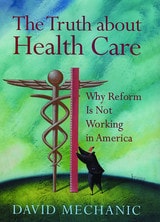
The Truth About Health Care
Why Reform is Not Working in AmericaMechanic, David
Rutgers University Press, 2006
In The Truth about Health Care, David Mechanic explains how health care in America has evolved in ways that favor a myriad of economic, professional, and political interests over those of patients. While money has always had a place in medical care, "big money" and the quest for profits has become dominant, making meaningful reforms difficult to achieve. Mechanic acknowledges that railing against these influences, which are here to stay, can achieve only so much. Instead, he asks whether it is possible to convert what is best about health care in America into a well functioning system that better serves the entire population.
Bringing decades of experience as an active health policy participant, researcher, teacher, and consultant to the public and private sectors, Mechanic examines the strengths and weaknesses of our system and how it has evolved. He pays special attention to areas often neglected in policy discussions, such as the loss of public trust in medicine, the tragic state of long-term care, and the relationship of mental health to health care.
For anyone who has been frustrated by uncoordinated health networks, insurance denials, and other obstacles to obtaining appropriate care, this book will provide a refreshing and frank look at the system's current and future dilemmas. Mechanic's thoughtful roadmap describes how health plans, healthcare professionals, policymakers, and consumer groups can work together to improve access, quality, fairness, and health outcomes in America.

Who Should Pay for Medicare?
Daniel Shaviro
University of Chicago Press, 2004
Daniel N. Shaviro sees the future of our national healthcare system as hinging on the issue of funding. The author of books on the economic issues surrounding Social Security and budget deficits, Shaviro is a skilled guide for anyone seeking to understand the financial aspects of government programs. Who Should Pay for Medicare? offers an accessible overview of how Medicare operates as a fiscal system. Discussions of Medicare reform often focus on the expansion of program treatment choices but not on the question of who should pay for Medicare's services. Shaviro's book addresses this critical issue, examining the underanalyzed dynamics of the significant funding gap facing Medicare. He gives a balanced, nonpartisan evaluation of various reform alternatives—considering everything from the creation of new benefits in this fiscal crunch to tax cuts to the demographic pressures we face and the issues this will raise when future generations have to pay for the care of today's seniors.
Who Should Pay for Medicare? speaks to seniors who feel entitled to expanded coverage, younger people who wonder what to expect from the government when they retire, and Washington policy makers who need an indispensable guidebook to Medicare's future.