Results by title
6 books match the query 'Heaney, Seamus'
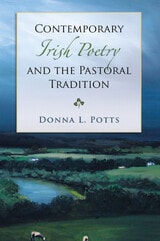
Contemporary Irish Poetry and the Pastoral Tradition
Donna L. Potts
University of Missouri Press, 2011
In Contemporary Irish Poetry and the Pastoral Tradition, Donna L. Potts closely examines the pastoral genre in the work of six Irish poets writing today. Through the exploration of the poets and their works, she reveals the wide range of purposes that pastoral has served in both Northern Ireland and the Republic: a postcolonial critique of British imperialism; a response to modernity, industrialization, and globalization; a way of uncovering political and social repercussions of gendered representations of Ireland; and, more recently, a means for conveying environmentalism’s more complex understanding of the value of nature.
In an important distinction from other studies of Irish poetry, Potts moves beyond the influence of history and politics on contemporary Irish pastoral poetry to consider the relatively recent influence of ecology. Contemporary Irish poets often rely on the motif of the pastoral retreat to highlight various environmental threats to those retreats—whether they be high-rises, motorways, global warming, or acid rain. Potts concludes by speculating on the future of pastoral in contemporary Irish poetry through her examination of more recent poets—including Moya Cannon and Paula Meehan—as well as other genres such as film, drama, and fiction.
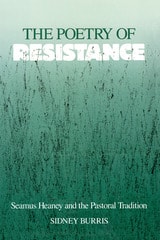
Poetry Of Resistance
Seamus HeaneySidney Burris
Ohio University Press, 1990
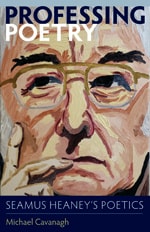
Professing Poetry
Seamus Heaney’s PoeticsMichael Cavanagh
Catholic University of America Press, 2009
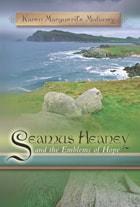
Seamus Heaney and the Emblems of Hope
Karen Marguerite Moloney
University of Missouri Press, 2007
A rich body of mythology and literature has grown around the Celtic ritual known as the Feis of Tara or “marriage of sovereignty”—ancient ceremonies in which the future king pledges to care for the land and serve the goddess of sovereignty. Seamus Heaney, whose writing has attracted the overwhelming share of critical attention directed toward contemporary Irish poetry, has engaged this symbolic tradition in some of his most significant—and controversial—work.
Seamus Heaney and the Emblems of Hope explores Heaney’s use of the family of sovereignty motifs and redresses the imbalance of criticism that has overemphasized the theme of sacrifice to the detriment of more optimistic symbols. Moreover, Moloney reviews the development of the marriage motif in Irish poetry from the ninth to the twenty-first centuries with a focus on Heaney’s adaptations from The Frenzy of Sweeney and The Midnight Court and on the work of such poets as Kinsella, Montague, Boland, and Ní Dhomhnaill. Karen Marguerite Moloney examines the central role that Heaney assigns the Feis of Tara in his response to the crisis of Ulster and to the general spiritual bankruptcy of our times, showing in his verse how the relationship of the male lover to the goddess—particularly in her more repugnant guises—serves as prototype for the humility and deference needed to repair the effects of English colonization of Ireland and, by extension, centuries of worldwide patriarchal abuse.
Through close, sustained readings of poems previously overlooked or misinterpreted, such as “Ocean’s Love to Ireland,” “Come to the Bower,” and “Bone Dreams”—poems that Irish feminist critics have deemed flawed and distressingly sexist—Moloney refutes views that have long stood unchallenged. She also considers the direction of Heaney’s more recent poems, which continue to resonate to the twin demands of conscience and artistic integrity.
An impeccably researched and immensely readable work, Seamus Heaney and the Emblems of Hope reveals that Heaney’s poetry offers a reverence for archetypal femininity and Dionysian energy that can counter the sterility and violence of postcolonial Irish life. Moloney shows us that, in the tradition of poets who preceded him, Heaney turns to the marriage of sovereignty to encode a message for our times—and to offer up emblems of hope on behalf of us all.
Seamus Heaney and the End of Catholic Ireland
Kieran Quinlan
Catholic University of America Press, 2020

Seamus Heaney
Searches For AnswersEugene O'Brien
Pluto Press, 2003