Results by title
18 books match the query 'Heritage tourism'
Afro-Atlantic Flight
Speculative Returns and the Black FantasticMichelle D. Commander
Duke University Press, 2017

Behind the Big House
Reconciling Slavery, Race, and Heritage in the U.S. SouthJodi Skipper
University of Iowa Press, 2022
When residents and tourists visit sites of slavery, whose stories are told? All too often the lives of slaveowners are centered, obscuring the lives of enslaved people. Behind the Big House gives readers a candid, behind-the-scenes look at what it really takes to interpret the difficult history of slavery in the U.S. South. The book explores Jodi Skipper’s eight-year collaboration with the Behind the Big House program, a community-based model used at local historic sites to address slavery in the collective narrative of U.S. history and culture.
In laying out her experiences through an autoethnographic approach, Skipper seeks to help other activist scholars of color negotiate the nuances of place, the academic public sphere, and its ambiguous systems of reward, recognition, and evaluation.
Beyond the Blockade
New Currents in Cuban ArchaeologyEdited by Susan Kepecs, L. Antonio Curet, and Gabino La Rosa Corzo
University of Alabama Press, 2011
An important collection of essays and scholarship by Cuban archaeologists about precontact human settlement on the island.
An important and timely collection of essays that greatly expands knowledge of the human settlement of Cuba and the activities of its indigenous peoples. The collection is a testament to the tenacity of Cuban and US scholars determined to dismantle the political and economic barriers that have impeded collaborative archaeological scholarship in Cuba. Despite economic and political challenges that have limited the pursuit of archaeological research in Cuba, these essays show that Cuban archaeology has made valuable contributions to understanding the cultural processes that have shaped life in the Caribbean in both prehispanic and historic periods and added significantly to our understanding of past Cuban peoples.
The collection, one of only a few studies of Cuban archaeology published in English in the United States, includes essays by both Cuban and US scholars that highlight trends in Cuban archaeology. It recognizes the past pioneers of joint Cuban-US archaeological projects and pays homage to those researchers, including Betty Meggers and Lourdes Dominguez, who sustained scholarly contact across the Florida Straits despite geopolitical roadblocks.
Culture on Tour
Ethnographies of TravelEdward M. Bruner
University of Chicago Press, 2004
Synthesizing more than twenty years of research in cultural tourism, Culture on Tour analyzes a remarkable variety of tourist productions, ranging from safari excursions in Kenya and dance dramas in Bali to an Abraham Lincoln heritage site in Illinois. Bruner examines each site in all its particularity, taking account of global and local factors, as well as the multiple perspectives of the various actors—the tourists, the producers, the locals, and even the anthropologist himself. The collection will be essential to those in the field as well as to readers interested in globalization and travel.

Eating Grasshoppers
Chapulines and the Women Who Sell ThemJeffrey H. Cohen
University of Texas Press, 2025
An approachable ethnography of how grasshoppers are harvested, sold, and consumed in Oaxaca.
Chapulines (toasted grasshoppers) are not a delicacy in Oaxaca. They are just food—good food—and a protein-rich seasonal snack that is the product of a long-standing industry based overwhelmingly on the labor of women. Jeffrey Cohen has interviewed dozens of these chapulineras, who harvest insects from corn and alfalfa fields, prepare them, and sell them in urban and rural marketplaces. An accessible ethnography, Eating Grasshoppers tells their story alongside the broader history of chapulines.
For tourists, chapulines are an experience—a gateway to the “real” Oaxaca. For locals, they are ordinary fare, but also a reminder of Indigenous stability and rural survival. In a sense, eating chapulines is a declaration of independence from a government that has condemned eating insects as backward. Yet, while chapulines are a generations-old favorite, eating them is not an act of preservation. Cohen shows that the business of this traditional food is thoroughly modern and ever evolving, with entrepreneurial chapulineras responding nimbly to complex and dynamic markets. From alfalfa fields to online markets, Eating Grasshoppers takes readers inside one of the world’s most fascinating food cultures.
Heritage or Heresy
Archaeology and Culture on the Maya RivieraCameron Jean Walker
University of Alabama Press, 2008
How can we effectively interpret and present one culture to another without stereotypes or over-simplifications? What is the best way to present an authoritative version of a national heritage without also endangering ancient sites or being insensitive to the local customs, beliefs, and religious practices of the indigenous peoples?
This volume addresses the ongoing thrust in archaeology to take the next step after preserving the past: interpreting that past for the future. That future audience includes both local citizens and tourists who may have little background in archaeology, anthropology, or the history of the culture featured. Walker presents the key components of the anthropological study of tourism as a global phenomenon, with particular emphasis on the more prominent arguments for how and why tourism is a universal and meaningful human activity. The highly controversial topic of authenticity is examined, with special attention given to how "authentic" has been defined and how it relates to the ways in which archaeological sites, artifacts, and cultural traditions are presented--or not presented--to the visiting public. The ephemeral promise of “authenticity” drives the heritage tourism industry, which is a key consideration for the long term economy of the Maya Riviera and elsewhere. Through analysis of seven archaeological sites on the Yucatan peninsula that are open to heritage touring, Walker reveals the planned growth of the Maya Riviera since the early 1970s and examines the impact of international tourism on both ancient structures and the contemporary Maya people and culture.
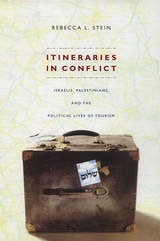
Itineraries in Conflict
Israelis, Palestinians, and the Political Lives of TourismRebecca L. Stein
Duke University Press, 2008
Combining vivid ethnographic detail, postcolonial theory, and readings of Israeli and Palestinian popular texts, Stein considers a broad range of Israeli leisure cultures of the Oslo period with a focus on the Jewish desires for Arab things, landscapes, and people that regional diplomacy catalyzed. Moving beyond conventional accounts, she situates tourism within a broader field of “discrepant mobility,” foregrounding the relationship between histories of mobility and immobility, leisure and exile, consumption and militarism. She contends that the study of Israeli tourism must open into broader interrogations of the Israeli occupation, the history of Palestinian dispossession, and Israel’s future in the Arab Middle East. Itineraries in Conflict is both a cultural history of the Oslo process and a call to fellow scholars to rethink the contours of the Arab-Israeli conflict by considering the politics of popular culture in everyday Israeli and Palestinian lives.
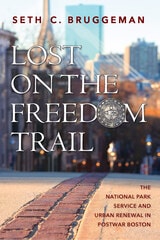
Lost on the Freedom Trail
The National Park Service and Urban Renewal in Postwar BostonSeth C. Bruggeman
University of Massachusetts Press, 2022
Boston National Historical Park is one of America's most popular heritage destinations, drawing in millions of visitors annually. Tourists flock there to see the site of the Boston Massacre, to relive Paul Revere's midnight ride, and to board Old Ironsides—all of these bound together by the iconic Freedom Trail, which traces the city's revolutionary saga.
Making sense of the Revolution, however, was never the primary aim for the planners who reimagined Boston's heritage landscape after the Second World War. Seth C. Bruggeman demonstrates that the Freedom Trail was always largely a tourist gimmick, devised to lure affluent white Americans into downtown revival schemes, its success hinging on a narrow vision of the city's history run through with old stories about heroic white men. When Congress pressured the National Park Service to create this historical park for the nation's bicentennial celebration in 1976, these ideas seeped into its organizational logic, precluding the possibility that history might prevail over gentrification and profit.
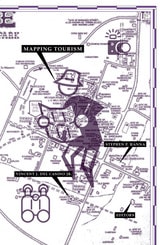
Mapping Tourism
Stephen P. Hanna
University of Minnesota Press, 2003
Looks at tourism maps to offer new insights into the social construction of place
At first glance, the relationships among tourists, tourism maps, and the spaces of tourism seem straightforward enough: tourists use maps to find their way to and through the sites of history, culture, nature, or recreation represented there. Less apparent is how tourism maps and those using them construct such spaces and identities. As the essays in Mapping Tourism clearly demonstrate, the extraordinary interactions of work with leisure and the everyday with the exotic make tourism maps ideal sites for exploring the contested construction of place and identity.
Construction sites in the “New Berlin,” Alabama’s civil rights trail, Québec City, a California ghost town, and Bangkok’s sex trade are among the spaces the essays examine. Taken together, these essays allow us to see tourist space as it truly is: contested, ever changing, and replete with issues of power.Contributors: Mary Curran, Eastern Connecticut State U; Dydia DeLyser, Louisiana State U; Owen J. Dwyer, Indiana U; John R. Gold, Oxford Brookes U; Margaret M. Gold, U of North London; Rob Shields; Karen E. Till, U of Minnesota.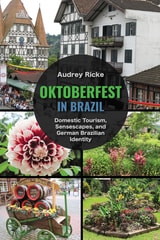
Oktoberfest in Brazil
Domestic Tourism, Sensescapes, and German Brazilian IdentityAudrey Ricke
University of Alabama Press, 2023
An immersive ethnography uncovering how sensory experience, tourism, and heritage performance shape German Brazilian identity across local, national, and transnational landscapes.
Oktoberfest in Brazil: Domestic Tourism, Sensescapes, and German Brazilian Identity is one of the first ethnographies to analyze the tourism industry based on German cultural heritage in southern Brazil. Southern Brazil’s booming domestic tourism industry draws more than 500,000 people to events such as the Oktoberfest in Blumenau. Ricke investigates domestic tourism as sensescapes, focusing on the multiple and layered meanings associated with tourism’s sensory experiences and interactions. The author also introduces the “economy of aesthetics” as a new framework to capture how the sensescapes associated with domestic tourism are intertwined in the negotiation of ethnic, national, and transnational identities. These sensescapes also intersect with discourses on class and race, which are examined as well.
Oktoberfest in Brazil leads readers on a tour through German Brazilian home gardens, folk dance performances, and the largest Oktoberfest in Brazil. These sensory-rich spaces of interaction provide access to different perspectives and types of identity negotiation at multiple levels from the local to the transnational. Ricke illustrates how the emotions and sensory experiences of these sensescapes associated with German cultural heritage function as a means for German Brazilians to negotiate senses of belonging as Brazilians as well as their ethnic and transnational identities.
This book also provides historical and contemporary insights into the politics of citizenship associated with cultural heritage. As politics become more polarized, the need to analyze different ways of communicating through sensory experiences increases. The unique contribution of the economy of aesthetics framework is its ability to capture the influential power of sensory experience in the negotiation of identity and senses of belonging and citizenship more broadly. It provides new insights into how and why some sensory experiences within domestic tourism foster belonging and identity while other experiences reinforce social distinctions and national divisions.
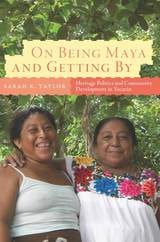
On Being Maya and Getting By
Heritage Politics and Community Development in YucatánSarah R. Taylor
University Press of Colorado, 2018
The book explores how Ek’Balam villagers negotiate and maneuver through a web of social programs, tourists, volunteers, and expectations while living their daily lives. Focusing on the active processes in which residents choose to participate, author Sarah R. Taylor provides insights into how the ideological conflicts surrounding economic development play out in the negotiations between internal community politics and external social actors. The conflicts implicit to conceptions of “community” as a target for development are made explicit through the systematic questioning of what exactly it means to be a member of a local, indigenous, or sustainable community in the process of being developed.
On Being Maya and Getting By is a rich description of how one community is actively negotiating with tourism and development and also a call for a more complex analysis of how rural villages are connected to greater urban, national, and global forces.
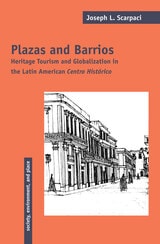
Plazas and Barrios
Heritage Tourism and Globalization in the Latin American Centro HistóricoJoseph L. Scarpaci
University of Arizona Press, 2004
This book explores how heritage tourism and globalization are reshaping the Latin American centro histórico, analyzing the transformation of the urban core from town plaza to historic center in nine cities: Bogotá, Colombia; Buenos Aires, Argentina; Cartagena, Colombia; Cuenca, Ecuador; Havana, Cuba; Montevideo, Uruguay; Puebla, Mexico; Quito, Ecuador; and Trinidad, Cuba. It tells how these pressures, combined with the advantage of a downtown location, have raised the potential of redeveloping these inner city areas but have also created the dilemma of how to restore and conserve them while responding to new economic imperatives.
In an eclectic and interdisciplinary study, Joseph Scarpaci documents changes in far-flung corners of the Latin American metropolis using a broad palette of tools: urban morphology profiles, an original land-use survey of 30,000 doorways in nine historic districts, numerous photographs, and a review of the political, economic, and globalizing forces at work in historic districts. He examines urban change as reflected in architectural styles, neighborhood growth and decline, real estate markets, and local politics in order to show the long reach of globalization and modernity.
Plazas and Barrios spans all of Spanish-speaking America to address the socio-political dimensions of urban change. It offers a means for understanding the tensions between the modern and traditional aspects of the built environment in each city and provides a key resource for geographers, urban planners, architectural historians, and all concerned with the implications of the emerging global economy.
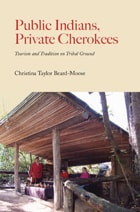
Public Indians, Private Cherokees
Tourism and Tradition on Tribal GroundChristina Taylor Beard-Moose
University of Alabama Press, 2008
A major economic industry among American Indian tribes is the public promotion and display of aspects of their cultural heritage in a wide range of tourist venues. Few do it better than the Eastern Band of the Cherokee, whose homeland is the Qualla Boundary of North Carolina. Through extensive research into the work of other scholars dating back to the late 1800s, and interviews with a wide range of contemporary Cherokees, Beard-Moose presents the two faces of the Cherokee people. One is the public face that populates the powwows, dramatic presentations, museums, and myriad roadside craft locations. The other is the private face whose homecoming, Indian fairs, traditions, belief system, community strength, and cultural heritage are threatened by the very activities that put food on their tables. Constructing an ethnohistory of tourism and comparing the experiences of the Cherokee with the Florida Seminoles and Southwestern tribes, this work brings into sharp focus the fine line between promoting and selling Indian culture.
Re-living the American Frontier
Western Fandoms, Reenactment, and Historical Hobbyists in Germany and America Since 1900Nancy Reagin
University of Iowa Press, 2021
But the Old West (like all visions of the past) proved to be shifting cultural terrain. In both Germany and the U. S., Western narratives of white settlement were once seen as “apolitical” and were widely accepted by white people. But during the Nazi period in Germany and in East Germany after 1945, the American West was reevaluated and politically repurposed. Then, during the late twentieth century, understandings of the West changed in the U. S. as well, while the violence of white settler colonialism and the displacement of Indigenous peoples became a flashpoint in the culture wars between right and left. Reagin shows that the past that fans seek to recreate is shaped by the changing present, as each new generation adapts and relives their own West.
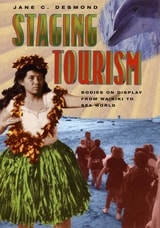
Staging Tourism
Bodies on Display from Waikiki to Sea WorldJane C. Desmond
University of Chicago Press, 1999
Gathering together written accounts, postcards, photographs, advertisements, films, and oral histories as well as her own interpretations of these displays, Desmond gives us a vibrant account of U.S. tourism in Waikiki from 1900 to the present. She then juxtaposes cultural tourism with "animal tourism" in the United States, which takes place at zoos, aquariums, and animal theme parks. In each case, Desmond argues, the relationship between the viewer and the viewed is ultimately based on concepts of physical difference harking back to the nineteenth century.
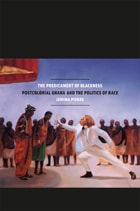
The Predicament of Blackness
Postcolonial Ghana and the Politics of RaceJemima Pierre
University of Chicago Press, 2012
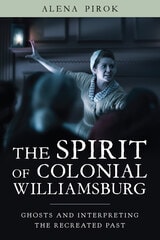
The Spirit of Colonial Williamsburg
Ghosts and Interpreting the Recreated PastAlena Pirok
University of Massachusetts Press, 2022
On any given night, hundreds of guests walk the darkened streets of Colonial Williamsburg looking for ghosts. Since the early 2000s, both the museum and private companies have facilitated these hunts, offering year-round ghost tours. Critics have called these excursions a cash grab, but in truth, ghosts and hauntings have long been at the center of the Colonial Williamsburg project.
The Spirit of Colonial Williamsburg examines how the long-dead past comes alive at this living-history museum. In the early twentieth century, local stories about the ghosts of former residents—among them Revolutionary War soldiers and nurses, tavern owners and prominent attorneys, and enslaved African Americans—helped to turn Williamsburg into a desirable site for historical restoration. But, for much of the twentieth century, the museum tried diligently to avoid any discussion of ghosts, considering them frivolous and lowbrow. Alena Pirok explores why historic sites have begun to embrace their spectral residents in recent decades, arguing that through them, patrons experience an emotional connection to place and a palpable understanding of the past through its people.
Truth-Spots
How Places Make People BelieveThomas F. Gieryn
University of Chicago Press, 2018
In Truth-Spots, Gieryn gives readers an elegant, rigorous rendering of the provenance of ideas, uncovering the geographic location where they are found or made, a spot built up with material stuff and endowed with cultural meaning and value. These kinds of places—including botanical gardens, naturalists’ field-sites, Henry Ford’s open-air historical museum, and churches and chapels along the pilgrimage way to Santiago de Compostela in Spain—would seem at first to have little in common. But each is a truth-spot, a place that makes people believe. Truth may well be the daughter of time, Gieryn argues, but it is also the son of place.