Results by title
9 books match the query 'Hierarchy'
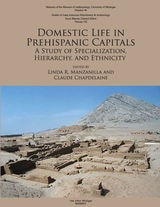
Domestic Life in Prehispanic Capitals
A Study of Specialization, Hierarchy, and EthnicityEdited by Linda R. Manzanilla and Claude Chapdelaine
University of Michigan Press, 2009

From a Shattered Sun
Hierarchy, Gender, and Alliance in the Tanimbar IslandsSusan Mckinnon
University of Wisconsin Press, 1991
Among a growing number of ethnographies of eastern Indonesia that deal with cosmology, exchange, and kinship, From a Shattered Sun is the first to address squarely issues originally broached by Edmund Leach and Claude Lévi-Strauss concerning the relation between hierarchy and equality in asymmetric systems of marriage.
On the basis of extensive fieldwork in the Tamimbar islands, Susan McKinnon analyzes the simultaneous presence of both closed, asymmetric cycles and open, asymmetric pathways of alliance—of both egalitarian and hierarchical configurations. In addition, Tamimbarese society is marked by the existence of multiple, differentially valued forms of marriage, affiliation, and residence. Rather than seeing these various forms as analytically separable types, McKinnon demonstrates that it is only by viewing them as integrally related—in terms of culturally specific understandings of "houses," gender, and exchange—that one can perceive the processes through which hierarchy and equality are created.
Hearing Southeast Asia
Sounds of Hierarchy and Power in ContextEdited by Nathan Porath
National University of Singapore Press, 2019

Hierarchy, Commerce, and Fraud in Bourbon Spanish America
A Postal Inspector's ExposeRuth Hill
Vanderbilt University Press, 2021
Hierarchy, History, and Human Nature
The Social Origins of Historical ConsciousnessDonald E. Brown
University of Arizona Press, 1988
"This is an intriguing and stimulating study of historical differences in the indigenous historiography of parts of Asia, the Middle East, and Europe."—American Anthropologist.
Hierarchy
Perspectives for Ecological ComplexityT. F. H. Allen and Thomas B. Starr
University of Chicago Press, 2017
This thoroughly revised and expanded second edition of Hierarchy reflects the assimilation of hierarchy theory into ecological research, its successful application to the understanding of complex systems, and the many developments in thought since. Because hierarchies and levels are habitual parts of human thinking, hierarchy theory has proven to be the most intuitive and tractable vehicle for addressing complexity. By allowing researchers to look explicitly at only the entities and interconnections that are relevant to a specific research question, hierarchically informed data analysis has enabled a revolution in ecological understanding. With this new edition of Hierarchy, that revolution continues.
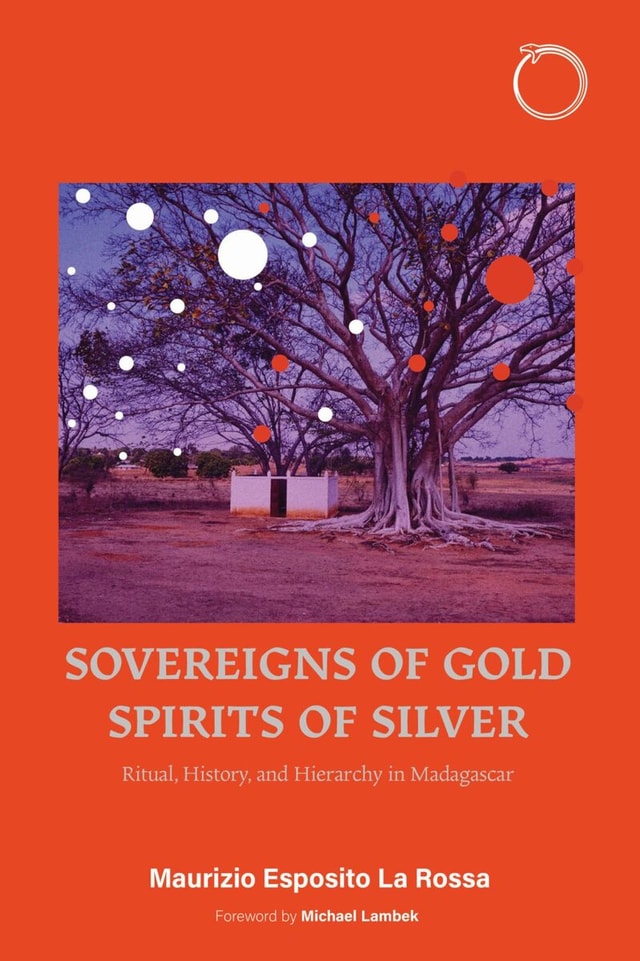
Sovereigns of Gold, Spirits of Silver
Ritual, History, and Hierarchy in MadagascarMaurizio Esposito La Rossa
HAU, 2026
How the inhabitants of Western Madagascar reshape their collective identity and negotiate their place within contemporary society through royal rituals and the reinterpretation of the past.
In a postcolonial republic marked by recurrent crises, royal hierarchy continues to frame social inequalities. Within this context, both the descendants of slaves and the newly rich seek to claim or legitimize new hierarchical positions by reformulating historical narratives and establishing them through royal rituals. Focusing on a cult dedicated to the spirits of the ancestors of the Silver Dynasty, Maurizio Esposito La Rossa investigates the categories of “silver” and “gold” that structure the hierarchy of the Sakalava monarchy and are also mobilized by politicians to legitimize their power.
Through multi-sited ethnography, the book offers a broader reflection on the link between narratives and places and on contrasting ways of conceiving history. Whereas Western historiography—and the rise of the nation-state—tends to produce unified historical narratives, the Sakalava monarchies conceive of history as rooted in specific places and social groups, where multiple versions coexist and contend. Combining the divergent demands of a historical anthropology and an anthropology of history, this book endeavors to recount another history of the Sakalava monarchy, without neglecting the polyphony that characterizes it. By tracing how the past is mobilized, transformed, and contested in the present, the book speaks to anthropologists, historians, and readers interested in the intricate entanglements of history, ritual, and political power in postcolonial settings.

Spiraling Into God
Bonaventure on Grace, Hierarchy , and HolinessKatherine Wrisley Shelby
Catholic University of America Press, 2023

The "Vanity of the Philosopher"
From Equality to Hierarchy in Post-Classical EconomicsSandra J. Peart and David M. Levy
University of Michigan Press, 2005
Here, Peart and Levy tackle the issues of racism, eugenics, hierarchy, and egalitarianism in classical economics and take a broad view of classical economics' doctrine of human equality. Responding to perennial accusations from the left and the right that the market economy has created either inequality or too much equality, the authors trace the role of the eugenics movement in pulling economics away from the classical economist's respect for the individual toward a more racist view at the turn of the century.
The "Vanity of the Philosopher" reveals the consequences of hierarchy in social science. It shows how the "vanity of the philosopher" has led to recommendations that range from the more benign but still objectionable "looking after" paternalism, to overriding preferences, and, in the extreme, to eliminating purportedly bad preferences. The authors suggest that an approach that abstracts from difference and presumes equal competence is morally compelling.
"People in the know on intellectual history and economics await the next book from Peart and Levy with much the same enthusiasm that greets a new Harry Potter book in the wider world. This book delivers the anticipated delights big time!"
-William Easterly, Professor of Economics and Africana Studies, NYU, and non-resident Senior Fellow, Center for Global Development
"In their customary idiosyncratic manner, Sandra Peart and David Levy reexamine the way in which the views of classical economists on equality and hierarchy were shifted by contact with scholars in other disciplines, and the impact this had on attitudes towards race, immigration, and eugenics. This is an imaginative and solid work of scholarship, with an important historical message and useful lessons for scholars today."
-Stanley Engerman, John Munro Professor of Economics and Professor of History, University of Rochester
Sandra J. Peart, Professor of Economics at Baldwin-Wallace College, has published articles on utilitarianism, the methodology of J. S. Mill, and the transition to neoclassicism. This is her fourth book. David M. Levy is Professor of Economics at George Mason University and Director of the Center for Study of Public Choice. This is his third book.