Results by title
12 books match the query 'Hip Hop'
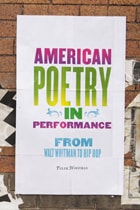
American Poetry in Performance
From Walt Whitman to Hip HopTyler Hoffman
University of Michigan Press, 2013
"Tyler Hoffman brings a fresh perspective to the subject of performance poetry, and this comes at an excellent time, when there is such a vast interest across the country and around the world in the performance of poetry. He makes important connections, explaining things in a manner that remains provocative, interesting, and accessible."
---Jay Parini, Middlebury College
American Poetry in Performance: From Walt Whitman to Hip Hop is the first book to trace a comprehensive history of performance poetry in America, covering 150 years of literary history from Walt Whitman through the rap-meets-poetry scene. It reveals how the performance of poetry is bound up with the performance of identity and nationality in the modern period and carries its own shifting cultural politics. This book stands at the crossroads of the humanities and the social sciences; it is a book of literary and cultural criticism that deals squarely with issues of "performance," a concept that has attained great importance in the disciplines of anthropology and sociology and has generated its own distinct field of performance studies. American Poetry in Performance will be a meaningful contribution both to the field of American poetry studies and to the fields of cultural and performance studies, as it focuses on poetry that refuses the status of fixed aesthetic object and, in its variability, performs versions of race, class, gender, and sexuality both on and off the page.
Relating the performance of poetry to shifting political and cultural ideologies in the United States, Hoffman argues that the vocal aspect of public poetry possesses (or has been imagined to possess) the ability to help construct both national and subaltern communities. American Poetry in Performance explores public poets' confrontations with emergent sound recording and communications technologies as those confrontations shape their mythologies of the spoken word and their corresponding notions about America and Americanness.
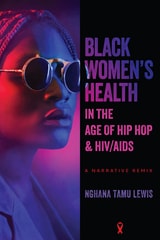
Black Women’s Health in the Age of Hip Hop and HIV/AIDS
A Narrative RemixNghana tamu Lewis
The Ohio State University Press, 2025

Deathlife
Hip Hop and Thanatological Narrations of BlacknessAnthony B. Pinn
Duke University Press, 2024
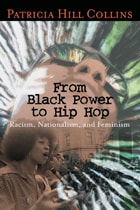
From Black Power to Hip Hop
Racism, Nationalism, and FeminismPatricia Hill Collins
Temple University Press, 2006
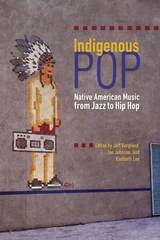
Indigenous Pop
Native American Music from Jazz to Hip HopEdited by Jeff Berglund, Jan Johnson, and Kimberli Lee
University of Arizona Press, 2016
From Joe Shunatona and the United States Indian Reservation Orchestra to Jim Pepper, from Buffy Saint-Marie to Robbie Robertson, from Joy Harjo to Lila Downs, Indigenous Pop vividly addresses the importance of Native musicians and popular musical genres, establishing their origins and discussing what they represent.
Arranged both chronologically and according to popular generic forms, the book gives Indigenous pop a broad new meaning. In addition to examining the transitive influences of popular music on Indigenous expressive forms, the contributors also show ways that various genres have been shaped by what some have called the “Red Roots” of American-originated musical styles. This recognition of mutual influence extends into the ways of understanding how music provides methodologies for living and survival.
Each in-depth essay in the volume zeros in on a single genre and in so doing exposes the extraordinary whole of Native music. This book showcases the range of musical genres to which Native musicians have contributed and the unique ways in which their engagement advances the struggle for justice and continues age-old traditions of creative expression.
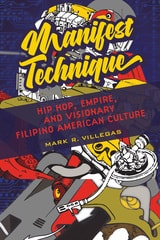
Manifest Technique
Hip Hop, Empire, and Visionary Filipino American CultureMark R. Villegas
University of Illinois Press, 2021
Filipino Americans have been innovators and collaborators in hip hop since the culture’s early days. But despite the success of artists like Apl.de.Ap of the Black Eyed Peas and superstar producer Chad Hugo, the genre’s significance in Filipino American communities is often overlooked. Mark R. Villegas considers sprawling coast-to-coast hip hop networks to reveal how Filipino Americans have used music, dance, and visual art to create their worlds. Filipino Americans have been exploring their racial position in the world in embracing hip hop’s connections to memories of colonial and racial violence. Villegas scrutinizes practitioners’ language of defiance, placing the cultural grammar of hip hop within a larger legacy of decolonization.
An important investigation of hip hop as a movement of racial consciousness, Manifest Technique shows how the genre has inspired Filipino Americans to envision and enact new ideas of their bodies, their history, and their dignity.
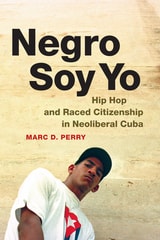
Negro Soy Yo
Hip Hop and Raced Citizenship in Neoliberal CubaMarc D. Perry
Duke University Press, 2016

Prophets of the Hood
Politics and Poetics in Hip HopImani Perry
Duke University Press, 2004
Perry offers detailed readings of the lyrics of many hip hop artists, including Ice Cube, Public Enemy, De La Soul, krs-One, OutKast, Sean “Puffy” Combs, Tupac Shakur, Lil’ Kim, Biggie Smalls, Nas, Method Man, and Lauryn Hill. She focuses on the cultural foundations of the music and on the form and narrative features of the songs—the call and response, the reliance on the break, the use of metaphor, and the recurring figures of the trickster and the outlaw. Perry also provides complex considerations of hip hop’s association with crime, violence, and misogyny. She shows that while its message may be disconcerting, rap often expresses brilliant insights about existence in a society mired in difficult racial and gender politics. Hip hop, she suggests, airs a much wider, more troubling range of black experience than was projected during the civil rights era. It provides a unique public space where the sacred and the profane impulses within African American culture unite.
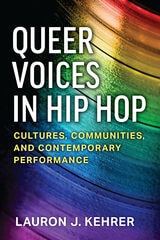
Queer Voices in Hip Hop
Cultures, Communities, and Contemporary PerformanceLauron J. Kehrer
University of Michigan Press, 2022
The Disturbing Profane
Hip Hop, Blackness, and the SacredJoseph R. Winters
Duke University Press, 2025
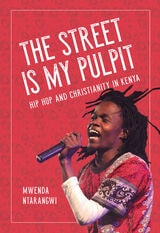
The Street Is My Pulpit
Hip Hop and Christianity in KenyaMwenda Ntarangwi
University of Illinois Press, 2016
Mwenda Ntarangwi explores the Kenyan hip hop scene through the lens of Juliani's life and career. A born-again Christian, Juliani produces work highlighting the tensions between hip hop's forceful self-expression and a pious approach to public life, even while contesting the basic presumptions of both. In The Street Is My Pulpit, Ntarangwi forges an uncommon collaboration with his subject that offers insights into Juliani's art and goals even as Ntarangwi explores his own religious experience and subjective identity as an ethnographer. What emerges is an original contribution to the scholarship on hip hop's global impact and a passionate study of the music's role in shaping new ways of being Christian in Africa.
The Vinyl Ain't Final
Hip Hop and the Globalization of Black Popular CultureDipannita Basu and Sidney Lemelle
Pluto Press, 2006
From the front lines of hip hop culture and music in the USA, Britain, France, Japan, Germany, Hawaii, Tanzania, Cuba, Samoa and South Africa, academics, poets, practitioners, journalists, and political commentators explore hip hop -- both as a culture and as a commodity. From the political economy of the South African music industry to the cultural resistance forged by Afro-Asian hip hop, this potent mix of contributors provides a unique critical insight into the implications of hip hop globally and locally. Indispensable for fans of hip hop culture and music, this book will also appeal to anyone interested in cultural production, cultural politics and the implications of the huge variety of forms hip hop encompasses.
Dipa Basu is and Associate Professor of Sociology and Black Studies at Pitzer College, Claremont, California. Her recent publications include 'Sociology of the Color Line' in Peter Ratcliffe, ed. The Politics of Social Science Research: Race, Ethnicity and Social Change (Palgrave Press, 2001).
Sidney Lemelle is an Associate Professor of Black Studies at Pomona College, Claremont, California. He has co-edited with Robin D.G Kelley, Imagining Home: Class, Culture and Nationalism in the African Diaspora (Verso, 1994).