Results by title
3 books match the query 'Historic bridges'
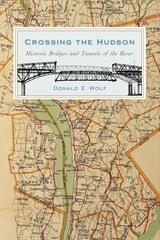
Crossing the Hudson
Historic Bridges and Tunnels of the RiverWolf, Donald
Rutgers University Press, 2010
Fog, tide, ice, and human error--before the American Revolution those who ventured to cross the vast Hudson Valley waterway did so on ferryboats powered by humans, animals, and even fierce winds. Before that war, not a single Hudson River bridge or tunnel had been built. It wasn't until Americans looked to the land in the fight for independence that the importance of crossing the river efficiently became a subject of serious interest, especially militarily. Later, the needs of a new transportation system became critical--when steam railroads first rolled along there was no practical way to get them across the water without bridges.
Crossing the Hudson continues this story soon after the end of the war, in 1805, when the first bridge was completed. Donald E. Wolf simultaneously tracks the founding of the towns and villages along the water's edge and the development of technologies such as steam and internal combustion that demanded new ways to cross the river. As a result, innovative engineering was created to provide for these resources.
From hybrid, timber arch, and truss bridges on stone piers to long-span suspension and cantilevered bridges, railroad tunnels, and improvements in iron and steel technology, the construction feats that cross the Hudson represent technical elegance and physical beauty. Crossing the Hudson reveals their often multileveled stories--a history of where, why, when, and how these structures were built; the social, political, and commercial forces that influenced decisions to erect them; the personalities of the planners and builders; the unique connection between a builder and his bridge; and the design and construction techniques that turned mythical goals into structures of utility and beauty.
[more]

PROCEEDINGS OF AN INTERNATIONAL CONFERENCE ON HISTORIC BRIDGES
EMORY L. KEMP
West Virginia University Press, 1999
In 1849, the new Wheeling Suspension Bridge was a triumph of engineering, the world's longest clear span bridge. The Wheeling bridge was also a landmark in the development of the American frontier, spanning the Ohio River to speed settlement and commerce in the Midwest and beyond. In 1999, historians, engineers, and industrial archaeologists from around the world met in Wheeling to celebrate the still-busy bridge's 150th anniversary. This book presents highlights of the conference, and points out the far-reaching effects of bridge-building.
[more]
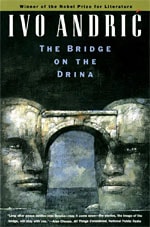
The Bridge on the Drina
Ivo Andric
University of Chicago Press, 1977
*NOBEL PRIZE WINNER*
A classic novel of war, suffering, and survival in Bosnia
Internationally acclaimed since its original publication just after World War II, The Bridge on the Drina is a vivid historical novel that uses the Mehmed Paša Sokolović Bridge as the centerpiece of the story of Bosnia and its people from the late sixteenth century to the beginning of World War I. As we seek to make sense of the current nightmare in this region, this remarkable, timely book serves as a reliable guide to its people and history. Through powerful stories of the people who make history—and the people suffer under those who do—Ivo Andric traces the story of the Bosnian people from the Ottoman Empire through the domination of Austria-Hungary and into the rising tide of competing nationalist ideologies that set the stage for the tragedy of World War I.
Written while Andric was under house arrest during the Nazi occupation, The Bridge on the Drina is as gripping as a soap opera, bringing history down to the level of compelling individual lives and experiences. It is one of the landmark works of twentieth-century literature, as powerful today as it ever was.
[more]