Results by title
28164 books match the query 'History' and 2536 start with a
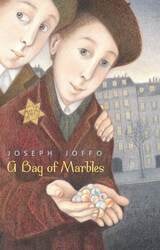
A Bag of Marbles
Joseph Joffo
University of Chicago Press, 2000

A Beautiful Fight
The Racial Politics of Capoeira in Backland BahiaEsther Viola Kurtz
University of Michigan Press, 2025
2026 Dance Studies Association de la Torre Bueno First Book Award Shortlist Finalist
A Beautiful Fight examines the potentials and limits of capoeira Angola to cohere a multiracial community committed to antiracist struggle. Capoeira, a musical fight-game that originated among enslaved Africans in Brazil, holds special significance for Black Brazilian activists as a spiritual and political practice that affirms the value of Black lives, thus countering anti-Black violence sanctioned by the Brazilian state. However, many capoeira groups count more white practitioners than Black, especially groups of the politicized, Afrocentric style capoeira Angola, raising debates about appropriation of Black culture that resonate across the Americas. A Beautiful Fight addresses these tensions. Drawing on ethnographic research with a multiracial capoeira Angola group in Brazil’s Bahian sertão or backlands, Esther Viola Kurtz explores diverse group members’ understandings of capoeira’s spiritual and political meanings and considers how white participation impacts capoeira’s antiracist politics. A Beautiful Fight argues that white practitioners occupying space in capoeira divert attention from Black members’ concerns and reproduce racist and colonialist ideologies, albeit unintentionally. In this way, the book complicates claims that shared music and dance bridge differences and facilitate cross-racial unity, yet Kurtz proposes that capoeira still transmits knowledge and tools that, when used with intention, commitment, and care, can be wielded to collaboratively contest racism and imagine a more just world.
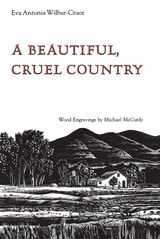
A Beautiful, Cruel Country
Eva Antonia Wilbur-Cruce
University of Arizona Press, 1987
Eva Antonia Wilbur inherited a unique affinity for the land. Granddaughter of a Harvard-educated physician who came to the Territory in the 1860s, she was the firstborn child of a Mexican mother and Anglo father who instilled in her an appreciation for both cultures. Little Toña learned firsthand the responsibilities of ranching—an education usually reserved for boys—and also experienced the racial hostility that occurred during those final years before the Tohono O'odham were confined to a reservation.
Begun as a reminiscence to tell younger family members about their "rawhide tough and lonely" life at the turn of the century, Mrs. Wilbur-Cruce's book is rich with imagery and dialogue that brings the Arivaca area to life. Her story is built around the annual cycle of ranch life—its spring and fall round-ups, planting and harvesting—and features a cavalcade of border characters, anecdotes about folk medicine, and recollections of events that were most meaningful in a young girl's life. Her account constitutes a valuable primary source from a region about which nothing similar has been previously published, while the richness of her story creates a work of literature that will appeal to readers of all ages.

A Bed Called Home
Life In The Migrant Labour Hostels of Cape TownMamphela Ramphele
Ohio University Press, 1993
In this challenging study, Dr. Mamphela Ramphele documents the life of the hostel dwellers of Cape Town, for whom a bed is literally a home for both themselves and their families. Elaborating the concept of space in its many dimensions—not just physical, but political, ideological, social, and economic as well—she emphasizes the constraints exerted on hostel dwellers by the limited spaces they inhabit. At the same time, she argues that within these constraints people have managed to find room for manoeuvre, and in her book explores the emancipatory possibilities of their environment.
The text is illustrated with a number of black-and-white photographs taken by Roger Meintjes in the townships and hostels.

A Bed for the King's Daughter
Stories by Shahla Ujayli; translated by Sawad Hussain
University of Texas Press, 2020
A groundbreaking collection of experimental short fiction by award-winning Syrian author and Booker International Prize for Arabic Fiction nominee Shahla Ujayli, A Bed for the King’s Daughter uses surrealism and irony to examine such themes as women’s agency, the decline of collective life and imagination under modernity, and the effects of social and political corruption on daily life. In “The Memoir of Cinderella’s Shoes,” Cinderella uses her famous glass slipper as a weapon in order to take justice into her own hands. In “Tell Me About Surrealism,” an art history professor’s writing assignment reveals the slipperiness of storytelling, and in “Merry Christmas,” the realities of apartheid interfere with one family’s celebration. Through twenty-two short stories, Ujayli animates—with brevity and inventiveness—themes relevant to both the particularities of life in the Arab world and life outside it.
A Bibliography of East European Travel Writing on Europe
Wendy Bracewell
Central European University Press, 2008
The bibliography volume of the three-volume East Looks West: East European Travel Writing in Europe collates travel writing published in book form by east Europeans travelling in Europe from ca. 1550 to 2000. It is intended as a fundamental research tool, collecting together travel writings within each national/linguistic tradition, and enabling comparative analysis of such material. It fills an important gap in the existing reference literature, both in western and east European languages, and will be of use to those working in the growing fields of comparative travel writing, regional and national identities, and postcolonialism.
These texts exist in surprisingly large numbers, and include writings of high literary quality as well as of historical interest, but they have been relatively little studied as a genre. Much of this material is rare and difficult to find, even in national libraries. As a result, there are few bibliographical surveys of the literature of east European travel and self-representation, and none that are region-wide or comparative in scope.
This is the third volume of a three-part set of East Looks West.
Vol. 1. Orientations. An Anthology of East European Travel Writing on Europe.
Vol. 2. Undern Eastern Eyes. A Comparative Introduction to East European Travel Writing on Europe.
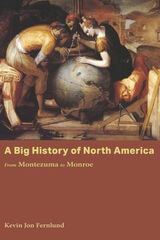
A Big History of North America
From Montezuma to MonroeKevin Jon Fernlund
University of Missouri Press, 2023
Nevertheless, the three-century journey to get to this point had been anything but predictable. The United States’ rise as a regional power was very much conditioned by constantly shifting transcontinental, transpacific, and above all transatlantic factors, all of which influenced North America’s three interactive cultural spheres: the Indigenous, the Hispano, and the Anglo. And while the United States profoundly shaped the history of Canada and Mexico, so, too, did these two transcontinental countries likewise shape the course of U.S. history.
In this ground-breaking work, Kevin Fernlund shows us that any society’s social development is directly related to its own social power and, just as crucially, to the protective extension or destructive intrusion of the social power of other societies.
A Biographical Dictionary of Women's Movements and Feminisms
Central, Eastern, and South Eastern Europe, 19th and 20th CenturiesAnna Loutfi
Central European University Press, 2006
A Black Corps d'Elite
An Egyptian Sudanese Conscript Battalion with the French Army in Mexico, 1863-1867, and its Survivors in Subsequent African HistoryRichard Hill
Michigan State University Press, 1995
For several years, the armies of Napoleon III deployed some 450 Muslim Sudanese slave soldiers in Veracruz, the port of Mexico City. As in the other case of Western hemisphere military slavery (the West India Regiments, a British unit in existence 1795-1815), the Sudanese were imported from Africa in the hopes that they would better survive the tropical diseases that so terribly afflicted European soldiers. In both cases, the Africans did indeed fulfill these expectations. The mixture of cultures embodied by this event has piqued the interest of several historians, so it is by no means unknown. Hill and Hogg provide a particularly thorough account of this exotic interlude, explaining its background, looking in detail at the battle record in Mexico, and figuring out who exactly made up the battalion. Much in their account is odd and interesting, for example, the Sudanese superiority to Austrian troops and their festive nine-day spree in Paris on the emperor's tab. The authors also assess the episode's longer-term impact on the Sudan, showing that the veterans of Mexico, having learnt much from their extended exposure to French military practices, rose quickly in the ranks, then taught these methods to others.
A Black Gambler’s World of Liquor, Vice, and Presidential Politics
William Thomas Scott of Illinois, 1839–1917Bruce L. Mouser
University of Wisconsin Press, 2014
Scott helped build the National Negro Liberty Party to forward economic, political, and legal rights for his race. But the hustling that had brought him business success proved his undoing as a national political figure. He was the NNLP's initial presidential nominee, only to be replaced by a better-educated and more socially acceptable candidate, George Edwin Taylor.
A Blacklist Education
American History, a Family Mystery, and a Teacher Under FireJane S. Smith
Rutgers University Press, 2025
Finalist for the Society of Midland Authors Richard Frisbie Award for Adult Nonfiction
In A Blacklist Education, a mysterious file of family papers triggers a journey through the dark days of political purges in the 1950s. Jane S. Smith tells the story of the anticommunist witch hunt that sent shockwaves through New York City’s public schools as more than a thousand teachers were targeted by Board of Education investigators. Her father was one of them—a fact she learned only long after his death.
Beginning in 1949, amid widespread panic about supposed communist subversion, investigators questioned teachers in their homes, accosted them in their classrooms, and ordered them to report to individual hearings. The interrogations were not published, filmed, open to the public, or reported in the news. By 1956, hundreds of New York City teachers had been fired, often because of uncorroborated reports from paid informers or anonymous accusers.
Most of the targeted teachers resigned or retired without any public process, their names recorded only in municipal files and their futures never known. Their absence became the invisible outline of an educational void, a narrowing of thought that pervaded classrooms for decades. In this highly personal story, family lore and childhood memory lead to restricted archives, forgotten inquisitions, and an eerily contemporary campaign to control who could teach and what was acceptable for students to learn.
A Blockaded Family
Life in Southern Alabama During the Civil WarParthenia Hague
University of Alabama Press, 2005
Parthenia Hague experienced the Civil War while employed as a schoolteacher on a plantation near Eufaula, Alabama. This book recounts how a frightened and war-weary household dealt with privations during the blockade imposed on the South by the federal navy. The memoir of Parthenia Hague is a detailed look at the ingenious industry and self-sufficiency employed by anxious citizens as the northern army closed in.
A Blueprint for Worker Solidarity
Class Politics and Community in WisconsinNaomi R Williams
University of Illinois Press, 2025
Naomi R Williams traces the journeys of two local activists to highlight how people can support democracy and economic freedom in the twenty-first century. In Racine, ideas of class and race shifted but remained strong. The broad-based class politics that emerged drew on racial analysis, vigilant organizing, and agile labor leadership that organized more people. Unionized workers in turn won political power while uniting to resist conservative and corporate attacks. Charting Racine’s transition, Williams breaks down how worker solidarity persevered and presents lessons that can provide valuable guidance for today’s generation of activists.
A Body Worth Defending
Immunity, Biopolitics, and the Apotheosis of the Modern BodyEd Cohen
Duke University Press, 2009
Inspired by Michel Foucault’s writings about biopolitics and biopower, Cohen traces the migration of immunity from politics and law into the domains of medicine and science. Offering a genealogy of the concept, he illuminates a complex of thinking about modern bodies that percolates through European political, legal, philosophical, economic, governmental, scientific, and medical discourses from the mid-seventeenth century through the twentieth. He shows that by the late nineteenth century, “the body” literally incarnates modern notions of personhood. In this lively cultural rumination, Cohen argues that by embracing the idea of immunity-as-defense so exclusively, biomedicine naturalizes the individual as the privileged focus for identifying and treating illness, thereby devaluing or obscuring approaches to healing situated within communities or collectives.
A Body of One's Own
A Trans History of ArgentinaPatricio Simonetto
University of Texas Press, 2024
2026 Silver Medal for the Best LGBTQ+ Themed Book, Conference on Latin American History (CLAH)
2026 Honorable Mention, Book Award, Social History Society
2025 Best Book in Social Sciences Award, Southern Cone Section, Latin American Studies Association
2024 Sylvia Rivera Award in Transgender Studies, The Center for LGBTQ Studies at the Graduate Center, CUNY
A history of Argentina that examines how trans bodies were understood, policed, and shaped in a country that banned medically assisted gender affirmation practices and punished trans lives.
As a trans history of Argentina, a country that banned medically assisted gender affirmation practices and punished trans lives, A Body of One’s Own places the histories of trans bodies at the core of modern Argentinian history. Patricio Simonetto documents the lives of people who crossed the boundaries of gender from the early twentieth century to the present. Based on extensive archival research in public and community-based archives, this book explores the mainstream medical and media portrayals of trans or travesti people, the state policing of gender embodiment, the experiences of those transgressing the boundaries of gender, and the development of homemade technologies from prosthetics to the self-injection of silicone. A Body of One's Own explores how trans activists' challenges to the exclusionary effects of Argentina’s legal, cultural, social, and political cisgender order led to the passage of the Gender Identity Law in 2012. Analyzing the decisive yet overlooked impact of gender transformation in the formation of the nation-state, gender-belonging, and citizenship, this book ultimately shows that supposedly abstract struggles to define the shifting notions of "sex," citizenship, and nationhood are embodied material experiences.
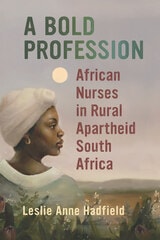
A Bold Profession
African Nurses in Rural Apartheid South AfricaLeslie Anne Hadfield
University of Wisconsin Press, 2023
Leslie Anne Hadfield compellingly demonstrates how these women were able to successfully carve out their own professional space and reshape notions of health and healing in the Eastern Cape. Bringing forth the stories of these nurses in their own voices, A Bold Profession is an homage to their dedication to the well-being of their communities. Hadfield sheds light on the struggles of balancing commitment to career and family lives during an oppressive apartheid. The volume fills an important gap for scholars studying the history of women, nursing, and health care in South Africa, illuminating the humanity of health care workers.

A Bountiful Harvest
The Midwestern Farm Photographs of Pete Wettach, 1925-1965Leslie A. Loveless
University of Iowa Press, 2002

A Box of Photographs
Roger Grenier
University of Chicago Press, 2013

A Boy in Terezín
The Private Diary of Pavel Weiner, April 1944–April 1945Pavel Weiner
Northwestern University Press, 2011
The Germans claimed that Theresienstadt was "the town the Führer gave the Jews," and they temporarily transformed it into a Potemkin village for an International Red Cross visit in June 1944, the only Nazi camp opened to outsiders. But the Germans lied. Theresienstadt was a holding pen for Jews to be shipped east to annihilation camps.
While famous and infamous figures and historical events flit across the pages, they form the background for Pavel's life. Assigned to the now-famous Czech boys' home, L417, Pavel served as editor of the magazine Ne?ar. Relationships, sports, the quest for food, and a determination to continue their education dominate the boys' lives. Pavel's father and brother were deported in September 1944; he turned thirteen (the age for his bar mitzvah) in November of that year, and he grew in his ability to express his observations and reflect on them. A Boy in Terezín registers the young boy's insights, hopes, and fears and recounts a passage into maturity during the most horrifying of times.
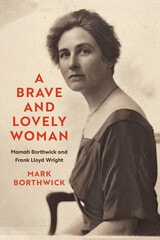
A Brave and Lovely Woman
Mamah Borthwick and Frank Lloyd WrightMark Borthwick
University of Wisconsin Press, 2025
Little of Wright’s life and work has been left untouched by his many admirers, critics, and biographers. And yet the woman who stood at the center of his emotional life, Mamah Borthwick, has fallen into near obscurity. Mark Borthwick—a distant relative—recenters Mamah Borthwick in her own life, presenting a detailed portrait of a fascinating woman, a complicated figure who was at once a dedicated mother and a faithless spouse, a feminist and a member of a conservative sorority, a vivacious extrovert and a social pariah. Careful research and engaging prose at last give Borthwick, an obscure but crucial character in one of America’s most famous tragedies, center stage.
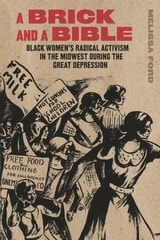
A Brick and a Bible
Black Women's Radical Activism in the Midwest during the Great DepressionMelissa Ford
Southern Illinois University Press, 2022
Uncovering the social revolution led by Black women in the heartland
In this first study of Black radicalism in midwestern cities before the civil rights movement, Melissa Ford connects the activism of Black women who championed justice during the Great Depression to those involved in the Ferguson Uprising and the Black Lives Matter movement. A Brick and a Bible examines how African American working-class women, many of whom had just migrated to “the promised land” only to find hunger, cold, and unemployment, forged a region of revolutionary potential.
A Brick and a Bible theorizes a tradition of Midwestern Black radicalism, a praxis-based ideology informed by but divergent from American Communism. Midwestern Black radicalism that contests that interlocking systems of oppression directly relates the distinct racial, political, geographic, economic, and gendered characteristics that make up the American heartland. This volume illustrates how, at the risk of their careers, their reputations, and even their lives, African American working-class women in the Midwest used their position to shape a unique form of social activism.
Case studies of Detroit, St. Louis, Chicago, and Cleveland—hotbeds of radical activism—follow African American women across the Midwest as they participated in the Ford Hunger March, organized the Funsten Nut Pickers’ strike, led the Sopkin Dressmakers’ strike, and supported the Unemployed Councils and the Scottsboro Boys’ defense. Ford profoundly reimagines how we remember and interpret these “ordinary” women doing extraordinary things across the heartland. Once overlooked, their activism shaped a radical tradition in midwestern cities that continues to be seen in cities like Ferguson and Minneapolis today.

A Brief History of American Sports
Elliott J. Gorn and Warren Goldstein
University of Illinois Press, 2013
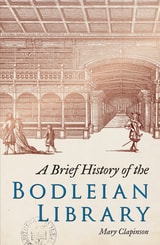
A Brief History of the Bodleian Library
Mary Clapinson
Bodleian Library Publishing, 2015
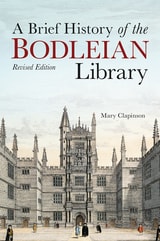
A Brief History of the Bodleian Library takes readers through the Library’s history, from its founding in 1602 by Sir Thomas Bodley to the present day. Along the way, the book traces the development of the Library’s incomparable collection, complete with details that reveal the eccentricities of those who have helped shape it, including Bodley himself, who conceived of the Library as a “republic of the learned,” and King George VI, who inadvertently delayed the opening of the New Bodleian in 1946 when he broke the key in the lock. Covering the major moments in the Library’s history and with a great many fun facts—How did the Library come to own not one of Shakespeare’s First Folios but two?—the book also apprises readers of its present concerns, including the building of individual subject libraries across Oxford, the use of underground passages, and the perennial search for more space.
A Brief History of the Bodleian Library
Mary Clapinson
Bodleian Library Publishing, 2020
How did a library founded over four hundred years ago grow to become the world-renowned institution it is today, home to over thirteen million items? From its foundation by Sir Thomas Bodley in 1598 to the opening of the Weston Library in 2015, this illustrated account shows how the Library’s history has been involved with the British monarchy and political events throughout the centuries. The history of the Library is also a history of collectors and collections, and this book traces the story of major donations and purchases, making use of the Library’s own substantial archives to show how it came to house key items such as early confirmations of the Magna Carta, Shakespeare’s First Folio, and the manuscript of Jane Austen’s earliest writings, among many others.
This revised edition brings the history of the Bodleian Library up to the present moment. Beautifully illustrated with prints, portraits, manuscripts, and archival material, this book is essential reading for anyone interested in the history of libraries and collections.
A Brief History of the Spanish Language
David A. Pharies
University of Chicago Press, 2007
After introductory chapters on what it means to study the history of a language, the concept of linguistic change, and the nature of language families, Pharies traces the development of Spanish from its Latin roots, all with the minimum amount of technical language possible. In the core sections of the book, readers are treated to an engaging and remarkably succinct presentation of the genealogy and development of the language, including accounts of the structures and peculiarities of Latin, the historical and cultural events that deeply influenced the shaping of the language, the nature of Medieval Spanish, the language myths that have become attached to Spanish, and the development of the language beyond the Iberian Peninsula, especially in the Americas. Focusing on the most important facets of the language’s evolution, this compact work makes the history of Spanish accessible to anyone with a knowledge of Spanish and a readiness to grasp basic linguistic concepts.
Available in both English and Spanish editions, A Brief History of the Spanish Language provides a truly outstanding introduction to the exciting story of one of the world’s great languages.
A Brief History of the Spanish Language
Second EditionDavid A. Pharies
University of Chicago Press, 2015
A Brief History of the Spanish Language focuses on the most important aspects of the development of the Spanish language, eschewing technical jargon in favor of straightforward explanations. Along the way, it answers many of the common questions that puzzle native speakers and non-native speakers alike, such as: Why do some regions use tú while others use vos? How did the th sound develop in Castilian? And why is it la mesa but el agua?
David A. Pharies, a world-renowned expert on the history and development of Spanish, has updated this edition with new research on all aspects of the evolution of Spanish and current demographic information. This book is perfect for anyone with a basic understanding of Spanish and a desire to further explore its roots. It also provides an ideal foundation for further study in any area of historical Spanish linguistics and early Spanish literature.
A Brief History of the Spanish Language is a grand journey of discovery, revealing in a beautifully compact format the fascinating story of the language in both Spain and Spanish America.

A Brief Life of Aquinas
The Theologian in His ContextJean-Pierre Torrell
Catholic University of America Press, 2024

A Bright Light of Hope
The Elizabeth Peratrovich StoryAnnie Boochever
University of Alaska Press, 2026
No one expected the girl from a small town in Alaska to make history, but Elizabeth Peratrovich saw discrimination and refused to stay silent. Fairness became the driving force of her life. She helped change Alaska so everyone, no matter what race, would be treated equally under the law. This is her story.
A Bright Light of Hope: The Elizabeth Peratrovich Story is the first picture biography for young people that tells the true story of the remarkable Alaska Native woman whose fight, alongside other Alaska leaders, guaranteed equal treatment under Alaska law, regardless of race. It was a right that took the rest of the country nearly twenty more years to realize with the US Civil Rights Act of 1964. Beautifully illustrated by Yup’ik artist Apay’uq Moore and adapted from Fighter in Velvet Gloves: Alaska Civil Rights Hero Elizabeth Peratrovich for grade school students, A Bright Light of Hope is just that—a light of hope. Published at a time when stories of Indigenous people are being actively suppressed by the federal government, the Elizabeth Peratrovich story brings hope to young people that they can make real change in their communities.
An accompanying study guide that features a scripted theatrical adaptation of the book intended for student performance as well as a variety of classroom activities is also available.
A British Enterprise in Brazil
The St. John d'el Rey Mining Company and the Morro Velho Gold Mine, 1830–1960Marshall Eakin
Duke University Press, 1990
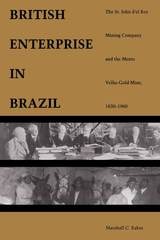
Utilizing company and local archives, Eakin shows that the company was surprisingly ineffective in translating economic success into political influence in Brazil. The most impressive impact of the British operation was at the local level, transforming a small, agrarian community into a sizable industrial city. Virtually a company town, Nova Lima experienced a small-scale industrial revolution as the community made the transition from the largest industrial slave complex in Brazil to a working-class city torn by labor strife and violence between communists and their opponents.

A Building History of Northern New England
James L. Garvin
University Press of New England, 2002
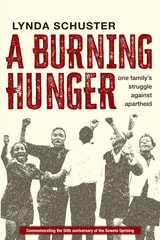
A Burning Hunger
One Family’s Struggle Against ApartheidLynda Schuster
Ohio University Press, 2006
Reissued for the 50th anniversary of the Soweto Uprising, A Burning Hunger reveals how one family’s courage ignited resistance and forever changed South Africa.
If the Mandelas were the generals in the fight for black liberation, the Mashininis were the foot soldiers. Theirs is a story of exile, imprisonment, torture, and loss, but also of dignity, courage, and strength in the face of appalling adversity. Originally published in Great Britain to critical acclaim, A Burning Hunger: One Family’s Struggle Against Apartheid tells a deeply moving human story and is one of the seminal books about the struggle against apartheid.
This family, Joseph and Nomkhitha Mashinini and their thirteen children, became immersed in almost every facet of the liberation struggle—from guerrilla warfare to urban insurrection. Although Joseph and Nomkhitha were peaceful citizens who had never been involved in politics, five of their sons became leaders in the antiapartheid movement. When the students of Soweto rose up in 1976 to protest a new rule making Afrikaans the language of instruction, they were led by charismatic young Tsietsi Mashinini. Scores of students were shot down and hundreds were injured. Tsietsi’s actions on that day set in motion a chain of events that would forever change South Africa, define his family, and transform their lives.
A Burning Hunger shows the human catastrophe that plagued generations of black Africans in the powerful story of one religious and law-abiding Soweto family. Basing her narrative on extensive research and interviews, Lynda Schuster richly portrays this remarkable family and in so doing reveals black South Africa during a time of momentous change.

A Byzantine Monastic Office, A.D. 1105
Jeffrey C. Anderson
Catholic University of America Press, 2016
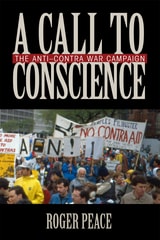
A Call to Conscience
The Anti-Contra War CampaignRoger Peace
University of Massachusetts Press, 2012
Unlike earlier U.S. interventions in Latin America, the Reagan administration's attempt to overthrow the Sandinista government of Nicaragua during the 1980s was not allowed to proceed quietly. Tens of thousands of American citizens organized and agitated against U.S. aid to the counterrevolutionary guerrillas, known as “contras.” Believing the Contra War to be unnecessary, immoral, and illegal, they challenged the administration's Cold War stereotypes, warned of “another Vietnam,” and called on the United States to abide by international norms.
A Call to Conscience offers the first comprehensive history of the anti–Contra War campaign and its Nicaragua connections. Roger Peace places this eight-year campaign in the context of previous American interventions in Latin America, the Cold War, and other grassroots oppositional movements. Based on interviews with American and Nicaraguan citizens and leaders, archival records of activist organizations, and official government documents, this book reveals activist motivations, analyzes the organizational dynamics of the anti–Contra War campaign, and contrasts perceptions of the campaign in Managua and Washington.
Peace shows how a variety of civic groups and networks—religious, leftist, peace, veteran, labor, women's rights—worked together in a decentralized campaign that involved extensive transnational cooperation.
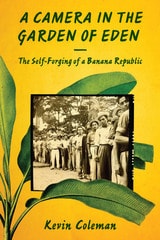
A Camera in the Garden of Eden
The Self-Forging of a Banana RepublicBy Kevin Coleman
University of Texas Press, 2016
In the early twentieth century, the Boston-based United Fruit Company controlled the production, distribution, and marketing of bananas, the most widely consumed fresh fruit in North America. So great was the company’s power that it challenged the sovereignty of the Latin American and Caribbean countries in which it operated, giving rise to the notion of company-dominated “banana republics.”
In A Camera in the Garden of Eden, Kevin Coleman argues that the “banana republic” was an imperial constellation of images and practices that was checked and contested by ordinary Central Americans. Drawing on a trove of images from four enormous visual archives and a wealth of internal company memos, literary works, immigration records, and declassified US government telegrams, Coleman explores how banana plantation workers, women, and peasants used photography to forge new ways of being while also visually asserting their rights as citizens. He tells a dramatic story of the founding of the Honduran town of El Progreso, where the United Fruit Company had one of its main divisional offices, the rise of the company now known as Chiquita, and a sixty-nine day strike in which banana workers declared their independence from neocolonial domination. In telling this story, Coleman develops a new set of conceptual tools and methods for using images to open up fresh understandings of the past, offering a model that is applicable far beyond this pathfinding study.
A Canyon through Time
Archaeology, History, and Ecology of the Tecolote Canyon Area, Santa Barbara County, CaliforniaJon M Erlandson
University of Utah Press, 2008
Known by the Chumash Indians as Hel’apunitse (guitar fish), the canyon was a major nexus of Chumash village life from about 2000 to 500 years ago. After the arrival of Europeans, the canyon passed from Chumash hands through successive Spanish, Mexican, and American administrations.
In A Canyon through Time, the authors summarize the deep history of this beautiful canyon, which serves as a fascinating history in microcosm of the California coastal region. Using data from archaeology, ecology, geology, geography, and history, they weave an interdisciplinary tale of the natural and human prehistory and history of the Tecolote Canyon area.

A Capital Idea
An Illustrated History of the Capital HotelSteven Weintz
University of Arkansas Press, 2002

A Capital Idea
An Illustrated History of the Capital HotelSteven Weintz
University of Arkansas Press, 2026
The Capital Hotel of Little Rock, Arkansas, is uniquely beautiful, with its cast-iron façade and marble lobby, its high-ceilinged rooms, and its rich history. Since its opening in 1876, it has been the stage for the struggles, schemes, and dreams of generations of politicians, debutantes, businesspeople, and newlyweds. A wide variety of owners and visionaries have shaped the hotel’s fortunes, including the Yankee entrepreneur who raised its walls, the Italian immigrant family who kept it going in its worst days, the architect who envisioned new life in its venerable bones, and the financiers and craftsmen who brought the Capital to its current glory as a luxury hotel.
The story of the Capital Hotel is also the story of Little Rock and of many American cities: built in the commercial boom of the 1870s, in full flower at the turn of the century—then battered by the Depression, optimistic in the postwar era, decrepit by the late 1960s, rejuvenated in the 1980s and 2000s, and now thriving today.
This lavishly illustrated volume—recently updated to celebrate the hotel’s 150th anniversary—traces the building’s lively history, from its origins as a commercial hub to its spectacular renovation into a jewel of downtown Little Rock.
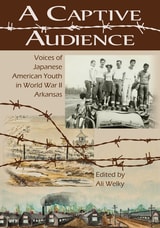
A Captive Audience
Voices of Japanese American Youth in World War II ArkansasAli Welky
Butler Center for Arkansas Studies, 2015
Intended for young-adult readers, this book explores important dimensions of Arkansas and U.S. history, including human rights and what it means to be an American.

A Cardboard Castle?
An Inside History of the Warsaw Pact, 1955-1991The National Security Archive Mastny
Central European University Press, 2005
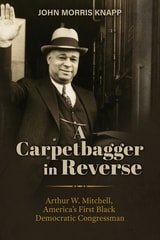
A Carpetbagger in Reverse
Arthur W. Mitchell, America's First Black Democratic CongressmanJohn Morris Knapp
University of Alabama Press, 2025
From Alabama to Congress—Arthur W. Mitchell’s fight for justice rewrote the rules of Black political power.
A Carpetbagger in Reverse offers a landmark reassessment of the life, career, and accomplishments of groundbreaking Congressman Arthur W. Mitchell, the first Black Democrat elected to Congress and the only Black member of Congress during his four terms of service from 1935 to 1943.
Born to former enslaved people in Alabama in 1883, Mitchell studied with Booker T. Washington at Tuskegee Institute and later moved to Washington DC and became a lawyer. He continued his career in Chicago, where the Great Migration had helped transform the city’s South Side into a vibrant, multiracial enclave.
As a congressman, Mitchell helped to create an enduring alliance between Black Americans and the Democratic party. Seeing his primary role as representing the South’s disempowered Black population, his belief that solutions to the region’s racial problems should arise from a new cadre of locally trained leaders brought him into frequent, vituperative conflict with the NAACP, the Republican Party, and the Black press. The first Black lawyer to argue successfully before the Supreme Court, his unanimous victory in Mitchell v. United States would have long-term consequences for the Civil Rights Movement.
A Carpetbagger in Reverse is the first publication significantly based on Mitchell’s papers, an essential and often overlooked source of insights about the development of Black political and culture life in the 1930s and 1940s.

A Casebook on Roman Water Law
Cynthia Jordan Bannon
University of Michigan Press, 2020
This casebook aims to cross historical and disciplinary boundaries by making the primary evidence for Roman water rights accessible to students and researchers. Cases are presented in both original Latin and English translation. To prepare for study of the cases, each chapter opens with an overview of its topic while the introduction presents the evidence for water rights and contextualizes them within historical and conceptual frameworks.
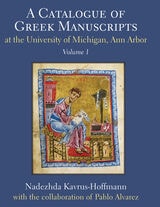
A Catalogue of Greek Manuscripts at the University of Michigan, Ann Arbor, Volume 1
Nadezhda Kavrus-Hoffmann with the collaboration of Pablo Alvarez
University of Michigan Press, 2021
A Catalogue of Greek Manuscripts at the University of Michigan, Ann Arbor is a comprehensive, fully illustrated catalogue of the largest collection of Greek manuscripts in America, including 110 codices and fragments ranging from the fourth to the nineteenth century. The collection, held in the Special Collections Research Center of the University of Michigan Library, contains many manuscripts from Epirus and the Meteora monasteries built on high pinnacles of rocks in Thessaly. Nadezhda Kavrus-Hoffmann has based the manuscript descriptions on the latest developments in the fields of paleography and codicology, including the newest recommendations of the Institute for Research and History of Texts in Paris. The catalogue includes high-resolution plates of all the manuscripts, allowing researchers to compare the entries with other Greek manuscripts around the world. This catalogue contains a trove of fascinating information related to Byzantine culture that will be available for the first time to scholars working on various disciplines of the humanities such as Classical and Byzantine Studies, Art History, Medieval Studies, Theology, and History.
This is the first volume of a projected two-volume set. Volume 2, also by Nadezhda Kavrus-Hoffmann, will contain descriptions of remaining Greek manuscripts in the Library’s collection, starting with Mich. Ms. 59 and ending with Mich. Ms. 238, for a total of 53 manuscripts and 8 fragments. Both volumes will have the same format – catalogue entries for each manuscript together with extensive illustrations. The publication date for Volume 2 has not been established.
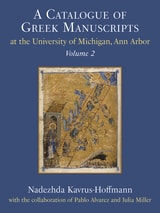
A Catalogue of Greek Manuscripts at the University of Michigan, Ann Arbor, Volume 2
Nadezhda Kavrus-Hoffmann with the collaboration of Pablo Alvarez and Julia Miller
University of Michigan Press, 2026
A Catalogue of Greek Manuscripts at the University of Michigan, Ann Arbor, Volume II unveils the rich diversity and enduring legacy of the Greek manuscript tradition preserved in one of North America's largest collections. Building on the acclaimed first volume, this second and concluding volume offers comprehensive illustrated descriptions of eighty-four manuscripts and fragments housed in the University of Michigan Library's Special Collections Research Center. The discovery of twenty-three previously unknown manuscripts and fragments significantly expands our understanding of Byzantine and post-Byzantine book culture, illuminating the remarkable continuity of Greek scholarly, liturgical, and artistic traditions from the ninth through the nineteenth centuries.
Each entry integrates codicological features, handwriting analysis, textual content, decoration, binding, provenance, and references to earlier scholarship as well as high-quality color plates to illustrate representative pages, script types, and illuminations. Among the exceptional highlights are a fragment of The Great Calculation According to the Indians by Maximos Planoudes, preserving portions of this rare mathematical treatise otherwise lost; an illuminated 1371 copy of The Heavenly Ladder by John Klimax, created by the renowned scribe Joasaph II of the Hodegon Monastery in Constantinople; and a newly identified manuscript containing rare patristic homilies linked to the sixteenth-century Choniates scriptorium in Venice.
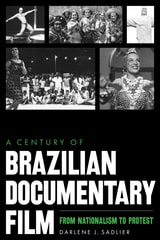
A Century of Brazilian Documentary Film
From Nationalism to ProtestDarlene J. Sadlier
University of Texas Press, 2022
Since the late nineteenth century, Brazilians have turned to documentaries to explain their country to themselves and to the world. In a magisterial history covering one hundred years of cinema, Darlene J. Sadlier identifies Brazilians’ unique contributions to a diverse genre while exploring how that genre has, in turn, contributed to the making and remaking of Brazil.
A Century of Brazilian Documentary Film is a comprehensive tour of feature and short films that have charted the social and political story of modern Brazil. The Amazon appears repeatedly and vividly. Sometimes—as in a prize-winning 1922 feature—the rainforest is a galvanizing site of national pride; at other times, the Amazon has been a focus for land-reform and Indigenous-rights activists. Other key documentary themes include Brazil’s swings from democracy to dictatorship, tensions between cosmopolitanism and rurality, and shifting attitudes toward race and gender. Sadlier also provides critical perspectives on aesthetics and media technology, exploring how documentaries inspired dramatic depictions of poverty and migration in the country’s Northeast and examining Brazilians’ participation in streaming platforms that have suddenly democratized filmmaking.

A Century of Church History
The Legacy of Philip SchaffEdited by Henry Warner Bowden. Foreword by Jaroslav Pelikan
Southern Illinois University Press, 1988
In commemoration of the hundredth anniversary of the American Society of Church History, this monumental compilation of historiographical scholarship calls on 10 eminent specialists to review significant achievements that over the past century have shaped current understanding of the multifaceted church.
The book inevitably honors the memory of Philip Schaff, the great 19th century church historian who laid the foundations of the discipline in America and in 1888 founded the ASCH. In examining the major subfields of church history, many of which Schaff pioneered himself in the U.S., the essayists explore such topics as early Christianity, the medieval church, the Reformation, American religious liberty, creeds and liturgies, and ecumenism.
The anthology includes David W. Lotz, "Philip Schaff and the Idea of Church History"; Robert M. Kingdon, "Reformation Studies"; John F. Wilson, "Civil Authority and Religious Freedom in America: Philip Schaff on the United States as a Christian Nation"; and Aidan Kavanagh, "Liturgical and Credal Studies"; Henry W. Bowden, "The First Century: Institutional Development and Ideas about the Profession"; Glenn F. Chesnut, "A Century of Patristic Studies, 1888–1988"; Bernard McGinn, "The Gold of Catholicity": Reflections on a Century of American Study of Medieval Church History"; Jay P. Dolan, "Immigration and American Christianity: A History of Their Histories"; Gerald H. Anderson, "To the Ends of the Earth: American Protestants in Pursuit of Mission"; and John T. Ford, "Ecumenical Studies."
The topics addressed in this book are the major concerns of church history today. The essays provide a critical survey of major developments in the different fields over the past century, discussing the scholars and publications that brought new information to light or changed the general understanding of church history by contributing fresh interpretations. In bringing readers up to date in church history by surveying benchmark contributions in each of the special areas surveyed, the contributors seek to orient historians and stimulate colleagues toward further investigation of a common past.
A common thread running through all of these essays, Bowden notes, "is the recognition that we are heirs to a major change in historical self-understanding. Over the course of a century we have moved from views where history taught lessons of exclusivist rectitude to an appreciation of shared heritage and mutual development." Two appendixes provide extensive historical data about the society itself.
A Century of Controversy
Constitutional Reform in AlabamaH. Bailey Thomson
University of Alabama Press, 2002
A timely examination of Alabama’s severely criticized state constitution
Alabama’s present constitution, adopted in 1901, is widely viewed as the source of many, if not most, of the state’s historic difficulties and inequities. Chief among these is a poorly funded school system, an imbalanced tax system that favors special business interests, legislated racism, and unchecked urban sprawl. Many citizens believe that, after 100 years of overburdening amendments and confusing addendums, the constitution urgently needs rewriting.
With this book, Bailey Thomson has assembled the best scholarship on the constitution, its history, and its implications for the future. Historian Harvey H. Jackson III details the degree to which the 1901 document was drafted as a legal tool to ensure white supremacy at the expense of poor whites and blacks, while Joe A. Sumners illustrates how the constitution ties the hands of elected civic leaders by handing authority for local decisions to state government in Montgomery. James W. Williams Jr. explores the impact of the state constitution on the beleaguered tax system and the three principal “revenue crises” it has engendered. Thomson’s own contribution explains how, in contrast to the previous failed attempts for constitutional change by past governors who appealed to their fellow power brokers, the current reform movement arose from the grassroots level.
As citizens and politicians in Alabama review the 1901 constitution for revision, as they navigate the pitfalls and opportunities inherent in change, it is incumbent that they inform themselves adequately on the controversies that have swirled around the constitution since its adoption. The future of Alabama’s government will depend upon it, as will the fortunes of Alabama’s business interests and the well-being of every citizen in the state for years to come.

A Century of Jewish Life In Dixie
The Birmingham ExperienceMark H. Elovitz
University of Alabama Press, 2003
Exploring the resilience, identity, and contributions of Southern Jews in the heart of Alabama.
This is the first substantial history of the Jews in any inland town or city of the industrial South. A Century of Jewish Life in Dixie offers a vivid and deeply researched portrait of Birmingham, Alabama’s Jewish community. Mark H. Elovitz traces the community’s evolution from its immigrant roots in the late 19th century through its growth into a vibrant and influential part of Southern society. Drawing on archival records, oral histories, and cultural analysis, Elovitz explores how Southern Jews balanced tradition and assimilation, navigated racial and religious tensions, and contributed to civic and economic life in a region undergoing dramatic transformation. This book provides a rare and nuanced look at Jewish identity in the American South, making it an essential resource for scholars of Jewish studies, Southern history, and American cultural life.
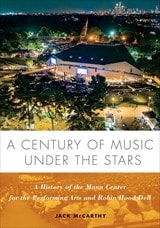
A Century of Music Under the Stars
A History of the Mann Center for the Performing Arts and Robin Hood DellMcCarthy, Jack, and The Mann Center for the Performing Arts
Temple University Press, 2025
The Dell, which opened in 1930, and the Mann, which opened in 1976, were initially built as summer homes for The Philadelphia Orchestra. As McCarthy fondly recounts, the Mann Center evolved to host the world’s top artists across many musical genres. Contemporary audiences have gathered on the Great Lawn for concerts by performers including James Taylor, The Roots, Phish, Diana Ross, John Legend, and others.
The venues, however, are more than just the music; they are about the beautiful natural setting, communal atmosphere, and spectacular view of the Philadelphia skyline. A Century of Music Under the Stars is a revealing and celebratory look back at beloved Philadelphia cultural icons. This informative and illuminating history will provide happy memories for generations of music lovers.
A Century of Nature
Twenty-One Discoveries that Changed Science and the WorldEdited by Laura Garwin and Tim Lincoln
University of Chicago Press, 2003

A Century of Populist Demagogues
Eighteen European Portraits, 1918–2018Ivan T. Berend
Central European University Press, 2020
The renowned historian Ivan T. Berend discusses populist demagoguery through the presentation of eighteen politicians from twelve European countries spanning World War I to the present. Berend defines demagoguery, reflects on its connections with populism, and examines the common features and differences in the demagogues’ programs and language.
Mussolini and Hitler, the “model demagogues,” are only briefly discussed, as is the election of Donald Trump in the United States and its impact on Europe. The eighteen detailed portraits include two communists, two fascists, and several right-wing and anti-EU politicians, extending across the full range of demagoguery. The author covers Béla Kun, the leader of the Hungarian Soviet Republic in 1919, weaving through Codreanu and Gömbös from the 1930s, on to Stahremberg and Haider in Austria, and then more broadly throughout Europe from Ceaușescu, Milošević, Tuđjman, Izetbegović, Berlusconi, Wilders, to the two Le Pens, Farage, and Boris Johnson, Orbán and the two Kaczyńskis. Each case includes an analysis of the time and place and is illustrated with quotations from the demagogues’ speeches.
This book is a warning about the continuing threat of populist demagogues both for their subjects and for history itself. Berend insists on the crucial importance for Europe to understand the reality behind their promises and persuasive language as imperative to impeding their success.