Results by title
12 books match the query 'Home Front'
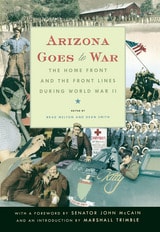
Arizona Goes to War
The Home Front and the Front Lines during World War IIBrad Melton
University of Arizona Press, 2003
Arizona Goes to War takes readers back to a time when military installations sprang up all over the state as thousands of airmen arrived to train in Arizona's clear desert skies, and when soldiers destined for North Africa came to get their first taste of desert sands. In its pages, readers will learn not only of the green recruits who passed through Arizona, but also of the state's Native Americans who registered for the draft in record numbers, of Japanese Americans unjustly incarcerated in desert detention centers, and of ordinary citizens who did their bit for the war effort. Included in the book are some of World War II's most incredible stories, such as the testing of tank engines in Arizona dust storms for the North Africa campaign, the interrogation of Japanese consular diplomats from Honolulu at the Triangle T Guest Ranch near Dragoon, and the escape of 25 German POWs from a detention camp outside of Phoenix—called the greatest escape by Axis prisoners from a U.S. compound during the war. A separate chapter pays tribute to Arizona's war heroes: not only Silvestre Herrera, but also fighter ace Grant Turley, Midway hero John C. Butler, and Pima Indian Ira Hayes, who helped raise the flag on Iwo Jima. A host of profiles and sidebars bring people and events of the wartime era to life, and a useful appendix provides a traveler's guide to Arizona's World War II sites.
World War II may have transformed Arizona more than it did any other state; not only did Arizona's industry blossom, its population did as well when servicemen who had been stationed there returned to put down stakes. Arizona Goes to War recaptures the glory and spirit of that era and reminds us that the people who lived through those years are well worth commemorating.
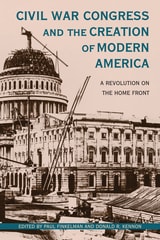
Civil War Congress and the Creation of Modern America
A Revolution on the Home FrontPaul Finkelman
Ohio University Press, 2018
Most literature on the Civil War focuses on soldiers, battles, and politics. But for every soldier in the United States Army, there were nine civilians at home. The war affected those left on the home front in many ways. Westward expansion and land ownership increased. The draft disrupted families while a shortage of male workers created opportunities for women that were previously unknown.
The war also enlarged the national government in ways unimagined before 1861. The Homestead Act, the Land Grant College Act, civil rights legislation, the use of paper currency, and creation of the Internal Revenue Service to collect taxes to pay for the war all illustrate how the war fundamentally, and permanently, changed the nation.
The essays in this book, drawn from a wide range of historical expertise and approaching the topic from a variety of angles, explore the changes in life at home that led to a revolution in American society and set the stage for the making of modern America.
Contributors: Jean H. Baker, Jenny Bourne, Paul Finkelman, Guy Gugliotta, Daniel W. Stowell, Peter Wallenstein, Jennifer L. Weber.
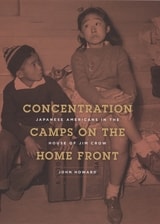
Concentration Camps on the Home Front
Japanese Americans in the House of Jim CrowJohn Howard
University of Chicago Press, 2008
While the basic facts of Japanese-American incarceration are well known, John Howard’s extensive research gives voice to those whose stories have been forgotten or ignored. He highlights the roles of women, first-generation immigrants, and those who forcefully resisted their incarceration by speaking out against dangerous working conditions and white racism. In addition to this overlooked history of dissent, Howard also exposes the government’s aggressive campaign to Americanize the inmates and even convert them to Christianity. After the war ended, this movement culminated in the dispersal of the prisoners across the nation in a calculated effort to break up ethnic enclaves.
Howard’s re-creation of life in the camps is powerful, provocative, and disturbing. Concentration Camps on the Home Front rewrites a notorious chapter in American history—a shameful story that nonetheless speaks to the strength of human resilience in the face of even the most grievous injustices.
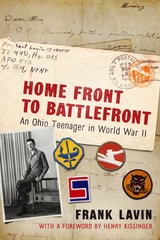
Home Front to Battlefront
An Ohio Teenager in World War IIFrank Lavin
Ohio University Press, 2016
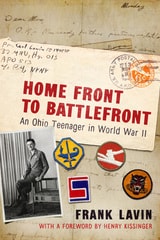
Carl Lavin was a high school senior when Pearl Harbor was attacked. The Canton, Ohio, native was eighteen when he enlisted, a decision that would take him with the US Army from training across the United States and Britain to combat with the 84th Infantry Division in the Battle of the Bulge. Home Front to Battlefront is the tale of a foot soldier who finds himself thrust into a world where he and his unit grapple with the horrors of combat, the idiocies of bureaucracy, and the oddities of life back home—all in the same day. The book is based on Carl’s personal letters, his recollections and those of the people he served beside, official military history, private papers, and more.
Home Front to Battlefront contributes the rich details of one soldier’s experience to the broader literature on World War II. Lavin’s adventures, in turn disarming and sobering, will appeal to general readers, veterans, educators, and students of the war. As a history, the book offers insight into the wartime career of a Jewish Ohioan in the military, from enlistment to training through overseas deployment. As a biography, it reflects the emotions and the role of the individual in a total war effort that is all too often thought of as a machine war in which human soldiers were merely interchangeable cogs.
Home Front to Battlefront
An Ohio Teenager in World War IIFrank Lavin
Ohio University Press, 2001
Carl Lavin was a high school senior when Pearl Harbor was attacked. The Canton, Ohio, native was eighteen when he enlisted, a decision that would take him with the US Army from training across the United States and Britain to combat with the 84th Infantry Division in the Battle of the Bulge. Home Front to Battlefront is the tale of a foot soldier who finds himself thrust into a world where he and his unit grapple with the horrors of combat, the idiocies of bureaucracy, and the oddities of life back home—all in the same day. The book is based on Carl’s personal letters, his recollections and those of the people he served beside, official military history, private papers, and more.
Home Front to Battlefront contributes the rich details of one soldier’s experience to the broader literature on World War II. Lavin’s adventures, in turn disarming and sobering, will appeal to general readers, veterans, educators, and students of the war. As a history, the book offers insight into the wartime career of a Jewish Ohioan in the military, from enlistment to training through overseas deployment. As a biography, it reflects the emotions and the role of the individual in a total war effort that is all too often thought of as a machine war in which human soldiers were merely interchangeable cogs.
Home Front
Daily Life in the Civil War NorthPeter John Brownlee, Sarah Burns, Diane Dillon, Daniel Greene, and Scott Manning Stevens
University of Chicago Press, 2013
Home Front: Daily Life in the Civil War North reveals this side of the war as it happened, comprehensively examining the visual culture of the Northern home front. Through contributions from leading scholars from across the humanities, we discover how the war influenced household economies and the cotton economy; how the absence of young men from the home changed daily life; how war relief work linked home fronts and battle fronts; why Indians on the frontier were pushed out of the riven nation’s consciousness during the war years; and how wartime landscape paintings illuminated the nation’s past, present, and future.
A companion volume to a collaborative exhibition organized by the Newberry Library and the Terra Foundation for American Art, Home Front is the first book to expose the visual culture of a world far removed from the horror of war yet intimately bound to it.
Little Italy in the Great War
Philadelphia's Italians on the Battlefield and Home FrontRichard N. Juliani
Temple University Press, 2020
The Great War challenged all who were touched by it. Italian immigrants, torn between their country of origin and country of relocation, confronted political allegiances that forced them to consider the meaning and relevance of Americanization. In his engrossing study, Little Italy in the Great War, Richard Juliani focuses on Philadelphia’s Italian community to understand how this vibrant immigrant population reacted to the war as they were adjusting to life in an American city that was ambivalent toward them.
Juliani explores the impact of the Great War on many immigrant soldiers who were called to duty as reservists and returned to Italy, while other draftees served in the U.S. Army on the Western Front. He also studies the impact of journalists and newspapers reporting the war in English and Italian, and reactions from civilians who defended the nation in industrial and civic roles on the home front.
Within the broader context of the American experience, Little Italy in the Great War examines how the war affected the identity and cohesion of Italians as a population still passing through the assimilation process.
Operation Homecoming
Iraq, Afghanistan, and the Home Front, in the Words of U.S. Troops and Their Families, Updated Editionedited by Andrew Carroll
University of Chicago Press, 2008
“One of the chanted mantras of our time is, ‘But I support the troops.’ Terrific. Now read Operation Homecoming to find out who they are, what they think, feel, want, have learned, won and lost in Iraq and Afghanistan.”—Daniel Henninger, Wall Street Journal
“This anthology is the honest voice of war. . . . In the end, they are all one voice, a voice we must hear, and must not forget.”—Jeff Shaara
“These voices are stirring, chilling, and unforgettable.”—Bobbie Ann Mason
“[Captures] what journalists cannot, no matter how close they get—firsthand accounts from the warriors and the families they leave behind.”—Chicago Tribune
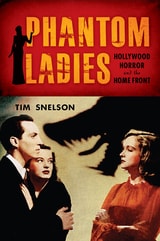
Phantom Ladies
Hollywood Horror and the Home FrontSnelson, Tim
Rutgers University Press, 2014
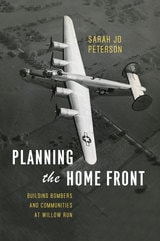
Planning the Home Front
Building Bombers and Communities at Willow RunSarah Jo Peterson
University of Chicago Press, 2013
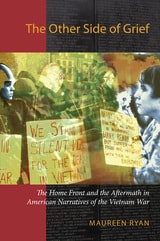
The Other Side of Grief
The Home Front and the Aftermath in American Narratives of the Vietnam WarMaureen Ryan
University of Massachusetts Press, 2008
The lingering aftereffects of the Vietnam War resonate to this day throughout American society: in foreign policy, in attitudes about the military and war generally, and in the contemporary lives of members of the so-called baby boom generation who came of age during the 1960s and early 1970s. While the best-known personal accounts of the war tend to center on the experience of combat, Maureen Ryan's The Other Side of Grief examines the often overlooked narratives—novels, short stories, memoirs, and films—that document the war's impact on the home front.
In analyzing the accounts of Vietnam veterans, women as well as men, Ryan focuses on the process of readjustment, on how the war continued to insinuate itself into their lives, their families, and their communities long after they returned home. She looks at the writings of women whose husbands, lovers, brothers, and sons served in Vietnam and whose own lives were transformed as a result. She also appraises the experiences of the POWs who came to be embraced as the war's only heroes; the ordeal of Vietnamese refugees who fled their “American War” to new lives in the United States; and the influential movement created by those who committed themselves to protesting the war.
The end result of Ryan's investigations is a cogent synthesis of the vast narrative literature generated by the Vietnam War and its aftermath. Together those stories powerfully demonstrate how deeply the legacies of the war penetrated American culture and continue to reverberate still.
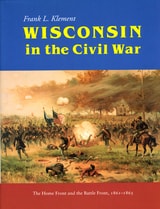
Wisconsin in the Civil War
The Home Front and the Battle Front, 1861-1865Frank Klement
Wisconsin Historical Society Press, 1997