Results by title
9 books match the query 'Home care'
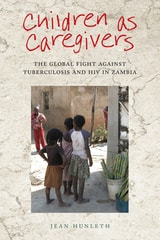
Children as Caregivers
The Global Fight against Tuberculosis and HIV in ZambiaHunleth, Jean
Rutgers University Press, 2017
In Zambia, due to the rise of tuberculosis and the closely connected HIV epidemic, a large number of children have experienced the illness or death of at least one parent. Children as Caregivers examines how well intentioned practitioners fail to realize that children take on active caregiving roles when their guardians become seriously ill and demonstrates why understanding children’s care is crucial for global health policy.
Using ethnographic methods, and listening to the voices of the young as well as adults, Jean Hunleth makes the caregiving work of children visible. She shows how children actively seek to “get closer” to ill guardians by providing good care. Both children and ill adults define good care as attentiveness of the young to adults’ physical needs, the ability to carry out treatment and medication programs in the home, and above all, the need to maintain physical closeness and proximity. Children understand that losing their guardians will not only be emotionally devastating, but that such loss is likely to set them adrift in Zambian society, where education and advancement depend on maintaining familial, reciprocal relationships.
View a gallery of images from the book (https://www.flickr.com/photos/childrenascaregivers)
Download the open access ebook.
Dementia Caregivers Share Their Stories
A Support Group in a BookLynda A. Markut
Vanderbilt University Press, 2005
Highlighting the ingenuity and resourcefulness of caregivers, the book brims with inspirational stories, practical advice, and creative approaches to problem-solving. Among the issues addressed are:
Becoming a caregiver, whether for a spouse or parent
Dealing with the personality changes caused by dementia, from anxiety and paranoia to hallucinations and impulsive behavior
Keeping dementia sufferers meaningfully involved in life
Handling the emotions and stresses of caregiving
Seeking help through support groups and other sources, including medical professionals, clergy, and other family members The authors, who have both been caregivers themselves, augment their interviewees' stories with connective commentary and their own personal stories. A useful resource section is included to refer readers to associations and help-lines.
Helping Yourself Help Others
A Book for CaregiversRosalynn Carter
University of Arkansas Press, 2023
“A practical, highly informative, and sympathetic guide.”
—The Washington Post
Most of us will become a caregiver at some point in our lives. And we will assume this role for the most personal reason imaginable: wanting to help someone we love. But we may not know where to start, and we may be afraid of losing ourselves in this daunting task.
Former first lady Rosalynn Carter, a longtime advocate for caregivers and mental health, knows firsthand the challenges of this labor of love. Drawing upon her own experiences and those of hundreds of others whose stories she gathered over many decades, Mrs. Carter offers reassuring, practical advice to any caregiver who has faced stress, anxiety, or loneliness.
Helping Yourself Help Others, reissued here with a new foreword, is as relevant as ever. Long before the COVID-19 pandemic inspired national conversations about the vast undervaluing of unpaid caregiving, the dangers of burnout, and the merits of self-care for relief, Rosalynn Carter was shining a light on these matters and everything else that caregivers confront. Filled with empathy, this encouraging guide will help you meet a difficult challenge head-on and find fulfillment and empowerment in your caregiving role.
Just Care
Messy Entanglements of Disability, Dependency, and DesireAkemi Nishida
Temple University Press, 2022
Just Care is Akemi Nishida’s thoughtful examination of care injustice and social justice enabled through care. The current neoliberal political economy has turned care into a business opportunity for the healthcare industrial complex and a mechanism of social oppression and control. Nishida analyzes the challenges people negotiate whether they are situated as caregivers, receivers, or both. Also illuminated is how people with disabilities come together to assemble community care collectives and bed activism (resistance and visions emerging from the space of bed) to reimagine care as a key element for social change.
The structure of care, Nishida writes, is deeply embedded in and embodies the cruel social order—based on disability, race, gender, migration status, and wealth—that determines who survives or deteriorates. Simultaneously, many marginalized communities treat care as the foundation of activism. Using interviews, focus groups, and participant observation with care workers and people with disabilities, Just Care looks into lives unfolding in the assemblage of Medicaid long-term care programs, community-based care collectives, and bed activism. Just Care identifies what care does, and asks: How can we activate care justice or just care where people feel cared affirmatively and care being used for the wellbeing of community and for just world making?
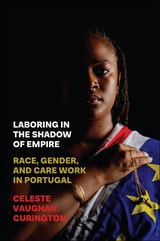
Laboring in the Shadow of Empire
Race, Gender, and Care Work in PortugalCeleste Vaughan Curington
Rutgers University Press, 2024
Winner of the ASA Race, Gender, and Class section's Distinguished Contribution to Scholarship Award
Winner of the ASA Racial and Ethnic Minorities section’s Oliver Cromwell Cox Book Award
Laboring in the Shadow of Empire: Race, Gender, and Care Work in Portugal examines the everyday lives of an African-descendant care service workforce that labors in an ostensibly “anti-racial” Europe and against the backdrop of the Portuguese colonial empire. While much of the literature on global care work has focused on Asian and Latine migrant care workers, there is comparatively less research that explicitly examines African care workers and their migration histories to Europe. Sociologist Celeste Vaughan Curington focuses on Portugal—a European setting with comparatively liberal policies around family settlement and naturalization for migrants. In this setting, rapid urbanization in the late twentieth century, along with a national push to reconcile work and family, has shaped the growth of paid home care and cleaning service industries. Many researchers focus on informal work settings, where immigrant rights are restricted and many workers are undocumented or without permanent residence status. Curington instead examines workers who have accessed citizenship or permanent residence status and also explores African women’s experiences laboring in care and service industries in the formal market, revealing how deeply colonial and intersectional logics of a racialized and international division of reproductive labor in Portugal render these women “hyper-invisible” and “hyper-visible” as “appropriate” workers in Lisbon.
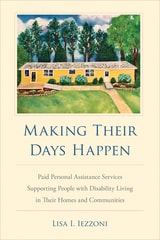
Making Their Days Happen
Paid Personal Assistance Services Supporting People with Disability Living in Their Homes and CommunitiesLisa I. Iezzoni
Temple University Press, 2022
Most Americans—even those with significant disability—want to live in their homes and communities. Unpaid family members or friends often work as “informal” caregivers, helping those who need assistance— and many feel they have no option but to serve. In contrast, paid personal assistance services workers (PAS) provide a lifeline to those consumers with complex needs and limited social networks. However, there is a crisis looming in the increasing needs for paid PAS and the limited available PAS workforce.
Making Their Days Happen explores disability, health, and civil rights, along with relevant federal and state labor policies related to personal assistance services. Lisa Iezzoni addresses the legal context of paid PAS as well as financing mechanisms for obtaining home-based personal assistance. She also draws upon interviews she conducted with paid PAS consumers and PAS workers to explore PAS experiences and their perspectives about their work.
Offering recommendations for improving future experiences of PAS consumers and providers, Iezzoni emphasizes that people with disabilities want to be a part of society, and PAS workers who do this low-wage work find satisfaction in helping them achieve their goals.
Managing Sickle Cell Disease
In Low-Income FamiliesShirley A. Hill
Temple University Press, 2003
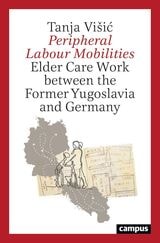
Peripheral Labour Mobilities
Tanja Višic
Campus Verlag, 2022
The precarious situation in the successor states of Yugoslavia created a specific dynamic in the field of labor mobility. Still, little research has been done in this region on how women, who are older care workers from Serbia or Bosnia commute—often via illegal border crossings—to German households to look after the elderly. In Peripheral Labor Mobilities, Tanja Višic explores this gender-specific migration pattern in the first expansive ethnography of contemporary cross-border elder care in this region. She takes up questions about how the mobility and work practices of women are integrated into the socio-economic networks of the informal care work sector while also looking at worker confrontations with labor laws and border regimes. Illustrative case studies clearly detail culturally specific patterns of perception of care work, family relationships, and the mobility demanded by these labor arrangements.
Unsettled Labors
Migrant Care Work in Palestine/IsraelRachel H. Brown
Duke University Press, 2024