Results by title
9 books match the query 'Homosexuality on television'
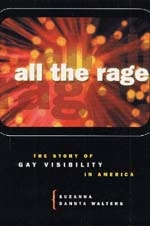
All the Rage
The Story of Gay Visibility in AmericaSuzanna Danuta Walters
University of Chicago Press, 2001
Many consider the new gay visibility a sign of social acceptance, while others charge that it is mere window dressing, obscuring the dogged persistence of discrimination. Walters moves beyond these positions and instead argues that these realities coexist: gays are simultaneously depicted as the sign of social decay and the chic flavor of the month. Taking on the common wisdom that visibility means progress, All the Rage maps the terrain on which gays are accepted as witty accessories in movies, gain access to political power, and yet still fall into constrictive stereotypes. Walters warns us with clarity and wit of the pitfalls of equating visibility with full integration into the fabric of American society. From the playful TV fantasies of lesbian weddings on Friends to the very real obstacles confronting gay marriage, from the award-winning comedy Will & Grace to Bible-thumping radio superhost Dr. Laura, All the Rage takes on naive celebrants and jaded naysayers alike. With a sophisticated mix of caution and optimism, it provides an illuminating guide through these exciting, controversial times.
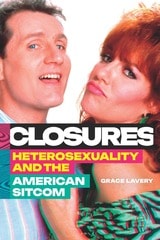
Closures
Heterosexuality and the American SitcomGrace Lavery
Duke University Press, 2024
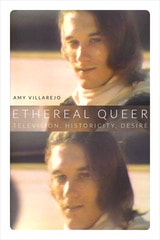
Ethereal Queer
Television, Historicity, DesireAmy Villarejo
Duke University Press, 2013
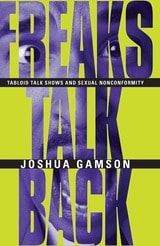
Freaks Talk Back
Tabloid Talk Shows and Sexual NonconformityJoshua Gamson
University of Chicago Press, 1998
"This entertaining, accessible, sobering discussion should make every viewer sit up and ponder the effects and possibilities of America's daily talk-fest with newly sharpened eyes."—Publishers Weekly
"Bold, witty. . . . There's a lot of empirical work behind this deceptively easy read, then, and it allows for the most sophisticated and complex analysis of talk shows yet."—Elayne Rapping, Women's Review of Books
"Funny, well-researched, fully theorized. . . . Engaged and humane scholarship. . . . A pretty inspiring example of what talking back to the mass media can be."—Jesse Berrett, Village Voice
"An extraordinarily well-researched volume, one of the most comprehensive studies of popular media to appear in this decade."—James Ledbetter, Newsday
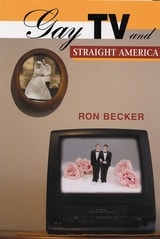
Gay TV and Straight America
Becker, Ron
Rutgers University Press, 2006
After decades of silence on the subject of homosexuality, television in the 1990s saw a striking increase in programming that incorporated and, in many cases, centered on gay material. In shows including Friends, Seinfeld, Party of Five, Homicide, Suddenly Susan, The Commish, Ellen, Will & Grace, and others, gay characters were introduced, references to homosexuality became commonplace, and issues of gay and lesbian relationships were explored, often in explicit detail.
In Gay TV and Straight America, Ron Becker draws on a wide range of political and cultural indicators to explain this sudden upsurge of gay material on prime-time network television. Bringing together analysis of relevant Supreme Court rulings, media coverage of gay rights battles, debates about multiculturalism, concerns over political correctness, and much more, Becker's assessment helps us understand how and why televised gayness was constructed by a specific culture of tastemakers during the decade.
On one hand the evidence points to network business strategies that embraced gay material as a valuable tool for targeting a quality audience of well-educated, upscale adults looking for something "edgy" to watch. But, Becker also argues that the increase of gay material in the public eye creates growing mainstream anxiety in reaction to the seemingly civil public conversation about equal rights.
In today's cultural climate where controversies rage over issues of gay marriage yet millions of viewers tune in weekly to programs like Queer Eye for the Straight Guy, this book offers valuable insight to the complex condition of America's sexual politics.
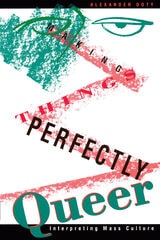
Making Things Perfectly Queer
Interpreting Mass CultureAlexander Doty
University of Minnesota Press, 1993
Doty argues that films, television, and other forms of mass culture consistently elicit a wide range of queer (sexually liminal) responses, and suggests an interpretive framework for understanding mass culture that stands as a corrective to many standard cultural approaches.
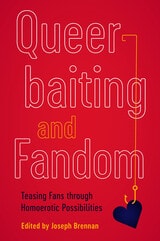
Queerbaiting and Fandom
Teasing Fans through Homoerotic PossibilitiesJoseph Brennan
University of Iowa Press, 2019
In this first-ever comprehensive examination of queerbaiting, fan studies scholar Joseph Brennan and his contributors examine cases that shed light on the sometimes exploitative industry practice of teasing homoerotic possibilities that, while hinted at, never materialize in the program narratives. Through a nuanced approach that accounts for both the history of queer representation and older fan traditions, these essayists examine the phenomenon of queerbaiting across popular TV, video games, children’s programs, and more.
Contributors: Evangeline Aguas, Christoffer Bagger, Bridget Blodgett, Cassie Brummitt, Leyre Carcas, Jessica Carniel, Jennifer Duggan, Monique Franklin, Divya Garg, Danielle S. Girard, Mary Ingram-Waters, Hannah McCann, Michael McDermott, E. J. Nielsen, Emma Nordin, Holly Eva Katherine Randell-Moon, Emily E. Roach, Anastasia Salter, Elisabeth Schneider, Kieran Sellars, Isabela Silva, Guillaume Sirois, Clare Southerton
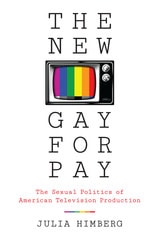
The New Gay for Pay
The Sexual Politics of American Television ProductionBy Julia Himberg
University of Texas Press, 2017
Television conveys powerful messages about sexual identities, and popular shows such as Will & Grace, Ellen, Glee, Modern Family, and The Fosters are often credited with building support for gay rights, including marriage equality. At the same time, however, many dismiss TV’s portrayal of LGBT characters and issues as “gay for pay”—that is, apolitical and exploitative programming created simply for profit. In The New Gay for Pay, Julia Himberg moves beyond both of these positions to investigate the complex and multifaceted ways that television production participates in constructing sexuality, sexual identities and communities, and sexual politics.
Himberg examines the production stories behind explicitly LGBT narratives and characters, studying how industry workers themselves negotiate processes of TV development, production, marketing, and distribution. She interviews workers whose views are rarely heard, including market researchers, public relations experts, media advocacy workers, political campaigners designing strategies for TV messaging, and corporate social responsibility department officers, as well as network executives and producers. Thoroughly analyzing their comments in the light of four key issues—visibility, advocacy, diversity, and equality—Himberg reveals how the practices and belief systems of industry workers generate the conceptions of LGBT sexuality and political change that are portrayed on television. This original approach complicates and broadens our notions about who makes media; how those practitioners operate within media conglomerates; and, perhaps most important, how they contribute to commonsense ideas about sexuality.
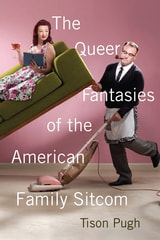
The Queer Fantasies of the American Family Sitcom
Pugh, Tison
Rutgers University Press, 2018
The Queer Fantasies of the American Family Sitcom examines the evasive depictions of sexuality in domestic and family-friendly sitcoms. Tison Pugh charts the history of increasing sexual depiction in this genre while also unpacking how sitcoms use sexuality as a source of power, as a kind of camouflage, and as a foundation for family building. The book examines how queerness, at first latent, became a vibrant yet continually conflicted part of the family-sitcom tradition.
Taking into account elements such as the casting of child actors, the use of and experimentation with plot traditions, the contradictory interpretive valences of comedy, and the subtle subversions of moral standards by writers and directors, Pugh points out how innocence and sexuality conflict on television. As older sitcoms often sit on a pedestal of nostalgia as representative of the Golden Age of the American Family, television history reveals a deeper, queerer vision of family bonds.
Download open access ebook here.