Results by title
8 books match the query 'Horn'

Ethnicity and Conflict in the Horn of Africa
Katsuyoshi Fukui
Ohio University Press, 1994
Conflicts in the Horn have all too often dominated press coverage of Africa. This book exposes the subtle and ambiguous role ethnicity can plan in social conflict, a role that is nowhere as simple and direct as commonly assumed.
Social conflict is routinely attributed to ethnic differentiation because dividing lines between rival groups often follow ethnic contours and cultural symbolism has proved a potent ideological weapon. The purpose of this book is to examine the nature of the bond linking ethnicity to conflict in a variety of circumstances.
The diverse groups are involved in confrontations at different levels and varying intensity, ranging from elemental struggles for physical survival of groups at the margin of society, to contests for state power and control of resources at the center.
These ten studies from Sudan, Ethiopia, Uganda, and Kenya are based on primary research by anthropologists and historians who have long experience of the region. The insights gained from this comparative work help to refine common assumptions about conflict among ethnic groups.

Get Your Elbow Off the Horn
Stories through the YearsJack R. Gannon
Gallaudet University Press, 2020
Many of his recollections are brief sketches that reveal much about being Deaf—and about being human. From reflecting on the difficult choices parents must make for their children, to recounting awkward communication exchanges, Gannon marries good humor with a poignant advocacy for sign language rights. His stories preserve and share Deaf American life and culture as he experienced it.
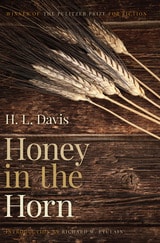
Honey in the Horn
H.L. Davis
Oregon State University Press, 2015
Clay Calvert, an orphan, works as a hand on a sheep ranch until he stumbles into trouble and is forced to flee. Journeying throughout the state, from the lush coastal forests, to the Columbia Gorge, to the golden wheat fields east of the Cascades, he encounters a cast of characters as rich and diverse as the land, including a native Tunne boy and a beautiful girl named Luce.
Originally published in 1935, Honey in the Horn reveals as much about the prevailing attitudes and beliefs of H. L. Davis’ lifetime as it does about the earlier era in which it is set. It transcends the limitations of its time through the sheer power and beauty of Davis’ prose. Full of humor and humanity, Davis’s first novel displays a vast knowledge of Pacific Northwest history, lore, and landscape.
An essential book for all serious readers of Northwest literature, this classic coming-of-age novel has been called the “Huckleberry Finn of the West.” It is the only Oregon book that has ever won a Pulitzer Prize for fiction. With a new introduction by Richard W. Etulain, this important work from one of Oregon’s premier authors is once again available for a new generation to enjoy.
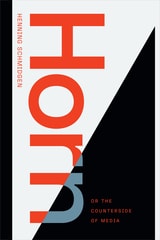
Horn, or The Counterside of Media
Henning Schmidgen
Duke University Press, 2022

Imagining Ethiopia
Struggles for History and Identity in the Horn of AfricaJohn Sorenson
Rutgers University Press, 1993

The Gate of Horn
PoemsL.S. Asekoff
Northwestern University Press, 2010
Recepient of 2013 Guggenheim Fellowship
Apart from two volumes published in the 1990s, the work of L. S. Asekoff has been winning admirers only among those lucky enough to encounter it in poetry journals and magazines over the last three decades. Now comes a new collection from this startlingly original poet. Astonishing in its variety of forms and subject matter, The Gate of Horn includes a series of monologues in which Asekoff conjures voices as disparate as the Marquis de Sade, an ancient Aztec warrior, an immigrant
Korean woman, a Vietnam vet, and a Holocaust historian. Above all, however, it is Asekoff’s own unmistakable voice that is on display— surreally sensual, intensely lyrical, darkly tragicomic. Through the gates of death and dreams, these wide-ranging, loosely associative poems speak with wit and erudition to the deepest mysteries of language and of life.

The Horn of Africa
Intra-State and Inter-State Conflicts and SecurityEdited by Redie Bereketeab and Cyril Obi
Pluto Press, 2013
The Horn of Africa, comprising Djibouti, Eritrea, Ethiopia, Sudan and Somalia, is the most conflict-ridden region in Africa. This book explores the origins and impact of these conflicts at both an intra-state and inter-state level and the insecurity they create.
The contributors show how regional and international interventions have compounded pre-existing tensions and have been driven by competing national interests linked to the 'War on Terror' and acts of piracy off the coast of Somalia.
The Horn of Africa outlines proposals for multidimensional mechanisms for conflict resolution in the region. Issues of border demarcation, democratic deficit, crises of nation and state building, and the roles of political actors and traditional authorities are all clearly analysed.

Two Years Below the Horn
Operation Tabarin, Field Science, and Antarctic SovereigntyAndrew Taylor
University of Manitoba Press, 2017