Results by title
8 books match the query 'Horror tales'
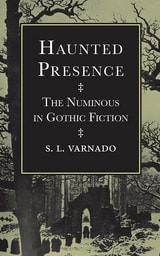
Haunted Presence
The Numinous in Gothic FictionS. L. Varnado
University of Alabama Press, 1987
Varnado offers a fresh and audacious analysis of the literature of the supernatural by employing insights derived from the philosophy of religious experience. Ranging from the Gothic novel of the eighteenth century to ghostly tales from the nineteenth and twentieth centuries, Varnado frames ghost stories as ontological challenge to the reader. The challenge is not in the form of philosophical proposition, however. Rather it is in the form of feelings and emotions that maintain a connection with the sense of reality. It is this area of reality that Rudolph Otto called the numinous—the feeling of the supernatural—that stands at the center of Gothic literature.
An understanding of this unique category of experience, aligned with its associated concept of “the sacred and the profane,” exposes the purpose of ghostly literature and demonstrates the enduring relevance of this mesmerizing genre.

Horror Readers' Advisory
The Librarian's Guide to Vampires, Killer Tomatoes, and Haunted HousesAmerican Library Association, 2004
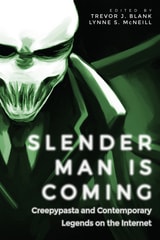
Slender Man Is Coming
Creepypasta and Contemporary Legends on the InternetTrevor J. Blank
Utah State University Press, 2018
As narrative texts are copied across online forums, they undergo modification, annotation, and reinterpretation by new posters in a folkloric process of repetition and variation. Though by definition legends deal largely with belief and possibility, the crowdsourced mythos behind creepypasta and Slender Man suggests a distinct awareness of fabrication. Slender Man is therefore a new kind of creation: one intentionally created as a fiction but with the look and feel of legend.
Slender Man Is Coming offers an unprecedented folkloristic take on Slender Man, analyzing him within the framework of contemporary legend studies, “creepypastas,” folk belief, and children’s culture. This first folkloric examination of the phenomenon of Slender Man is a must-read for anyone interested in folklore, horror, urban legends, new media, or digital cultures.
Contributors: Timothy H. Evans, Andrea Kitta, Mikel J. Koven, Paul Manning, Andrew Peck, Jeffrey A. Tolbert, Elizabeth Tucker
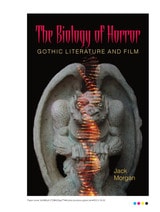
The Biology of Horror
Gothic Literature and FilmJack Morgan
Southern Illinois University Press, 2002
Unearthing the fearful flesh and sinful skins at the heart of gothic horror, Jack Morgan rends the genre’s biological core from its oft-discussed psychological elements and argues for a more transhistorical conception of the gothic, one negatively related to comedy. The Biology of Horror: Gothic Literature and Film dissects popular examples from the gothic literary and cinematic canon, exposing the inverted comic paradigm within each text.
Morgan’s study begins with an extensive treatment of comedy as theoretically conceived by Suzanne Langer, C. L. Barber, and Mikhail Bakhtin. Then, Morgan analyzes the physical and mythological nature of horror in inverted comic terms, identifying a biologically grounded mythos of horror. Motifs such as sinister loci, languishment, masquerade, and subversion of sensual perception are contextualized here as embedded in an organic reality, resonating with biological motives and consequences. Morgan also devotes a chapter to the migration of the gothic tradition into American horror, emphasizing the body as horror’s essential place in American gothic.
The bulk of Morgan’s study is applied to popular gothic literature and films ranging from high gothic classics like Matthew Lewis’s The Monk, Ann Radcliffe’s The Mysteries of Udolpho, Charles Maturin’s Melmoth the Wanderer, and Mary Shelley’s Frankenstein, to later literary works such as Poe’s macabre tales, Melville’s “Benito Cereno,” J.S. Le Fanu’s Uncle Silas, H.P. Lovecraft’s “The Shadow over Innsmouth,” Shirley Jackson’s The Haunting of Hillhouse, Stephen King’s Salem’s Lot, and Clive Barker’s The Damnation Game. Considered films include Nosferatu, Invasion of the Body Snatchers, Friday the 13th, Halloween, Night of the Living Dead, Angel Heart, The Stand, and The Shining.
Morganconcludes his physical examination of the Gothic reality with a consideration born of Julia Kristeva’s theoretical rubric which addresses horror’s existential and cultural significance, its lasting fascination, and its uncanny positive—and often therapeutic—direction in literature and film.
The Living Dead
A Study of the Vampire in Romantic LiteratureJames B. Twitchell
Duke University Press, 1981
The Readers' Advisory Guide to Horror
Becky Siegel Spratford
American Library Association, 2012
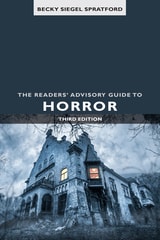
The Readers' Advisory Guide to Horror
Becky Siegel Spratford
American Library Association, 2021
Like the zombies, ghouls, and vampires which inhabit many of its books, the popularity of horror fiction is unstoppable. Even if you don’t happen to be a fan yourself, you won’t be “scared” to advise readers on finding their next great fright thanks to the astute guidance provided by horror expert Spratford in her updated guide. This definitive resource for library workers at any level of experience or familiarity with horror fiction
- details the state of the genre right now, including its appeal factors and key authors, assisting readers in getting up to speed quickly;
- presents ten annotated lists of suggested titles, all published since 2000, each with a short introduction providing historical context;
- delves into horror movies, TV shows, podcasts, and other formats; and
- offers abundant marketing advice, programming options, and pointers on additional resources.
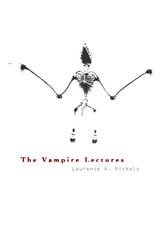
Vampire Lectures
Laurence A. Rickels
University of Minnesota Press, 1999
A wild and wide-ranging “psycho-history” of the vampire.
A wild and wide-ranging “psycho-history” of the vampire.
Bela Lugosi may-as the eighties gothic rock band Bauhaus sang-be dead, but the vampire lives on. A nightmarish figure dwelling somewhere between genuine terror and high camp, a morbid repository for the psychic projections of diverse cultures, an endlessly recyclable mass-media icon, the vampire is an enduring object of fascination, fear, ridicule, and reverence. In The Vampire Lectures, Laurence A. Rickels sifts through the rich mythology of vampirism, from medieval folklore to Marilyn Manson, to explore the profound and unconscious appeal of the undead.Based on the course Rickels has taught at the University of California, Santa Barbara, for several years (a course that is itself a cult phenomenon on campus), The Vampire Lectures reflects Rickels’s unique lecture style and provides a lively history of vampirism in legend, literature, and film. Rickels unearths a trove that includes eyewitness accounts of vampire attacks; burial rituals and sexual taboos devised to keep vampirism at bay; Hungarian countess Elisabeth Bathory’s use of girls’ blood in her sadistic beauty regimen; Bram Stoker’s Dracula, with its turn-of-the-century media technologies; F. W. Murnau’s haunting Nosferatu; and crude, though intense, straight-to-video horror films such as Subspecies. He makes intuitive, often unexpected connections among these sometimes wildly disparate sources.More than a compilation of vampire lore, however, The Vampire Lectures makes an original and intellectually rigorous contribution to literary and psychoanalytic theory, identifying the subconscious meanings, complex symbolism, and philosophical arguments-particularly those of Marx, Freud, and Nietzsche-embedded in vampirism and gothic literature.ISBN 0-8166-3391-6 Cloth £34.50 $49.95xxISBN 0-8166-3392-4 Paper £14.00 $19.95376 Pages 5 7/8 x 9 SeptemberTranslation inquiries: University of Minnesota Press