Results by title
19 books match the query 'Human Resources & Personnel Management'
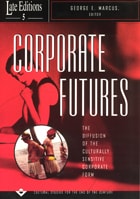
Corporate Futures
The Diffusion of the Culturally Sensitive Corporate FormEdited by George E. Marcus
University of Chicago Press, 1998
Late Editions 5, Corporate Futures, questions this idea of a "cultural landscape" by focusing on the the marked investment of corporations in the concept of culture, long the purview of anthropologists and, more recently, those involved in the humanistic disciplines. Emerging in the discourse of the workplace—and traveling beyond it to traditionally alternative associations—is the idea of a "corporate culture" with its own organization, management policies and practices, and ethos. How can we understand this culture of corporations, and to what extent does it reflect self-contained communities or fragmented human existence in groups under conditions of postmodernity? Corporate Futures tackles these issues and questions through conversations with managers, financial and risk analysts, and other participants in national and international organizations.
The results—engaging, intriguing, speculative, current—continue the work begun in earlier volumes to map the terrain of the present and navigate the uncertain future.
Praise for Late Editions: "If the succeeding volumes are as compassionate and informed as the first, this series could become an essential postmodern guidebook to the world's changing cultural terrain. I plan on letting it ease me into the next century."—Catherine Gysin, Utne Reader
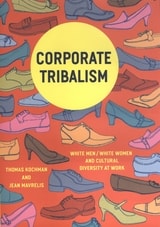
Corporate Tribalism
White Men/White Women and Cultural Diversity at WorkThomas Kochman and Jean Mavrelis
University of Chicago Press, 2009
The 2008 elections shattered historical precedents and pushed race and gender back to the forefront of our national consciousness. The wide range of reactions to the efforts of Barack Obama, Hillary Clinton, and Sarah Palin dramatically reflected ongoing conflicts over diversity in our society, especially in the venue where people are most likely to encounter them: work. As more and more people who aren’t white men enter corporate America, we urgently need to learn how to avoid clashes over these issues and how to resolve them when they do occur.
Thomas Kochman and Jean Mavrelis have been helping corporations successfully do that for over twenty years. Their diversity training and consulting firm has helped managers and employees at numerous companies recognize and overcome the cultural bases of miscommunication between ethnic groups and across gender lines—and in Corporate Tribalism they seek to share their expertise with the world. In the first half of the book, Kochman addresses white men, explicating the ways that their cultural background can motivate their behavior, work style, and perspective on others. Then Mavrelis turns to white women, focusing on the particular problems they face, including conflicts with men, other women, and themselves. Together they emphasize the need for a multicultural—rather than homogenizing—approach and offer constructive ideas for turning the workplace into a more interactive community for everyone who works there.
Written with the wisdom and clarity gained from two decades of hands-on work, Corporate Tribalism will be an invaluable resource as we look toward a future beyond the glass ceiling.
Down and Out in the New Economy
How People Find (or Don’t Find) Work TodayIlana Gershon
University of Chicago Press, 2017
Finding a job used to be simple. Now . . . well, it’s complicated. In today’s economy, you can’t just be an employee looking to get hired—you have to market yourself as a business, one that can help another business achieve its goals.
That’s a radical transformation in how we think about work and employment, says Ilana Gershon. And with Down and Out in the New Economy, she digs deep into that change and what it means, not just for job seekers, but for businesses and our very culture. In telling this story, Gershon covers all parts of the employment spectrum: she interviews hiring managers about how they assess candidates; attends personal branding seminars; talks with managers at companies around the United States to suss out regional differences—like how Silicon Valley firms look askance at the lengthier employment tenures of applicants from the Midwest. And she finds that not everything has changed: though the technological trappings may be glitzier, in a lot of cases, who you know remains more important than what you know.
Rich in the voices of people deeply involved with all parts of the employment process, Down and Out in the New Economy offers a snapshot of the quest for work today—and a pointed analysis of its larger meaning.
Dynamic Management of Growing Firms
A Strategic ApproachLorraine Uhlaner Hendrickson and John Psarouthakis
University of Michigan Press, 1998
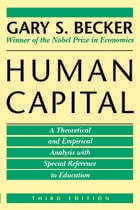
Human Capital
A Theoretical and Empirical Analysis, with Special Reference to Education, 3rd EditionGary S. Becker
University of Chicago Press, 1993
This expanded edition includes four new chapters, covering recent ideas about human capital, fertility and economic growth, the division of labor, economic considerations within the family, and inequality in earnings.
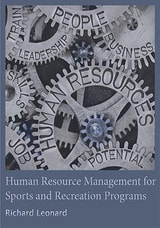
Human Resource Management for Sports and Recreation Programs
Richard Leonard
FiT Publishing, 2020
Human resource management is one of the most important components of business operations in any organization, and sport and recreation programs are no exception. This textbook provides the framework and principles necessary for undergraduate and graduate students to develop, implement, and maintain the human resource strategies and practices that are essential in managing a sport, recreation or athletics program, from community and youth centers, to intramural collegiate and professional sports.
Human Resource Management for Sport and Recreation Programs examines foundational concepts and the practical elements of human resource management, providing detailed insight, and a step by step look at overall program policies and plan development, program implementation and management, including personnel recruitment, onboarding and assessment techniques, planning and procedures for corrective action, as well as examining relevant legal, ethical, and safety considerations governing the employer—employee relationship. This text is essential in understanding how to successfully recruit, retain, reward, and maintain the most valuable resource of any organization: it’s people.
Human Resources and Higher Education
Staff Report on the Commission on Human Resources and Advanced EducationJohn K. Folger
Russell Sage Foundation, 1970
Managing Diversity in Organizations
Robert T. Golembiewski
University of Alabama Press, 1995
Managing Diversity in Organizations focuses on a key issue that organizations are facing—diversity. It is here, and it is growing. The only question now is how well we deal with diversity, especially in organizational contexts.
Golembiewski identifies the many forces and factors propelling us into the age of diversity in organizations—ethical, political, philosophic, demographic, and so on—and details the historical and contemporary approaches. Most practice has focused on a "level playing field" or equal opportunity and "tilting the playing field" or equal outcomes. This volume focuses on diversity as a strategic device rather than as a nicety rooted in behavioral and organizational research. Managing diversity successfully in organizations requires a thorough understanding of management infrastructure that is consistent with diversity--especially structures of work, policies, and procedures that institutionalize and build diversity.

Marginal Workers, Marginal Jobs
The Underutilization of American WorkersBy Teresa A. Sullivan
University of Texas Press, 1978
Unemployment levels have received a great deal of attention and discussion in recent years. However, another labor category—underemployment—has virtually been ignored. Underutilized or underemployed workers are those who are experiencing inadequate hours of work, insufficient levels of income, and mismatch of occupation and skills. Marginal Workers, Marginal Jobs addresses two principal issues: how can we measure underemployment, and how can we explain its prevalence?
To answer the first question, Teresa Sullivan examines yardsticks in use, demonstrates their inadequacy, and develops a different measure that is easy to interpret and is usable by both demographers and economists. In answering the second, she analyzes 1960 and 1970 census data to determine the relative effects of population composition and job structure on levels of employment.
One of the important contributions of Sullivan's study is to distinguish between marginal workers and marginal jobs in explaining underutilization. Previous explanations, including the widely used dual market theory, have not stressed this analytic distinction. In addition, her work accounts separately for the various types of marginality and seeks to show the condition of workers who are marginal on more than one count—for example, those who are both young and black, or old and female.
A provocative study based on large samples of the U.S. population, this book raises important questions about a critical subject and makes a significant contribution to the theory of underutilization.

Output Measurement in the Service Sectors
Edited by Zvi Griliches
University of Chicago Press, 1992
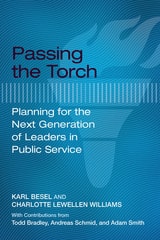
Passing the Torch
Planning for the Next Generation of Leaders in Public ServiceKarl Besel
University of Arkansas Press, 2016
Public-service executives, both elected and appointed within the public and nonprofit sectors, are retiring at record levels, and the number of Americans reaching age sixty-five annually will continue to rise over the next decade and is expected to surpass four million in 2020. Finding qualified, motivated leaders to fill vital public-service positions will challenge the public and nonprofit sectors.
Unfortunately, recent studies show that few proactive steps are being taken by public-service organizations to plan for the next generation. Passing the Torch: Planning for the Next Generation of Public-Service Leaders provides an outline for those who will be facing and managing these looming changes.
In this valuable guide, the factors that influence selection of a career in public service are explored through the authors’ years of experience as leaders in public-service organizations and through interviews with other public-service professionals. Passing the Torch will be essential for leaders of nonprofit organizations, university faculty, researchers in the field of nonprofit management, and students in nonprofit management courses.
Pension Plans and Employee Performance
Evidence, Analysis, and PolicyRichard A. Ippolito
University of Chicago Press, 1997
Challenging the accepted view of defined contribution plans, such as the 401k, as merely convenient tax-deferred savings plans, Ippolito argues that these plans can help firms select and pay their best workers without expending monitoring resources. Building on his proposals for managing private pension plans, Ippolito concludes with a blueprint for fixing the social security system that would promote incentives to work and save while at the same time improving the system's financial condition.
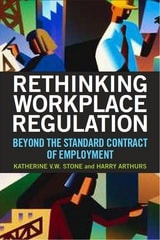
Rethinking Workplace Regulation
Beyond the Standard Contract of EmploymentKatherine V.W. Stone
Russell Sage Foundation, 2013

Studies of Labor Market Intermediation
Edited by David H. Autor
University of Chicago Press, 2009
From the traditional craft hiring hall to the Web site Monster.com, a multitude of institutions exist to facilitate the matching of workers with firms. The diversity of such Labor Market Intermediaries (LMIs) encompasses criminal records providers, public employment offices, labor unions, temporary help agencies, and centralized medical residency matches. Studies of Labor Market Intermediation analyzes how these third-party actors intercede where workers and firms meet, thereby aiding, impeding, and, in some cases, exploiting the matching process.
By building a conceptual foundation for analyzing the roles that these understudied economic actors serve in the labor market, this volume develops both a qualitative and quantitative sense of their significance to market operation and worker welfare. Cross-national in scope, Studies of Labor Market Intermediation is distinctive in coalescing research on a set of market institutions that are typically treated as isolated entities, thus setting a research agenda for analyzing the changing shape of employment in an era of rapid globalization and technological change.
The Analysis of Firms and Employees
Quantitative and Qualitative ApproachesEdited by Stefan Bender, Julia Lane, Kathryn L. Shaw, Fredrik Andersson, and Till von Wachter
University of Chicago Press, 2008

The Enigma of Diversity
The Language of Race and the Limits of Racial JusticeEllen Berrey
University of Chicago Press, 2015
Ellen Berrey digs deep into those questions in The Enigma of Diversity. Drawing on six years of fieldwork and historical sources dating back to the 1950s and making extensive use of three case studies from widely varying arenas—housing redevelopment in Chicago’s Rogers Park neighborhood, affirmative action in the University of Michigan’s admissions program, and the workings of the human resources department at a Fortune 500 company—Berrey explores the complicated, contradictory, and even troubling meanings and uses of diversity as it is invoked by different groups for different, often symbolic ends. In each case, diversity affirms inclusiveness, especially in the most coveted jobs and colleges, yet it resists fundamental change in the practices and cultures that are the foundation of social inequality. Berrey shows how this has led racial progress itself to be reimagined, transformed from a legal fight for fundamental rights to a celebration of the competitive advantages afforded by cultural differences.
Powerfully argued and surprising in its conclusions, The Enigma of Diversity reveals the true cost of the public embrace of diversity: the taming of demands for racial justice.

The Inclusive Corporation
A Disability Handbook for Business ProfessionalsGriff Hogan
Ohio University Press, 2003
The Inclusive Corporation succinctly presents disability-related information and resources that business managers need, and does so in a way that is highly readable and easy to use. The book is respectful and understanding of business requirements, while at the same time conveying a comprehensive knowledge of disability issues.
Matters of legal compliance, social responsibility, recruitment, diversity, employee supervision, customer service, product design and marketing — all are dealt with in The Inclusive Corporation. The result of the author's many years of experience working with businesses to improve their ability to include disabled people both as customers and employees, The Inclusive Corporation will be welcomed by people with disabilities and by business professionals nationwide.
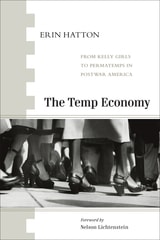
The Temp Economy
From Kelly Girls to Permatemps in Postwar AmericaAuthored by Erin Hatton
Temple University Press, 2010
Everyone knows that work in America is not what it used to be. Layoffs, outsourcing, contingent work, disappearing career ladders—these are the new workplace realities for an increasing number of people. But why? In The Temp Economy, Erin Hatton takes one of the best-known icons of the new economy—the temp industry—and finds that it is more than just a symbol of this degradation of work. The temp industry itself played an active role in this decline—and not just for temps. Industry leaders started by inventing the "Kelly Girl," exploiting 1950s gender stereotypes to justify low wages, minimal benefits, and chronic job insecurity. But they did not stop with Kelly Girls. From selling human"business machines" in the 1970s to "permatemps" in the 1990s, the temp industry relentlessly portrayed workers as profit-busting liabilities that hurt companies' bottom lines even in boom times. These campaigns not only legitimized the widespread use of temps, they also laid the cultural groundwork for a new corporate ethos of ruthless cost cutting and mass layoffs.
Succinct, highly readable, and drawn from a vast historical record of industry documents, The Temp Economy is a one-stop resource for anyone interested in the temp industry or the degradation of work in postwar America.
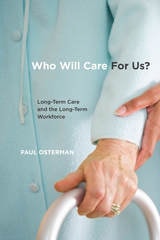
Who Will Care For Us?
Long-Term Care and the Long-Term WorkforcePaul Osterman
Russell Sage Foundation, 2017
Using national surveys, administrative data, and nearly 120 original interviews with workers, employers, advocates, and policymakers, Osterman finds that direct care workers are marginalized and often invisible in the health care system. While doctors and families alike agree that good home care aides and CNAs are crucial to the well-being of their patients, the workers report poverty-level wages, erratic schedules, exclusion from care teams, and frequent incidences of physical injury on the job. Direct care workers are also highly constrained by policies that specify what they are allowed to do on the job, and in some states are even prevented from simple tasks such as administering eye drops.
Osterman concludes that broadening the scope of care workers’ duties will simultaneously boost the quality of care for patients and lead to better jobs and higher wages. He proposes integrating home care aides and CNAs into larger medical teams and training them as “health coaches” who educate patients on concerns such as managing chronic conditions and transitioning out of hospitals. Osterman shows that restructuring direct care workers’ jobs, and providing the appropriate training, could lower health spending in the long term by reducing unnecessary emergency room and hospital visits, limiting the use of nursing homes, and lowering the rate of turnover among care workers.
As the Baby Boom generation ages, Who Will Care for Us? demonstrates the importance of restructuring the long-term care industry and establishing a new relationship between direct care workers, patients, and the medical system.