Results by title
14 books match the query 'Human-computer interaction'

A Practical Guide to Usability Testing
Joseph S. Dumas and Janice C. Redish
Intellect Books, 1999
This book is simply written and filled with examples from many types of products and tests. It discusses the full range of testing options from quick studies with a few subjects to more formal tests with carefully designed controls. The authors discuss the place of usability laboratories in testing as well as the skills needed to conduct a test.
Included are forms to use or modify to conduct a usability test, as well as layouts of existing labs that will help the reader build his or her own.
A User's Guide to the Age of Tech
Grant Wythoff
University of Minnesota Press, 2025
How users experience and influence technological change—when so much of that change feels out of our control
Every day, we casually employ one of the most complex tools ever created, using it to read the news, plan our day, and connect with friends. In A User’s Guide to the Age of Tech, Grant Wythoff investigates the process by which now-ubiquitous technologies like our phones become integrated into our lives, showing how the “gadget” stage—before devices are widely adopted—opens the door for users to co-create these technologies and adapt them toward unexpected ends.
In this elegant, approachable work, Wythoff offers a view of how users make new technology their own, subverting dominant power structures and imagining uses never intended by their creators. Rooted in a detailed look into the history of technique (focusing on how we do things with tools rather than the tools themselves), A User’s Guide to the Age of Tech proceeds to complicate, and influence, discussion of subjects like the digital divide and AI.
Drawing on a range of sources, including novels, patents, and newspapers, Wythoff explores the vernacular philosophies that have emerged from users and their diverse, everyday practices, bringing down to earth the conversation about digital titans, away from the abstracted domains of server farms and algorithms. Lodging a passionate argument that we know ourselves better than the data brokers who appear to wield influence over our psyches, Wythoff invites readers (and tech users) to imagine their own digital technique, acknowledge their vast expertise, and see its immense value.
Retail e-book files for this title are screen-reader friendly with images accompanied by short alt text and/or extended descriptions.
Digital Sensations
Space, Identity, And Embodiment In Virtual RealityKen Hillis
University of Minnesota Press, 1999
Considers the cultural and philosophical assumptions underlying virtual reality, and how the technology affects the real world.
Virtual reality is in the news and in the movies, on TV and in the air. Why is the technology-or the idea—so prevalent precisely now? What does it mean—what does it do—to us? Digital Sensations looks closely at how the “lived” world is affected by representational forms generated by communication technologies, especially digital and optical virtual technologies.
Virtual reality, or VR, is a technological reproduction of the process of perceiving the real, yet that process is filtered through the social realities and embedded cultural assumptions about human bodies and space held by the technology’s creators. Through critical histories of the technologies of vision, light, space, and embodiment, Ken Hillis traces the often contradictory intellectual and metaphysical impulses behind the Western transcendental wish to achieve an ever more perfect copy of the real. He advocates that current and proposed virtual technologies reflect a Western desire to escape the body. Because virtual technologies are new, these histories also address unintended and underconsidered consequences flowing from their rapid dissemination, such as commodifications and the alienation of new forms of surveillance. Exploring topics from VR and other, earlier visual technologies, Hillis’s penetrating perspective on the cultural power of place and space broadens our view of the interplay between social relations and technology.
Electronic Monuments
Gregory Ulmer
University of Minnesota Press, 2005
From a do-it-yourself Mount Rushmore to an automated tribute to the devastating annual toll of traffic deaths in the United States, Electronic Monuments describes commemoration as a fundamental experience, joining individual and collective identity, and adapting both to the emerging apparatus of “electracy,” or digital literacy. Concerns about the destruction of civic life caused by the society of the spectacle are refocused on the question of how a collectivity remembers who or what it is.
Ulmer proposes that the Internet makes it possible for monumentality to become a primary site of self-knowledge, one that supports a new politics, ethics, and dimension of education. The Internet thus holds the promise of bringing citizens back into the political equation as witnesses and monitors.
Gregory L. Ulmer is professor of English and media studies at the University of Florida, Gainesville.
I, Cyborg
Kevin Warwick
University of Illinois Press, 2002
Warwick, the world's leading expert in cybernetics, explains how he has deliberately crossed over a perilous threshold to take the first practical steps toward becoming a cyborg--part human, part machine--using himself as a guinea pig and undergoing surgery to receive technological implants connected to his central nervous system.
Believing that machines with intelligence far beyond that of humans will eventually make the important decisions, Warwick investigates whether we can avoid obsolescence by using technology to improve on our comparatively limited capabilities. Warwick also discusses the implications for human relationships, and his wife's participation in the experiments.
Beyond the autobiography of a scientist who became, in part, a machine, I, Cyborg is also a story of courage, devotion, and endeavor that split apart personal lives. The results of these amazing experiments have far-reaching implications not only for e-medicine, extra-sensory input, increased memory and knowledge, and even telepathy, but for the future of humanity as well.
My Mother Was a Computer
Digital Subjects and Literary TextsN. Katherine Hayles
University of Chicago Press, 2005
My Mother Was a Computer explores how the impact of code on everyday life has become comparable to that of speech and writing: language and code have grown more entangled, the lines that once separated humans from machines, analog from digital, and old technologies from new ones have become blurred. My Mother Was a Computer gives us the tools necessary to make sense of these complex relationships. Hayles argues that we live in an age of intermediation that challenges our ideas about language, subjectivity, literary objects, and textuality. This process of intermediation takes place where digital media interact with cultural practices associated with older media, and here Hayles sharply portrays such interactions: how code differs from speech; how electronic text differs from print; the effects of digital media on the idea of the self; the effects of digitality on printed books; our conceptions of computers as living beings; the possibility that human consciousness itself might be computational; and the subjective cosmology wherein humans see the universe through the lens of their own digital age.
We are the children of computers in more than one sense, and no critic has done more than N. Katherine Hayles to explain how these technologies define us and our culture. Heady and provocative, My Mother Was a Computer will be judged as her best work yet.
Prosthetic Memories
Postcolonial Feminisms in a More-Than-Human WorldHyaesin Yoon
Duke University Press, 2025
Signal Processing to Drive Human-Computer Interaction
EEG and eye-controlled interfacesSpiros Nikolopoulos
The Institution of Engineering and Technology, 2020
Star Worlds
Freedom Versus Control in Online GameworldsWilliam Sims Bainbridge
University of Michigan Press, 2016
The four “star worlds” explored in this book illustrate the dilemmas concerning the role of technology as liberator or oppressor in our postindustrial society, and represent computer simulations of future possibilities of human experience. Bainbridge considers the relationship between a real person and the role that person plays, the relationship of an individual to society, and the relationship of human beings to computing technology. In addition to collecting ethnographic and quantitative data about the social behavior of other players, he has immersed himself in each of these worlds, role-playing 14 avatars with different skills and goals to gain new insights into the variety of player experience from a personal perspective.
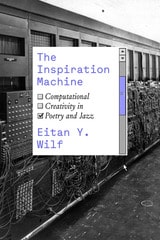
The Inspiration Machine
Computational Creativity in Poetry and JazzEitan Y. Wilf
University of Chicago Press, 2023
In The Inspiration Machine, Eitan Y. Wilf explores the transformative potentials that digital technology opens up for creative practice through three ethnographic cases, two with jazz musicians and one with a group of poets. At times dissatisfied with the limitations of human creativity, these artists do not turn to computerized algorithms merely to execute their preconceived ideas. Rather, they approach them as creative partners, delegating to them different degrees of agentive control and artistic decision-making in the hopes of finding inspiration in their output and thereby expanding their own creative horizons.
The algorithms these artists develop and use, however, remain rooted in and haunted by the specific social predicaments and human shortfalls that they were intended to overcome. Experiments in the digital thus hold an important lesson: although Wilf’s interlocutors returned from their adventures with computational creativity with modified, novel, and enriched capacities and predilections, they also gained a renewed appreciation for, and at times a desire to re-inhabit, non-digital creativity. In examining the potentials and pitfalls of seemingly autonomous digital technologies in the realm of art, Wilf shows that computational solutions to the real or imagined insufficiencies of human practice are best developed in relation to, rather than away from, the social and cultural contexts that gave rise to those insufficiencies, in the first place.
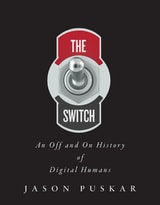
The Switch
An Off and On History of Digital HumansJason Puskar
University of Minnesota Press, 2024
From the telegraph to the touchscreen, how the development of binary switching transformed everyday life and changed the shape of human agency
The Switch traces the sudden rise of a technology that has transformed everyday life for billions of people: the binary switch. By chronicling the rapid growth of binary switching since the mid-nineteenth century, Jason Puskar contends that there is no human activity as common today as pushing a button or flipping a switch—the deceptively simple act of turning something on or off. More than a technical history, The Switch offers a cultural and political analysis of how reducing so much human action to binary alternatives has profoundly reshaped modern society.
Analyzing this history, Puskar charts the rapid shift from analog to digital across a range of devices—keyboards, cameras, guns, light switches, computers, game controls, even the “nuclear button”—to understand how nineteenth-century techniques continue to influence today’s pervasive digital technologies. In contexts that include musical performance, finger counting, machine writing, voting methods, and immersive play, Puskar shows how the switch to switching led to radically new forms of action and thought.
The innovative analysis in The Switch makes clear that binary inputs have altered human agency by making choice instantaneous, effort minimal, and effects more far-reaching than ever. In the process, it concludes, switching also fosters forms of individualism that, though empowering for many, also preserve a legacy of inequality and even domination.
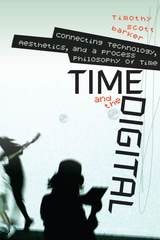
Time and the Digital
Connecting Technology, Aesthetics, and a Process Philosophy of TimeTimothy Scott Barker
Dartmouth College Press, 2012
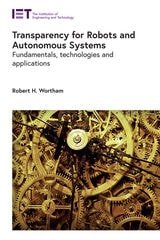
Transparency for Robots and Autonomous Systems
Fundamentals, technologies and applicationsRobert H. Wortham
The Institution of Engineering and Technology, 2020
Ultrascale Computing Systems
Jesus Carretero
The Institution of Engineering and Technology, 2019