Results by title
28 books match the query 'Hunting and gathering societies'
Ancient Indigenous Cuisines
Archaeological Explorations of the MidcontinentEdited by Susan M. Kooiman, Jodie A. O'Gorman, and Autumn M. Painter
University of Alabama Press, 2025
New essays from foodways archaeology related to cuisine in social, cultural, and environmental contexts.
This collection of original essays is the first to cover recent trends in foodways archaeology in the Midwest using the concept of cuisine: the selection of food ingredients and methods of food preparation, cooking, and serving/consumption in relation to their social, cultural, and environmental contexts. This work span the Early Archaic (9000 BC) to Late Precontact (up to around AD 1500) in ecological zones of present-day Michigan, Indiana, Illinois, Wisconsin, Minnesota, North Dakota, and Manitoba. Chapters trace development from hunter-gathering to horticultural practices to the more robust farming/fishing/hunting model centered on maize, squash, and other domesticates.
As Susan M. Kooiman, Jodie A. O’Gorman, and Autumn M. Painter note, identification of past cooking habits and evolving methods for foodstuffs identification can help archaeologists to reconstruct foodways and connect food behaviors with identity and associated fundamental societal beliefs. Contributors to this collection use cutting-edge methods and perspectives and consider a range of questions and outcomes that demonstrate the versatility and strength of culinary studies. To move the field forward, contributors also note areas for further analysis and improvement.
This volume targets archaeologists and students, archaeobotanists and zooarchaeologists, and those curious about Indigenous food culture. Engaging content includes chapters on the construction of earth ovens, the use-alteration of pottery and residue, a discussion of cuisine combining plant and animal data with ceramic trends, and the various contexts of plates to understand cooking methods and the social role of cuisine. Others examine faunal remains, the plant remains of feasting, the introduction of maize, the use of limestone nixtamalization, and archaeobotanical assemblages that reveal shifts in cuisine. A conclusion addresses the question, Why cuisine?
CONTRIBUTORS
Rebecca K. Albert / Alleen Betzenhauser / Jennifer R. Haas / Mary M. King / Susan M. Kooiman / Mary E. Malainey / Terrance J. Martin / Fernanda Neubauer / Kelsey Nordine / Jodie A. O’Gorman / Autumn M. Painter / Jeffrey M. Painter / Kimberly Schaefer / Mary Simon
Archaeology of Large-Scale Manipulation of Prey
The Economic and Social Dynamics of Mass HuntingKristen A. Carlson
University Press of Colorado, 2018
The Archaeology of Large-Scale Manipulation of Prey explores the social and functional aspects of large-scale hunting adaptations in the archaeological record. Mass-kill hunting strategies are ubiquitous in human prehistory and exhibit culturally specific economic, social, environmental, and demographic markers. Here, seven case studies—primarily from the Americas and spanning from the Folsom period on the Great Plains to the ethnographic present in Australia—expand the understanding of large-scale hunting methods beyond the customary role of subsistence and survival to include the social and political realms within which large-scale hunting adaptations evolved.
Addressing a diverse assortment of archaeological issues relating to the archaeological signatures and interpretation of mass-kill sites, The Archaeology of Large-Scale Manipulation of Prey reevaluates and rephrases the deep-time development of hunting and the themes of subsistence to provide a foundation for the future study of hunting adaptations around the globe. Authors illustrate various perspectives and avenues of investigation, making this an important contribution to the field of zooarchaeology and the study of hunter-gatherer societies throughout history. The book will appeal to archaeologists, ethnologists, and ecologists alike.
Contributors: Jane Balme, Jonathan Driver, Adam C. Graves, David Maxwell, Ulla Odgaard, John D. Speth, María Nieves Zedeño
Complex Hunter Gatherers
Evolution Organization of Prehistoric Communities Plateau of Northwestern NAWilliam C Prentiss
University of Utah Press, 2004
The Plateau region of the Pacific Northwest witnessed the emergence, persistence, and decline of a diverse array of hunter-gatherer communities during the course of a past several thousand year period. Consequently, the region contains an archaeological record of groups who lived at times in permanent villages, employed complex resource procurement and processing strategies, participated in wide-ranging trade networks, and maintained social organizations featuring high degrees of social inequality.
Complex Hunter-Gatherers presents a broad synthesis of the archaeology of the Plateau, inclusive of the Columbia and Fraser-Thompson drainages. The contributors seek to further our understanding of the nature of prehistoric social organization, subsistence practices, and lifeways of those living on the Plateau, and to expand upon this foundation to understand the evolution and organization of complex hunter-gatherers in general.

Food Storage in Michigan's Late Woodland
The Work of Indigenous WomenKathryn M. Frederick
University of Alabama Press, 2026
Incorporates experimental archaeology to understand the food-caching strategies led by Indigenous women in Late Woodland Michigan.
This experimental archaeology book centers on the decision of Indigenous women in Michigan’s Late Woodland to store food in cache pits for later use, to ensure a stable food supply. These food storage techniques were efforts to increase communal chances of survival in direct responses to sociopolitical changes. Kathryn M. Frederick highlights the importance of food storage in these communities and the decision-making and behaviors behind it.
To discover why food storage became a popular practice at that period, Frederick considered the efficacy of subterranean food storage and constructed experiments to understand the timing and use of cache pits and to test their reliability and efficiency. She also compiled ethnographic data on location, environmental conditions, movement strategies, and types of foodstuffs stored for dozens of hunter-gatherer groups. Two distinct patterns of food storage emerged: “reliant” and “redundant.” Frederick argues that the Indigenous women utilized a system of reliant storage during times of abundance but could switch to a redundant system as the socioeconomic climate shifted. This book will interest a wide swath of archaeologists and others interested in Indigenous foodways and women’s key roles.
Foragers and Farmers of the Northern Kayenta Region
Excavations along the Navajo Mountain RoadPhil Geib
University of Utah Press, 2011
Foragers and Farmers of the Northern Kayenta Region presents the results of a major archaeological excavation project on Navajo tribal land in the Four Corners area and integrates this new information with existing knowledge of the archaeology of the northern Kayenta region. The excavation of thirty-three sites provides a cross section of prehistory from which Navajo Nation archaeologists retrieved a wealth of information about subsistence, settlement, architecture, and other aspects of past lifeways. The project’s most important contributions involve the Basketmaker and Archaic periods, and include a large number of radiocarbon dates on high-quality samples. Dating back to the early Archaic period (ca. 7000 BC) and ranging forward through the Basketmaker components to the Puebloan period, this volume is a powerful record of ancient peoples and their cultures. Detailed supplementary data will be available on the University of Utah Press Web site upon publication of this summary volume.
Volume 2: Archaic Site Descriptions
Volume 3: Basketmaker Site Descriptions
Volume 4: Puebloan Site Descriptions
Volume 5: Analyses and Interpretation
Appendix Volume
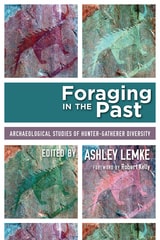
Foraging in the Past
Archaeological Studies of Hunter-Gatherer DiversityUniversity Press of Colorado, 2018
Well-established and young scholars present new prehistoric data and describe new methods and theories to investigate ancient forager lifeways and document hunter-gatherer variability across the globe. The authors use relationships established by cross-cultural data as a background for examining the empirical patterns of prehistory. Covering underwater sites in North America, the peaks of the Andes, Asian rainforests, and beyond, chapters are data rich, methodologically sound, and theoretically nuanced, effectively exploring the latest evidence for behavioral diversity in the fundamental process of hunting and gathering.
Foraging in the Past establishes how hunter-gatherers can be considered archaeologically, extending beyond the reach of ethnographers and historians to argue that only through archaeological research can the full range of hunter-gatherer variability be documented. Presenting a comprehensive and integrated approach to forager diversity in the past, the volume will be of significance to both students and scholars working with or teaching about hunter-gatherers.
Contributors: Nicholas J. Conard, Raven Garvey, Keiko Kitagawa, John Krigbaum, Petra Krönneck, Steven Kuhn, Julia Lee-Thorp, Peter Mitchell, Katherine Moore, Susanne C. Münzel, Kurt Rademaker, Patrick Roberts, Britt Starkovich, Brian A. Stewart, Mary Stiner
Foraging in the Tennessee River Valley
12,500 to 8,000 Years AgoKandace D. Hollenbach
University of Alabama Press, 2009
Holocene Hunter-Gatherers of the Lower Ohio River Valley
Richard Jefferies
University of Alabama Press, 2009
Hunter-Gatherer Archaeology as Historical Process
Edited by Kenneth E. Sassaman and Donald H. Holly Jr.
University of Arizona Press, 2011
Combining the latest empirical studies of archaeological practice with the latest conceptual tools of anthropological and historical theory, this volume seeks to set a new course for hunter-gatherer archaeology by organizing the chapters around three themes. The first section offers diverse views of the role of human agency, challenging the premise that hunter-gatherer societies were bound by their interactions with the natural world. The second section considers how society and culture are constituted. Chapters in the final section take the long view of the historical process, examining how cultural diversity arises out of interaction and the continuity of ritual practices.
A closing commentary by H. Martin Wobst underscores the promise of an archaeology of foragers that does not associate foraging with any particular ideology or social structure but instead invites inquiry into counterintuitive alternatives. Hunter-Gatherer Archaeology as Historical Process seeks to blur the divisions between prehistory and history, between primitive and modern, and between hunter-gatherers and people in other societies. Because it offers alternatives to the dominant discourse and contributes to the agenda of hunter-gatherer research, this book will be of interest to anyone involved in the study of foraging peoples.
Intrasite Spatial Analysis of Mobile and Semisedentary Peoples
Analytical Approaches to Reconstructing Occupation HistoryEdited by Amy E. Clark and Joseph A. M. Gingerich
University of Utah Press, 2022
This volume includes studies that span archaeological and ethnographic contexts, from highly mobile Paleoindian foragers to semi-sedentary preagriculturalists of the Epipaleolithic and modern pastoralists in Mongolia. The authors hold that commonalities in human behavior lead to similar patterns in the organization and maintenance of space by people. They present a series of ideas and approaches to make it easier to recognize universals in human behaviors, which allow archaeologists to better compare intrasite spatial patterns. The book creates a baseline for new intrasite spatial analyses in the twenty-first century.
Island of Fogs
Archaeological and Ethnohistorical Investigations of Isla Cedros, Baja CaliforniaMatthew R Des Lauriers
University of Utah Press, 2010
Located off the west coast of the Mexican state of Baja California, Isla Cedros—Island of Fogs—is site to some of the most extensive and remarkable archeological discoveries on the continent. Two sites dated to before 12,000 cal BP have been excavated, as well as portions of two large village sites dated to the last one thousand years. Among the artifacts discovered are the earliest fishhooks found on the continent.
Drawing on ten years of his own historical, ethnographic, and archaeological research, Matthew Des Lauriers uses Isla Cedros to form hypotheses regarding the ecological, economic, and social nature of island societies. Des Lauriers uses a comparative framework in order to examine both the development and evolution of social structures among Pacific coast maritime hunter-gatherers as well as to track patterns of change.
Because it examines the issue of whether human populations can intensively harvest natural resources without causing ecological collapse, Island of Fogs provides a relevant historical counterpart to modern discussions of ecological change and alternative models for sustainable development.
Winner of the Society for American Archaeology Book Award.
Julian Steward and the Great Basin
The Making of an AnthropologistRichard O Clemmer
University of Utah Press, 1999
Julian Steward and the Great Basin is a critical assessment of Steward’s work, the factors that influenced him, and his deep effect on American anthropology. Steward (1902–1972) was one of the foremost American exponents of cultural ecology, the idea that societies evolve in adaptation to their human and natural environments. He was also central in shaping basic anthropological constructs such as "hunter-gatherer" and "adaptation." But his fieldwork took place almost entirely in the Great Basin.
In one sense, the phases of Steward’s career epitomize the successive schools of anthropological theory and practice. Each chapter explores a different aspect of his work ranging from early efforts at documenting trait distributions to his later role in the development of social transformation theory, area studies, and applied anthropology.
Julian Steward and the Great Basin also corrects long-standing misperceptions that originated with Steward about lifeways of the Indians living between the Great Plains and California. It charts new directions for research, demanding a more exacting study of environmental conditions, material adaptations, and organizational responses, as well as an appreciation of the ideological and humanistic dimensions of Basin Life.
Labor's Lot
The Power, History, and Culture of Aboriginal ActionElizabeth A. Povinelli
University of Chicago Press, 1994
In Labor's Lot, Povinelli shows how everyday activities shape Aboriginal identity and provide cultural meaning. She focuses on the Belyuen women's interactions with the countryside and on Belyuen conflicts with the Australian government over control of local land. Her analysis raises serious questions about the validity of Western theories about labor and culture and their impact on Aboriginal society.
Povinelli's focus on women's activities provides an important counterpoint to recent works centering on male roles in hunter-gatherer societies. Her unique "cultural economy" approach overcomes the dichotomy between the two standard approaches to these studies. Labor's Lot will engage anyone interested in indigenous peoples or in the relationship between culture and economy in contemporary social practice.
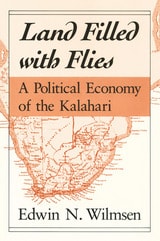
Land Filled with Flies
A Political Economy of the KalahariEdwin N. Wilmsen
University of Chicago Press, 1989
"[A] major work. . . . Anthropologists will, and should, use Wilmsen's meticulously detailed study to revise their early lectures in the introductory course, and no future study of African 'foragers' should ignore it."—Parker Shipton, American Anthropologist
"An impressive book. . . . The reader need only read the first few pages to judge both the quality and ambitiousness of the work. . . . Essential reading."—David R. Penna, Africa Today
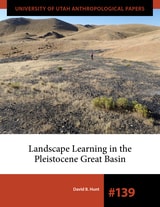
Landscape Learning in the Pleistocene Great Basin
David B. Hunt
University of Utah Press, 2025
Hunt seeks insight into the initial development of adaptive strategies related to the procurement of essential resources within a region. Incorporating data from archaeological investigation at the Old River Bed Delta in Utah and focusing specifically on the lithics recovered, Hunt develops what he terms the Discoverability Model. He proposes this model as a way for archaeologists to begin quantifying the qualitative aspects of colonization and landscape learning models.
Late Holocene Research on Foragers and Farmers in the Desert West
Barbara J. Roth and Maxine E. McBrinn
University of Utah Press, 2015
Three main themes link these papers: the role of the environment in shaping prehistoric behavior, flexibility in foraging and farming adaptations, and diversity in settlement strategies. Contributors cover a range of topics including the varied ways hunter-gatherers adapted to arid environments, the transition from hunting and gathering to farming and the reasons for it, the variation in early farmers across the Southwest and Great Basin, and the differing paths followed as they developed settled villages.
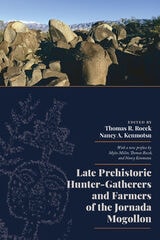
Late Prehistoric Hunter-Gatherers and Farmers of the Jornada Mogollon
Thomas R. Rocek
University Press of Colorado, 2023
The Jornada branch of the Mogollon culture and its inhabitants played a significant economic, political, and social role at multiple scales. This volume draws together results from recent large-scale CRM work that has amassed among the largest data sets in the Southwest with up-to-date chronological, architectural, faunal, ceramic, obsidian sourcing, and other specialized studies. Chapters by some of the most active researchers in the area address topics that reach beyond the American Southwest, such as mobility, forager adaptations, the transition to farming, responses to environmental challenges, and patterns of social interaction.
Late Prehistoric Hunter-Gatherers and Farmers of the Jornada Mogollon is an up-to-date summary of the major developments in the region and their implications for Southwest archaeology in particular and anthropological archaeological research more generally.
The publication of this book is supported in part by the Arizona Archaeological and Historical Society and the Center for Material Culture Studies at the University of Delaware.
Contributors: Rafael Cruz Antillón, Douglas H. M. Boggess, Peter C. Condon, Linda Scott Cummings, Moira Ernst, Tim Graves, David V. Hill, Nancy A. Kenmotsu, Shaun M. Lynch, Arthur C. MacWilliams, Mary Malainey, Timothy D. Maxwell, Myles R. Miller, John Montgomery, Jim A. Railey, Thomas R. Rocek, Matt Swanson, Christopher A. Turnbow, Javier Vasquez, Regge N. Wiseman, Chad L. Yost
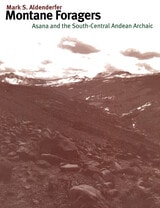
Montane Foragers
Asana and the South-Central Andean ArchaicMark S. Aldenderfer
University of Iowa Press, 1998
Aldenderfer's investigation forms a methodological and theoretical tour de force that elucidates elevational stress—what it takes for humans to adjust and survive at high altitudes. In a masterful integration of mountain biology and ecology, he emphasizes the nature of hunter-gatherer adaptations to high-mountain environments. He carefully documents the cultural history of Asana, the first stratified, open-air site discovered in the highlands of the south-central Andes. He establishes a number of major occurrences at this revolutionary site, including the origins of plant and animal domestication and transitions to food production, the growth and packing of forager populations, and the advent of some form of complexity and social hierarchy.
The rich and diversified archaeological record recovered at Asana—which spans from 10,000 to 3,500 years ago—includes the earliest houses as well as public and ceremonial buildings in the central cordillera. Built, used, and abandoned over many millennia, the Asana structures completely transform our understanding of the antiquity and development of native American architecture. Aldenderfer's detailed archaeological case study of high-elevation foraging adaptation, his description of this extreme environment as a viable human habitat, and his theoretical model of montane foraging create a new understanding of the lifeways of foraging peoples worldwide.
Paleoindian or Paleoarchaic?
Great Basin Human Ecology at the Pleistocene-Holocene TransitionKelly E Graf
University of Utah Press, 2008
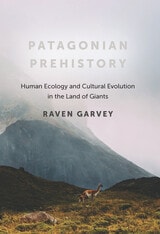
Patagonian Prehistory
Human Ecology and Cultural Evolution in the Land of GiantsRaven Garvey
University of Utah Press, 2021
Garvey’s novel hypotheses question common assumptions regarding Patagonia’s suitability for prehistoric hunter-gatherers. She makes four primary arguments: (1) the surprising lack of clothing in parts of prehistoric Patagonia supports a relatively slow initial colonization of the Americas; (2) the sparse record of human habitation during the middle Holocene may be due to prehistoric behavioral changes and archaeological sampling methods rather than population decline; (3) farming never took root in Patagonia because risks associated with farming likely outweighed potential benefits; and, finally, (4) the broad trajectory of cultural change in Patagonia owes as much to feedback between population size and technology as to conditions in the rugged Patagonian outback itself.
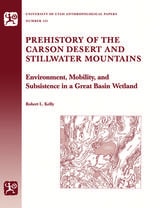
Prehistory Of Carson Desert and Stillwater
Anthropological Paper 123Robert Kelly
University of Utah Press, 2001
University of Utah Anthropological Paper No. 123
This study examines prehistoric use of the Stillwater Marsh in the Carson Desert of western Nevada and the adjacent Stillwater Mountains based on an archaeological survey undertaken in 1980 and 1981, and excavations conducted in 1987. Much of the argument about the use of wetlands revolved around whether they were used be sedentary hunter-gatherers, were just one stop of a family’s seasonal round, or were used only as backup resources. As a result, this report focuses on the issues of hunter-gatherer subsistence and mobility.
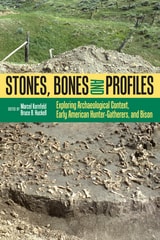
Stones, Bones, and Profiles
Exploring Archaeological Context, Early American Hunter-Gatherers, and BisonMarcel Kornfeld
University Press of Colorado, 2016
Stones, Bones, and Profiles addresses key and cutting-edge research of three pillars of hunter-gatherer archaeology. Stones and bones—flaked stone tools and the bones of the prey animals—are the objects most commonly recovered from hunter-gatherer archaeological sites, and profiles represent the geologic context of the archeological record. Together they constitute the foundations of much of early archaeology, from the appearance of the earliest humans to the advent of the Neolithic.
The volume is divided into three sections: Peopling of North America and Paleoindians, Geoarchaeology, and Bison Bone Bed Studies. The first section dissects established theories about the Paleoindians, including the possibility that human populations were in North America before Clovis and the timing of the opening of the Alberta Corridor. The second section provides new perspectives on the age and contexts of several well-known New World localities such as the Lindenmeier Folsom and the UP Mammoth sites, as well as a synthesis of the geoarchaeology of the Rocky Mountains' Bighorn region that addresses significant new data and summarizes decades of investigation. The final section, Bison Bone Bed Studies, consists of groundbreaking zooarchaeological studies offering new perspectives on bison taxonomy and procurement.
Stones, Bones, and Profiles presents new data on Paleoindian archaeology and reconsiders previous sites and perspectives, culminating in a thought-provoking and challenging contribution to the ongoing study of Paleoindians around the world.
Contributors: Leland Bement, Jack W. Brink, John Carpenter, Brian Carter, Thomas J. Connolly, Linda Scott Cummings, Loren G. Davis, Allen Denoyer, Stuart J. Fiedel, Judson Byrd Finley, Andrea Freeman, C. Vance Haynes Jr., Bryan Hockett, Vance T. Holliday, Dennis L. Jenkins, Thomas A. Jennings, Eileen Johnson, George T. Jones, Oleksandra Krotova, Patrick J. Lewis, Vitaliy Logvynenko, Ian Luthe, Katelyn McDonough, Lance McNees, Fred L. Nials, Patrick W. O’Grady, Mary M. Prasciunas, Karl J. Reinhard, Michael Rondeau, Guadalupe Sanchez, William E. Scoggin, Ashley M. Smallwood, Iryna Snizhko, Thomas W. Stafford Jr., Mark E. Swisher, Frances White, Eske Willerslev, Robert M. Yohe II, Chad Yost
The Archaic Southwest
Foragers in an Arid LandEdited by Bradley J. Vierra
University of Utah Press, 2018
The Behavioral Ecology of Efe Pygmy Men in the Ituri Forest, Zaire
Robert C. Bailey
University of Michigan Press, 1991
The Late Archaic across the Borderlands
From Foraging to FarmingEdited by Bradley J. Vierra
University of Texas Press, 2005
Why and when human societies shifted from nomadic hunting and gathering to settled agriculture engages the interest of scholars around the world. One of the most fruitful areas in which to study this issue is the North American Southwest, where Late Archaic inhabitants of the Sonoran and Chihuahuan Deserts of Mexico, Arizona, and New Mexico turned to farming while their counterparts in Trans-Pecos and South Texas continued to forage. By investigating the environmental, biological, and cultural factors that led to these differing patterns of development, we can identify some of the necessary conditions for the rise of agriculture and the corresponding evolution of village life.
The twelve papers in this volume synthesize previous and ongoing research and offer new theoretical models to provide the most up-to-date picture of life during the Late Archaic (from 3,000 to 1,500 years ago) across the entire North American Borderlands. Some of the papers focus on specific research topics such as stone tool technology and mobility patterns. Others study the development of agriculture across whole regions within the Borderlands. The two concluding papers trace pan-regional patterns in the adoption of farming and also link them to the growth of agriculture in other parts of the world.
The Neolithic Revolution in the Near East
Transforming the Human LandscapeAlan H. Simmons; foreword by Ofer Bar-Yosef
University of Arizona Press, 2007
Based on more than thirty years of fieldwork, this timely volume examines the Neolithic Revolution in the Levantine Near East and the Mediterranean island of Cyprus. Alan H. Simmons explores recent research regarding the emergence of Neolithic populations, using both environmental and theoretical contexts, and incorporates specific case studies based on his own excavations. In clear and graceful prose, Simmons traces chronological and regional differences within this land of immense environmental contrasts—woodland, steppe, and desert. He argues that the Neolithic Revolution can be seen in a variety of economic, demographic, and social guises and that it lacked a single common stimulus.
Each chapter includes sections on history, terminology, geographic range, specific domesticated species, the composition of early villages and households, and the development of social, symbolic, and religious behavior. Most chapters include at least one case study and conclude with a concise summary. In addition, Simmons presents a unique chapter on the island of Cyprus, where intriguing new research challenges assumptions about the impact and extent of the Neolithic.
The Neolithic Revolution in the Near East conveys the diversity of our Neolithic ancestors, providing a better understanding of the period and the new social order that arose because of it. This insightful volume will be especially useful to Near Eastern scholars and to students of archaeology and the origins of agriculture.
Under the Canopy
The Archaelogy of Tropical Rain ForestsMercader, Julio
Rutgers University Press, 2002
Did our ancestors live in tropical forests? Although we see the rainforest as a bountiful environment teeming with life forms, most anthropologists and archaeologists have long viewed these areas as too harsh for human occupation during the pre-agricultural stages of hominid development.
Under the Canopy turns conventional wisdom on its head by providing a well-documented, geographically diverse overview of Stone Age sites in the wet tropics. New research indicates that, as humanity and its precursors increased their geographical and ecological ranges, rainforests were settled at a much earlier period than had previously been thought.
Featuring the work of leading scholars from Australia, Brazil, Canada, Colombia, France, Malaysia, Panama, Spain, and the United States, Under the Canopy creates a new niche in paleolithic studies: the archaeology of tropical rainforests. This book provides the first synthesis of archaeological research in early foraging sites across the rainforest zone, and indicates that tropical forests could harbor important clues to human evolution, origins of modern behavior, cultural diversity, and human impact on tropical ecosystems.
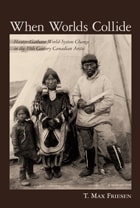
When Worlds Collide
Hunter-Gatherer World-System Change in the 19th Century Canadian ArcticT. Max Friesen
University of Arizona Press, 2013
Max Friesen has adapted and expanded world-system theory in order to develop a model that explains how hunter-gatherer interaction networks, or world-systems, are structured—and why they change. He has utilized this model to better understand the development of Inuvialuit society in the western Canadian Arctic over a 500-year span, from the pre-contact period to the early twentieth century.
As Friesen combines local archaeological data with more extensive ethnographic and archaeological evidence from the surrounding region, a picture emerges of a dynamic Inuvialuit world-system characterized by bounded territories, trade, warfare, and other forms of interaction. This world-system gradually intensified as the impacts of Euroamerican colonial activities increased. This intensification, Friesen suggests, was based on pre-existing Inuvialuit social and economic structures rather than on patterns imposed from outside. Ultimately, this intense interacting network collapsed near the end of the nineteenth century. When Worlds Collide offers a new way to comprehend small-scale world-systems from the point of view of indigenous people. Its approach will prove valuable for understanding hunter-gatherer societies around the globe.