Results by title
7 books match the query 'Ideal'
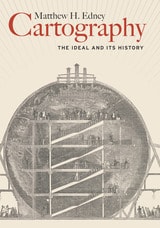
Cartography
The Ideal and Its HistoryMatthew H. Edney
University of Chicago Press, 2019
In this book Edney disavows the term cartography, rejecting the notion that maps represent an undifferentiated category of objects for study. Rather than treating maps as a single, unified group, he argues, scholars need to take a processual approach that examines specific types of maps—sea charts versus thematic maps, for example—in the context of the unique circumstances of their production, circulation, and consumption. To illuminate this bold argument, Edney chronicles precisely how the ideal of cartography that has developed in the West since 1800 has gone astray. By exposing the flaws in this ideal, his book challenges everyone who studies maps and mapping practices to reexamine their approach to the topic. The study of cartography will never be the same.
Citoyennes
Women and the Ideal of Citizenship in Eighteenth-Century FranceAnnie K. Smart
University of Delaware Press, 2012
Did women have a civic identity in eighteenth-century France? In Citoyennes: Women and the Ideal of Citizenship in Eighteenth-Century France, Annie Smart contends that they did. While previous scholarship has emphasized the ideal of domestic motherhood or the image of the republican mother, Smart argues persuasively that many pre-revolutionary and revolutionary texts created another ideal for women–the ideal of civic motherhood. Smart asserts that women were portrayed as possessing civic virtue, and as promoting the values and ideals of the public sphere.
Contemporary critics have theorized that the eighteenth-century ideal of the Republic intentionally excluded women from the public sphere. According to this perspective, a discourse of “Rousseauean” domestic motherhood stripped women of an active civic identity, and limited their role to breastfeeding and childcare. Eighteenth-century France marked thus the division between a male public sphere of political action and a female private sphere of the home.
Citoyennes challenges this position and offers an alternative model of female identity. This interdisciplinary study brings together a variety of genres to demonstrate convincingly that women were portrayed as civic individuals. Using foundational texts such as Jean-Jacques Rousseau’s Emile, or on Education (1762), revolutionary gouaches of Lesueur, and vaudeville plays of Year II of the Republic (1793/1794), this study brilliantly shows that in text and image, women were represented as devoted to both the public good and their families.
In addition, Citoyennes offers an innovative interpretation of the home. Through re-examining sphere theory, this study challenges the tendency to equate the home with private concerns, and shows that the home can function as a site for both private life and civic identity.
Citoyennes breaks new ground, for it both rectifies the ideal of domestic Rousseauean motherhood, and brings a fuller understanding to how female civic identity operated in important French texts and images.
Published by University of Delaware Press. Distributed worldwide by Rutgers University Press.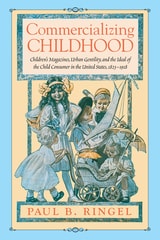
Commercializing Childhood
Children's Magazines, Urban Gentility, and the Ideal of the Child Consumer in the United States, 1823-1918Paul B. Ringel
University of Massachusetts Press, 2015
In this deeply researched and engaging book, Paul B. Ringel combines an analysis of the stories in nineteenth-century American children's magazines with the backstories of their authors, editors, and publishers to explain how this hugely successful industry trained generations of American children to become genteel consumers. Ringel demonstrates how these publications, which were read in hundreds of thousands of homes, played to two conflicting impulses within American families: to shield children from commercial influences by offering earnest and moral entertainment and to help children learn how to prosper in an increasingly market-driven society.
Heresy and the Ideal
On Contemporary PoetryDavid Baker
University of Arkansas Press, 2000

Margaret
A Tale of the Real and Ideal, Blight and BloomSylvester Judd
University of Massachusetts Press, 2009
Praised at the time as the most emphatically “American” book ever written, Margaret is a breathtaking combination of female bildungsroman, utopian novel, and historical romance. First published in 1845, Sylvester Judd's novel centers on the fictional New England village of Livingston, where the young Margaret Hart strives to escape the poverty and vice of her surroundings by learning from a mysterious teacher, the “Master,” and by entwining herself with the powers of nature. But when Margaret's brother is tried and hanged for murder, this rural community collapses, forcing Margaret to face the temptations of an urban underworld and to confront the intrigue of her family history. Margaret is the story of a young woman's attempt to create a new social order, founded on beauty and truth, in a land plagued by violence, debauchery, and political instability.
As Gavin Jones points out in his new introduction, Margaret perhaps stands alone in its creation of a female character who grows in social rather than domestic power. The novel also remains unique in its exploration of transcendental philosophy in novelistic form. Part eco-criticism, part seduction novel, part temperance tract, and part social history, Margaret is a virtual handbook for understanding the literary culture of mid-nineteenth-century America, the missing piece in puzzling out connections between writers such as Hawthorne, Melville, Whitman, and Thoreau.
Margaret was widely read and deeply influential on both British and American writers throughout the nineteenth century but controversial for its representations of alcoholism and capital punishment. Judd's novel remains resonant for today's readers as it overturns conventional views of the literary representation of women and the origins of the American Renaissance.
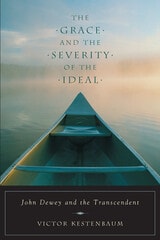
The Grace and the Severity of the Ideal
John Dewey and the TranscendentVictor Kestenbaum
University of Chicago Press, 2002
Kestenbaum argues that to Dewey, the pragmatic struggle for ideal meaning occurs at the frontier of the visible and the invisible, the tangible and the intangible. Penetrating analyses of Dewey's early and later writings, as well as comparisons with the works of Hans-Georg Gadamer, Michael Oakeshott, and Wallace Stevens, shed new light on why Dewey regarded the human being's relationship to the ideal as "the most far-reaching question" of philosophy. For Dewey, the pragmatic struggle for the good life required a willingness "to surrender the actual experienced good for a possible ideal good." Dewey's pragmatism helps us to understand the place of the transcendent ideal in a world of action and practice.
The Ideal of the Practical
Colombia’s Struggle to Form a Technical EliteBy Frank Safford
University of Texas Press, 1976
The Ideal of the Practical is a study of efforts by a segment of the upper class in an aristocratic Latin American society to alter cultural values in the society, creating stronger orientations toward the technical and the practical. Frank Safford describes attempts by members of Colombia’s nineteenth-century political elite to use technical education as a means of nurturing energetic upper-class entrepreneurs and an industrious working class in a static agrarian economy. In the course of his analysis, Safford sketches the historical development of scientific and technical education and of the engineering profession in Colombia.
The book opens with a description of the economic and social context of early nineteenth-century Colombia. It then discusses some early experiments with manual industrial training between 1820 and 1850. Later chapters deal with the careers of upper-class youths sent abroad for scientific and technical training, the growth of indigenous engineering education, and the crystallization of a Colombian engineering profession. While the book primarily explores the nineteenth century, it also touches on eighteenth-century Spanish Bourbon antecedents and provides an epilogue on the twentieth-century evolution of technical elites in Colombia.
The author focuses on the reasons why the implantation of technical education and technical orientations proved difficult. He examines the interplay between various obstructions: on the one hand, a hierarchical social structure and aristocratic social values and, on the other, obstructions created by fundamental geographic and economic conditions. He concludes that, while Colombian leaders had hoped that technical education and the development of values oriented toward the technical would spearhead economic growth, in fact economic growth proved a prerequisite for the effective implantation of technical orientations and training.