Results by title
178 books match the query 'Identification' and 17 start with a
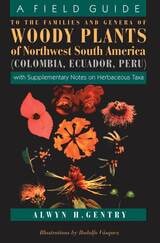
A Field Guide to the Families and Genera of Woody Plants of Northwest South America
With Supplementary Notes on Herbaceous TaxaAlwyn H. Gentry llustrated by Rodolfo Vasquez
University of Chicago Press, 1993
As a consummate field researcher, Gentry designed this guide to be not just comprehensive, but also easy to use in rigorous field conditions. Unlike many field guides, which rely for their identifications on flowers and fruits that are only present during certain seasons, Gentry's book focuses on characters such as bark, leaves, and odor that are present year-round. His guide is filled with clear illustrations, step-by-step keys to identification, and a wealth of previously unpublished data.
All biologists, wildlife managers, conservationists, and government officials concerned with the tropical rain forests will need and use this field guide.
Alwyn Gentry was one of the world's foremost experts on the biology of tropical plants. He was senior curator at the Missouri Botanical Garden, and was a member of Conservation International's interdisciplinary Rapid Assessment Program (RAP) team, which inventories the biodiversity of the most threatened tropical areas. From 1967 to 1993 he collected more than 80,000 plant specimens, many of them new to science.
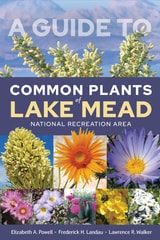
A Guide to Common Plants of Lake Mead National Recreation Area
Elizabeth A. Powell
University of Nevada Press, 2023
A Guide to Common Plants of Lake Mead National Recreation Area is the definitive book for weekend explorers and botanists alike who venture into LMNRA ready to discover the many wonders of the local flora. The authors highlight 183 plants that hikers are most likely to encounter along popular trails, washes, and surrounding hot springs, helping the area’s millions of annual visitors identify and enjoy these common plants. This guide includes photos and descriptions of each plant, along with a map of LMNRA.
The authors also provide a primer on plant ecology, including a guide to plant structures, desert adaptations and life forms, plant-to-plant interactions, and plant-animal interactions. Plants are grouped by life forms, such as tree, shrub, cactus, or grass, and by flower color within the wildflower section. The guide will encourage readers to pause and look carefully at each plant they encounter, giving them an enriched experience during their exploration.
A History of Oregon Ornithology
From Territorial Days to the Rise of BirdingAlan L. Contreras
Oregon State University Press, 2022
Editors Alan Contreras, Vjera Thompson, and Nolan Clements have assembled chapters exploring the differences and interplay between the amateur and professional study of birds, along with discussions of early birding societies, notable observers, and ornithological studies. It includes significant chapters on Charles Bendire, William L. Finley, Ira Gabrielson, Stanley Jewett, and David B. Marshall. It also notes the sometimes-overlooked contributions of women to our expanding knowledge of western birds. Special attention is paid to the development of seabird observation, the impact of the Internet, and the rise of digital resources for bird observers.
Intended for readers interested in the history of Oregon, the history of scientific explorations in the west, and the origins of modern birding and field ornithology, A History of Oregon Ornithology offers a detailed and entertaining tour of how birds were first observed and studied by explorers in what is now Oregon.
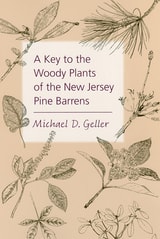
A Key to the Woody Plants of the New Jersey Pine Barrens
Geller, Michael D
Rutgers University Press, 2002
Within southern New Jersey lies the largest expanse of undeveloped land in the megalopolis between Boston and Washington, D.C. This is the Pine Barrens, our nation’s first National Reserve, where visitors are struck by how much the vegetation varies from surrounding areas. Because the sandy soil is only marginally suitable for most agriculture and because the location amounts to a peninsula, settlement has been limited and the current ecology is relatively untouched. However, as New Jersey’s population increases, people are looking to the Pine Barrens with a new interest.
A Key to the Woody Plants of the New Jersey Pine Barrens is a hand-illustrated, user-friendly guide for both the interested student and weekend naturalist. The key lists all of the woody plants of the Pine Barrens except for a few rare, non-native species. In several keys and more than fifty highly detailed drawings, Michael D. Geller describes the basic features of woody plants and explains how to identify plants both in summer and winter.
Along with his set of workable identification keys, the author provides an enjoyable introduction to the geology, ecology, and history of the region, and relates each to the unique flora of the Pine Barrens. The book provides readers with an effective means of identifying the plants that are hallmarks of one of the state’s last wild areas.
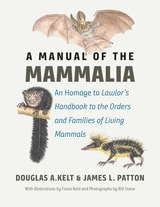
A Manual of the Mammalia
An Homage to Lawlor’s “Handbook to the Orders and Families of Living Mammals”Douglas A. Kelt and James L. Patton
University of Chicago Press, 2020
The taxonomy of recent mammals has lately undergone tremendous revision, but it has been decades since the last update to Timothy E. Lawlor’s acclaimed identification guide the Handbook to the Orders and Families of Living Mammals. Integrating the latest advances in research, Douglas A. Kelt and James L. Patton provide this long-overdue update in their new, wholly original work, A Manual of the Mammalia.
Complemented by global range maps, high-resolution photographs of skulls and mandibles by Bill Stone, and the outstanding artwork of Fiona Reid, this book provides an overview of biological attributes of each higher taxon while highlighting key and diagnostic characters needed to identify skulls and skins of all recent mammalian orders and most families. Kelt and Patton also place taxa in their currently understood supra-familial clades, and discuss current challenges in higher mammal taxonomy. Including a comprehensive review of mammalian anatomy to provide a foundation for understanding all characters employed throughout, A Manual of the Mammalia is both a user-friendly handbook for students learning to identify higher mammal taxa and a uniquely comprehensive, up-to-date reference for mammalogists and mammal-lovers from across the globe.
A Practical Guide to the Marine Animals of Northeastern North America
Leland W Pollock
Rutgers University Press, 1998
Acanthaceae to Myricaceae
Water Willows to Wax MyrtlesRobert H. Mohlenbrock
Southern Illinois University Press, 2008
Veteran botanist, scientific author, and professor Robert H. Mohlenbrock brings the full depth of his expertise and scholarship to his latest book, Acanthaceae to Myricaceae: Water Willows to Wax Myrtles, the third of four volumes in the Aquatic and Standing Water Plants of the Central Midwest series. This easy-to-use illustrated reference guide covers aquatic and standing water plants for the states of Iowa, Illinois, Indiana, Ohio, Kansas, Missouri, Nebraska, and Kentucky (excluding the biologically distinct Cumberland Mountain region of eastern Kentucky), from spearmint to wintergreen, from aster to waterwort.
The volume identifies, describes, and organizes species in three groups, including truly aquatic plants, which spend their entire life with their vegetative parts either completely submerged or floating on the water’s surface; emergents, which are usually rooted under water with their vegetative parts standing above the water’s surface; and wetland plants, which live most or all of their lives out of water, but which can live at least three months in water.
Mohlenbrock lists the taxa alphabetically, and within each taxon, he describes the species with the scientific names he deems most appropriate (indicating if his opinion differs from that of the U.S. Fish and Wildlife Service), common names, identification criteria, line drawings, geographical distribution, habitat description, and official U.S. Fish and Wildlife Service wetlands designation as described by the National Wetland Inventory Section in 1988.
Acanthaceae to Myricaceae is an essential reference for state and federal employees who deal with environmental conservation and mitigation issues in aquatic and wetland plants. It is also a useful guide for students and instructors in college and university courses focusing on the identification of aquatic and wetland plants.

Age Factors in Biometric Processing
Michael Fairhurst
The Institution of Engineering and Technology, 2013
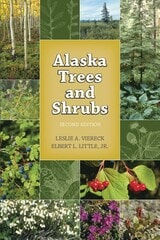
Alaska Trees and Shrubs
Les Viereck
University of Alaska Press, 2007
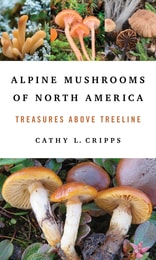
Alpine Mushrooms of North America
Treasures above TreelineCathy L. Cripps
University of Illinois Press, 2025
Features include:
- More than 200 color photographs
- Small size perfect for use in the field
- In-depth scientific information on 150 species, including some recently discovered and most not found outside alpine or Arctic habitats
- Division of species into ecological groups to aid with searching and identification
- Coverage of the Rocky Mountains of Montana, Wyoming, and Colorado, with extensions into British Columbia and Alaska, with many of the same mushrooms also found in the Arctic
- Tips on collecting for both professional researchers and amateur enthusiasts
- A conservation-based approach aimed at the general public, mycologists, researchers, naturalists, land managers, and others
Easy to use and charged with cutting-edge science, Alpine Mushrooms of North America is an expert guide to mycology’s final frontier.
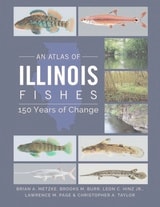
An Atlas of Illinois Fishes
150 Years of ChangeBrian A. Metzke, Brooks M. Burr, Leon C. Hinz Jr., Lawrence M. Page, and Christopher A. Taylor
University of Illinois Press, 2022
Scientifically up-to-date and illustrated with over 240 color photos, An Atlas of Illinois Fishes is a benchmark in the study of Illinois’s ever-changing fish communities and the habitats that support them.

An Illustrated Guide to Iowa Prairie Plants
Paul Christiansen
University of Iowa Press, 1999
Iowa is the only state completely within the tallgrass prairie formation. Thanks to rich soil, adequate rainfall, and warm summer temperatures, hundreds of species combine to produce a diverse and colorful and ever-changing landscape. Using text and maps by Paul Christiansen and newly created drawings by Mark Müller, this first comprehensive guide to the prairie plants native to Iowa provides all the information necessary for identifying and distinguishing even the most similar species.
Species are described from the ground up: stem, leaf, bud, flower, fruit, and habitat. The time of flowering and fruiting is given for the central part of Iowa. Where several species are closely related, a common member of the group is fully described, and the other species are compared with the first. Each species is paired with a distribution map. The superbly detailed illustrations, all of which were drawn specifically for this handbook, capture the general shape of each plant as well as its characteristic features. A guide to family identification, information about extant and restored prairies in Iowa, and a glossary are also included.
Farmers who settled Iowa in the 1800s viewed the great green sea of grasses and wildflowers as a challenge to be replaced with cropfields and pastures. Today we realize that the prairie is an addictive, restorative, aesthetically satisfying place for study and recreation. An Illustrated Guide to Iowa Prairie Plants is designed to enable those who want to go beyond the most common plants to identify all native species and to learn more about their distribution, structure, and natural history.
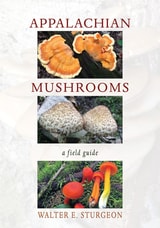
Appalachian Mushrooms
A Field GuideWalter E. Sturgeon
Ohio University Press, 2018
From one of the region’s foremost mushroom hunters—Walter E. Sturgeon—comes a long-overdue field guide to finding and identifying the mushrooms and fleshy fungi found in the Appalachian mountains from Canada to Georgia. Edibility and toxicity, habitat, ecology, and detailed diagnostic features of the disparate forms they take throughout their life cycles are all included, enabling the reader to identify species without the use of a microscope or chemicals.
Appalachian Mushrooms is unparalleled in its accuracy and currency, from its detailed photographs to descriptions based on the most advanced classification information available, including recent DNA studies that have upended some mushrooms’ previously accepted taxonomies. Sturgeon celebrates more than 400 species in all their diversity, beauty, and scientific interest, going beyond the expected specimens to include uncommon ones and those that are indigenous to the Appalachian region.
This guide is destined to be an indispensable authority on the subject for everyone from beginning hobbyists to trained experts, throughout Appalachia and beyond.
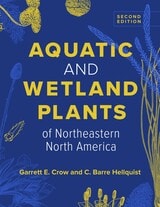
Aquatic and Wetland Plants of Northeastern North America
Garrett E. Crow and C. Barre Hellquist
University of Wisconsin Press, 2023
This is by far the best and most comprehensive manual and illustrated guide to native and naturalized vascular plants—ferns, conifers, and flowering plants—growing in aquatic and wetland habitats in northeastern North America, from Newfoundland west to Minnesota and south to Virginia and Missouri. Published in two volumes, this long-awaited work completely revises and greatly expands Norman Fassett’s 1940 classic A Manual of Aquatic Plants, yet retains the features that made Fassett’s book so useful.
Features include:
* coverage of 1139 plant species, 1186 taxa, 295 genera, 109 families
* more than 600 pages of illustrations, and illustrations for more than 90% of the taxa
* keys for each species include references to corresponding illustrations
* habitat information, geographical ranges, and synonomy
* a chapter on nuisance aquatic weeds
* glossaries of botanical and habitat terms
* a full index for each volume
Wetland ecologists, botanists, resource managers, public naturalists, and environmentalists concerned with the preservation of wetland areas, which are increasingly threatened, will welcome this clear, workable, and comprehensive guide.
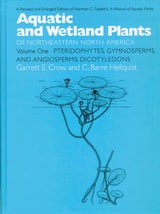
Aquatic and Wetland Plants of Northeastern North America, Volume I
A Revised and Enlarged Edition of Norman C. Fassett's A Manual of Aquatic Plants, Volume I: Pteridphytes, Gymnosperms, and Angiosperms: DicotyledonsGarrett E. Crow and C. Barre Hellquist
University of Wisconsin Press, 2000
This is by far the best and most comprehensive manual and illustrated guide to native and naturalized vascular plants—ferns, conifers, and flowering plants—growing in aquatic and wetland habitats in northeastern North America, from Newfoundland west to Minnesota and south to Virginia and Missouri. Published in two volumes, this long-awaited work completely revises and greatly expands Norman Fassett’s 1940 classic A Manual of Aquatic Plants, yet retains the features that made Fassett’s book so useful.
Features include:
* coverage of 1139 plant species, 1186 taxa, 295 genera, 109 families
* more than 600 pages of illustrations, and illustrations for more than 90% of the taxa
* keys for each species include references to corresponding illustrations
* habitat information, geographical ranges, and synonomy
* a chapter on nuisance aquatic weeds
* glossaries of botanical and habitat terms
* a full index for each volume
Wetland ecologists, botanists, resource managers, public naturalists, and environmentalists concerned with the preservation of wetland areas, which are increasingly threatened, will welcome this clear, workable, and comprehensive guide.
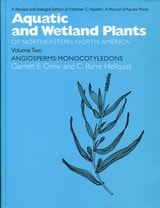
Aquatic and Wetland Plants of Northeastern North America, Volume II
A Revised and Enlarged Edition of Norman C. Fassett's A Manual of Aquatic Plants, Volume II: Angiosperms: MonocotyledonsGarrett E. Crow and C. Barre Hellquist
University of Wisconsin Press, 2000
This is by far the best and most comprehensive manual and illustrated guide to native and naturalized vascular plants—ferns, conifers, and flowering plants—growing in aquatic and wetland habitats in northeastern North America, from Newfoundland west to Minnesota and south to Virginia and Missouri. Published in two volumes, this long-awaited work completely revises and greatly expands Norman Fassett’s 1940 classic A Manual of Aquatic Plants, yet retains the features that made Fassett’s book so useful.
Features include:
* coverage of 1139 plant species, 1186 taxa, 295 genera, 109 families
* more than 600 pages of illustrations, and illustrations for more than 90% of the taxa
* keys for each species include references to corresponding illustrations
* habitat information, geographical ranges, and synonomy
* a chapter on nuisance aquatic weeds
* glossaries of botanical and habitat terms
* a full index for each volume
Wetland ecologists, botanists, resource managers, public naturalists, and environmentalists concerned with the preservation of wetland areas, which are increasingly threatened, will welcome this clear, workable, and comprehensive guide.
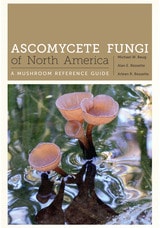
Ascomycete Fungi of North America
A Mushroom Reference GuideBy Michael Beug, Arleen Bessette, and Alan E. Bessette
University of Texas Press, 2014
Approximately 75 percent of all fungi that have been described to date belong to the phylum Ascomycota. They are usually referred to as Ascomycetes and are commonly found and collected by mushroom enthusiasts. Ascomycetes exhibit a remarkable range of biodiversity, are beautiful and visually complex, and some, including morels and truffles, are highly prized for their edibility. Many play significant roles in plant ecology because of the mycorrhizal associations that they form. Thus it is remarkable that no book dedicated to describing and illustrating the North American Ascomycetes has been published in over sixty years.
Filling the gap between technical publications and the limited representation of Ascomycetes in general mushroom field guides, Ascomycete Fungi of North America is a scientifically accurate work dedicated to this significant group of fungi. Because it is impossible to describe and illustrate the tens of thousands of species that occur in North America, the authors focus on species found in the continental United States and Canada that are large enough to be readily noticeable to mycologists, naturalists, photographers, and mushroom hunters. They provide 843 color photographs and more than 600 described species, many of which are illustrated in color for the first time. While emphasizing macroscopic field identification characteristics for a general audience, the authors also include microscopic and other advanced information useful to students and professional mycologists. In addition, a color key to the species described in this book offers a visual guide to assist in the identification process.