Results by title
2 books match the query 'Identity (Philosophical concept) in art'
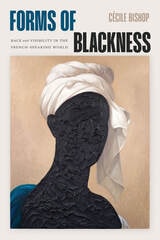
Forms of Blackness
Race and Visibility in the French-Speaking WorldCécile Bishop
Duke University Press, 2025
Forms of Blackness examines how race can be approached as a form shaped and perceived through visual and aesthetic practices. Cécile Bishop offers a new way of thinking about the politics of visibility and presses readers to question how to interpret what they see.
Considering race as form across literature, theory, painting, and photography, Cécile Bishop’s Forms of Blackness explores the formal devices that make blackness both visible and recognizable. In keeping with black Francophone theorists like Édouard Glissant and Frantz Fanon, Bishop uses the ambiguities these aesthetic forms carry to explore a range of identity concepts like opacity, formlessness, and doubleness. Bishop puts blackness-as-race and blackness-as-form in dialogue, showing how race disrupts the concept of artistic autonomy and how the aesthetic challenges race as a self-evident visual phenomenon. When thought together, form does not isolate blackness from race but rather calls attention to the material substrate that turns race into a phenomenon that can be experienced through sense perception. Moving between careful analysis and experimental modes of critique, Forms of Blackness offers a new way of thinking about the politics of visibility and offers a pressing invitation to question the ways we interpret what we see.
Considering race as form across literature, theory, painting, and photography, Cécile Bishop’s Forms of Blackness explores the formal devices that make blackness both visible and recognizable. In keeping with black Francophone theorists like Édouard Glissant and Frantz Fanon, Bishop uses the ambiguities these aesthetic forms carry to explore a range of identity concepts like opacity, formlessness, and doubleness. Bishop puts blackness-as-race and blackness-as-form in dialogue, showing how race disrupts the concept of artistic autonomy and how the aesthetic challenges race as a self-evident visual phenomenon. When thought together, form does not isolate blackness from race but rather calls attention to the material substrate that turns race into a phenomenon that can be experienced through sense perception. Moving between careful analysis and experimental modes of critique, Forms of Blackness offers a new way of thinking about the politics of visibility and offers a pressing invitation to question the ways we interpret what we see.
[more]

Frontiers of Screen History
Imagining European Borders in Cinema, 1945-2010Edited by Raita Merivirta, Kimmo Ahonen, Heta Mulari, and Rami Mähkä
Intellect Books, 2013
Frontiers of Screen History provides an insightful exploration into the depiction and imagination of European borders in cinema after World War II. While films have explored national and political borders, they have also attempted to identify, challenge, and imagine frontiers of another kind: social, ethnic, religious, and gendered. The book investigates all these perspectives. Its unique focus on the representation of European borders and frontiers via film is groundbreaking, opening up a new field of research and scholarly discussion. The exceptional variety of national and cultural perspectives provides a rewarding investigation of borders and frontiers.
[more]