Results by title
58 books match the query 'Identity (Psychology) in literature' and 4 start with a
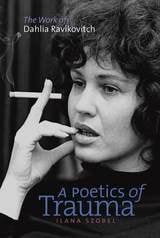
A Poetics of Trauma
The Work of Dahlia RavikovitchIlana Szobel
Brandeis University Press, 2013
The work of the renowned Israeli poet, translator, peace activist, and 1998 Israel Prize laureate Dahlia Ravikovitch (1936–2005) portrays the emotional structure of a traumatized and victimized female character. Ilana Szobel’s book, the first full-length study of Ravikovitch in English, offers a theoretical discussion of the poetics of trauma and the politics of victimhood, as well as a rethinking of the notions of activity and passivity, strength and weakness. Analyzing the deep structure embodied in Ravikovitch’s work, Szobel unearths the interconnectedness of Ravikovitch’s private-poetic subjectivity and Israeli national identity, and shows how her unique poetics can help readers overcome cultural biases and sympathetically engage otherness.
[more]
Afrindian Fictions
Diaspora, Race, and National Desire in South AfricaPallavi Rastogi
The Ohio State University Press, 2008
In the first published book-length study of Indian fiction in South Africa, Pallavi Rastogi demonstrates that Indians desire South African citizenship in the fullest sense of the word, a longing for inclusion that is asserted through an “Afrindian” identity. Afrindian Fictions: Diaspora, Race, and National Desire in South Africa examines Afrindian identity and blurs the racial binary of black and white interaction in South African studies as well as unsettles the East-West paradigm of migration dominant in South Asian diaspora studies.
While offering incisive analyses of the work of the most important South African Indian writers today—Ahmed Essop, Farida Karodia, Achmat Dangor, Imraan Coovadia, and Praba Moodley among others—the author also places South African Indian fiction within broader literary traditions. Rastogi’s project of recovery shines a light on the rich but neglected literature by South African Indians. The book closes with interviews conducted with six key South African Indian writers. Here the authors not only reflect on their own writing but also comment on many of the issues raised in the book itself, particularly the role of Indians in South Africa today, and the status of South African Indian writing.
Afrindian Fictions is a valuable introduction to South African Indian literature as well as a major interrogation of some of the foundational notions of post-colonial literary studies.
[more]
Améfrica in Letters
Literary Interventions from Mexico to the Southern ConeJennifer Carolina Gómez Menjívar
Vanderbilt University Press, 2022
Traditional histories of Black letters in Latin America have delimited their geographic scope to the Caribbean while also omitting intertwined Afro-Indigenous discourses. Inspired by the legacy of Amefrican thinker Lélia Gonzalez, Améfrica in Letters highlights the Black poets, songwriters, novelists, essayists, and bloggers who have created a counter-multiculturalist literary history on the Latin American mainland. To capture a sense of the variety of their contributions, this book spans Mexico, Central America, the Andes, and the Southern Cone—highlighting the transcontinental nature of the legacy of Black writing and its impact beyond national boundaries. The writers examined in the volume engage with regional intellectual frameworks while putting into circulation a demand for a recalibration of the Hispanophone and Lusophone contexts in which they and other Afrodescendants reside.
[more]
As If!
Queer Criticism Across DifferenceChase Gregory
Duke University Press, 2025
In As If!, Chase Gregory explores the stylistically strategic, often campy, and productively fraught cross-identifications of early queer criticism. Gregory calls this form of aids-era criticism as if!—a mode of writing in which authors struggle to read, write, and identify with and across categories of race, sexuality, and gender. Analyzing the work of Robert Reid-Pharr, Deborah E. McDowell, Barbara Johnson, and Eve Kosofsky Sedgwick, Gregory shows how their writing productively challenges fixed ideas of identity and knowledge production. Using these four writers as case studies of a larger trend within early queer criticism, Gregory demonstrates that even when critical attempts at relation are met by impasse, as if! criticism breaks down social relation, especially within those fields influenced by queer theory, deconstructionist feminist theory, and Black feminist theory. By advocating a return to as if! criticism as a politically useful blueprint for contemporary cultural inquiry, Gregory draws attention to the obstacles to forging identification across difference and insists on the impossible project of solidarity across such difference.
[more]