Results by title
67 books match the query 'Imagination' and 6 start with a
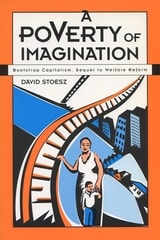
A Poverty of Imagination
Bootstrap Capitalism, Sequel to Welfare ReformDavid Stoesz
University of Wisconsin Press, 2000
Welfare reform was supposed to end welfare as we know it. And it has. The welfare poor have been largely transformed into the working poor, but their poverty persists. This hard-hitting book takes a close look at where we’ve gone wrong—and where we might go next if we truly want to improve the lot of America’s underclass.
Tracing the roots of recent reforms to the early days of the war on poverty, A Poverty of Imagination describes a social welfare system grown increasingly inept, corrupt, and susceptible to conservative redesign. Investigating the causes of the ongoing failure of welfare assistance, Stoesz focuses on the economic barriers that impede movement out of poverty into the American mainstream. He explores such issues as the heterogeneity of welfare families, generational welfare, inadequate benefits, the negative effects of time limits on welfare recipients, a fringe banking industry that exploits low-income families, the limited capacity of low-wage markets, and the unavailability of credit.
Stoesz suggests that a form of "bootstrap capitalism" would allow individuals and families to participate more fully in American society and achieve upward economic mobility and stability. This proposal, emphasizing wage supplements, asset building, and community capitalism, sets the stage for the next act in poverty policy in the United States. With its valuable insights on the American welfare system and its positive agenda for change, this book makes a significant intervention in our ongoing struggle to come to terms with widespread poverty in the wealthiest nation on earth.
Acts of Faith and Imagination
Theological Patterns in Catholic FictionBrent Little
Catholic University of America Press, 2023
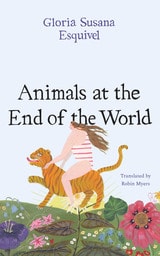
Animals at the End of the World
By Gloria Susana Esquivel, translated by Robin Myers
University of Texas Press, 2020
Animals at the End of the World begins with an explosion, which six-year-old Inés mistakes for the end of the world that she has long feared. In the midst of the chaos, she meets the maid’s granddaughter, Mariá, who becomes her best friend and with whom she navigates the adult world in her grandparents’ confined house. Together, they escape the house and confront the “animals” that populate Bogotá in the 1980s. But Inés soon realizes she cannot count on either María or her preoccupied and conflicted parents. Alone, she must learn to decipher her outer and inner worlds, confronting both armies of beasts and episodes of domestic chaos. In the process, she also learns what it means to test boundaries, break rules, and cope with the consequences.
The first novel by Colombian author Gloria Susana Esquivel, Animals at the End of the World is a poetic and moving coming-of-age story that lingers long after its final page.
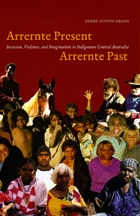
Arrernte Present, Arrernte Past
Invasion, Violence, and Imagination in Indigenous Central AustraliaDiane J. Austin-Broos
University of Chicago Press, 2008
Employing ethnographic and archival research, Diane Austin-Broos traces the history of the Arrernte as they have transitioned from a society of hunter-gatherers to members of the Hermannsburg Mission community to their present, marginalized position in the modern Australian economy. While she concludes that these wrenching structural shifts led to the violence that now marks Arrernte communities, she also brings to light the powerful acts of imagination that have sustained a continuing sense of Arrernte identity.
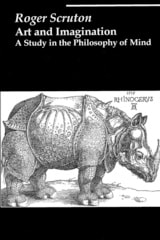
Art and Imagination
A Study in the Philosophy of MindRoger Scruton
St. Augustine's Press, 2015
Scruton examines and rejects various attempts made by recent philosophers to demarcate the realm of aesthetic judgment. He argues that the logic of aesthetic judgment does not suffice to distinguish what is “aesthetic” from what is not, for aesthetic judgments must be explained in terms of the conditions for their acceptance rather than the conditions for their truth. These “acceptance conditions” can be understood only if we first know what is meant by aesthetic experience. This theory attempts to show how aesthetic experience can be regarded as autonomous, even though it is intimately connected with ordinary experience, and is indeed dependent on ordinary experience for its full description.
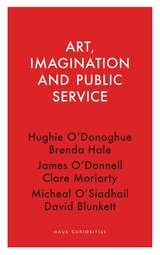
Art, Imagination and Public Service
Hughie O'Donoghue, Brenda Hale, James O'Donnell, Clare Moriarty, Micheal O'Siadhail, and David Blunkett
Haus Publishing, 2021
Intended to inspire public servants of all kinds to reconnect fearlessly with their fundamental humanity, the three conversations in Art, Imagination and Public Service present a way of thinking about imaginative, compassionate, and intelligent public service. The book consists of three dialogues: between former UK Home Secretary David Blunkett and poet Micheal O’Siadhail, former UK Supreme Court president Brenda Hale and painter Hughie O’Donoghue, and UK Permanent Secretary Clare Moriarty and musician James O’Donnell. Together they explore how art and imagination can sustain public servants and enable them to find new ways of addressing the problems facing government, parliament, and the law—problems that resist utilitarian responses in which people end up being treated only as statistics in a target-driven world. Through these conversations, the speakers discover surprising connections in approaches to their work.