Results by title

15 books match the query 'Imaging systems'

cover of Deep Learning Models in Medical Imaging: Diagnostic innovations and clinical intelligence

Deep Learning Models in Medical Imaging

Diagnostic innovations and clinical intelligence

Rajakumar Girija

The Institution of Engineering and Technology, 2027

As healthcare technology moves towards a near-human level of performance in image recognition for screening, diagnosis, staging, and prognosis, this authored book lays the groundwork for understanding AI's transformative impact on the analysis of medical images.
[more]
cover of Developments in Control Theory Towards Glocal Control

Developments in Control Theory Towards Glocal Control

Li Qiu

The Institution of Engineering and Technology, 2012

Glocal control, a term coined by Professor Shinji Hara at The University of Tokyo, represents a new framework for studying behaviour of complex dynamical systems from a feedback control perspective. A large number of dynamical components can be interconnected and interact with each other to form an integrated system with certain functionalities. Such complex systems are found in nature and have been created by man, including gene regulatory networks, neuronal circuits for memory, decision making, and motor control, bird flocking, global climate dynamics, central processing units for computers, electrical power grids, the World Wide Web, and financial markets. A common feature of these systems is that a global property or function emerges as a result of local, distributed, dynamical interactions of components. The objective of 'glocal' (global + local) control is to understand the mechanisms underlying this feature, analyze existing complex systems, and to design and create innovative systems with new functionalities. This book is dedicated to Professor Shinji Hara on the occasion of his 60th birthday, collecting the latest results by leading experts in control theories to lay a solid foundation towards the establishment of glocal control theory in the coming decades.
[more]
cover of Electrical Capacitance Tomography (ECT): Principles, systems and industrial applications

Electrical Capacitance Tomography (ECT)

Principles, systems and industrial applications

Wuqiang Yang

The Institution of Engineering and Technology, 2026

Electrical capacitance tomography (ECT) is a non-intrusive and non-invasive imaging technique that creates a cross-sectional image of the distribution of dielectric materials inside a pipe or vessel. ECT measures the capacitance between pairs of electrodes mounted on the outside of the pipe, and reconstructs a cross-sectional image using the measured capacitance data and a suitable algorithm, to reflect the inside permittivity distribution. ECT is particularly useful for visualising the multiphase flow of non-conductive substances in industrial processes.
[more]
cover of Fortressing Pixels: Information security for images, videos, audio and beyond

Fortressing Pixels

Information security for images, videos, audio and beyond

Subhrajyoti Deb

The Institution of Engineering and Technology, 2025

Emerging and pivotal technologies such as artificial intelligence and deep learning, cloud computing, internet of things, blockchain, encryption, and quantum cryptography are required to meet multimedia data's evolving needs and security requirements. In digital imaging, a pixel is the smallest element of an image that can be manipulated through software. Pixels within a digital image or graphical user interface must be secured to control unauthorized access or manipulation.
[more]
cover of Handbook of Speckle Filtering and Tracking in Cardiovascular Ultrasound Imaging and Video

Handbook of Speckle Filtering and Tracking in Cardiovascular Ultrasound Imaging and Video

Christos P. Loizou

The Institution of Engineering and Technology, 2018
Ultrasound imaging technology has experienced a dramatic change in the last 30 years. Because of its non-invasive nature and continuing improvements in image quality, ultrasound imaging is progressively achieving an important role in the assessment and characterization of cardiovascular imaging. Speckle is inherent in ultrasound imaging giving rise to a granular appearance instead of homogeneous, flat shades of gray, as is visible and as such, speckle can severely compromise interpretation of ultrasound images, particularly in discrimination of small structures. On the other hand, speckle can be used in the detection of time varying phenomena, or tracking tissue motion. The objective of this book is to provide a reference edited volume covering the whole spectrum of speckle phenomena, theoretical background and modelling, algorithms and selected applications in cardiovascular ultrasound imaging and video processing and analysis. The book is organized under the following four parts, Part I: Introduction to Speckle Noise; Part II: Speckle Filtering; Part III: Speckle Tracking; Part IV: Selected Applications in Cardiovascular Imaging.
[more]
cover of Image Processing for Engineers

Image Processing for Engineers

Andrew E. Yagle and Fawwaz T. Ulaby

Michigan Publishing Services, 2018
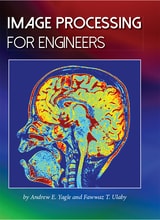
[from the Preface] Designed for a course on image processing (IP) aimed at both graduate students as well as undergraduates in their senior year, in any field of engineering, this book starts with an overview in Chapter 1 of how imaging sensors—from cameras to radars to MRIs and CAT—form images, and then proceeds to cover a wide array of image processing topics. The IP topics include: image interpolation, magnification, thumbnails, and sharpening, edge detection, noise filtering, de-blurring of blurred images, supervised and unsupervised learning, and image segmentation, among many others. As a prelude to the chapters focused on image processing (Chapters 3–12), the book offers in Chapter 2 a review of 1-D signals and systems, borrowed from our 2018 book Signals and Systems: Theory and Applications, by Ulaby and Yagle.
[more]
cover of Imaging Sensor Technologies and Applications

Imaging Sensor Technologies and Applications

Wuqiang Yang

The Institution of Engineering and Technology, 2020

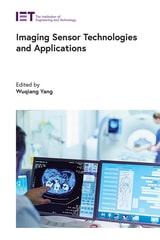
Imaging sensors are crucial for electronic imaging systems, including digital cameras, camera modules, medical imaging equipment, night vision equipment, radar and sonar, drones, and many others. This contributed book covers a wide range of frequency, sensing modalities and applications, including x-ray beam imaging sensors, optical scattering sensors, smart visual sensors in robotic systems, tuneable diode Laser absorption spectroscopy (TDLAS) sensors, light detection and ranging (LiDAR) sensors, microwave imaging sensors, electro-magnetic imaging with ultra-wideband (UWB) sensors, synthetic aperture radar (SAR), electrical resistance tomography (ERT) sensors, electrical tomography for medical applications, electro-magnetic tomography (EMT) sensors, micro sensors for cell and blood imaging, and ultrasound imaging sensors.
[more]
cover of Imaging and Sensing for Unmanned Aircraft Systems: Control and Performance, Volume 1

Imaging and Sensing for Unmanned Aircraft Systems

Control and Performance, Volume 1

Vania V. Estrela

The Institution of Engineering and Technology, 2020

This two-volume book set explores how sensors and computer vision technologies are used for the navigation, control, stability, reliability, guidance, fault detection, self-maintenance, strategic re-planning and reconfiguration of unmanned aircraft systems (UAS).
[more]
cover of Imaging and Sensing for Unmanned Aircraft Systems: Deployment and Applications, Volume 2

Imaging and Sensing for Unmanned Aircraft Systems

Deployment and Applications, Volume 2

Vania V. Estrela

The Institution of Engineering and Technology, 2020

This two-volume book set explores how sensors and computer vision technologies are used for the navigation, control, stability, reliability, guidance, fault detection, self-maintenance, strategic re-planning and reconfiguration of unmanned aircraft systems (UAS).
[more]
cover of Intelligent Distributed Video Surveillance Systems

Intelligent Distributed Video Surveillance Systems

Sergio A. Velastin

The Institution of Engineering and Technology, 2006

There is a growing interest in the development and deployment of surveillance systems in public and private locations. Conventional approaches rely on the installation of wide area CCTV (Closed Circuit Television), but the explosion in the numbers of cameras that have to be monitored, the increasing costs of providing monitoring personnel and the limitations that humans have to maintain sustained levels of concentration severely limit the effectiveness of these systems. Advances in information and communication technologies, such as computer vision for face recognition and human behaviour analysis, digital annotation and storage of video, transmission of video/audio streams over wired and wireless networks, can potentially provide significant improvements in this field.
[more]
cover of Introduction to Radar Target Recognition

Introduction to Radar Target Recognition

P. Tait

The Institution of Engineering and Technology, 2006
This book text provides an overview of the radar target recognition process and covers the key techniques being developed for operational systems. It is based on the fundamental scientific principles of high resolution radar, and explains how the underlying techniques can be used in real systems, taking into account the characteristics of practical radar system designs and component limitations. It also addresses operational aspects, such as how high resolution modes would fit in with other functions such as detection and tracking.
[more]
cover of Introduction to Sensors for Ranging and Imaging

Introduction to Sensors for Ranging and Imaging

Graham Brooker

The Institution of Engineering and Technology, 2009

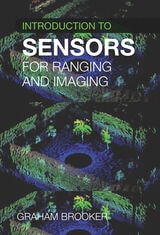
This is a comprehensive textbook and reference that provides a solid background in active sensing technology. Beginning with a historical overview and an introductory section on signal generation, filtering and modulation, it follows with a section on radiometry (infrared and microwave) as a background to the active sensing process. The core of the book is concerned with active sensing, starting with the basics of time-of-flight sensors (operational principles, components), and goes through the derivation of the radar range equation, and the detection of echo signals, both fundamental to the understanding of radar, sonar and lidar imaging. Several chapters cover signal propagation of both electromagnetic and acoustic energy, target characteristics, stealth and clutter. The remainder of the book involves the basics of the range measurement process, active imaging with an emphasis on noise and linear frequency modulation techniques, Doppler processing, and target tracking.
[more]
cover of Maritime Autonomous Vehicles: Methods and measurements

Maritime Autonomous Vehicles

Methods and measurements

Frank Ehlers

The Institution of Engineering and Technology, 2025
The maritime domain is of an enormous interest to our society, from the economy to health, and security. Operating in the maritime domain, on the other hand, is dangerous, expensive, and most of the time at low execution speed. Unmanned systems are in many ways suited to such environments, but the successful realisation of maritime autonomous vehicles requires an overarching design and development cycle, starting from design and modelling of unmanned systems, to control and implementation exhibiting a reliable and explainable level of autonomy and self-organization amidst the sudden and possibly extreme disturbances occurring in the uncertain and dynamic maritime environment.
[more]
cover of Medical Imaging Informatics: Machine learning, deep learning and big data analytics

Medical Imaging Informatics

Machine learning, deep learning and big data analytics

Mamoon Rashid

The Institution of Engineering and Technology, 2024

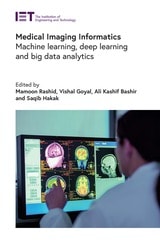
Medical imaging informatics play an important role in the effectiveness of present-day healthcare systems. Advancement of artificial intelligence, big data analytics, and internet of things technologies contribute greatly to various healthcare applications. Artificial intelligence techniques are contributing to improvements with traditionally human-based systems and ensuring that the accuracy of prediction and diagnosis is being continually enhanced. The development of reliable and accurate healthcare models is becoming ever more possible with the help of machine learning and deep learning technologies. Artificial intelligence has the power to solve many complex problems in medical imaging and is a technology that will help to design the future of many healthcare systems.
[more]
cover of Radar Imaging and Holography

Radar Imaging and Holography

A. Pasmurov

The Institution of Engineering and Technology, 2005

Increasing information content is an important scientific problem in modern observation systems development. Radar, or microwave, imaging, a technique which combines radar techniques with digital or optical information processing, can be used for this purpose. Drawing on their own research, the authors provide an overview of the field and explain why a unified approach based on wave field processing techniques, including holographic and tomographic approaches, is necessary in high resolution radar design. Such techniques use the complex field incident on an observation surface to produce a hologram, which can be used to reconstruct an image of the object or to restore some of its physical parameters. This makes it possible to extract the size, coordinates and radar cross-section of individual scattering centres.
[more]