69 books match the query 'Indiana' and 4 start with a
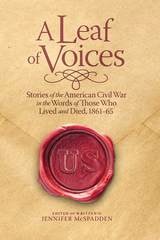
cover of A Leaf of Voices: Stories of the American Civil War in the Words of Those Who Lived and Died, 1861-65

A Leaf of Voices

Stories of the American Civil War in the Words of Those Who Lived and Died, 1861-65

Jennifer McSpadden

Indiana Historical Society Press, 2014
During the American Civil the Wabash Intelligencer and the Wabash Plain Dealer frequently printed letters from Wabash County men serving in the Union army. The letter writers are a remarkable cast of characters: young and old, soldiers, doctors, ministers, officers, enlisted men, newspaper men, and a fifteen-year-old printers’ devil who enlisted as a drummer boy. These are not stories of generals or battle strategies; they are the stories of the ordinary soldiers and their everyday lives. They describe long tiring marches across state after state, crossing almost impossible terrain, facing shortages of rations and supplies, enduring extremes of weather where they froze one day and sweltered the next, and encountering guerrillas that harried the wagon trains. The correspondents wrote of walking over the bodies of fallen comrades and foes alike, of mules and their wagons sinking into muddy roads that became like quicksand, of shipwrecks, and of former slaves.
[more]
cover of A Study of the Glacial Kame Culture in Michigan, Ohio, and Indiana

A Study of the Glacial Kame Culture in Michigan, Ohio, and Indiana

Wilbur M. Cunningham

University of Michigan Press, 1948
In this book, Wilbur Cunningham presents data on artifacts from eleven sites in the Midwest, with a focus on the Burch site in Berrien County, Michigan. Rare shell gorgets in the shape of sandals (called sandal-sole gorgets) were found at all of the sites. Includes 10 plates. Appendix by James B. Griffin.
[more]
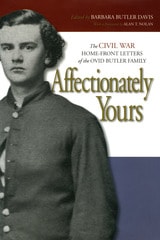
cover of Affectionately Yours: The Civil War Home-Front Letters of the Ovid Butler Family

Affectionately Yours

The Civil War Home-Front Letters of the Ovid Butler Family

Barbara Butler Davis

Indiana Historical Society Press, 2004
In the American Civil War missives from relatives to soldiers relating the details of what was occurring in the villages and towns unscarred by the conflict were rare. Edited by Barbara Butler Davis, Affectionately Yours: The Civil War Home-Front Letters of the Ovid Butler Family includes transcriptions of sixty-five holograph letters written from 1863 to 1865 to their son Scot. The letters are housed in the collection of the Irvington Historical Society and relate a fascinating social history of the Indianapolis community during the Civil War. The book also includes a foreword by Civil War historian Alan T. Nolan.
[more]
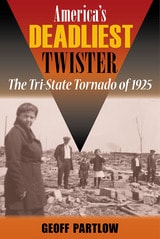
cover of America's Deadliest Twister: The Tri-State Tornado of 1925

America's Deadliest Twister

The Tri-State Tornado of 1925

Geoff Partlow

Southern Illinois University Press, 2014

Winner, ISHS Certificate of Excellence, 2015

Disaster relief as we know it did not exist when the deadliest tornado in U.S. history gouged a path from southeast Missouri through southern Illinois and into southwestern Indiana. The tri-state tornado of 1925 hugged the ground for 219 miles, generated wind speeds in excess of 300 miles per hour, and killed 695 people. Drawing on survivor interviews, public records, and newspaper archives, America’s Deadliest Twister offers a detailed account of the storm, but more important, it describes life in the region at that time as well as the tornado’s lasting cultural impact, especially on southern Illinois.

Author Geoff Partlow follows the storm from town to town, introducing us to the people most affected by the tornado, including the African American population of southern Illinois. Their narratives, along with the stories of the heroes who led recovery efforts in the years following, add a hometown perspective to the account of the storm itself.

In the discussion of the aftermath of the tornado, Partlow examines the lasting social and economic scars in the area, but he also looks at some of the technological firsts associated with this devastating tragedy. Partlow shows how relief efforts in the region began to change the way people throughout the nation thought about disaster relief, which led to the unified responses we are familiar with today.
 

[more]