Results by title
26 books match the query 'Infectious Diseases'
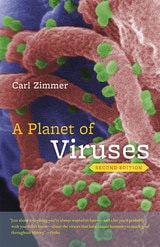
A Planet of Viruses
Second EditionCarl Zimmer
University of Chicago Press, 2015
Fortunately, science writer Carl Zimmer is here to guide us. In this compact volume, he tells the story of how the smallest living things known to science can bring an entire planet of people to a halt--and what we can learn from how we've defeated them in the past.
Planet of Viruses covers such threats as Ebola, MERS, and chikungunya virus; tells about recent scientific discoveries, such as a hundred-million-year-old virus that infected the common ancestor of armadillos, elephants, and humans; and shares new findings that show why climate change may lead to even deadlier outbreaks. Zimmer’s lucid explanations and fascinating stories demonstrate how deeply humans and viruses are intertwined. Viruses helped give rise to the first life-forms, are responsible for many of our most devastating diseases, and will continue to control our fate for centuries. Thoroughly readable, and, for all its honesty about the threats, as reassuring as it is frightening, A Planet of Viruses is a fascinating tour of a world we all need to better understand.
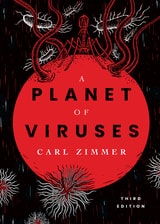
A Planet of Viruses
Third EditionCarl Zimmer
University of Chicago Press, 2021
Fully revised and updated, with new illustrations and a new chapter about coronaviruses and the spread of Covid-19, this third edition of Carl Zimmer’s A Planet of Viruses pulls back the veil on this hidden world. It presents the latest research on how viruses hold sway over our lives and our biosphere, how viruses helped give rise to the first life-forms, how viruses are producing new diseases, how we can harness viruses for our own ends, and how viruses will continue to control our fate as long as life endures.
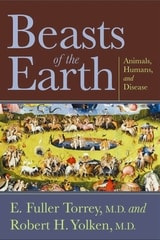
Beasts of the Earth
Animals, Humans, and DiseaseTorrey, E. Fuller
Rutgers University Press, 2014
Humans have lived in close proximity to other animals for thousands of years. Recent scientific studies have even shown that the presence of animals has a positive effect on our physical and mental health. People with pets typically have lower blood pressure, show fewer symptoms of depression, and tend to get more exercise.
But there is a darker side to the relationship between animals and humans. Animals are carriers of harmful infectious agents and the source of a myriad of human diseases. In recent years, the emergence of high-profile illnesses such as AIDS, SARS, West Nile virus, and bird flu has drawn much public attention, but as E. Fuller Torrey and Robert H. Yolken reveal, the transfer of deadly microbes from animals to humans is neither a new nor an easily avoided problem.
Beginning with the domestication of farm animals nearly 10,000 years ago, Beasts of the Earth traces the ways that human-animal contact has evolved over time. Today, shared living quarters, overlapping ecosystems, and experimental surgical practices where organs or tissues are transplanted from non-humans into humans continue to open new avenues for the transmission of infectious agents. Other changes in human behavior like increased air travel, automated food processing, and threats of bioterrorism are increasing the contagion factor by transporting microbes further distances and to larger populations in virtually no time at all.
While the authors urge that a better understanding of past diseases may help us lessen the severity of some illnesses, they also warn that, given our increasingly crowded planet, it is not a question of if but when and how often animal-transmitted diseases will pose serious challenges to human health in the future.
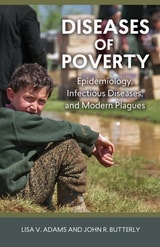
Diseases of Poverty
Epidemiology, Infectious Diseases, and Modern PlaguesLisa V. Adams and John R. Butterly
Dartmouth College Press, 2015
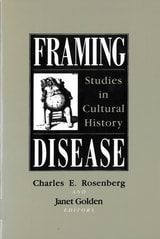
Framing Disease
Studies in Cultural HistoryRosenberg, Charles E
Rutgers University Press, 1992
"In some ways disease does not exist until we have agreed that it does, by perceiving, naming, and responding to it, " writes Charles E. Rosenberg in his introduction to this stimulating set of essays. Disease is both a biological event and a social phenomenon. Patient, doctor, family, and social institutions—including employers, government, and insurance companies—all find ways to frame the biological event in terms that make sense to them and serve their own ends.
Many diseases discussed here—endstage renal disease, rheumatic fever, parasitic infectious diseases, coronary thrombosis—came to be defined, redefined, and renamed over the course of several centuries. As these essays show, the concept of disease has also been used to frame culturally resonant behaviors: suicide, homosexuality, anorexia nervosa, chronic fatigue syndrome. Disease is also framed by public policy, as the cases of industrial disability and of forensic psychiatry demonstrate. Medical institutions, as managers of people with disease, come to have vested interests in diagnoses, as the histories of facilities to treat tuberculosis or epilepsy reveal. Ultimately, the existence and conquest of disease serves to frame a society's sense of its own "healthiness" and to give direction to social reforms.
The contributors include Steven J. Peitzman, Peter C. English, John Farley, Christopher Lawrence, Michael MacDonald, Bert Hansen, Joan Jacobs Brumberg, Robert A. Aronowitz, Gerald Markowitz, David Rosner, Janet A. Tighe, Barbara Bates, Ellen Dwyer, John M. Eyler, and Elizabeth Fee. For any student of disease and society, this book is essential, compelling reading.

Geographic Medicine for the Practitioner
Algorithms in the Diagnosis and Management of Exotic DiseasesKenneth D. Warren and Adel A. F. Mahmoud
University of Chicago Press, 1978
"The algorithms in this book have been developed by Drs. Warren and Mahmoud, as the result of a systematic effort to produce such guides. The book is presented as another in the series "Studies in Infectious Disease Research" and is a most welcome addition, certain to supply a major and hitherto inadequately fulfilled need."—from the Foreword, by Edward H. Kass, M. D., Ph.D
Hidden Arguments
Political Ideology and Disease Prevention PolicySylvia Noble Tesh
Rutgers University Press, 1988
Along the way she makes these principal points: She criticizes as politically conservative the idea that diseases result from a multifactorial web of causes. Placing responsibility for disease prevention on "society" is ideological, she argues. In connection with the air traffic controllers she questions whether it is in a union's best interests to claim that workers' jobs are stressful. She shows why there are no entirely neutral answers to questions about the toxicity of environmental pollutants. In a final chapter, Tesh urges scientists to incorporate egalitarian values into their search for the truth, rather than pretending science can be divorced from that political ideology.
Infectious Disease Emergencies
Preparedness and ResponseEdited by Dale Fisher
National University of Singapore Press, 2025
For too long, the theory and practice of infectious disease outbreak response have been the domain of a small number of experienced responders. The COVID-19 pandemic brought global attention to the requirements of effective outbreak response, and the need for preparation across the key pillars. Decisionmakers, early career practitioners, and those in the field now have access to a comprehensive text that brings together evidence-based and practical insights from the best in the business.
Dale Fisher, Professor of Medicine at the National University of Singapore, was chair of WHO’s Global Outbreak Alert and Response Network before and during most of the pandemic. In this massive collaborative effort, he marshals nearly one hundred top public health leaders and experts from the front lines to present thirty-seven chapters on pandemic preparedness and response, drawing heavily on experiences from COVID-19, but also from Ebola, MERS, SARS-1, influenza, and other outbreaks of modern times. The contributors include experts from health ministries and Centres for Disease Control and national public health institutions around the world; from international organizations like the WHO, MSF, IFRC, and UNICEF; and research institutions and various NGOs from dozens of countries, adding to the diversity and richness of the descriptions.
Infectious Disease
A Scientific American ReaderEdited by Scientific American
University of Chicago Press, 2008

Making Uncertainty
Tuberculosis, Substance Use, and Pathways to Health in South AfricaAnna Versfeld
Rutgers University Press, 2023

Maraña
War and Disease in the Jungles of ColombiaLina Pinto-García
University of Chicago Press, 2025
Cutaneous leishmaniasis, transmitted by female sandflies, produces skin lesions of varying size and shape. In Colombia, the insect vector of the disease is native to the same forested environments that have served as the main stage for one of the longest and most violent wars in Latin American history. As a result, the populations most affected by leishmaniasis in Colombia are members of the state army and nonstate armed groups.
Lina Pinto-García explores how leishmaniasis and the armed conflict are inextricably connected and mutually reinforcing. Maraña means “tangle” in Spanish but is also commonly used in Colombia to name the entangled greenery, braided lianas, and dense foliage that characterize the tropical forests where leishmaniasis transmission typically occurs. Pinto-García argues that leishmaniasis and the war are not merely linked but enmarañadas to each other through narratives, technologies, and practices produced by the state, medicine, biomedical research, and the armed conflict itself. All told, Maraña is a passionate study of how war has shaped the production of scientific knowledge about leishmaniasis and access to its treatments in Colombia.
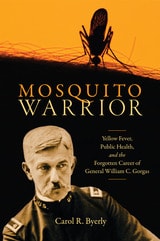
Mosquito Warrior
Yellow Fever, Public Health, and the Forgotten Career of General William C. GorgasCarol R. Byerly
University of Alabama Press, 2024
A compelling biography of General William C. Gorgas, the US Army doctor's campaign against mosquito-borne disease reshaped public health, military medicine, and U. S. power on the world stage.
Mosquito Warrior tells the engrossing story of General William C. Gorgas (1854–1920), the once-renowned pioneer in tropical disease research and public health. His fascinating life illuminates vast transformations in the United States, including the end of the Civil War and the industrialization of the US military and economy, the emergence of germ theory and the modernization of the public health system, and the rise of the United States as a world power.
A scion of Confederate elites, Gorgas came of age amidst war and disease and the politics of racial segregation. He followed his father into military service as an army medical officer, treating troops on America’s western frontier posts. During the US occupation of Cuba, Gorgas applied Walter Reed’s research on the theory of mosquito-borne disease transmission, ending centuries of yellow fever in Havana through the eradication of the deadly Aedes aegypti mosquito. Applying similar strategies on the isthmus of Panama against yellow fever and malaria, Gorgas enabled the completion of the Panama Canal, then the largest engineering project in the world. Hailed a hero, he pursued his fight against mosquito-borne disease throughout the tropics, expanding American interests as he went. Appointed as US Army surgeon general on the eve of World War I, Gorgas resumed work modernizing the army health care system, strengthening US medical and military authority on the world stage.
Celebrated in life, Gorgas’s reputation fell victim to competing political interests and jealousies after his death, a cautionary tale about historical memory and the politics of science and personality. Carol R. Byerly’s balanced and contemporary examination of Gorgas illuminates his complex legacy in medicine and public health, military history, and American ambitions at the dawn of US global ascendency.
Persisting Pandemics
Syphilis, AIDS, and COVIDPowel H. Kazanjian
Rutgers University Press, 2025
Perturbing the Organism
The Biology of Stressful ExperienceHerbert Weiner
University of Chicago Press, 1992
This authoritative work is the first to analyze critically the entire range of research and theory on stress in animals and humans, from the earliest studies in the 1930s up to the present day. Herbert Weiner not only documents the many empirical and conceptual advances of recent years, but also supplies a new working definition and classification of stressful experience. He describes the integrated, organismic responses to stressful environmental changes, tasks, and challenges in terms of functional adaptation: the failure of these responses results in injury, ill-health, disease, and death. To examine the coordination between behavior and bodily functions, Weiner reviews current knowledge on how stressful experiences also alter biobehavioral rhythms.
Providing a useful, integrative concept of stress rooted in an understanding of the organism as an interactive communication system composed of many subsystems, Perturbing the Organism will interest a wide range of clinicians and researchers throughout the medical and behavioral sciences.
The John D. and Catherine T. MacArthur Foundation Series on Mental Health and Development
Rhetoric of a Global Epidemic
Transcultural Communication about SARSHuiling Ding
Southern Illinois University Press, 2014
2016 CCCC Best Book Award in Technical and Scientific Communication
In the past ten years, we have seen great changes in the ways government organizations and media respond to and report on emerging global epidemics. The first outbreak to garner such attention was SARS (severe acute respiratory syndrome). In Rhetoric of a Global Epidemic, Huiling Ding uses SARS to explore how various cultures and communities made sense of the epidemic and communicated about it. She also investigates the way knowledge production and legitimation operate in global epidemics, the roles that professionals and professional communicators, as well as individual citizens, play in the communication process, points of contention within these processes, and possible entry points for ethical and civic intervention.
Focusing on the rhetorical interactions among the World Health Organization, the United States, China, and Canada, Rhetoric of a Global Epidemic investigates official communication and community grassroots risk tactics employed during the SARS outbreak. It consists of four historical cases, which examine the transcultural risk communication about SARS in different geopolitical regions at different stages. The first two cases deal with risk communication practices at the early stage of the SARS epidemic when it originated in southern China. The last two cases move to transcultural rhetorical networks surrounding SARS.
With such threats as SARS, avian flu, and swine flu capturing the public imagination and prompting transnational public health preparedness efforts, the need for a rhetoric of global epidemics has never been greater. Government leaders, public health officials, health care professionals, journalists, and activists can learn how to more effectively craft and manage transcultural risk communication from Ding’s examination of the complex and varied modes of communication around SARS. In addition to offering a detailed case study, Rhetoric of a Global Epidemic provides a critical methodology that professional communicators can use in their investigations of epidemics and details approaches to facilitating more open, participatory risk communication at all levels.

Selling Science
Polio and the Promise of Gamma GlobulinMawdsley, Stephen E
Rutgers University Press, 2016
Drawing on oral history interviews, medical journals, newspapers, meeting minutes, and private institutional records, Selling Science sheds light on the ethics of scientific conduct, and on the power of marketing to shape public opinion about medical experimentation.
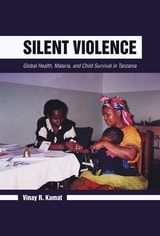
Silent Violence
Global Health, Malaria, and Child Survival in TanzaniaVinay R. Kamat
University of Arizona Press, 2013
Malaria control, according to Kamat, has become increasingly medicalized, a trend that overemphasizes biomedical and pharmaceutical interventions while neglecting the social, political, and economic conditions he maintains are central to Africa’s malaria problem. Kamat offers recent findings on global health governance, neoliberal economic and health policies, and their impact on local communities.
Seeking to link wider social, economic, and political forces to local experiences of sickness and suffering, Kamat analyzes the lived experiences and practices of people most seriously affected by malaria—infants and children. The persistence of childhood malaria is a form of structural violence, he contends, and the resultant social suffering in poor communities is closely tied to social inequalities.
Silent Violence illustrates the evolving nature of local responses to the global discourse on malaria control. It advocates for the close study of disease treatment in poor communities as an integral component of global health funding. This ethnography combines a decade of fieldwork with critical review and a rare anthropological perspective on the limitations of the bureaucratic, technological, institutional, medical, and political practices that currently determine malaria interventions in Africa.
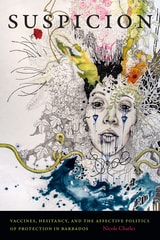
Suspicion
Vaccines, Hesitancy, and the Affective Politics of Protection in BarbadosNicole Charles
Duke University Press, 2021
Duke University Press Scholars of Color First Book Award recipient
The Bacteriology of Tuberculosis
Egons Darzins
University of Minnesota Press, 1958
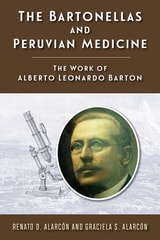
The Bartonellas and Peruvian Medicine
The Work of Alberto Leonardo BartonAlarcón, Graciela S
Rutgers University Press, 2019
The book is the result of intense bibliographic research and of original documents aimed not just at the examination of Barton’s life and work, but also the examination of today’s perspectives and future work in the field of infectious and “neglected” diseases. The authors address current scientific information on the relevant bacteria Bartonella bacilliformis, besides current research and clinical status of the other Bartonellas, making it a useful and practical text for those studying infectious diseases.
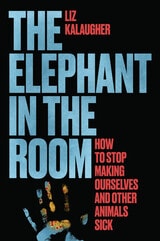
The Elephant in the Room
How to Stop Making Ourselves and Other Animals SickLiz Kalaugher
University of Chicago Press, 2025
When new diseases spread, news reports often focus on wildlife culprits—rodents, monkeys and mpox; bats and COVID-19; waterfowl and avian flu; or mosquitoes and Zika. But, in this urgent and engaging book, we see it often works the other way around—humans have caused diseases in other animals countless times, through travel and transport, the changes we impose on our environment, and global warming. With science journalist Liz Kalaugher as our guide, we meet the wildlife we have harmed and the experts now studying the crosscurrents between humans, other animals, and health.
Herds of buffalo in Kenya, cloned ferrets in Colorado, and frogs shipped worldwide as living pregnancy tests for humans, all help Kalaugher dive into the murky backstories behind wildlife epidemics past and present. We learn that military conflict likely contributed to the spread of rinderpest, or cattle plague, throughout Africa, devastating pastoral communities. That crowded poultry farms may create virulent new forms of bird flu that spill back into the wild. And that West Nile virus—which affects not only birds and humans, but other animals, including horses, skunks, and squirrels—is spreading as global temperatures rise.
Expanding today’s discussions of environmental protection to include illness and its impact, Kalaugher both sounds the alarm and explores ways to stop the emergence and spread of wildlife diseases. These solutions start with a simple lesson: when we protect other animals, we protect ourselves.
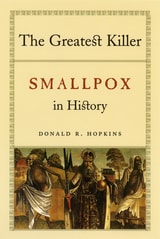
The Greatest Killer
Smallpox in HistoryDonald R. Hopkins
University of Chicago Press, 2002
In The Greatest Killer, Donald R. Hopkins provides a fascinating account of smallpox and its role in human history. Starting with its origins 10,000 years ago in Africa or Asia, Hopkins follows the disease through the ancient and modern worlds, showing how smallpox removed or temporarily incapacitated heads of state, halted or exacerbated wars, and devastated populations that had never been exposed to the disease. In Hopkins's history, smallpox was one of the most dangerous-and influential-factors that shaped the course of world events.
The Stockholm Paradigm
Climate Change and Emerging DiseaseDaniel R. Brooks, Eric P. Hoberg, and Walter A. Boeger
University of Chicago Press, 2019
As this book reveals, a new understanding of the evolution of pathogen-host systems, called the Stockholm Paradigm, explains what is happening. The planet is a minefield of pathogens with preexisting capacities to infect susceptible but unexposed hosts, needing only the opportunity for contact. Climate change has always been the major catalyst for such new opportunities, because it disrupts local ecosystem structure and allows pathogens and hosts to move. Once pathogens expand to new hosts, novel variants may emerge, each with new infection capacities. Mathematical models and real-world examples uniformly support these ideas. Emerging disease is thus one of the greatest climate change–related threats confronting humanity.
Even without deadly global catastrophes on the scale of the 1918 Spanish Influenza pandemic, emerging diseases cost humanity more than a trillion dollars per year in treatment and lost productivity. But while time is short, the danger is great, and we are largely unprepared, the Stockholm Paradigm offers hope for managing the crisis. By using the DAMA (document, assess, monitor, act) protocol, we can “anticipate to mitigate” emerging disease, buying time and saving money while we search for more effective ways to cope with this challenge.
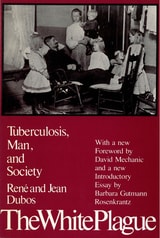
The White Plague
Tuberculosis, Man and SocietyDubos, Jean
Rutgers University Press, 1987
In The White Plague, René and Jean Dubos argue that the great increase of tuberculosis was intimately connected with the rise of an industrial, urbanized society and—a much more controversial idea when this book first appeared forty years ago—that the progress of medical science had very little to do with the marked decline in tuberculosis in the twentieth century.
The White Plague has long been regarded as a classic in the social and environmental history of disease. This reprint of the 1952 edition features new introductory writings by two distinguished practitioners of the sociology and history of medicine. David Mechanic's foreword describes the personal and intellectual experience that shaped René Dubos's view of tuberculosis. Barbara Gutmann Rosenkrantz's historical introduction reexamines The White Plague in light of recent work on the social history of tuberculosis. Her thought-provoking essay pays particular attention to the broader cultural and medical assumptions about sickness and sick people that inform a society’s approach to the conquest of disease.
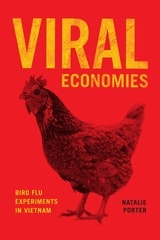
Viral Economies
Bird Flu Experiments in VietnamNatalie Porter
University of Chicago Press, 2019
In Viral Economies, Natalie Porter draws from long-term research on bird flu in Vietnam to chart the pathways of scientists, NGO workers, state veterinarians, and poultry farmers as they define and address pandemic risks. Porter argues that as global health programs expand their purview to include life and livestock, they weigh the interests of public health against those of commercial agriculture, rural tradition, and scientific innovation. Porter challenges human-centered analyses of pandemics and shows how dynamic and often dangerous human-animal relations take on global significance as poultry and their pathogens travel through global livestock economies and transnational health networks. Viral Economies urges readers to think critically about the ideas, relationships, and practices that produce our everyday commodities, and that shape how we determine the value of life—both human and nonhuman.
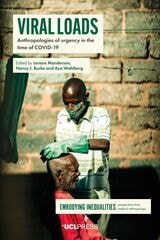
Viral Loads
Anthropologies of Urgency in the Time of COVID-19Edited by Lenore Manderson, Nancy J. Burke, and Ayo Wahlberg
University College London, 2021
The COVID-19 pandemic disrupted some lives more than others. While more than half the world’s population experienced physical restrictions in the wake of the virus, Viral Loads reveals how the international response placed disparate burdens on exploited communities across the globe. Contributors from six continents situate the pandemic within a highly connected yet exceedingly unequal world marked by fragmented communities, austere economies, and unstable governments. Ambitious in its scope, Viral Loads insists that medical anthropology must be part of any future efforts to build a new post-pandemic world.