Results by title
15 books match the query 'Information theory'
Code
From Information Theory to French TheoryBernard Dionysius Geoghegan
Duke University Press, 2022
Digital Communication Modulation, Coding, and Information Theory
Kim Winick
Michigan Publishing Services, 2025
The modern era of digital communication dates to Claude Shannon’s three seminal papers appearing in 1948 and 1949 in the Bell System Technical Journal. Digital communication advanced rapidly in the following years and generated a large number of technologies, including cell phones, Wi-Fi, fiber optic communication, MP3 players, JPEG-encoded photographs, high-definition television (HDTV), etc. With increasing demands for remote and high-speed digital access to data and real-time video, advances are likely to continue for the foreseeable future. The topics covered in this book constitute a “first course” on digital communication because with a few exceptions, primarily related to the multipath propagation effects and fading, only the point-to-point additive white Gaussian noise channel is considered. This was one of the first channels to be seriously studied in the modern era of digital communication that began with Shannon. From a practical perspective, modulation and coding for the deep-space channel motivated much of the early work in this field. The material covered in this textbook is still widely used and forms the basis for subsequent and ongoing advancements in the field. Broadly speaking, the fundamentals covered in this textbook are the notion of information, entropy, lossless data compression, error-correcting methods in the presence of noise, the fundamental limits of reliable communication, channel capacity, optimum decision theory and optimum receiver principals, common modulation types, the relationship between bandwidth and dimensionality, system performance using modulation and coding, and the fundamental trade-off between energy-efficiency and bandwidth-efficiency.

Distant Horizons
Digital Evidence and Literary ChangeTed Underwood
University of Chicago Press, 2019

Formalizing the Dynamics of Information
Edited by Martina Faller, Stefan Kaufmann, and Marc Pauly
CSLI, 2000
Furious
Technological Feminism and Digital FuturesCaroline Bassett
Pluto Press, 2019

Furious
Technological Feminism and Digital FuturesCaroline Bassett
Pluto Press, 2019
Holding On to Reality
The Nature of Information at the Turn of the MillenniumAlbert Borgmann
University of Chicago Press, 1999
"[Borgmann] has offered a stunningly clear definition of information in Holding On to Reality. . . . He leaves room for little argument, unless one wants to pose the now vogue objection: I guess it depends on what you mean by nothing."—Paul Bennett, Wired
"A superb anecdotal analysis of information for a hype-addled age."—New Scientist
"This insightful and poetic reflection on the changing nature of information is a wonderful antidote to much of the current hype about the 'information revolution.' Borgmann reminds us that whatever the reality of our time, we need 'a balance of signs and things' in our lives."—Margaret Wertheim, LA Weekly
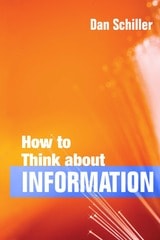
How to Think about Information
Dan Schiller
University of Illinois Press, 2006
It is common wisdom that the U.S. economy has adapted to losses in its manufacturing base because of the booming information sector, with high-paying jobs for everything from wireless networks to video games. We are told we live in the Information Age, in which communications networks and media and information services drive the larger economy. While the Information Age may have looked sunny in the beginning, as it has developed it looks increasingly ominous: its economy and benefits grow more and more centralized--and in the United States, it has become less and less subject to democratic oversight.
Corporations around the world have identified the value of information and are now seeking to control its production, transmission, and consumption. In How to Think about Information, Dan Schiller explores the ways information has been increasingly commodified as a result and how it both resembles and differs from other commodities. Through a linked series of theoretical, historical, and contemporary studies, Schiller reveals this commodification as both dynamic and expansionary, but also deeply conflicted and uncertain. He examines the transformative political and economic changes occurring throughout the informational realm and analyzes key dimensions of the process, including the buildup of new technological platforms, the growth of a transnationalizing culture industry, and the role played by China as it reinserts itself into an informationalized capitalism.

Information and Experimental Knowledge
James Mattingly
University of Chicago Press, 2021
What is experimental knowledge, and how do we get it? While there is general agreement that experiment is a crucial source of scientific knowledge, how experiment generates that knowledge is far more contentious. In this book, philosopher of science James Mattingly explains how experiments function. Specifically, he discusses what it is about experimental practice that transforms observations of what may be very localized, particular, isolated systems into what may be global, general, integrated empirical knowledge. Mattingly argues that the purpose of experimentation is the same as the purpose of any other knowledge-generating enterprise—to change the state of information of the knower. This trivial-seeming point has a non-trivial consequence: to understand a knowledge-generating enterprise, we should follow the flow of information. Therefore, the account of experimental knowledge Mattingly provides is based on understanding how information flows in experiments: what facilitates that flow, what hinders it, and what characteristics allow it to flow from system to system, into the heads of researchers, and finally into our store of scientific knowledge.
Knowledge and the Flow of Information
Fred I. Dretske
CSLI, 1999

Logic, Information and Agency
Johan van Benthem
CSLI, 2025
Everything we do is driven by information, but the dynamic process of acquiring information and adjusting our views based on it has seldom been put at the center place in logic, and there are few textbooks introducing readers to this line of work. The present book introduces the reader to major logical techniques for studying information dynamics and interaction between agents, based on a variety of intuitive scenarios as well as recent research. Readers will learn styles of modeling, as well as the basic features of the new logical systems emanating from this line of work. All the separate strands in the book are brought together in a comprehensive study of information flow and action in games, forming a logic-based complement to standard perspectives in game theory.
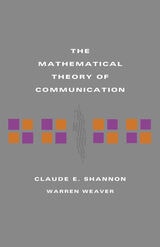
The Mathematical Theory of Communication
Claude E. Shannon and Warren Weaver
University of Illinois Press, 1998
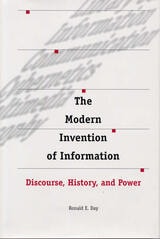
The Modern Invention of Information
Discourse, History, and PowerRonald E. Day
Southern Illinois University Press, 2008
In The Modern Invention of Information: Discourse, History, and Power, Ronald E. Day provides a historically informed critical analysis of the concept and politics of information. Analyzing texts in Europe and the United States, his critical reading method goes beyond traditional historiographical readings of communication and information by engaging specific historical texts in terms of their attempts to construct and reshape history.
After laying the groundwork and justifying his method of close reading for this study, Day examines the texts of two pre–World War II documentalists, Paul Otlet and Suzanne Briet. Through the work of Otlet and Briet, Day shows how documentation and information were associated with concepts of cultural progress. Day also discusses the social expansion of the conduit metaphor in the works of Warren Weaver and Norbert Wiener. He then shows how the work of contemporary French multimedia theorist Pierre Lévy refracts the earlier philosophical writings of Gilles Deleuze and Félix Guattari through the prism of the capitalist understanding of the “virtual society.”
Turning back to the pre–World War II period, Day examines two critics of the information society: Martin Heidegger and Walter Benjamin. He explains Heidegger’s philosophical critique of the information culture’s model of language and truth as well as Benjamin’s aesthetic and historical critique of mass information and communication. Day concludes by contemplating the relation of critical theory and information, particularly in regard to the information culture’s transformation of history, historiography, and historicity into positive categories of assumed and represented knowledge.
Theory Development in the Information Sciences
Edited by Diane H. Sonnenwald
University of Texas Press, 2016
Emerging as a discipline in the first half of the twentieth century, the information sciences study how people, groups, organizations, and governments create, share, disseminate, manage, search, access, evaluate, and protect information, as well as how different technologies and policies can facilitate and constrain these activities. Given the broad span of the information sciences, it is perhaps not surprising that there is no consensus regarding its underlying theory—the purposes of it, the types of it, or how one goes about developing new theories to talk about new research questions.
Diane H. Sonnenwald and the contributors to this volume seek to shed light on these issues by sharing reflections on the theory-development process. These reflections are not meant to revolve around data collection and analysis; rather, they focus on the struggles, challenges, successes, and excitement of developing theories. The particular theories that the contributors explore in their essays range widely, from theories of literacy and reading to theories of design and digital search. Several chapters engage with theories of the behavior of individuals and groups; some deal with processes of evaluation; others reflect on questions of design; and the rest treat cultural and scientific heritage. The ultimate goal, Sonnenwald writes in her introduction, is to “encourage, inspire, and assist individuals striving to develop and/or teach theory development.”

Travelling Facts
The Social Construction, Distribution, and Accumulation of KnowledgeEdited by Caroline Baillie, Elizabeth Dunn, and Yi Zheng
Campus Verlag, 2004