Results by title
7 books match the query 'Information visualization'
Critical Data Storytelling for Libraries
Crafting Ethical Narratives for Advocacy and ImpactKate McDowell
American Library Association, 2025
- the dynamic interrelationships between storyteller, audience, and story which lie at the heart of storytelling;
- ways to mesh library data collection processes with long-term storytelling potential, prioritizing interaction over transaction;
- three time-honored and effective narrative strategies for organizing the informational and emotional content of library data stories, easily adaptable for any situation;
- approaches for emphasizing inclusivity and justice to ensure that library advocates can tell stories that challenge stereotypes, promote equity, and align their efforts with broader ethical and social goals;
- audience attitudes as challenges and opportunities for library data communication; and
- strategies for maintaining open and transparent public communication in the face of rampant misinformation and active disinformation campaigns.
Critical Data Storytelling in the Composition Classroom
Angela Laflen
Utah State University Press, 2025
At the heart of Laflen’s approach is critical data storytelling—a practice that equips students with the skills to understand, interpret, and ethically communicate with and about data through various multimodal formats. By teaching students to make informed decisions as data storytellers, Laflen addresses the ethical implications of working with data while offering practical strategies for reading and analyzing data stories. This approach empowers both students and teachers to engage critically with data as a tool for learning and communication. It also highlights how multimodal composition has yet to fully account for the central role of data in shaping contemporary communication and argumentation.
By focusing on the ethical and rhetorical dimensions of data storytelling, Critical Data Storytelling in the Composition Classroompresents a pedagogical approach that prepares students for the challenges of working with data in a rapidly evolving digital landscape. This flexible, adaptable model for teaching critical data literacy is of great interest to writing instructors, scholars in rhetoric and composition, and educators who seek to prepare students for the demands of a data-driven world.
Engaging Ambience
Visual and Multisensory Methodologies and Rhetorical TheoryBrian McNely
Utah State University Press, 2024
By articulating theoretically sound methodologies and methods for the empirical study of rhetoric conceived as originary, immanent, and enveloping, Brian McNely contributes a methodological perspective that furthers new materialist theories of rhetoric. McNely demonstrates how scholars’ emergent theories of rhetoric call for new methodologies that can extend their reach, and in the process, he proposes a new conception of visual rhetoric. Engaging Ambience delineates methodologies and methods that help researchers in rhetoric and writing studies discover the ambient environments that condition and support everyday communication in all its forms.
Engaging Ambiencedetails and demonstrates visual and multisensory methodologies and methods for exploring the wondrous complexity of everyday communication. It will appeal to scholars and students of rhetorical theory, visual and multisensory rhetorics, and composition and writing studies.
LingVis
Visual Analytics for LinguisticsEdited by Miriam Butt, Annette Hautli-Janisz, and Verena Lyding
CSLI, 2018
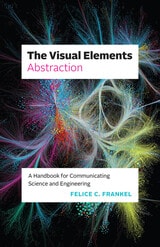
The Visual Elements—Abstraction
A Handbook for Communicating Science and EngineeringFelice C. Frankel
University of Chicago Press, 2026
For anyone interested in visual communication, a training guide for evaluating and developing visual representations for the big ideas in science and technology, essential skills for journal submissions, grant applications, and public understanding.
As a scientist, engineer, or other researcher, you may have written an abstract. In a paragraph, you explain the purpose of your research, your approach, the questions you have asked and answered, and your work’s impact. The abstract is a summary and an invitation—to read the paper, attend your talk, and join you in your thinking. You may even have been asked to create a visual abstract—a single image—to achieve the same goals. As a designer or public information officer, you may have had a similar brief—to explain a compelling subject with a visual for a journal cover or press release. And yet, this important skill—devising visual metaphors—isn’t typically taught. With her decades of experience creating compelling images and instructing MIT researchers, award-winning photographer and science communicator Felice C. Frankel helps readers evaluate and create their own visual abstractions.
Like in her other books in the Visual Elements series, on photography and design, Frankel asks readers to evaluate different choices—for example, in conveying the uncertainty of a hurricane’s path or the organization of the Standard Model for elementary particles. But in Abstraction, she offers more. With examples from science, engineering, and beyond, the book helps readers consider and evaluate the visuals around them and determine how they work and when they fail: Is this representation the best for communication? Will these abstractions encourage others to engage with my work? Will they mislead? Will they help my ideas evolve? Frankel invites researchers to think about the many meanings behind their images—and, in turn, to think more deeply about their research.
Tokens of Meaning
Papers in Honor of Lauri KarttunenEdited by Cleo Condoravdi and Tracy Holloway King
CSLI, 2019
Using Digital Analytics for Smart Assessment
Tabatha Farney
American Library Association, 2017