Results by title
11 books match the query 'Institutional Change'
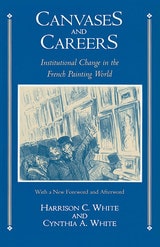
Canvases and Careers
Institutional Change in the French Painting WorldHarrison C. White and Cynthia A. White
University of Chicago Press, 1993
Originally published in 1965, this ground-breaking work is a classic piece of empirical research in the sociology of art. In this edition, Harrison C. White's new Foreword compares the marketing approaches of two contemporary painters, while Cynthia A. White's new Afterword reviews recent scholarship in the field.
Crisis and Control
Institutional Change in Financial Market RegulationEdited by Renate Mayntz
Campus Verlag, 2012
Embedded Politics
Industrial Networks and Institutional Change in PostcommunismGerald A. McDermott
University of Michigan Press, 2003
Using comparative case analysis of several manufacturing sectors, Embedded Politics accounts for change and continuity in the formation of new economic governance institutions in the Czech Republic. It analytically links the macropolitics of state policy with the micropolitics of industrial restructuring. Thus the book advances an alternative approach for the comparative study of institutional change and industrial adjustment.
As a historical and contemporary analysis of Czech firms and public institutions, this book will command the attention of students of postcommunist reforms, privatization, and political-economic transitions in general. But also given its interdisciplinary approach and detailed empirical analysis of policy-making and firm behavior, Embedded Politics is a must read for scholars of politics, economics, sociology, political economy, business organization, and public policy.
Gerald A. McDermott is Assistant Professor of Management in The Wharton School of Management at The University of Pennsylvania. His research applies recent advances in comparative political economy and industrial organization, including theories of social networks, historical institutionalism, and incomplete markets to analyze issues of economic governance, firm creation, and industrial restructuring in advanced and newly industrialized countries. As evidenced by Embedded Politics, his current focus is on problems of institutional and organizational learning in the formation of meso-level governance institutions in emerging market and postsocialist economies.
McDermott also works as Senior Research Fellow at the IAE Escuela de Direccion y Negocios at Universidad Austral in Buenos Aires, and he has served as Project Coordinator at the Inter-American Development Bank. He has consulted for the Finance, Private Sector, and Infrastructure Division at the World Bank and advised the Deputy Foreign Minister of the Czech Republic. In addition he has published many papers and book chapters on entrepreneurship, privatization, institutions, and networks in Central Europe and Latin America.
Federal Judiciary and Institutional Change
Deborah J. Barrow, Gary Zuk, and Gerard S. Gryski
University of Michigan Press, 1996
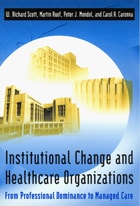
Institutional Change and Healthcare Organizations
From Professional Dominance to Managed CareW. Richard Scott, Martin Ruef, Peter J. Mendel, and Carol A. Caronna
University of Chicago Press, 2000
This book examines the transformations that have occurred in medical care systems in the San Francisco Bay area since 1945. The authors describe these changes in detail and relate them to both the sociodemographic trends in the Bay Area and to shifts in regulatory systems and policy environments at local, state, and national levels. But this is more than a social history; the authors employ a variety of theoretical perspectives—including strategic management, population ecology, and institutional theory—to examine five types of healthcare organizations through quantitative data analysis and illustrative case studies.
Providing a thorough account of changes for one of the nation's leading metropolitan areas in health service innovation, this book is a landmark in the theory of organizations and in the history of healthcare systems.
Institutional Change in American Politics
The Case of Term LimitsEdited by Karl T. Kurtz, Bruce Cain, and Richard G. Niemi
University of Michigan Press, 2009
Legislative term limits adopted in the 1990s are in effect in fifteen states today. This reform is arguably the most significant institutional change in American government of recent decades. Most of the legislatures in these fifteen states have experienced a complete turnover of their membership; hundreds of experienced lawmakers have become ineligible for reelection, and their replacements must learn and perform their jobs in as few as six years.
Now that term limits have been in effect long enough for both their electoral and institutional effects to become apparent, their consequences can be gauged fully and with the benefit of hindsight. In the most comprehensive study of the subject, editors Kurtz, Cain, and Niemi and a team of experts offer their broad evaluation of the effects term limits have had on the national political landscape.
"The contributors to this excellent and comprehensive volume on legislative term limits come neither to praise the idea nor to bury it, but rather to speak dispassionately about its observed consequences. What they find is neither the horror story of inept legislators completely captive to strong governors and interest groups anticipated by the harshest critics, nor the idyll of renewed citizen democracy hypothesized by its more extreme advocates. Rather, effects have varied across states, mattering most in the states that were already most professionalized, but with countervailing factors mitigating against extreme consequences, such as a flight of former lower chamber members to the upper chamber that enhances legislative continuity. This book is must reading for anyone who wants to understand what happens to major institutional reforms after the dust has settled."
---Bernard Grofman, Professor of Political Science and Adjunct Professor of Economics, School of Social Sciences, University of California, Irvine
"A decade has passed since the first state legislators were term limited. The contributors to this volume, all well-regarded scholars, take full advantage of the distance afforded by this passage of time to explore new survey data on the institutional effects of term limits. Their book is the first major volume to exploit this superb opportunity."
---Peverill Squire, Professor, Department of Political Science, University of Iowa
Karl T. Kurtz is Director of the Trust for Representative Democracy at the National Conference of State Legislatures.
Bruce Cain is Heller Professor of Political Science and Director of the Institute of Governmental Studies at the University of California at Berkeley, and the Director of the University of California Washington Center.
Richard G. Niemi is Don Alonzo Watson Professor of Political Science at the University of Rochester.
Institutional Change, Discretion, and the Making of Modern Congress
An Economic InterpretationGlenn R. Parker
University of Michigan Press, 1992
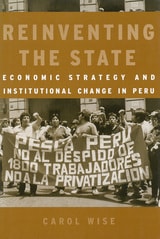
Reinventing the State
Economic Strategy and Institutional Change in PeruCarol Wise
University of Michigan Press, 2003

Tuberculosis Control and Institutional Change in Shanghai, 1911–2011
Rachel S. Core
Hong Kong University Press, 2023
Tuberculosis Control and Institutional Change in Shanghai, 1911–2011 is the first book on the most widespread and deadly infectious disease in China, both historically and today. Weaving together interviews with data from periodicals and local archives in Shanghai, Rachel Core examines the rise and fall of tuberculosis control in China from the 1950s to the 1990s. Under the socialist work unit system, the vast majority of people had guaranteed employment, a host of benefits tied to their workplace, and there was little mobility—factors that made the delivery of medical and public health services possible in both urban and rural areas. The dismantling of work units amid wider market reforms in the 1980s and 1990s led to the rise of temporary and casual employment and a huge migrant worker population, with little access to health care, creating new challenges in TB control. This study of Shanghai will provide valuable lessons for historians, social scientists, public health specialists, and many others working on public health infrastructure on both the national and global levels.
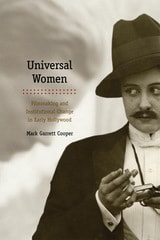
Universal Women
Filmmaking and Institutional Change in Early HollywoodMark Garrett Cooper
University of Illinois Press, 2010
A Choice Outstanding Academic Title, 2011.
Between 1912 and 1919, the Universal Film Manufacturing Company credited eleven women with directing at least 170 films, but by the mid-1920s all of these directors had left Universal and only one still worked in the film industry at all. Two generations of cinema historians have either overlooked or been stymied by the mystery of why Universal first systematically supported and promoted women directors and then abruptly reversed that policy.
In this trailblazing study, Mark Garrett Cooper approaches the phenomenon as a case study in how corporate movie studios interpret and act on institutional culture in deciding what it means to work as a man or woman. In focusing on issues of institutional change, Cooper challenges interpretations that explain women's exile from the film industry as the inevitable result of a transhistorical sexism or as an effect of a broadly cultural revision of gendered work roles. Drawing on a range of historical and sociological approaches to studying corporate institutions, Cooper examines the relationship between institutional organization and aesthetic conventions during the formative years when women filmmakers such as Ruth Ann Baldwin, Cleo Madison, Ruth Stonehouse, Elise Jane Wilson, and Ida May Park directed films for Universal.
Women's Studies on Its Own
A Next Wave Reader in Institutional ChangeRobyn Wiegman, ed.
Duke University Press, 2002
Since the 1970s, Women's Studies has grown from a volunteerist political project to a full-scale academic enterprise. Women's Studies on Its Own assesses the present and future of the field, demonstrating how institutionalization has extended a vital, ongoing intellectual project for a new generation of scholars and students.
Women’s Studies on Its Own considers the history, pedagogy, and curricula of Women’s Studies programs, as well as the field’s relation to the managed university. Both theoretically and institutionally grounded, the essays examine the pedagogical implications of various divisions of knowledge—racial, sexual, disciplinary, geopolitical, and economic. They look at the institutional practices that challenge and enable Women’s Studies—including interdisciplinarity, governance, administration, faculty review, professionalism, corporatism, fiscal autonomy, and fiscal constraint. Whether thinking about issues of academic labor, the impact of postcolonialism on Women’s Studies curricula, or the relation between education and the state, the contributors bring insight and wit to their theoretical deliberations on the shape of a transforming field.
Contributors. Dale M. Bauer, Kathleen M. Blee, Gloria Bowles, Denise Cuthbert, Maryanne Dever, Anne Donadey, Laura Donaldson, Diane Elam, Susan Stanford Friedman, Judith Kegan Gardiner, Inderpal Grewal, Sneja Gunew, Miranda Joseph, Caren Kaplan, Rachel Lee, Devoney Looser, Jeanette McVicker, Minoo Moallem, Nancy A. Naples, Jane O. Newman, Lindsey Pollak, Jean C. Robinson, Sabina Sawhney, Jael Silliman, Sivagami Subbaraman, Robyn Warhol, Marcia Westkott, Robyn Wiegman, Bonnie Zimmerman