Results by title
15 books match the query 'Interpreting'
Deaf Eyes on Interpreting
Thomas K. Holcomb
Gallaudet University Press, 2018
Deaf Eyes on Interpreting brings Deaf people to the forefront of the discussions about what constitutes quality interpreting services. The contributors are all Deaf professionals who use interpreters on a regular basis, and their insights and recommendations are based on research as well as on personal experiences. These multiple perspectives reveal strategies to maximize access to interpreted work and hearing environments and to facilitate trust and understanding between interpreters and Deaf consumers. Interpreter educators, interpreting students, professional interpreters, and Deaf individuals will all benefit from the approaches offered in this collection.

Giorgione's Tempest
Interpreting the Hidden SubjectSalvatore Settis
University of Chicago Press, 1990
Harry's Farewell
Interpreting and Teaching the Truman PresidencyEdited & Intro by Richard S. Kirkendall
University of Missouri Press, 2004
Interpreting The Theatrical Past
Historiography Of PerformanceThomas Postlewait
University of Iowa Press, 1989

Interpreting and Experiencing Disney
Mediating the MouseEdited by Priscilla Hobbs
Intellect Books, 2022
It would be difficult to go through life without ever encountering a Disney product. Since the first Mickey Mouse cartoon premiered in 1928, Disney has played a central role in shaping American popular culture, and it has expanded to the global market. The company positioned itself as a titan of family entertainment, and many of its offerings, from films to consumable products, have become embedded in the minds of children and adults, woven into many of our life experiences. Fans of Disney build connections with their favorite characters and franchises, fueled by Disney’s marketing practices. Others have developed a near-cult-like relationship with the brand, equating its products with religious icons and theme park visits with pilgrimages.
This edited volume looks beyond the movies and merchandise to peer into the very heart of the Disney phenomenon: how the fan response drives the corporation’s massive marketing machine and how the corporate response, in turn, shapes the fan experience.
Interpreting in Legal Settings
Debra Russell
Gallaudet University Press, 2009
The work of interpreters in legal settings, whether they are spoken or signed language interpreters, is filled with enormous complexity and challenges. This engrossing volume presents six, data-based studies from both signed and spoken language interpreter researchers on a diverse range of topics, theoretical underpinnings, and research methodologies.
In the first chapter, Ruth Morris analyzes the 1987 trial of Ivan (John) Demjanjuk in Jerusalem, and reveals that what might appear to be ethical breaches often were no more than courtroom dynamics, such as noise and overlapping conversation. Waltraud Kolb and Franz Pöchhacker studied 14 asylum appeals in Austria and found that interpreters frequently aligned themselves with the adjudicators. Bente Jacobsen presents a case study of a Danish-English interpreter whose discourse practices expose her attempts to maintain, mitigate, or enhance face among the participants.
In the fourth chapter, Jemina Napier and David Spencer investigate the effectiveness of interpreting in an Australian courtroom to determine if deaf citizens should participate as jurors. Debra Russell analyzed the effectiveness of preparing sign language interpreter teams for trials in Canada and found mixed results. The final chapter presents Zubaidah Ibrahim-Bell’s research on the inadequate legal services in Malaysia due to the fact that only seven sign interpreters are available. Taken together, these studies point to a “coming of age” of the field of legal interpreting as a research discipline, making Interpreting in Legal Settings an invaluable, one-of-a-kind acquisition.
Interpreting in Multilingual, Multicultural Contexts
Rachel Locker McKee
Gallaudet University Press, 2010
The Seventh Volume in the Studies in Interpretation Series
Nineteen international authorities contribute their research and findings to Interpreting in Multilingual, Multicultural Contexts, probing the complex nature of interpreted interaction involving Deaf and hearing people of diverse linguistic and cultural backgrounds. They also analyze the contextualized interpreting practices and considerations that transpire from this diversity.
In three parts, this trenchant collection shows how Deaf and hearing people use language in fluctuating ways to connect with each other. The chapters in Part 1 — Expanding Frontiers: ASL-English-Spanish Interpreting in the United States — consider sign language interpreting at the border between Baja California and the state; trilingual video relay service (VRS) interpreting; and constructing a valid, reliable trilingual interpreting testing instrument. Part 2 — Mediating Indigenous Voices — explores how to construct roles in a Maori Deaf trilingual context; considerations for interpreting signed languages of American Indian Communities; and interpreting for indigenous Deaf clients in far north Queensland, Australia.
In the final section, Part 3 — Globalizing: Interpreting in International Contexts — protocols for interpreting in multilingual international conferences are analyzed. The last chapter describes the arduousness of sign language interpreting in multilingual, international settings. It acts as a fitting conclusion to this examination of the challenges to the sociolinguistic repertoire of interpreters mediating across multiplex combinations of culture and language.
Interpreting in the Zone
How the Conscious and Unconscious Function in InterpretationJack Hoza
Gallaudet University Press, 2016
Jack Hoza’s newest research examines the components that enable interpreters to perform successfully, looking at literature in interpretation, cognitive science, education, psychology, and neuroscience, as well as reviewing the results of two qualitative studies he conducted. He seeks to uncover what it means to interpret in the zone by understanding exactly how the brain works in interpretation scenarios. He explores a range of dichotomies that influence interpretation outcomes, such as:
- Intuition vs. rational thought
- Left brain vs. right brain
- Explicit vs. implicit learning
- Novice vs. master
- Spoken vs. signed languages
- Emotion vs. reasoning
Interpreting in the Zone shows that cognitive research can help us better understand the intricacies of the interpreting process and has implications for how to approach the interpreting task. This resource will be of value to both the interpreter-in-training as well as the seasoned practitioner.
Interpreting the Gospel of John in Antioch and Alexandria
Miriam DeCock
SBL Press, 2020
A nuanced study of early Christian exegesis
Miriam DeCock analyzes four important early Christian treatments of the Gospel of John, including commentaries by Origen and Cyril from the Alexandrian tradition and the homilies of John Chrysostom and the commentary of Theodore of Mopsuestia, which represent Antiochian traditions. DeCock maintains that the traditional distinction between nonliteral and literal interpretations in these two early Christian centers remains helpful despite recent challenges to the paradigm. She argues that a major and abiding distinction between the two schools lies in the manner in which Alexandrian and Antiochian authors apply the gospel text to their respective communities. DeCock demonstrates that the Antiochenes find primarily literal moral examples and doctrinal teachings in John's Gospel, whereas the Alexandrians find both these and nonliteral teachings concerning the immediate situation of the church and of its individual members.
Features
- An examination of each author's interpretations of a selection of texts
- Focused explorations of John 2; 4; and 9-11 in early Christian exegesis
- A study of early literal non-literal interpretations of John's Gospel
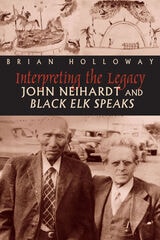
Interpreting the Legacy
John Neihardt and Black Elk SpeaksBrian Holloway
University Press of Colorado, 2020
Using Neihardt's original handwritten notes and early manuscript drafts, Holloway demonstrates the poet's careful and deliberate re-creation of Black Elk's spiritual world in order to induce a transcendent experience in the reader. Through exhaustive research into Neihardt's biographical materials, published philosophical and metaphysical writings, and volumes of taped lectures, Holloway examines the sources of the book's production as well as the reactions to and the implications of his literary portrayal of the spiritual world of the Oglala.
Restoring Neihardt's reputation as a faithful witness to Black Elk's sacred landscape, Interpreting the Legacy: John Neihardt and Black Elk Speaks will be of interest to Neihardt scholars and students of literature, religious studies, and Native American studies.
Interpreting the Self
Two Hundred Years of American AutobiographyDiane Bjorklund
University of Chicago Press, 1998
"A refreshingly welcome approach to this intriguing topic. . . . [Bjorklund's] extensive and systematic approach to her source material is impressive and enriches our understanding of this essential subject."—Virginia Quarterly Review
"Bjorklund studies both famous and obscure writers, and her clear prose style and copious quotations provide insight into the many aspects of the changing American self." —Library Journal
New Zealand Cinema
Interpreting the PastEdited by Alistair Fox, Barry Keith Grant, and Hilary Radner
Intellect Books, 2011
New Zealand has produced one of the world’s most vibrant film cultures, a reflection of the country’s evolving history and the energy and resourcefulness of its people. From early silent features like The Te Kooti Trail to recent films such as River Queen, this book examines the role of the cinema of New Zealand in building a shared sense of national identity. The works of key directors, including Peter Jackson, Jane Campion, and Vincent Ward, are here introduced in a new light, and select films are given in-depth coverage. Among the most informative accounts of New Zealand’s fascinating national cinema, this will be a must for film scholars around the globe.
The Philosophy of Claude Lefort
Interpreting the PoliticalBernard Flynn
Northwestern University Press, 2005
Much of what passes for political philosophy in our day is merely politicized philosophical concepts, a distinction author Bernard Flynn underscores as he describes the development of Lefort's truly political philosophy—its ideas formed in response to his own political experience and to the work of certain major figures within the tradition of political thought. Beginning with Lefort's most important single work, his book on Machiavelli, Flynn presents the philosopher's conceptions of politics, modernity, and interpretation in the context within which they took shape. He then draws on a wide variety of Lefort's works to explicate his notions of premodern and modern democracy in which totalitarianism, in Lefort's singular and highly influential theory, is identified as a permanent problem of modernity.
A valuable exposition of one of the most important Continental philosophers of the post-World War II period, Flynn's book is itself a noteworthy work of interpretive philosophy, pursuing the ideas and issues addressed by Lefort to a point of unparalleled clarity and depth.

The Spirit of Colonial Williamsburg
Ghosts and Interpreting the Recreated PastAlena Pirok
University of Massachusetts Press, 2022
On any given night, hundreds of guests walk the darkened streets of Colonial Williamsburg looking for ghosts. Since the early 2000s, both the museum and private companies have facilitated these hunts, offering year-round ghost tours. Critics have called these excursions a cash grab, but in truth, ghosts and hauntings have long been at the center of the Colonial Williamsburg project.
The Spirit of Colonial Williamsburg examines how the long-dead past comes alive at this living-history museum. In the early twentieth century, local stories about the ghosts of former residents—among them Revolutionary War soldiers and nurses, tavern owners and prominent attorneys, and enslaved African Americans—helped to turn Williamsburg into a desirable site for historical restoration. But, for much of the twentieth century, the museum tried diligently to avoid any discussion of ghosts, considering them frivolous and lowbrow. Alena Pirok explores why historic sites have begun to embrace their spectral residents in recent decades, arguing that through them, patrons experience an emotional connection to place and a palpable understanding of the past through its people.
Translation, Sociolinguistic, and Consumer Issues in Interpreting
Melanie Metzger
Gallaudet University Press, 2007
The Third Volume in the Studies in Interpretation Series
This new volume focuses on scholarship over a refined spectrum of issues that confront interpreters internationally. Editors Melanie Metzger and Earl Fleetwood call upon researchers from the United States, Ireland, Australia, and the Philippines to share their findings in six chapters.
In the first chapter, Roberto R. Santiago and Lisa A. Frey Barrick reveal how interpreters deal with translating source language idioms into American Sign Language (ASL). In Chapter 2, Lorraine Neeson and Susan Foley-Cave review the particular demands for decision-making that face interpreters on several levels in a class on semantics and pragmatics. Liza B. Martinez explains in Chapter 3 the complicated, multilingual process of code switching by Filipino interpreters when voice-interpreting Filipino Sign Language.
Chapter 4 offers a deconstruction by Daniel Roush of the stereotype that Deaf ASL-users are direct or blunt, based on his analysis of two speech/social activities of requests and refusals. Jemina Napier investigates interpreting from the perspective of deaf consumers in Australia in Chapter 5 to explore their agenda for quality interpreting services. In the final chapter, Amy Frasu evaluates methods for incorporating visual aids into interpretations from spoken English to American Sign Language and the potential cognitive dissonance for deaf persons that could result.