Results by title
4 books match the query 'Interrogation'
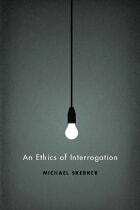
An Ethics of Interrogation
Michael Skerker
University of Chicago Press, 2010
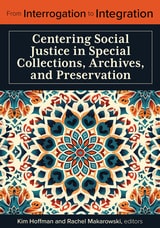
From Interrogation to Integration
Centering Social Justice in Special Collections, Archives, and PreservationKim Hoffman
Assoc of College & Research Libraries, 2025
From Interrogation to Integration: Centering Social Justice in Special Collections, Archives, and Preservation collects case studies, research projects, lesson plans, stories, practical strategies, color illustrations, and accessible, low-cost solutions from authors who have grappled directly with the legacy of harm present in their own institutions. The volume is organized into five themes:
- Research
- Description
- Preservation and Access
- Outreach
- Instruction
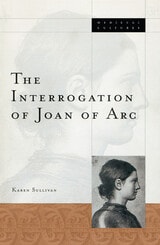
Interrogation Of Joan Of Arc
Karen Sullivan
University of Minnesota Press, 1999
A radical reassessment of the trial of Joan of Arc that gives a new sense of Joan in her time.
The transcripts of Joan of Arc’s trial for heresy at Rouen in 1431 and the minutes of her interrogation have long been recognized as our best source of information about the Maid of Orleans. Historians generally view these legal texts as a precise account of Joan’s words and, by extension, her beliefs. Focusing on the minutes recorded by clerics, however, Karen Sullivan challenges the accuracy of the transcript. In The Interrogation of Joan of Arc, she re-reads the record not as a perfect reflection of a historical personality’s words, but as a literary text resulting from the collaboration between Joan and her interrogators.
Sullivan provides an illuminating and innovative account of Joan’s trial and interrogation, placing them in historical, social, and religious context. In the fifteenth century, interrogation was a method of truth-gathering identified not with people like Joan, who was uneducated, but with clerics, like those who tried her. When these clerics questioned Joan, they did so as scholastics educated at the University of Paris, as judges and assistants to judges, and as pastors trained in hearing confessions.The Interrogation of Joan of Arc traces Joan’s conflicts with her interrogators not to differing political allegiances, but to fundamental differences between clerical and lay cultures. Sullivan demonstrates that the figure depicted in the transcripts as Joan of Arc is a complex, multifaceted persona that results largely from these cultural differences. Discerning and innovative, this study suggests a powerful new interpretive model and redefines our sense of Joan and her time.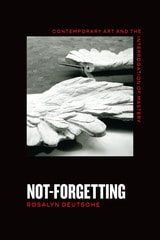
Not-Forgetting
Contemporary Art and the Interrogation of MasteryRosalyn Deutsche
University of Chicago Press, 2022
Amid times of emboldened cruelty and perpetual war, Rosalyn Deutsche links contemporary art to three practices that counter the prevailing destructiveness: psychoanalytic feminism, radical democracy, and war resistance. Deutsche considers how art joins these radical practices to challenge desires for mastery and dominion, which are encapsulated in the Eurocentric conception of the human that goes under the name “Man” and is driven by deadly inclinations that Deutsche calls masculinist. The masculinist subject—as an individual or a group—universalizes itself, claims to speak on behalf of humanity, and meets differences with conquest.
Analyzing artworks by Christopher D’Arcangelo, Robert Filliou, Hans Haacke, Mary Kelly, Silvia Kolbowski, Barbara Kruger, Louise Lawler, Martha Rosler, James Welling, and Krzysztof Wodiczko, Deutsche illuminates the diverse ways in which they expose, question, and trouble the visual fantasies that express masculinist desire. Undermining the mastering subject, these artworks invite viewers to question the positions they assume in relation to others. Together, the essays in Not-Forgetting, written between 1999 and 2020, argue that this art offers a unique contribution to building a less cruel and violent society.