Results by title
16 books match the query 'Intersubjectivity'
Collective Effervescence
Edited by Sébastien Tutenges and Philip Smith
Temple University Press, 2026
The editors and contributors to Collective Effervescence make a deep dive into new waters. They investigate solo experiences, virtual collectivities, low-intensity effervescence, and negative outcomes. Through studies of drug ceremonies, occupational subcultures, bookshops, online activities, and much more, each chapter discovers and theorizes something previously unknown. Collective Effervescence finds new potentials in a familiar theoretical resource.
Contributors: Sarah H. Awad, Pierre Bouchat, Randall Collins, Silvia da Costa, Scott Draper, Lisa Flower, Romulo Lelis, Heather Margrsion, Sharon Mascall-Dare, Ashley Mears, Margit Anne Petersen, José J. Pizarro, Bernard Rimé, Dario Páez, David Sausdal, Daniel Smith, Femke Vandenberg, Brady Wagoner, David Wästerfors, Brad West, and the editors
Foucault's Discipline
The Politics of SubjectivityJohn S. Ransom
Duke University Press, 1997
Foucault’s Discipline demonstrates how Foucault’s valorization of descriptive critique over prescriptive plans of action can be applied to the decisively altered political landscape of the end of this millennium. By reconstructing the philosopher’s arguments concerning the significance of disciplinary institutions, biopower, subjectivity, and forms of resistance in modern society, Ransom shows how Foucault has provided a different way of looking at and responding to contemporary models of government—in short, a new depiction of the political world.
How Lifeworlds Work
Emotionality, Sociality, and the Ambiguity of BeingMichael Jackson
University of Chicago Press, 2017
In How Lifeworlds Work, Jackson draws on years of ethnographic fieldwork in West Africa to highlight the dynamic quality of human relationships and reinvigorate the study of kinship and ritual. How, he asks, do we manage the perpetual process of accommodation between social norms and personal emotions, impulses, and desires? How are these two dimensions of lived reality joined, and how are the dual imperatives of individual expression and collective viability managed? Drawing on the pragmatist tradition, psychology, and phenomenology, Jackson offers an unforgettable, beautifully written account of how we make, unmake, and remake, our lifeworlds.
Humanism of the Other
Emmanuel Levinas
University of Illinois Press, 2003
Husserl and Transcendental Intersubjectivity
A Response to the Linguistic-Pragmatic CritiqueDan Zahavi
Ohio University Press, 2001
Against this background the book compares his view with the approaches to intersubjectivity found in Heidegger, Sartre, and Merleau-Ponty, and it then attempts to establish to what extent the phenomenological approach can contribute to the current discussion of intersubjectivity. This is achieved through a systematic confrontation with the language-pragmatical positions of Apel and Habermas.

I KNOW THAT YOU KNOW THAT I KNOW
NARRATING SUBJECTS FROM MOLL FLANDERS TO MARNIEGeorge Butte
The Ohio State University Press, 2004
In I Know That You Know That I Know, Butte explores how stories narrate human consciousness. Butte locates a historical shift in the representation of webs of consciousnesses in narrative—what he calls “deep intersubjectivity”—and examines the effect this shift has since had on Western literature and culture. The author studies narrative practices in two ways: one pairing eighteenth-and nineteenth-century British novels (Moll Flanders and Great Expectations, for example), and the other studying genre practices—comedy, anti-comedy and masquerade—in written and film narratives (Jane Austen and His Girl Friday, for example, and Hitchcock’s Cary Grant films).
Butte’s second major claim argues for new ways to read representations of human consciousness, whether or not they take the form of deep intersubjectivity. Phenomenological criticism has lost its credibility in recent years, but this book identifies better reading strategies arising out of what the author calls poststructuralist phenomenology, grounded largely in the work of the French philosopher Merleau-Ponty. Butte criticizes the extreme of transcendental idealism (first-wave phenomenological criticism) and cultural materialism (when it rules out the study of consciousness). He also criticizes the dominant Lacanian framework of much academic film criticism.
Intersubjective Existence
A Critical Reflection on the Theory and the Practice of SelfhoodOliva Blanchette
Catholic University of America Press, 2021
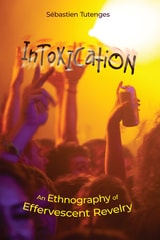
Intoxication
An Ethnography of Effervescent RevelrySébastien Tutenges
Rutgers University Press, 2023
For two decades, Sébastien Tutenges has conducted research in bars, nightclubs, festivals, drug dens, nightlife resorts, and underground dance parties in a quest to answer a fundamental question: Why do people across cultures gather regularly to intoxicate themselves?
Vivid and at times deeply personal, this book offers new insights into a wide variety of intoxicating experiences, from the intimate feeling of connection among concertgoers to the adrenaline-fueled rush of a fight, to the thrill of jumping off a balcony into a swimming pool. Tutenges shows what it means and feels to move beyond the ordinary into altered states in which the transgressive, spectacular, and unexpected take place.
He argues that the primary aim of group intoxication is the religious experience that Émile Durkheim calls collective effervescence, the essence of which is a sense of connecting with other people and being part of a larger whole. This experience is empowering and emboldening and may lead to crime and deviance, but it is at the same time vital to our humanity because it strengthens social bonds and solidarity.
The book fills important gaps in Durkheim’s social theory and contributes to current debates in micro-sociology as well as cultural criminology and cultural sociology. Here, for the first time, readers will discover a detailed account of collective effervescence in contemporary society that includes: an explanation of what collective effervescence is; a description of the conditions that generate collective effervescence; a typology of the varieties of collective effervescence; a discussion of how collective effervescence manifests in the realm of nightlife, politics, sports, and religion; and an analysis of how commercial forces amplify and capitalize on the universal human need for intoxication.
This book is also freely available online as an open access digital edition.
Download the open access ebook here. (https://www.rutgersuniversitypress.org/media/wysiwyg/documents/intoxication.pdf)
Minima Ethnographica
Intersubjectivity and the Anthropological ProjectMichael Jackson
University of Chicago Press, 1998
Written in the style of Theodor Adorno's Minima Moralia, Jackson's work shows how general ideas are always anchored in particular social events and critical concerns. Emphasizing the intersubjective encounter over objective descriptions of the whole historical and contemporary situation of a given people, he illustrates the power and originality of existential anthropology through a series of vignettes from his fieldwork in Sierra Leone and Australia. An award-winning poet, novelist, and anthropologist, Jackson offers a timely critique of conventions that dull our sense of the links between academic study and lived experience.
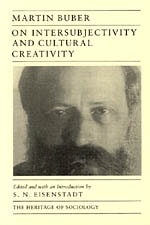
On Intersubjectivity and Cultural Creativity
Martin Buber
University of Chicago Press, 1992
Buber's central focus in his sociological work is the relation between social interaction, or intersubjectivity, and the process of human creativity. Specifically, Buber seeks to define the nature and conditions of creativity, the conditions of authentic intersubjective social relations that nurture creativity in society and culture. He attempts to identify situations favorable to creativity that he believes exist to some extent in all cultures, though their fullest development occurs only rarely.
Buber considers the combination of open dialogue between human and human and a dialogue between man and God to be necessary for the crystallization of the common discourse that is essential for holding a free, just, and open society together.
Important for an understanding of Buber's thought, these writings—touching on education, religion, the state, and charismatic leadership—will be of profound value to students of sociology, philosophy, and religion.
Semantic Tectonics
Writing Studies, Intersubjectivity, and the End of SolipsismDylan B. Dryer
Utah State University Press, 2026
Semantic Tectonics offers an engaging contribution to the ongoing conversation about the alliances of convenience and fissiparous relations among second--language writing, rhetoric, technical and professional communication, composition, and basic writing. From a theoretical perspective, the book brings together insights from a range of important scholars who have advanced relational alternatives to Cartesian dualisms of mind and body, self and other, thought and language. Naming these dualisms “solipsism,” the book extends these alternatives into empirical inquiries into the lexicogrammar of contemporary writing studies scholarship, using corpus analytics to bolster, and sometimes challenge, critical-discourse and content--analytic approaches.
With frequent pauses to explain and model corpus tools and applications, to pose questions for further inquiry, and to contemplate pedagogical or civic applications, Semantic Tectonics shows how the field’s social mission is constrained by tacit beliefs about critical concepts like language, self, context, genre, reflection, agency, and development. By foregrounding the empirical study of patterns in language itself, this book inspires readers to shift their perspective to the operational significance of word- and phrase-level discourse as sites for ideological and pedagogical intervention.
Subjectivity, Objectivity, and Intersubjectivity
A New Paradigm for Religion and ScienceJoseph A. Bracken
Templeton Press, 2009
During the Middle Ages, philosophers and theologians argued over the extramental reality of universal forms or essences. In the early modern period, the relation between subjectivity and objectivity, the individual self and knowledge of the outside world, was a rich subject of debate. Today, there is considerable argument about the relation between spontaneity and determinism within the evolutionary process, whether a principle of spontaneous self-organization as well as natural selection is at work in the aggregation of molecules into cells and the development of primitive forms of life into complex organisms. In Subjectivity, Objectivity and Intersubjectivity, Joseph A. Bracken proposes that what is ultimately at stake here is the age-old problem of the relationship between the One and the Many, universality and particularity on different levels of existence and activity within nature.
Suture and Narrative
Deep Intersubjectivity in Fiction and FilmGeorge Butte
The Ohio State University Press, 2017
Suture and Narrative: Deep Intersubjectivity in Fiction and Film by George Butte offers a new phenomenological understanding of how fiction and film narratives use particular techniques to create and represent the experience of community. Butte turns to the concept of suture from Lacanian film theory and to the work of Merleau-Ponty to contribute a deeper and broader approach to intersubjectivity for the field of narrative theory.
Butte’s approach allows for narratives that represent insight as well as blindness, love, and loss, locating these connections and disconnections in narratological techniques that capture the crisscrossing of perspectives, such as those in fiction’s free indirect discourse and in the oblique angle of film’s shot/reverse shot convention. Butte studies the implications of this chiasmus in the novels and film adaptations of later Henry James works, Barrie’s Peter Pan tales and film adaptations, and the films Silence of the Lambsand Nothing But a Man. Suture’s story in the twentieth century, according to Butte, is a story of the loss of immediacy and community. Yet in concluding this, Butte finds optimism in the Coen brothers’ Raising Arizona as well as in Why Be Happy When You Could Be Normal? by Jeanette Winterson and Marc Webb’s film (500) Days of Summer.
The Intentional Spectrum and Intersubjectivity
Phenomenology and the Pittsburgh Neo-HegeliansMichael D. Barber
Ohio University Press, 2011
World-renowned analytic philosophers John McDowell and Robert Brandom, dubbed “Pittsburgh Neo-Hegelians,” recently engaged in an intriguing debate about perception. In The Intentional Spectrum and Intersubjectivity Michael D. Barber is the first to bring phenomenology to bear not just on the perspectives of McDowell or Brandom alone, but on their intersection. He argues that McDowell accounts better for the intelligibility of empirical content by defending holistically functioning, reflectively distinguishable sensory and intellectual intentional structures. He reconstructs dimensions implicit in the perception debate, favoring Brandom on knowledge’s intersubjective features that converge with the ethical characteristics of intersubjectivity Emmanuel Levinas illuminates.
Phenomenology becomes the third partner in this debate between two analytic philosophers, critically mediating their discussion by unfolding the systematic interconnectionamong perception, intersubjectivity, metaphilosophy, and ethics.
The Ontology of Becoming and the Ethics of Particularity
M. C. Dillon
Ohio University Press, 2012
M. C. Dillon (1938–2005) was widely regarded as a world-leading Merleau-Ponty scholar. His book Merleau-Ponty’s Ontology (1988) is recognized as a classic text that revolutionized the philosophical conversation about the great French phenomenologist. Dillon followed that book with two others: Semiological Reductionism, a critique of early-1990s linguistic reductionism, and Beyond Romance, a richly developed theory of love. At the time of his death, Dillon had nearly completed two further books to which he was passionately committed. The first one offers a highly original interpretation of Nietzsche’s ontology of becoming. The second offers a detailed ethical theory based on Merleau-Ponty’s account of carnal intersubjectivity. The Ontology of Becoming and the Ethics of Particularity collects these two manuscripts written by a distinguished philosopher at the peak of his powers—manuscripts that, taken together, offer a distinctive and powerful view of human life and ethical relations.
Time and the Shared World
Heidegger on Social RelationsIrene McMullin
Northwestern University Press, 2013
In doing so, McMullin argues that Heidegger’s work on the social nature of the self must be located within a philosophical continuum that builds on Kant and Husserl’s work regarding the nature of the a priori and the fundamental structures of human temporality, while also pointing forward to developments of these themes to be found in Heidegger’s later work and in such thinkers as Sartre and Levinas. By developing unrecognized resources in Heidegger’s work, Time and the Shared World is able to provide a Heidegger-inspired account of respect and the intersubjective origins of normativity.