Results by title

4 books match the query 'Intimate'

cover of Forcing Divorce: Intimate and Non-Intimate Coercive Control in Marriage Dissolution

Forcing Divorce

Intimate and Non-Intimate Coercive Control in Marriage Dissolution

Péter Berta

Rutgers University Press, 2027

Forcing Divorce seeks to contribute to a more nuanced understanding of what possible causes, motivations, constraints, and dynamics may lie behind forced divorce cases in various social and political contexts. This volume points out that coercive and controlling behavior plays a key role in forcing divorce and provides a detailed insight into the diverse set of strategies and tactics of marital coercive control, as well as the negative emotional, psychological, social, economic, legal , and physical consequences of their use. The chapters reveal that marital coercive control can develop not only in cases of forced divorce related to intimate partnerships, but also in non-intimate, large-scale social contexts, such as the relationship between the state and its citizens, or between religious leaders and their followers. They also highlight why contextual pressure is significant and how it operates, and why it is useful to distinguish between conducive contexts (soft contextual pressure) and coercive contexts (hard contextual pressure) in order to gain a more thorough understanding of the dynamics of restriction of individual marital choice and consent in cases of forced divorce.
[more]
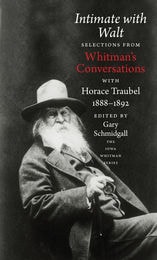
cover of Intimate With Walt: Whitmans Conversataions With Horace Traubel

Intimate With Walt

Whitmans Conversataions With Horace Traubel

Gary Schmidgall

University of Iowa Press, 2001

In March 1888 Horace Traubel, Whitman's loyal and hardworking assistant, began to record his almost daily conversations with the most famous resident of Camden. The result: more than 1,900,000 words that were eventually published between 1906 and 1996 in nine volumes. Titled With Walt Whitman in Camden, these volumes contain much that is mundane and repetitive, but they also include many passages crucial for a full and humane understanding of America's first great national poet.

In Intimate with Walt Gary Schmidgall has condensed Traubel's nearly 5,000 pages into one manageable volume featuring the many self-revealing, humorous, nostalgic, and often curmudgeonly words of the Good Gray Poet. The book is divided into five sections, each consisting of several chapters: the first, presenting Walt on himself, his family, and his daily life and visitors at the only home he ever owned; the second, on his artistic credos, the literary life, and a large array of comments on the writing, publication of, and critical reaction to Leaves of Grass; the third, focusing on his friends, admirers, idols, and lovers; the fourth and longest, presenting his no-holds-barred views on a variety of topics, including the American scene, race, religion, music, and even alcohol; and finally, a gathering of passages revealing Whitman's struggles with his infirmities, his poignant final days, and Traubel's observations on Whitman's deathbed scene and burial rites.

Whitman was the great poet of autobiography, and with this volume we gain entry into a most remarkable life in his own words. Whimsical and highly entertaining, poignant and moving, illuminating and candid, Intimate with Walt makes accessible the most amazing oral history project in all of American letters.
[more]
cover of Intimate: An American Family Photo Album

Intimate

An American Family Photo Album

Paisley Rekdal

Tupelo Press, 2012

Literary Nonfiction. Memoir. Asian American Studies. Native American Studies. INTIMATE is a hybrid memoir and "photo album" that blends personal essay, historical documentary, and poetry to examine the tense relationship between self, society, and familial legacy in contemporary America. Typographically innovative, INTIMATE creates parallel streams, narrating the stories of Rekdal's Norwegian-American father and his mixed-race marriage, the photographer Edward S. Curtis, and Curtis's murdered Apsaroke guide, Alexander Upshaw. The result is panoramic, a completely original literary encounter with intimacy, identity, family relations, and race.
[more]
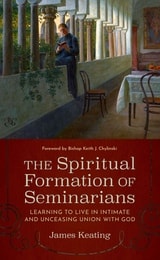
cover of The Spiritual Formation of Seminarians: Learning to Live in Intimate and Unceasing Union with God

The Spiritual Formation of Seminarians

Learning to Live in Intimate and Unceasing Union with God

James Keating

Catholic University of America Press, 2025

In this book, Deacon James Keating provides an opportunity for one spiritual director to introduce his mind to the minds of other directors with the hope that his ideas may season their own already developed method of direction. The book does not attend to all the possible realities a director may encounter within his or her training or within the daily execution of this ministry. The author wishes to share his approach to directing seminarians by reflecting upon themes and experiences which regularly appear within direction sessions. Spiritual direction certainly has some universal components to it. All directors want their directees to internalize a habit of prayer, to choose a life of remaining with God, to suffer the vulnerability necessary to know divine love and to then embody that love as heralds of the Gospel. But each director approaches his or her directees from within their own skin, from within a personality that is unique, and by way of a formation that reflects the unique attractions of each director and his or her own sufferings, failures, and fidelities. These unique embodiments no one writer can know or capture in a book. And so, this book simply begins a conversation that the author invites other directors to enter and add to according to their own insights. The spiritual life of those in seminary occupies the integrating center of a projected life of priestly ministry. Time needed to secure an interior life of prayer is one of the key reasons the Church demands years of formation before the celibate state is entered. Such a state in life is entered as a testimony to the reality that God lives and loves. In light of such love a man enters seminary to discern if he desires to surrender his whole life in response to God sharing His own. To live as a cleric without a vital interior life leaves a man in a state of meaninglessness. Instilling the virtue of prayer during priestly formation can help assure that celibate priesthood retains its inspiration and meaning throughout the life of a priest. Spiritual directors minister to assist a future priest to secure a lifetime habit of prayer so as to secure his commitment to communicate with the living God.
[more]