Results by title
3 books match the query 'Iowa Indians'

The Amazing Life of Jeffrey Deroine
Enslaved Trader, Prairie Diplomat, and Missouri SettlerGreg Olson
University of Missouri Press, 2026
Born into slavery in St. Louis in 1806, Jeffrey Deroine (de-rō-NAY) worked and lived in the heart of a rapidly changing nation. Forced to work in the fur trade on the Missouri River, he experienced Missouri’s rapid transformation from territory to statehood. As a trader, he helped his hometown grow from a small trading center into a large river town. Later, he participated in the founding of the frontier city of St. Joseph, Missouri.
Though scraps of his life are still present in the historical record, specifics have proven elusive. Still, it is important to tell Deroine’s life story, as it gives us a look both into the life of an enslaved man and the struggles of a free person of color in pre-Civil War Missouri. His life spanned a critical point in the history of the state, and he seems to have spent most of it at the very heart of the action.
Though not well known, the story of Jeffrey Deroine is significant because it illustrates the nuanced intersectionality of lives on the American frontier. Deroine was a man of both French and African descent who lived much of his life among Indigenous people. Born into slavery, he became a free person of color who was a businessman, owned property, and enslaved others. His life defied expectations and stereotypes, and a consideration of it allows us to better understand the history of Missouri and the West.
[more]
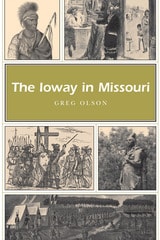
The Ioway in Missouri
Greg Olson
University of Missouri Press, 2008
Although their ancestors came from the Great Lakes region and they now live in several midwestern states, the Ioway (Baxoje) people claim a rich history in Missouri dating back to the eighteenth century. Living alongside white settlers while retaining their traditional way of life, the tribe eventually had to make difficult choices in order to survive—choices that included unlikely alliances, resistance, and even violence.
This is the first book on the Ioway to appear in thirty years and the first to focus on their role in Missouri’s colonial and early statehood periods. Greg Olson tells how the Ioway were attracted to the rich land between the Mississippi and Missouri rivers as a place in which they could peacefully reside. But it was here that they ended up facing the greatest challenges to their survival as a people, with leaders like White Cloud and Great Walker rising to meet those demands.
Olson draws on interviews with contemporary tribal members to convey an understanding of Ioway beliefs, practices, and history, and he incorporates reports of Indian agents and speeches of past Ioway leaders to illuminate the changes that took place in the tribe’s traditional ways of life. He tells of their oral traditions and creation stories, their farming and hunting practices, and their alliances with neighboring Indians, incoming settlers, and the U.S. government. In describing these alliances, he shows that the Ioway did not always agree among themselves on the direction they should take as they navigated the crosscurrents of a changing world, and that the attempts of some Ioway leaders to adapt to white society did not prevent the tribe’s descent into poverty and despair or their ultimate removal from their lands.
As modern Ioway in Kansas and Oklahoma work to recover the history of their people—and as local historians recognize their important place in Missouri history—Olson’s book offers a balanced account of the profound effects on the Ioway of other tribes, explorers, and settlers who began to move into their homelands after the Louisiana Purchase. Written for a general audience, it is a useful, accessible introduction to the changing fortunes of the Ioway people in the era of exploration, colonialism, and early statehood.
[more]
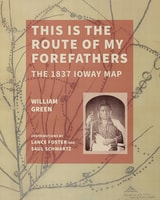
This Is the Route of My Forefathers
The 1837 Ioway MapWilliam Green
University of Iowa Press, 2025
The state of Iowa is named for the Ioways, but most Iowans—and most Americans—know little about them. In This Is the Route of My Forefathers, William Green elevates an understudied history by synthesizing oral traditions, written records, and archaeological data to decode the 1837 map drafted by Ioway leaders. Spanning Indigenous settlements from Missouri to Wisconsin, this map was created to depict tribal history and defend tribal land claims at the height of the Indian removal era.
Illustrating nearly 200 years of Ioway history, the 1837 Ioway map provides insights into the tribe’s political and diplomatic strategies, their relationships with neighboring nations, and how they resisted and negotiated in the face of dispossession. This Is the Route of My Forefathers uses an interdisciplinary approach to reveal how group accounts may fade over time, while accounts of origin—legendary histories—remain rich and vibrant.
Illustrating nearly 200 years of Ioway history, the 1837 Ioway map provides insights into the tribe’s political and diplomatic strategies, their relationships with neighboring nations, and how they resisted and negotiated in the face of dispossession. This Is the Route of My Forefathers uses an interdisciplinary approach to reveal how group accounts may fade over time, while accounts of origin—legendary histories—remain rich and vibrant.
[more]