Results by title
173 books match the query 'Ireland' and 18 start with a
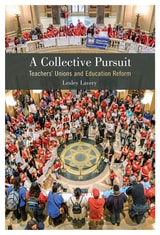
A Collective Pursuit
Teachers' Unions and Education ReformLesley Lavery
Temple University Press, 2020
Teachers’ unions are the organizations responsible for safeguarding the conditions of teachers’ employment. Union supporters claim strong synergies between teachers’ interests and students’ interests, but critics of unions insist that the stance of teachers in collective bargaining may disadvantage students as unions reduce the power of administrators to manage, remove, reward or retain excellent teachers.
In A Collective Pursuit, Lesley Laveryunpacks how teachers’ unions today are fighting for contracts that allow them to earn a decent living and build “schools all students deserve.” She explains the form and function of the nation’s largest teachers’ unions. Lavery then explores unionization campaigns in the Twin Cities charter schools. A Collective Pursuit also examines teacher strikes and contract negotiations, school finance and finance reform, and district and union attempts to address racial achievement gaps, to provide a context for understanding the economic, political, and demographic forces that inspire teachers to improve conditions for students.
A Collective Pursuit emphasizes that while teachers’ unions serve a traditional, economic role, they also provide a vast array of valuable services to students, educators, parents, and community members.

A Death-Dealing Famine
The Great Hunger in IrelandChristine Kinealy
Pluto Press, 1997
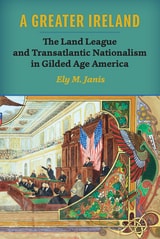
A Greater Ireland
The Land League and Transatlantic Nationalism in Gilded Age AmericaEly M. Janis
University of Wisconsin Press, 2014
As this "Greater Ireland" flourished, new opportunities arose for women and working-class men to contribute within Irish-American society. Exploring the complex interplay of ethnicity, class, and gender, Janis demonstrates the broad range of ideological, social, and political opinion held by Irish Americans in the 1880s. Participation in the Land League deeply influenced a generation that replaced their old county and class allegiances with a common cause, shaping the future of Irish-American nationalism.
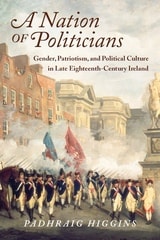
A Nation of Politicians
Gender, Patriotism, and Political Culture in Late Eighteenth-Century IrelandPadhraig Higgins
University of Wisconsin Press, 2009
In A Nation of Politicians, Padhraig Higgins argues that the development of Volunteer-initiated activities—associating, petitioning, subscribing, shopping, and attending celebrations—expanded the scope of political participation. Using a wide range of literary, archival, and visual sources, Higgins examines how ubiquitous forms of communication—sermons, songs and ballads, handbills, toasts, graffiti, theater, rumors, and gossip—encouraged ordinary Irish citizens to engage in the politics of a more inclusive society and consider the broader questions of civil liberties and the British Empire. A Nation of Politicians presents a fascinating tale of the beginnings of Ireland’s richly vocal political tradition at this important intersection of cultural, intellectual, social, and public history.

A Party with Socialists in It
A History of the Labour LeftSimon
Pluto Press, 2022
A smart and succinct history of the Labour left
*A Guardian Book of the Day*
The defeat of socialist firebrand Jeremy Corbyn as Labour Leader in 2019 confirmed Tony Benn's famous retort 'the Labour party has never been a socialist party, although there have always been socialists in it.'
For over a hundred years, the British Labour Party has been a bastion for working-class organization and struggle. However, has it ever truly been on the side of the workers? Where do its interests really lie? And can we rely on it to provide a barrier against right-wing forces?
Simon Hannah's smart and succinct history of the Labour left guides us through the twists and turns of the party, from the Bevanite movement and the celebrated government of Clement Attlee, through the emergence of a New Left in the 1970s and the Blairism of the 1990s, to Corbyn's defeat and his replacement by Keir Starmer.
This new edition is updated throughout, with a new final chapter and conclusion bringing the story up to date.
After the Digging
Alan Shapiro
University of Chicago Press, 1998
"Powerful. . . . That a young poet can handle this subject so well in a first book is . . . a pleasure in itself."—Robert von Hallberg, Contemporary Literature, 1981
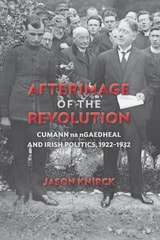
Afterimage of the Revolution
Cumann na nGaedheal and Irish Politics, 1922–1932Jason Knirck
University of Wisconsin Press, 2014
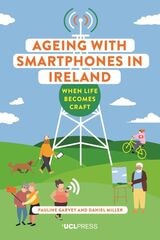
Ageing with Smartphones in Ireland
When Life Becomes CraftPauline Garvey and Daniel Miller
University College London, 2021
This volume documents a radical change in the experience of aging. Based on two ethnographies in Dublin, Ireland, the book illustrates how smartphones enable old people to focus on crafting a new life in retirement. For some, the smartphone is an intimidating burden linked to being on the wrong side of a new digital divide. But for most, however, it has become integral to a new trajectory towards a more sustainable life, both for themselves and their environment. The smartphone has reunited extended family and old friends, helped resolve intergenerational conflicts though new forms of grandparenting, and has become a health resource. This is a book about acknowledging late middle age in contemporary Ireland and examines how older people in Ireland experience life today.
Alexis de Tocqueville's journey in Ireland, July-August, 1835
Alexis de Tocqueville
Catholic University of America Press, 1990
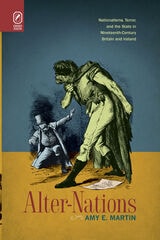
Alter-Nations
Nationalisms, Terror, and the State in Nineteenth-Century Britain and IrelandAmy E. Martin
The Ohio State University Press, 2012
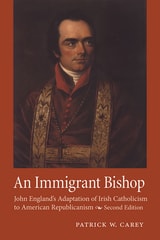
An Immigrant Bishop
John England's Adaptation of Irish Catholicism to American Republicanism, Second EditionPatrick W. Carey
Catholic University of America Press, 2022
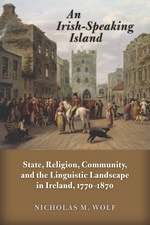
An Irish-Speaking Island
State, Religion, Community, and the Linguistic Landscape in Ireland, 1770–1870Nicholas M. Wolf
University of Wisconsin Press, 2014
As late as 1840, Ireland had as many as four million Irish speakers—a significant proportion of the total population—who could be found in every county of the island and in all social classes and religious persuasions. Their impact on the modern history of Ireland and the United Kingdom cannot be captured by a simple conclusion that they became anglicized. Rather, Nicholas M. Wolf explores the complex ways in which the transition from Irish to English placed a premium on adaptive bilingualism and shaped beliefs and behavior in the domestic sphere, religious life, and oral culture within the community. An Irish-Speaking Island will interest not only historians but also scholars of linguistics, folklore, politics, literature, and religion.
Winner, Michael J. Durkan Prize for Books on Language and Culture, American Conference for Irish Studies
Winner, Donald Murphy Prize for Distinguished First Books, American Conference for Irish Studies

Ancestral Voices
Religion and Nationalism in IrelandConor Cruise O'Brien
University of Chicago Press, 1995
"O'Brien's bravura performance [is] seductive in its intellectual sweep and literary assurance."—Toby Barnard, Times Literary Supplement
"Has the magical insistence which Conor Cruise O'Brien can produce at his best. . . . Where he looks back to his own childhood the book shines. He writes of his mother and father with effortless grace and candor, with a marvelous, elegant mix of affection and detachment."—Observer
Anomalous States
Irish Writing and the Post-Colonial MomentDavid Lloyd
Duke University Press, 1993
Beginning with Heaney and Beckett, Lloyd shows how in these authors the question of identity connects with the dominance of conservative cultural nationalism and argues for the need to understand Irish culture in relation to the wider experience of colonized societies. A central essay reads Yeats's later works as a profound questioning of the founding of the state. Final essays examine the gradual formation of the state and nation as one element in a cultural process that involves conflict between popular cultural forms and emerging political economies of nationalism and the colonial state. Modern Ireland is thus seen as the product of a continuing process in which, Lloyd argues, the passage to national independence that defines Ireland's post-colonial status is no more than a moment in its continuing history.
Anomalous States makes an important contribution to the growing body of work that connects cultural theory with post-colonial historiography, literary analysis, and issues in contemporary politics. It will interest a wide readership in literary studies, cultural studies, anthropology, and history.
Arab Americans in Michigan
Rosina J. Hassoun
Michigan State University Press, 2003
The state of Michigan hosts one of the largest and most diverse Arab American populations in the United States. As the third largest ethnic population in the state, Arab Americans are an economically important and politically influential group. It also reflects the diversity of national origins, religions, education levels, socioeconomic levels, and degrees of acculturation. Despite their considerable presence, Arab Americans have always been a misunderstood ethnic population in Michigan, even before September 11, 2001 imposed a cloud of suspicion, fear, and uncertainty over their ethnic enclaves and the larger community. In Arab Americans in Michigan Rosina J. Hassoun outlines the origins, culture, religions, and values of a people whose influence has often exceeded their visibility in the state.
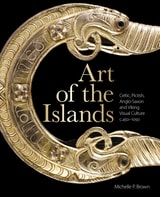
Art of the Islands
Celtic, Pictish, Anglo-Saxon and Viking Visual Culture, c. 450-1050Michelle P. Brown
Bodleian Library Publishing, 2015
Michelle P. Brown remedies this oversight, presenting an extensively illustrated art historical overview of this formative period in the region’s history. Describing the interactions between the region’s inhabitants, she also explores the formation of national and regional identities. Brown ranges across works as diverse as the Book of Kells, the Tara Brooch, the Aberlemno Stone, the Lindisfarne Gospels, the Alfred Jewel, and the Benedictional of St. Ethelwold, showing how their complex imagery can be best interpreted. She also considers the impact of the art of this period upon the history of art in general, exploring how it has influenced many movements since, from the Carolingian Renaissance and the Romanesque style to the nineteenth-century Arts and Crafts movement.

Artaud 1937 Apocalypse
Letters from IrelandAntonin Artaud
Diaphanes, 2019
During his fateful journey, Artaud wrote letters to friends in Paris which included several “magic spells,” intended to curse his enemies and protect his friends from the city’s forthcoming incineration and the Antichrist’s appearance. (To André Breton, he wrote: “It’s the Unbelievable—yes, the Unbelievable—it’s the Unbelievable which is the truth.”) This book collects all of Artaud’s surviving correspondence from his time in Ireland, as well as photographs of the locations he traveled through. Featuring an afterword and notes by the book’s translator, Stephen Barber, this edition marks the seventieth anniversary of Artaud’s death.
Austerity Ireland
The Failure of Irish CapitalismKieran Allen and Brian O'Boyle
Pluto Press, 2013
In Austerity Ireland, Kieran Allen challenges this official image and argues that the Irish state's response to the crash has primarily been designed to protect economic privilege. The resulting austerity has been a failure and is likely to produce a decade of hardship.
The book offers a deeply informed and penetrating diagnosis of Ireland's current socio-economic and political malaise, suggesting that a political earthquake is underway which may benefit the left. Austerity Ireland is essential reading for all students of Irish politics and economics, as well as those interested in the politics of austerity and the eurozone crisis.