Results by title
20 books match the query 'It'
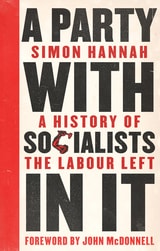
A Party with Socialists in It
A History of the Labour LeftSimon Hannah
Pluto Press, 2018
A Party with Socialists in It addresses those questions and more, telling the story of the Labour Party from its origins to today, showing how at every turn it has struggled with the tension between the rights and demands of workers and a more centrist position. As Jeremy Corbyn’s leadership attempts to revitalize the party after the initial success of the Blair years turned into disappointment and disenchantment, this clear-eyed history could not be more timely.

A Party with Socialists in It
A History of the Labour LeftSimon
Pluto Press, 2022
A smart and succinct history of the Labour left
*A Guardian Book of the Day*
The defeat of socialist firebrand Jeremy Corbyn as Labour Leader in 2019 confirmed Tony Benn's famous retort 'the Labour party has never been a socialist party, although there have always been socialists in it.'
For over a hundred years, the British Labour Party has been a bastion for working-class organization and struggle. However, has it ever truly been on the side of the workers? Where do its interests really lie? And can we rely on it to provide a barrier against right-wing forces?
Simon Hannah's smart and succinct history of the Labour left guides us through the twists and turns of the party, from the Bevanite movement and the celebrated government of Clement Attlee, through the emergence of a New Left in the 1970s and the Blairism of the 1990s, to Corbyn's defeat and his replacement by Keir Starmer.
This new edition is updated throughout, with a new final chapter and conclusion bringing the story up to date.
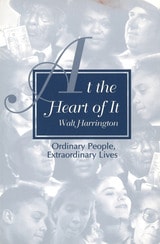
At the Heart of It
Ordinary People, Extraordinary LivesWalt Harrington
University of Missouri Press, 1996
Delving into the everyday lives of real, everyday people, Walt Harrington skillfully draws the reader into an intimate relationship with the men and women profiled in this powerful collection of stories--people like V. I. Smith, a homicide detective; Deane Guy, a stock car racer; Jackie Jordan, a social worker in family services; and Sheri D'Amato, a girls' soccer coach.
Originally appearing in the Washington Post Magazine, these stories, which capture a cross section of Americans, stand out in the field of journalism because of the unique way in which Walt Harrington uses unheralded, individual lives to elaborate on the great human issues of the day. In "Mothers and Daughters" three generations of women discuss how society affected the choices they made and who they became. "The Mystery of Goodness" follows a Harvard-educated lawyer who handles death-row cases for very little money because he feels the system is unfair to African Americans. In "To Have and Have Not" a young couple with two small children struggle to make ends meet. Harrington describes in detail the creation of a poem by Rita Dove, then United States Poet Laureate, in "The Shape of Her Dreaming."
Harrington has adeptly combined sociology and journalism into beautiful prose. As "literary journalism," the stories employ scene, dialogue, and physical description within a narrative framework. At the same time, they also adhere to all the traditional journalistic standards of accuracy, fairness, and balance. As a result, At the Heart of It represents a subgenre that is rarely practiced and seldom understood even within the profession of journalism.
All of these stories are snapshots, pieces of everyday life in America that are intended to be a mirror held to the lives of readers. These are not stories about which you can remain neutral; even the most casual readers will be moved by the glimpses Walt Harrington provides us of ourselves.

Banking On It
Inside Baseball, Hardball Politics, and Building the Best Era in Phillies HistoryPaul Hagen with Kevin Cooney
Temple University Press, 2027
When Citizens Bank Park opened on April 3, 2024, it was the result of twelve years (and many false starts) of maneuvering for the venue to replace Veterans Stadium as the home to the Philadelphia Phillies. Banking On It describes the politicking that took place, from conflicts between the Phillies and the Philadelphia Eagles resulting from sharing a venue, to decisions about where to build the new ballpark, who would pay for it, and where the outfield fences would be placed.
Paul Hagen and Kevin Cooney recount the setbacks, frustrations, missteps, political machinations, and angst the team surmounted as the process played out. But Banking On It also details the benefits of all these efforts—the Phillies became a powerhouse franchise after settling into their new home. The new stadium helped the team elevate its game by generating money to attract and keep better players, including Jim Thome, Ryan Howard, and Kyle Schwarber taking advantage of groundwork laid by scouts and managers. The Phillies have had their most successful two decades in franchise history playing at Citizens Bank Park.
Banking On It celebrates the game, the team, and the stadium that helped create a championship era.
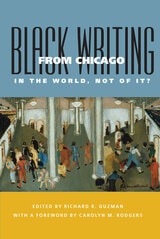
Black Writing from Chicago
In the World, Not of It?Edited by Richard R. Guzman. Foreword by Carolyn M. Rodgers
Southern Illinois University Press, 2006
Black Writing from Chicago: In the World, Not of It? takes readers on a cultural trip through Chicago’s literary history. Editor Richard R. Guzman compiles the first comprehensive collection of the works of Chicago’s black writers from 1861 to the present day. The anthology, which includes works from newspaper writing, poetry, fiction, drama, essays, and historical and social commentary, seeks not only to represent a broad range of writings but also to focus tightly on such themes as hope and despair, racism and equality, spirituality and religion. More than sixty writers, from the anonymous “J. W. M. (Colored)” to Ken Green, unfold a story that reflects the literary periods in black American history. Each author’s selection is preceded by a biographical and a bibliographical introduction. Readers interested in Chicago, race relations, and literature, as well as scholars of history, sociology, urban studies, and cultural studies, will find the collection invaluable.
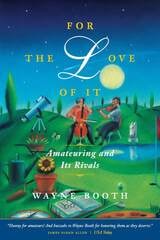
For the Love of It
Amateuring and Its RivalsWayne C. Booth
University of Chicago Press, 1999
"If, in truth, Booth is an amateur player now in his fifth decade of amateuring, he is certainly not an amateur thinker about music and culture. . . . Would that all of us who think and teach and care about music could be so practical and profound at the same time."—Peter Kountz, New York Times Book Review
"[T]his book serves as a running commentary on the nature and depth of this love, and all the connections it has formed in his life. . . . The music, he concludes, has become part of him, and that is worth the price."—Clea Simon, Boston Globe
"The book will be read with delight by every well-meaning amateur who has ever struggled. . . . Even general readers will come away with a valuable lesson for living: Never mind the outcome of a possibly vain pursuit; in the passion that is expended lies the glory."—John von Rhein, Chicago Tribune
"Hooray for amateurs! And huzzahs to Wayne Booth for honoring them as they deserve. For the Love of It celebrates amateurism with genial philosophizing and pointed cultural criticism, as well as with personal reminiscences and self-effacing wit."—James Sloan Allen, USA Today
"Wayne Booth, the prominent American literary critic, has written the only sustained study of the interior experience of musical amateurism in recent years, For the Love of It. [It] succeeds as a meditation on the tension between the centrality of music in Booth's life, both inner and social, and its marginality. . . . It causes the reader to acknowledge the heterogeneity of the pleasures involved in making music; the satisfaction in playing well, the pride one takes in learning a difficult piece or passage or technique, the buzz in one's fingertips and the sense of completeness with the bow when the turn is done just right, the pleasure of playing with others, the comfort of a shared society, the joy of not just hearing, but making, the music, the wonder at the notes lingering in the air."—Times Literary Supplement

How to Love Everyone and Almost Get Away with It
Lara Egger
University of Massachusetts Press, 2021
Winner of Ploughshares’ 2022 John C. Zacharis First Book Award
Wrestling with desire, shame, and the complications of attempting to resist one's own nature, How to Love Everyone and Almost Get Away with It offers a tragicomic tour of a heart in midlife crisis. Populated by unruly angels, earthbound astronauts, xylophones, wordplay, and glitter glue, these wildly associative poems transform the world line by line, image by image. Part confessional, part kitsch, and often self-deprecating, this debut collection offers an honest and tender exploration of love's necessary absurdity. Lara Egger asks: Who put the end in crescendo, the over in lover? Are metaphors always reliable witnesses? Why does the past sleep with us when we hope the person beside us is the future?
In Washington but Not of It
The Prophetic Politics of Religious LobbyistsDaniel Hofrenning
Temple University Press, 1995
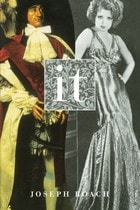
It
Joseph Roach
University of Michigan Press, 2011
A consumer’s guide to iconic celebrity and ageless glamour
“Strikingly original, wickedly witty, and thoroughly learned, Roach’s anatomy of abnormally interesting people and the vicarious pleasure we take in our modern equivalents to gods and royals will captivate its readers from the first page. I dare you to read just one chapter!”
—Felicity Nussbaum, University of California, Los Angeles
“It considers the effect that arises when spectacularly compelling performers and cultural fantasy converge, as in the outpouring of public grief over the death of Princess Diana. . . . An important work of cultural history, full of metaphysical wit . . . It gives us a fresh vocabulary for interpreting how after-images endure in cultural memory.”
—Andrew Sofer, Boston College
“Joseph Roach’s enormous erudition, sharp wit, engaging style, and gift for finding the most telling historical detail or literary quote are here delightfully applied to the intriguing subject of why certain historical and theatrical figures have possessed a special power to fascinate their public.”
—Marvin Carlson, Graduate Center, City University of New York
That mysterious characteristic “It”—“the easily perceived but hard-to-define quality possessed by abnormally interesting people”—is the subject of Joseph Roach’s engrossing new book, which crisscrosses centuries and continents with a deep playfulness that entertains while it enlightens.
Roach traces the origins of “It” back to the period following the Restoration, persuasively linking the sex appeal of today’s celebrity figures with the attraction of those who lived centuries before. The book includes guest appearances by King Charles II, Samuel Pepys, Flo Ziegfeld, Johnny Depp, Elinor Glyn, Clara Bow, the Second Duke of Buckingham, John Dryden, Michael Jackson, and Lady Diana, among others.
Love/Stories (or, but you will get used to it)
Five Short PlaysItamar Moses
Northwestern University Press, 2010
A casting session for a play about a love affair goes awry. A talk-back with a theater audience becomes the occasion for a life-altering choice. A couple moving in together finds that greater intimacy can be a mixed blessing when even the surface of their dialogue is stripped away.
Metatheatrical antics abound in Itamar Moses’s Love/Stories (or, but you will get used to it), five one-act meditations on modern love and on the act of telling stories — in which a variety of inventive devices stresses the ineradicable gap between art and experience. Reminiscent of the works
of both Samuel Beckett and David Foster Wallace in their verbal dexterity, humor, and generosity, the plays collected in Love/Stories constitute an important addition to the contemporary American theater by one of our most exciting young playwrights.

Murder Unpunished
How the Aryan Brotherhood Murdered Waymond Small and Got Away with ItThornton W. Price
University of Arizona Press, 2005
Thornton Price, one of the defense attorneys, now tells how Farmer and Small became cannon fodder in this war to reclaim Arizona’s prisons from rival gangs. These gangs—the Aryan Brotherhood, the Mau Maus, and the Mexican Mafia—were suspected of committing more than a dozen murders over the previous two years, motivating politicians to crack down after the violence could no longer be ignored or contained. To reconstruct the case, Price reviewed 16,000 pages of court records and conducted interviews with key participants to piece together an insider’s account of the crime and the politics behind its investigation. Prison murders should be easy to solve, but investigators quickly learned that the convicts’ code of silence makes these cases often impossible to win in court.
Price focuses on the special problems posed by prison crime by getting inside the skins of men like murderer Terry "Crazy" Farmer and William "Red Dog" Howard, one of the Florence Eleven and a founder of the Aryan Brotherhood. He also presents the perspectives of state investigators and reveals how they calculated to pit black witnesses against white killers until one black would break the code of silence and provoke feuding within the Brotherhood.
Murder Unpunished tells how society’s most outrageous criminals ran the prison through gang violence as outside the walls Arizona struggled to outgrow its Wild West past. Like few other books, it reveals how prisons incubate predatory criminals and gangs, and it exposes the unique difficulties of prosecuting prison crimes. It is a gripping account that cuts to the heart of our penal system and a cautionary tale for citizens who prefer to keep prisons out of sight, out of mind.
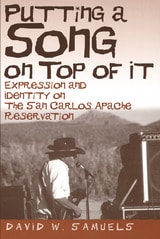
Putting a Song on Top of It
Expression and Identity on the San Carlos Apache ReservationDavid W. Samuels
University of Arizona Press, 2004
For many people on the San Carlos reservation, both the traditional calls of the Mountain Spirits and the hard edge of a country, rock, or reggae song can evoke the feeling of being Apache. Using insights gained from both linguistic and musical practices in the community—as well as from his own experience playing in an Apache country band—David W. Samuels explores the complex expressive lives of these people to offer new ways of thinking about cultural identity.
Samuels analyzes how people on the reservation make productive use of popular culture forms to create and transform contemporary expressions of Apache cultural identity. As Samuels learned, some popular songs—such as those by Bob Marley—are reminiscent of history and bring about an alignment of past and present for the Apache listener. Thinking about Geronimo, for instance, might mean one thing, but “putting a song on top of it” results in a richer meaning. Samuels also proposes that the concept of the pun, as both a cultural practice and a means of analysis, helps us understand the ways in which San Carlos Apaches are able to make cultural symbols point in multiple directions at once. Through these punning, layered expressions, people on the reservation express identities that resonate with the complicated social and political history of the Apache community.
This richly detailed study challenges essentialist notions of Native American tribal and ethnic identity by revealing the turbulent complexity of everyday life on the reservation. Samuels’s work is a multifaceted exploration of the complexities of sound, of language, and of the process of constructing and articulating identity in the twenty-first century.
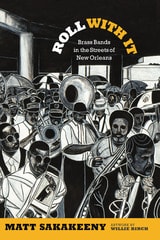
Roll With It
Brass Bands in the Streets of New OrleansMatt Sakakeeny
Duke University Press, 2013

The Bible Without Theology
The Theological Tradition and Alternatives to ItRobert A. Oden, Jr.
University of Illinois Press, 1987
Using cross-cultural and interdisciplinary methodology, Oden investigates three biblical issues--the clothing of Adam and Eve, Jacob's name change to Israel, and ritual prostitution and Deuteronomy--in light of extra-biblical evidence. He also challenges scholars' assumptions of Scripture as monotheistic and proposes treating biblical narrative as myth rather than as historical fact.
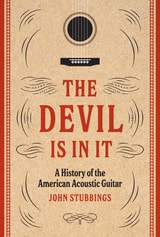
The Devil Is in It
A History of the American Acoustic GuitarJohn Stubbings
University of Texas Press, 2025
The rich history of the acoustic guitar and its impact on the music world.
In 2020, guitar expert John Stubbings released a limited-edition book on the American acoustic guitar that sold out in days. Now, The Devil Is in It returns with additional research and subject matter for a new generation of readers. Stubbings traveled the country and met with guitar makers, players, collectors, and historians to unravel the long and rich history of the acoustic guitar, its evolution, and the music it has made over the last hundred years.
Starting with the eighteenth-century European classical guitar, luthiers altered the instrument, changing the way musicians played them, and in turn the music they made. This slow but steady transformation created the iconic American flat-top that became influential across genres and rooted itself in cultural significance. The guitar developed from an obscure instrument into a superstar of the musical world, rivaling then overshadowing its competition. Tied to artists from Gillian Welch and Tracy Chapman to Taylor Swift and Ed Sheeran, the acoustic guitar maintains its eminence in American music and culture. The story of an alluring instrument that shaped the music of the twentieth century, The Devil Is in It is a must-read for lovers of the acoustic guitar and the music it has made.
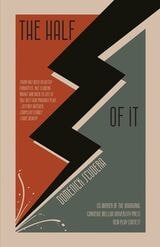
The Half of It
Domenick Scudera
Carnegie Mellon University Press, 2026
A play that explores the influence of pioneer drag artist Bert Savoy.
The Half of It is inspired by the life and work of Bert Savoy, a Vaudeville drag artist who was active in the 1910s and early 1920s. Savoy was at the height of his career when he was tragically killed by lightning in 1923. The play highlights the groundbreaking and inspirational work of this important, yet largely forgotten, pioneer. Characters include some of Savoy’s famous friends, such as Klondike Kate and Mae West (who many believe borrowed her sassy stage persona from Savoy’s drag act). The play explores themes of gender identity, gender expression, celebrity in the modern era, the LGBTQ community of the early twentieth century, and the origins of contemporary drag performance.
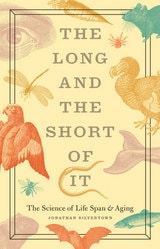
The Long and the Short of It
The Science of Life Span and AgingJonathan Silvertown
University of Chicago Press, 2013
With The Long and the Short of It, biologist and writer Jonathan Silvertown offers readers a witty and fascinating tour through the scientific study of longevity and aging. Dividing his daunting subject by theme—death, life span, aging, heredity, evolution, and more—Silvertown draws on the latest scientific developments to paint a picture of what we know about how life span, senescence, and death vary within and across species. At every turn, he addresses fascinating questions that have far-reaching implications: What causes aging, and what determines the length of an individual life? What changes have caused the average human life span to increase so dramatically—fifteen minutes per hour—in the past two centuries? If evolution favors those who leave the most descendants, why haven’t we evolved to be immortal? The answers to these puzzles and more emerge from close examination of the whole natural history of life span and aging, from fruit flies, nematodes, redwoods, and much more.

The Rest of It
Hustlers, Cocaine, Depression, and Then Some, 1976–1988Martin Duberman
Duke University Press, 2018
Despite the hardships, Duberman managed to be incredibly productive: he wrote his biography of Paul Robeson, rededicated himself to teaching, wrote plays, and coedited the prize-winning Hidden from History. His exploration of new paths of scholarship culminated in his founding of the Center for Lesbian and Gay Studies, thereby inaugurating a new academic discipline. At the outset of the HIV/AIDS epidemic Duberman increased his political activism, and in these pages he also describes the tensions between the New Left and gay organizers, as well as the profound homophobia that created the conditions for queer radical activism. Filled with gossip, featuring cameo appearances by luminaries such as Gore Vidal, Norman Mailer, Vivian Gornick, Susan Brownmiller, Kate Millett, and Néstor Almendros, among many others, and most importantly, written with an unflinching and fearless honesty, The Rest of It provides scathing insights into a troubling decade of both personal and political history. It is a stimulating look into a key period of Duberman's life, which until now had been too painful to share.
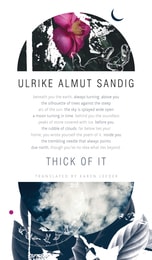
Thick of It
Ulrike Almut Sandig
Seagull Books, 2018
What's Love Got to Do with It?
Transnational Desires and Sex Tourism in the Dominican RepublicDenise Brennan
Duke University Press, 2004
Illuminating the complex world of Sosúa’s sex business in rich detail, Brennan draws on extensive interviews not only with sex workers and clients, but also with others who facilitate and benefit from the sex trade. She weaves these voices into an analysis of Dominican economic and migration histories to consider the opportunities—or lack thereof—available to poor Dominican women. She shows how these women, local actors caught in a web of global economic relations, try to take advantage of the foreign men who are in Sosúa to take advantage of them. Through her detailed study of the lives and working conditions of the women in Sosúa’s sex trade, Brennan raises important questions about women’s power, control, and opportunities in a globalized economy.