Results by title
16 books match the query 'Jewish Law'
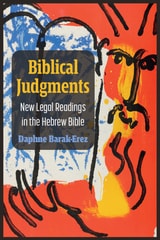
Biblical Judgments
New Legal Readings in the Hebrew BibleDaphne Barak-Erez
University of Michigan Press, 2024
Rather than offering a historical study, Barak-Erez draws upon famous court decisions from around the world to root her analysis in modern law. Organized by subject matter, Biblical Judgments analyzes how the themes of law and government, judging and judges, human rights and social justice, criminal law, private law, and family and inheritance law are presented through a number of different stories. In recounting the compelling narratives of the Hebrew Bible, Biblical Judgments exposes their inherent legal tensions and what we can learn about legal dilemmas today.
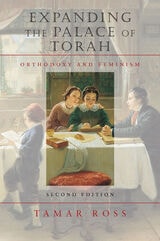
Expanding the Palace of Torah
Orthodoxy and FeminismTamar Ross
Brandeis University Press, 2004
This new edition brings this acclaimed and classic text back into print with a new essay by Tamar Ross which examines new developments in feminist thought since the book was first published in 2004.

Fertility and Jewish Law
Feminist Perspectives on Orthodox Responsa LiteratureRonit Irshai
Brandeis University Press, 2012
Jewish Legal Theories
Writings on State, Religion, and MoralityEdited by Leora Batnitzky and Yonatan Brafman
Brandeis University Press, 2018
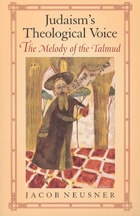
Judaism's Theological Voice
The Melody of the TalmudJacob Neusner
University of Chicago Press, 1995
In his attempt to answer these questions, Neusner sets forth the character and the form of the Torah as sung theology. Israel, the holy community, meets God in the synagogue, while at prayer, and in the yeshiva, when studying the Torah—at the moment in each setting when the Torah is received. In both circumstances people do not read but sing out its words. With the written part of the Torah sung in the synagogue, and the oral part declaimed in centers of sacred learning, music provides the medium for Judaism's theological voice.
Neusner identifies a reciprocal exchange between the holy community Israel and God: Israel sings to God when the Torah is studied, and God sings to Israel when the Torah is declaimed. Through the metaphor of music, Neusner offers an account of how he believes those faithful to the Torah meet God in the Torah, and how they should listen to the melody of God's self-revelation. The result is an original theological reflection that will interest all students of Judaism.
Legal Writing, Legal Practice
The Biblical Bailment Law and Divine JusticeYael Landman
SBL Press, 2022
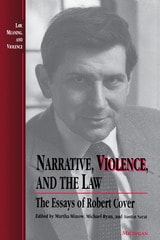
Narrative, Violence, and the Law
The Essays of Robert CoverMartha Minow, Michael Ryan, and Austin Sarat, Editors
University of Michigan Press, 1993
"Bob Cover was and remains the dominant voice of his generation among legal scholars. These essays, each one magnificent in itself, are, when taken together, even more important. The wisdom they impart is forever." --Guido Calabresi, Dean and Sterling Professor of Law, Yale University "Robert Cover drew his sources for the authority of law--for its violence, but also for its paideic potential--from the structuring stories that spark our communal imaginations. Literally until the day of his untimely death, his irreplaceably restless spirit was binding itself with the pages of the Midrash, of The Brothers Karamazov, of Billy Budd, Sailor. It is for us now to work also with these--Bob Cover's stories."--Richard Weisberg, Benjamin N. Cardozo Law School, Yeshiva University "The writings of Robert Cover were usually provocative, sometimes exasperating, but always relevant. In his last years, he concentrated on Jewish sources as well as mystical and Messianic thought. This collection of his articles is a thesaurus of some of his finest writings."--Robert F. Drinan, S.J., Georgetown University Law Center. The late Robert Cover was Professor of Law, Yale Law School.
Poverty, Law, and Divine Justice in Persian and Hellenistic Judah
Johannes Unsok Ro
SBL Press, 2018
A view of Persian and Hellenistic Judean communities through theological and socioeconomic lenses
Johannes Unsok Ro employs philological, historical, and sociological approaches to investigate the close connections between socioeconomic structures, social inequality, and theological developments in the Judean communities in Persian- and Hellenistic-era Palestine. Ro contends that competing points of view from communities of lay returnees, priestly returnees, and communities of resident Judeans and Samaritans were juxtaposed within the Hebrew Bible, which took shape during the postexilic period. By exploring issues such as the relationship between the shaping of the canon and literacy in the Judean community, the term strangers in the biblical law codes, the socioeconomic structures of Judean communities reflected in the biblical law codes, the development of the theological concept of divine punitive justice, the piety of the poor in certain psalms, and the concept of poverty in the Dead Sea Scrolls, Ro illustrates that the communities behind each text and its redactions can be ascertained through sociological and theological lenses.
Features
- Demonstration that a theology of the poor materialized orally among the poor but found written expression among Levites
- Insight into the socioeconomic and theological concerns of the authorial groups behind various biblical law codes
- A case that biblical “poverty” sometimes refers to humility and a theologically reflected consciousness of lowliness toward God
Praying Legally
Shalom E. Holtz
SBL Press, 2019
Explore the lengthy history of legal metaphors in ancient prayer
In biblical and other ancient Near Eastern sources, prayer is an opportunity to make one’s case before divine judges. Prayers were formulated using courtroom or trial language, including demands for judgment, confessions, and accusations. The presence of these legal concepts reveals ancient Near Eastern thoughts about what takes place when one prays. Holtz highlights legal concepts that appear in prayers, including the motif of the speakers' oppression in Psalms the possibility of countersuit against God through prayer, and divine attention and inattention as legal responses. By reading ancient prayers together with legal texts, this book shows how speakers took advantage of prayer as an opportunity to have their day in the divine court and even sue against divine injustice.
Features
- Identification of legal vocabulary and concepts that appear in ancient prayers
- Analysis of legal metaphors in prayer examples in Akkadian and postbiblical rabbinic texts
- Interpretations of trial records and texts from Psalms and Lamentations
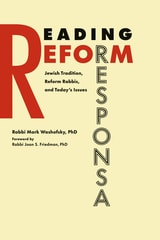
Reading Reform Responsa
Jewish Tradition, Reform Rabbis, and Today's IssuesRabbi Mark Washofsky, PhD
Central Conference of American Rabbis, 2024

Religious Objects as Psychological Structures
Moshe Halevi Spero
University of Chicago Press, 1992
By constructing a halakhic metapsychology within which psychological phenomena can be given specific halakhic identities, Spero arrives at a unique perspective on the development of religious objects and God representations. He traces two lines of development: one for relationships between humans, anthropocentric, and another for relationships between God and humans, deocentric. The second aspect of his argument is that these two distinct but parallel lines allow one to conceptualize the revolutionary possibility of transference displacements—the shift of religious symbology—not only from interpersonal relationships onto the God concept (Freud's model) but also from an objective human-God relationship onto interpersonal relationships. Filled with clinical as well as theoretical illustrations, Spero's work is a rich resource for both the religious patient and the religious therapist.
In the last few decades, a great deal of literature has been written on the relationship between theology and psychotherapy; none of this work, however, has addressed its subject using Judaism as a point of reference. Spero successfully takes up the task of bridging this gap in previous scholarship.
Separation of Church and State
Dina de-Malkhuta Dina in Jewish LawGil Graff
University of Alabama Press, 1985
Exploring the enduring dialogue between Jewish law and the law of the state.
For the Jewish community, the end of the Middle Ages and the emergence of the modern nation-state brought the promise of equal citizenship as well as the possible loss of Jewish corporate identity. The legal maxim dina de-malkhuta dina (the law of the State is law) invoked in Talmidic times to justify the acceptance of the king’s law and qualified in the Middle Ages by Maimonides and Rashbam to include the requirement of consent by the governed underwent further redefinition by Jews in the Napoleonic age. Graff focuses on the struggle between 18th and 19th-century Jewish religious reformers and traditionalists in defining the limits of dina de-malkhuta dina. He traces the motivations of the reformers who, in their zeal to gain equality for the formerly disenfranchised Jewish communities in Western Europe, were prepared to render unto the State compromising authority over Jewish religious life under the rubric of dina de-malkhuta dina was intended to strike a balance between synagogue and state and not to be used as a pretext for the liquidation of the community’s corporate existence.
The Birth of Doubt
Confronting Uncertainty in Early Rabbinic LiteratureMoshe Halbertal
SBL Press, 2020
A systematic attempt to understand the rabbinic world through its approach to confronting uncertainty
In the history of halakhah, the treatment of uncertainty became one of the most complex fields of intense study. In his latest book, Moshe Halbertal focuses on examining the point of origin of the study of uncertainty in early rabbinic literature, including the Mishnah, Tosefta, and halakhic midrashim. Halbertal explores instructions concerning how to behave in situations of uncertainty ranging from matters of ritual purity, to lineage and marriage, to monetary law, and to the laws of forbidden foods. This examination of the rules of uncertainty introduced in early rabbinic literature reveals that these rules were not aimed at avoiding but rather at dwelling in the midst of uncertainty, thus rejecting the sectarian isolationism that sought to minimize a community’s experience of and friction with uncertainty.
Features:
- A thorough investigation of the principles concerning how to behave in cases of uncertainty
- An examination of two distinct modes for coping with uncertainty

The Challenges of Sovereignty
Essays on Israel and ZionismDavid Ellenson
Brandeis University Press, 2026
Key essays by a notable scholar address some of the most pressing questions facing Israel today.
Over the course of his rich career, David Ellenson—one of the most outstanding Jewish scholars, intellectuals, and thinkers of our time—probed the tension between tradition and modernity, especially as reflected in the ceaseless reinterpretation of liturgical and halakhic texts. Alongside that scholarly interest, largely centered on European Jewry, Ellenson produced an impressive body of work on Zionism and Israel.
This volume follows the arc of this body of work from Ellenson’s early articles on the Zionism of American rabbis to his last essay on the struggle between Jewish and democratic impulses in Israeli society. He draws on familiar sources of inquiry—Jewish prayers and legal sources—to chart changes in Israeli religious life and to excavate its theological-political foundation. What emerges is a profound meditation on some of the most important questions that Israel faces today: what does it mean to be Jewish in the state? What role should Halakhah play in a self-defined Jewish state? How should the state treat its non-Jewish minority? How deeply rooted is democracy in the state and its foundational texts? And can the state ever escape seemingly irrepressible internal and external conflict?
The Hermeneutics of Torah
Proverbs 2, Deuteronomy, and the Composition of Proverbs 1–9Bernd U. Schipper
SBL Press, 2021
This revised and expanded English edition of Bernd U. Schipper’s 2012 Hermeneutik der Tora incorporates the results of his continued research and writings on Proverbs. For nearly a century, many biblical scholars have argued that the main theological traditions, such as the divine law, God’s torah, do not appear in the book of Proverbs. In this volume, however, Schipper demonstrates that Proverbs interacts in a sophisticated way with the concept of the torah. A detailed analysis of Proverbs 2 and other passages from the first part of the book of Proverbs shows that Proverbs engages in a postexilic discourse around “wisdom and torah” concerning the abilities of humans to fulfill the will of YHWH exemplified in the divine torah.

The Mishnah in Contemporary Perspective, Volume 1
Alan J. Avery-Peck
SBL Press, 2016
Now in Paperback!
In the past thirty years, the Mishnah has taken its place as a principal focus in the academic study of religion and of Judaism. Many university scholars have participated in the contemporary revolution in the description, analysis, and interpretation of the Mishnah. Nearly all the publishing scholars of the academy who are now at work are represented in this project. Both essential volumes present a broad selection of approaches to the study of the Mishnah. What they prove in diverse ways is that the Mishnah defines the critical focus of the study of Judaism. It is a document that rewards study in the academic humanities.
Features:
- The best of contemporary scholarship on the Mishnah
- The most representative selection of contemporary Mishnah-study contributions available in any collection in a Western language
- Paperback format of an essential Brill reference work