Results by title
3 books match the query 'Johnson, Javon'
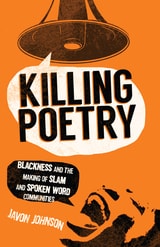
Killing Poetry
Blackness and the Making of Slam and Spoken Word CommunitiesJohnson, Javon
Rutgers University Press, 2017
Winner of the 2019 Lilla A. Heston Award
Co-winner of the 2018 Ethnography Division’s Best Book from the NCA
In recent decades, poetry slams and the spoken word artists who compete in them have sparked a resurgent fascination with the world of poetry. However, there is little critical dialogue that fully engages with the cultural complexities present in slam and spoken word poetry communities, as well as their ramifications.
In Killing Poetry, renowned slam poet, Javon Johnson unpacks some of the complicated issues that comprise performance poetry spaces. He argues that the truly radical potential in slam and spoken word communities lies not just in proving literary worth, speaking back to power, or even in altering power structures, but instead in imagining and working towards altogether different social relationships. His illuminating ethnography provides a critical history of the slam, contextualizes contemporary black poets in larger black literary traditions, and does away with the notion that poetry slams are inherently radically democratic and utopic.
Killing Poetry—at times autobiographical, poetic, and journalistic—analyzes the masculine posturing in the Southern California community in particular, the sexual assault in the national community, and the ways in which related social media inadvertently replicate many of the same white supremacist, patriarchal, and mainstream logics so many spoken word poets seem to be working against. Throughout, Johnson examines the promises and problems within slam and spoken word, while illustrating how community is made and remade in hopes of eventually creating the radical spaces so many of these poets strive to achieve.
[more]
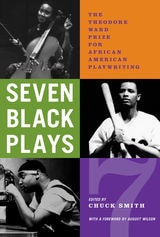
Seven Black Plays
The Theodore Ward Prize for African American PlaywritingChuck Smith
Northwestern University Press, 2004
Awarded annually since 1987, the Theodore Ward Prize recognizes the outstanding individual accomplishments of African American playwrights, as well as their growing importance to the shape and direction of American drama in our time. This collection, edited by a director and educator who has been affiliated with the contest for fifteen of its seventeen years, showcases a selection of the award-winning plays and offers a rich and varied view of the best of two decades of evolving African American drama.
These seven plays, which span the Ward Prize's history, represent a wide range of talents, experience, and perspectives brought to bear on diverse themes, from a unique moment in the history of baseball's Negro League to a working-class couple contending with a neighborhood bully; from a child's memories of negotiating desegregation to coming of age amidst the ravages of racism, child abuse, and AIDS. By turns poetic and moving, brave and rousing, uproarious and unsettling, these works written by established and emerging playwrights allow actors, directors, theatergoers, and readers to sample the multifarious dramatic experience being limned by African American playwrights today.
These seven plays, which span the Ward Prize's history, represent a wide range of talents, experience, and perspectives brought to bear on diverse themes, from a unique moment in the history of baseball's Negro League to a working-class couple contending with a neighborhood bully; from a child's memories of negotiating desegregation to coming of age amidst the ravages of racism, child abuse, and AIDS. By turns poetic and moving, brave and rousing, uproarious and unsettling, these works written by established and emerging playwrights allow actors, directors, theatergoers, and readers to sample the multifarious dramatic experience being limned by African American playwrights today.
[more]
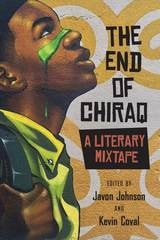
The End of Chiraq
A Literary MixtapeEdited by Javon Johnson and Kevin Coval
Northwestern University Press, 2018
The End of Chiraq: A Literary Mixtape is a collection of poems, rap lyrics, short stories, essays, interviews, and artwork about Chicago, the city that came to be known as "Chiraq" ("Chicago" + "Iraq"), and the people who live in its vibrant and occasionally violent neighborhoods. Tuned to the work of Chicago’s youth, especially the emerging artists and activists surrounding Young Chicago Authors, this literary mixtape unpacks the meanings of “Chiraq” as both a vexed term and a space of possibility.
"Chiraq" has come to connote the violence—interpersonal and structural—that many Chicago youth regularly experience. But the contributors to The End of Chiraq show that Chicago is much more than Chiraq. Instead, they demonstrate how young people are thinking and mobilizing, engaged in a process of creating a new and safer world for themselves, their communities, and their city.
In true mixtape fashion, the book is an exercise in "low end theory" that does not just include so-called underground and marginal voices, but foregrounds them. Edited by award-winning poets, writers, and teachers Javon Johnson and Kevin Coval, The End of Chiraq addresses head-on the troublesome relationship between Chicago and Chiraq and envisions a future in which both might be transformed.
[more]