Results by title
29 books match the query 'Perception'
A Course on Perception
1964-1965Gilbert Simondon
University of Minnesota Press, 2027
The first English translation of Gilbert Simondon’s wide-ranging course on the philosophical and scientific histories of perception
Translated into English for the first time, Gilbert Simondon’s A Course on Perception: 1964–1965 engages in a wide-ranging inquiry into the structure, operation, and activity of perception. Investigating its history throughout the centuries, Simondon shows how perception continually shapes and is reshaped by various strands of philosophical and scientific thought.
Prior to the advent of the natural sciences, perception functioned as the foundation of philosophical reflection and the sole instrument for acquiring knowledge and truth. Tracing his subject from these roots in antiquity, Simondon’s course draws on the work of other prominent philosophers such as Spinoza, Berkeley, Hume, and Bergson to follow the evolving trajectory of perception in the wake of classical Cartesian rationalism. As the realms of biology, physiology, and positivism in the natural sciences emerged with the Modern epoch, perception became a necessary theoretical starting point for philosophical investigations of an organism’s relation to its particular milieu.
Emerging from a course delivered at the Sorbonne in Paris between 1964 and 1965, Simondon utilizes a transdisciplinary approach to better understand the sensitivities that various life forms use to orient themselves in the world, offering a nuanced examination of perception in all its philosophical complexity.
Retail e-book files for this title are screen-reader friendly with images accompanied by short alt text and/or extended descriptions.

A Foray into the Worlds of Animals and Humans
with A Theory of MeaningJakob von Uexküll
University of Minnesota Press, 2010
A key document in the genealogy of posthumanist thought, A Foray into the Worlds of Animals and Humans advances Uexküll's revolutionary belief that nonhuman perceptions must be accounted for in any biology worth its name; it also contains his arguments against natural selection as an adequate explanation for the present orientation of a species' morphology and behavior. A Theory of Meaning extends his thinking on the umwelt, while also identifying an overarching and perceptible unity in nature. Those coming to Uexküll's work for the first time will find that his concept of the umwelt holds out new possibilities for the terms of animality, life, and the whole framework of biopolitics itself.

Animacies
Biopolitics, Racial Mattering, and Queer AffectMel Y. Chen
Duke University Press, 2012
Chen's book is the first to bring the concept of animacy together with queer of color scholarship, critical animal studies, and disability theory. Through analyses of dehumanizing insults, the meanings of queerness, animal protagonists in recent Asian/American art and film, the lead in toys panic in 2007, and the social lives of environmental illness, Animacies illuminates a hierarchical politics infused by race, sexuality, and ability. In this groundbreaking book, Chen rethinks the criteria governing agency and receptivity, health and toxicity, productivity and stillness—and demonstrates how attention to the affective charge of matter challenges commonsense orderings of the world.
Aristotle
The Power of PerceptionDeborah K. W. Modrak
University of Chicago Press, 1987
Arkansas Travelers
Geographies of Exploration and Perception, 1804-1834Andrew J. Milson
University of Arkansas Press, 2023
“I reckon stranger you have not been used much to traveling in the woods,” a hunter remarked to Henry Rowe Schoolcraft as he trekked through the Ozark backcountry in late 1818. The ensuing exchange is one of many compelling encounters between Arkansas travelers and settlers depicted in Arkansas Travelers: Geographies of Exploration and Perception, 1804–1834. This book is the first to integrate the stories of four travelers who explored Arkansas during the transformative period between the Louisiana Purchase of 1803 and statehood in 1836: William Dunbar, Thomas Nuttall, Henry Rowe Schoolcraft, and George William Featherstonhaugh.
In addition to gathering their tales of treacherous rivers, drunken scoundrels, and repulsive food, historian and geographer Andrew J. Milson explores the impact such travel narratives have had on geographical understandings of Arkansas places. Using the language in each traveler’s narrative, Milson suggests, and the book includes, new maps that trace these perceptions, illustrating not just the lands traversed, but the way travelers experienced and perceived place. By taking a geographical approach to the history of these spaces, Arkansas Travelers offers a deeper understanding—a deeper map—of Arkansas.
Beautiful Data
A History of Vision and Reason since 1945Orit Halpern
Duke University Press, 2015

Beyond Vision
Essays on the Perception of ArtPavel Florensky
Reaktion Books, 2004
Pavel Florensky was a true polymath: trained in mathematics and philosophy at Moscow University, he rejected a scholarship in advanced mathematics in order to study theology at the Moscow Theological Academy. He was also an expert linguist, scientist and art historian. A victim of the Soviet government’s animosity towards religion, he was condemned to a Siberian labor camp in 1933 where he continued his work under increasingly difficult circumstances. He was executed in 1937.
Blind to Sameness
Sexpectations and the Social Construction of Male and Female BodiesAsia Friedman
University of Chicago Press, 2013
Drawing on more than sixty interviews with two decidedly different populations—the blind and the transgendered—Blind to Sameness answers provocative questions about the relationships between sex differences, biology, and visual perception. Both groups speak from unique perspectives that magnify the social construction of dominant visual conceptions of sex, allowing Friedman to examine the visual construction of the sexed body and highlighting the processes of social perception underlying our everyday experience of male and female bodies. The result is a notable contribution to the sociologies of gender, culture, and cognition that will revolutionize the way we think about sex.
Color and Color Perception
A Study in Anthropocentric RealismDavid R. Hilbert
CSLI, 1987
Emily Dickinson
Monarch of PerceptionDomhnall Mitchell
University of Massachusetts Press, 2000
Emily Dickinson has often been pictured as a sensitive but isolated poet—someone who published very little in her lifetime and limited herself to lyrics, considered to be the kind of poems most removed from social and political life. In recent years, scholars have challenged that view, and this book extends the discussion in valuable new directions.
Domhnall Mitchell begins by focusing on three historical phenomena—the railroad, the Dickinson homestead, and horticulture—and argues that poems about trains, home, and flowers engage with their meanings in ways that extend beyond the confines of the aesthetic. He shows how Dickinson's poems and letters reveal the full complexity of her position as a woman situated within a larger social and economic class.
In the second half of the book, Mitchell considers the ideological, textual, and editorial implications of Dickinson's strategic privatization of her art. He relates the particular forms of her manuscripts' appearance, distribution, and collation to aspects of her social as well as her literary consciousness. In a chapter that is certain to provoke debate, he explores what it means to read individual poems and letters in manuscript versions rather than in printed editions. By paying close attention to textual evidence, he makes the case that various features of the manuscripts are actually matters of accident or immediate convenience rather than the visual markers of a new aesthetic principle.
Mitchell closes by using the theories of Mikhail Bakhtin to explore the contradictions of a “private” poetry that engages verbally in multiple areas of nineteenth-century life and discourse. By attending to the contemporaneous particularities of recurrent words and images, he demonstrates that Dickinson could stay at home and still be at home in history, too.
Imperfect Fit
Aesthetic Function, Facture, and Perception in Art and Writing since 1950Allen Fisher
University of Alabama Press, 2016
Rethinking art, poetry, and perception through the creative disruptions of contemporary culture.
Imperfect Fit: Aesthetic Function, Facture, and Perception in Art and Writing since 1950 is an expansive and incisive examination of the patterns of connectedness in contemporary art and poetry. Allen Fisher—a highly accomplished poet, painter, critic, and art historian as well as a key figure in the British poetry revival of the 1960s and 1970s—has a close and discerning connection to his subjects.
In Imperfect Fit, Fisher focuses on the role of fracturing, ruptures, and breakages in many traditional ties between art and poetry, as well as the resulting use of collage and assemblage by practitioners of those arts. Fisher addresses, among other subjects, destruction as a signifier in twentieth-century art; the poetic employment of bureaucratic vocabularies and “business speak”; and the roles of public performance and memory loss in the fashioning of human knowledge and art.
Commonplace notions of coherence, logic, and truth are reimagined and deconstructed in this study, and Fisher concludes by suggesting that contemporary culture offers a particularly robust opportunity—and even necessity—to engage in the production of art as a pragmatic act. Scholars of art, poetry, and aesthetics will be engaged and challenged by this insightful work.
Information and Mind
The Philosophy of Fred DretskeEdited by Paul G. Skokowski
CSLI, 2020
Knowing as Moving
Perception, Memory, and PlaceSusan Leigh Foster
Duke University Press, 2025
Motivation and the Primacy of Perception
Merleau-Ponty's Phenomenology of KnowledgePeter Antich
Ohio University Press, 2021
Narrative Consciousness
Structure and Perception in the Fiction of Kafka, Beckett, and Robbe-GrilletBy George H. Szanto
University of Texas Press, 1972
Comparatively little critical attention has been devoted to narrative technique in modern fiction, and formal analysis of the work of Kafka, Beckett, and Robbe-Grillet in particular has for the most part been limited to short studies in journals, many of these in languages other than English. The criticism written in English has dealt primarily with theme with metaphysics and myth and ignored structure and style.
Yet it is structure and style that offer the reader a way into the often bewildering and disturbing fictional worlds these three writers present. The problem confronting writers since the middle of the nineteenth century has been how to cope artistically with an increasingly alienating and mechanized world. As George Szanto sees it, Kafka, Beckett and Robbe-Grillet conclude, by the example of their fictions, that the writer's province is no longer this impossible environment. Instead, the writer must work within the only knowledge available to any one person: the knowledge attained through perceptions. The proper study for a storyteller is thus the search for the unique details, the describable perceptions a person chooses from the outside world and brings into their mind, which in the end define their nature. The shape of the story is determined by the narrating consciousness, that single character through whose awareness the details are filtered. Thus, in a very special sense, the tale and the telling are one.
Szanto's meticulous and thoughtful study of the major fiction of Kafka, Beckett, and Robbe-Grillet searches out these details and examines the manner in which each author, through the minds of his characters, has selected and ordered them. His structural approach not only leads the reader directly into the works under scrutiny, but also provides an understanding of the workings of the art itself.
In the appendices, the author surveys the different ways in which criticism has treated these three writers. His extensive bibliography provides a valuable research tool.
Ontopower
War, Powers, and the State of PerceptionBrian Massumi
Duke University Press, 2015
Perception and cognition
issues in the foundations of psychologyC. Wade. Savage
University of Minnesota Press, 1978
Perception in Aristotle’s Ethics
Eve Rabinoff
Northwestern University Press, 2018
Rabinoff's project is philosophically motivated both by the details of Aristotle’s thought and more generally by an increasing philosophical awareness that the ethical agent is an embodied, situated individual, rather than primarily a disembodied, abstract rational will.

Perception, Expression, and History
The Social Phenomenology of Maurice Merleau-PontyJohn O'Neill
Northwestern University Press, 1970

Perception, Theory, and Commitment
The New Philosophy of ScienceHarold I. Brown
University of Chicago Press, 1979
empiricist tradition and then the more historical and process-oriented
approach he calls the “new philosophy of science.” Examining the two
together, he describes the very transition between them as an example
of the kind of change in historical tradition with which the new
philosophy of science concerns itself.
“I would recommend it to every historian of science and to every
philosopher of science. . . . I found it clear, readable, accurate,
cogent, insightful, perceptive, judicious, and full of original
ideas.”
—Maurice A. Finocchiaro, Isis
“The best and most original aspect of the book is its overall
conception.”
—Thomas S. Kuhn
Harold I. Brown is professor of philosophy at Northern Illinois
University.
Planets and Perception
Telescopic Views and Interpretations, 1609-1909William Sheehan
University of Arizona Press, 1988

Polanski and Perception
The Psychology of Seeing and the Cinema of Roman PolanskiDavide Caputo
Intellect Books, 2012

The Key of Green
Passion and Perception in Renaissance CultureBruce R. Smith
University of Chicago Press, 2008
Contending that color is a matter of both sensation and emotion, Bruce R. Smith examines Renaissance material culture—including tapestries, clothing, and stonework, among others—as well as music, theater, philosophy, and nature through the lens of sense perception and aesthetic pleasure. At the same time, Smith offers a highly sophisticated meditation on the nature of consciousness, perception, and emotion that will resonate with students and scholars of the early modern period and beyond. Like the key to a map, The Key of Green provides a guide for looking, listening, reading, and thinking that restores the aesthetic considerations to criticism that have been missing for too long.
The Political Life of Sensation
Davide Panagia
Duke University Press, 2009
Panagia claims that the rule of narrative governs our inherited notions of political subjectivity and agency, such that reading and writing are the established modes of political deliberation. Yet the contemporary citizen-subject is a viewing subject, influenced by film, photos, and other perceptual stimuli as much as by text. Challenging the rule of narrative, Panagia analyzes diverse sites of cultural engagement including the visual dynamics portrayed in the film The Ring, the growth of festival culture in late-fifteenth-century Florence, the practices of convivium espoused by the Slow Food movement, and the architectural design of public newsstands. He then ties these occasions for sensation to notable moments in the history of political thought and shows the political potential of a dislocated subjectivity therein. Democratic politics, Panagia concludes, involves a taking part in those everyday practices that interrupt our common modes of sensing and afford us an awareness of what had previously been insensible.
The Primacy of Perception
And Other Essays on Phenomenological Psychology, the Philosophy of Art, History and PoliticsMaurice Merleau-Ponty
Northwestern University Press, 1964
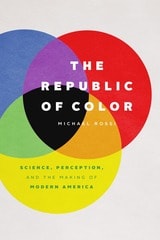
The Republic of Color
Science, Perception, and the Making of Modern AmericaMichael Rossi
University of Chicago Press, 2019
For a nation in the grip of profound economic, cultural, and demographic crises, the standardization of color became a means of social reform—a way of sculpting the American population into one more amenable to the needs of the emerging industrial order. Delineating color was also a way to characterize the vagaries of human nature, and to create ideal structures through which those humans would act in a newly modern American republic. Michael Rossi’s compelling history goes far beyond the culture of the visual to show readers how the control and regulation of color shaped the social contours of modern America—and redefined the way we see the world.

The Senses of Democracy
Perception, Politics, and Culture in Latin AmericaBy Francine R. Masiello
University of Texas Press, 2018
In The Senses of Democracy, Francine R. Masiello traces a history of perceptions expressed in literature, the visual arts, politics, and history from the start of the nineteenth century to the present day. A wide transnational landscape frames the book along with an original and provocative thesis: when the discourse on democracy is altered—when nations fall into crisis or the increased weight of modernity tests minds and nerves—the representation of our sensing bodies plays a crucial role in explaining order and rebellion, cultural innovation, and social change.
Taking a wide arc of materials—periodicals, memoirs, political proclamations, and travel logs, along with art installations and fiction—and focusing on the technologies that supplement and enhance human perception, Masiello looks at the evolution of what she calls “sense work” in cultural texts, mainly from Latin America, that wend from the heights of romantic thought to the startling innovations of modernism in the early twentieth century and then to times of posthuman experience when cyber bodies hurtle through globalized space and human senses are reproduced by machines. Tracing the shifting debates on perceptions, The Senses of Democracy offers a new paradigm with which to speak of Latin American cultural history and launches a field for the comparative study of bodies, experience, pleasure, and pain over the continental divide. In the end, sense work helps us to understand how culture finds its location.
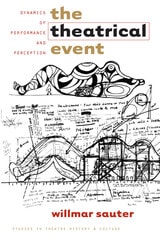
The Theatrical Event
Dynamics of Performance and PerceptionWillmar Sauter
University of Iowa Press, 2000
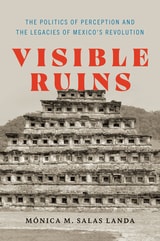
Visible Ruins
The Politics of Perception and the Legacies of Mexico's RevolutionMónica M. Salas Landa
University of Texas Press, 2024
2026 Honorable Mention, Mejor Libro, Historia Reciente y Memoria Section of the Latin American Studies Association
An examination of the failures of the Mexican Revolution through the visual and material records.
The Mexican Revolution (1910–1920) introduced a series of state-led initiatives promising modernity, progress, national grandeur, and stability; state surveyors assessed land for agrarian reform, engineers used nationalized oil for industrialization, archaeologists reconstructed pre-Hispanic monuments for tourism, and anthropologists studied and photographed Indigenous populations to achieve their acculturation. Far from accomplishing their stated goals, however, these initiatives concealed violence, and permitted land invasions, forced displacement, environmental damage, loss of democratic freedom, and mass killings. Mónica M. Salas Landa uses the history of northern Veracruz to demonstrate how these state-led efforts reshaped the region's social and material landscapes, affecting what was and is visible. Relying on archival sources and ethnography, she uncovers a visual order of ongoing significance that was established through postrevolutionary projects and that perpetuates inequality based on imperceptibility.