Results by title
9 books match the query 'Joyce'
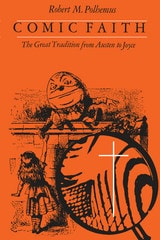
Comic Faith
The Great Tradition from Austen to JoyceRobert M. Polhemus
University of Chicago Press, 1980
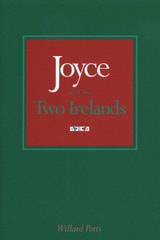
Joyce and the Two Irelands
By Willard Potts
University of Texas Press, 2001
Uniting Catholic Ireland and Protestant Ireland was a central idea of the "Irish Revival," a literary and cultural manifestation of Irish nationalism that began in the 1890s and continued into the early twentieth century. Yet many of the Revival's Protestant leaders, including W. B. Yeats, Lady Gregory, and John Synge, failed to address the profound cultural differences that made uniting the two Irelands so problematic, while Catholic leaders of the Revival, particularly the journalist D. P. Moran, turned the movement into a struggle for greater Catholic power.
This book fully explores James Joyce's complex response to the Irish Revival and his extensive treatment of the relationship between the "two Irelands" in his letters, essays, book reviews, and fiction up to Finnegans Wake. Willard Potts skillfully demonstrates that, despite his pretense of being an aloof onlooker, Joyce was very much a part of the Revival. He shows how deeply Joyce was steeped in his whole Catholic culture and how, regardless of the harsh way he treats the Catholic characters in his works, he almost always portrays them as superior to any Protestants with whom they appear. This research recovers the historical and cultural roots of a writer who is too often studied in isolation from the Irish world that formed him.
Joyce, Bakhtin, and the Literary Tradition
Toward a Comparative Cultural PoeticsM. Keith Booker
University of Michigan Press, 1997

Joyce, Chaos, and Complexity
Thomas Jackson Rice
University of Illinois Press, 1997
Placing Joyce in his cultural context, Rice first traces the influence of Euclidean and non-Euclidean geometries on Dubliners and A Portrait of the Artist as a Young Man. He then demonstrates that, when later innovations in science transformed entire worldviews, Joyce recognized conventional literary modes of representation as offering only arbitrary constructions of this reality. Joyce responded in Ulysses by experimenting with perspective, embedding design, and affirming the existence of reality. Rice contends that Ulysses presages the multiple tensions of chaos theory; likewise, chaos theory can serve as a model for understanding Ulysses. In Finnegans Wake Joyce consummates his vision and anticipates the theories of complexity science through a dynamic approximation of reality.
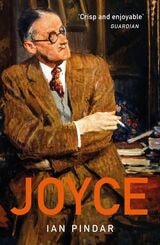
Joyce
Second EditionIan Pindar
Haus Publishing, 2025
James Joyce (1882–1941) is hailed as one of the greatest writers of the twentieth century. Rejecting his homeland and its religion as a young man, Joyce went on to reinvent the Dublin of his youth in his fiction. His masterpiece, Ulysses—once banned in Britain and the United States—redefined the modern novel and has become a canonical classic. Finnegans Wake, written as Joyce’s eyesight deteriorated, cemented his legacy as one of the founding figures of modernist literature.
In a revised edition of this lucid and compelling biography, containing a new foreword from the author, crucial events in Joyce’s life, from his self-imposed exile to his creative triumphs, are explored vividly. Ian Pindar reveals how Joyce’s work carefully blends the abstract and the mundane, capturing the great human comedy of which we are all part.
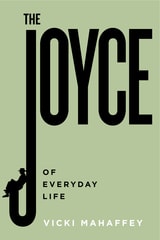
The Joyce of Everyday Life
Vicki Mahaffey
Bucknell University Press, 2024
Winner of the American Conference on Irish Studies’ Robert Rhodes Prize for Books on Literature
Part of James Joyce’s genius was his ability to find the poetry in everyday life. For Joyce, even a simple object like a table becomes magical, “a board that was of the birchwood of Finlandy and it was upheld by four dwarfmen of that country but they durst not move more for enchantment.” How might we learn to regain some of the childlike play with language and sense of delight in the ordinary that come so naturally to Joyce?
The Joyce of Everyday Life teaches us how to interpret seemingly mundane objects and encounters with openness and active curiosity in order to attain greater self-understanding and a fuller appreciation of others. Through a close examination of Joyce's joyous, musical prose, this book shows how language provides us with the means to revitalize daily experience and social interactions across a huge, diverse, and everchanging world.
Acclaimed Joyce scholar Vicki Mahaffey demonstrates how his writing might prompt us to engage in a different kind of reading, treating words and fiction as tools for expanding the boundaries of the self with humor and feeling. A book for everyone who loves language, The Joyce of Everyday Life is a lyrical romp through quotidian existence.
The Subject of Modernism
Narrative Alterations in the Fiction of Eliot, Conrad, Woolf, and JoyceTony E. Jackson
University of Michigan Press, 1994
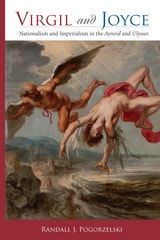
Virgil and Joyce
Nationalism and Imperialism in the <i>Aeneid</i> and <i>Ulysses</i>Randall J. Pogorzelski
University of Wisconsin Press, 2016
Joyce wrote Ulysses during the Irish War of Independence, when militants, politicians, and intellectuals were attempting to create a new Irish nation. Virgil wrote the Aeneid when, in the wake of decades of civil war, Augustus was founding what we now call the Roman Empire. Randall Pogorzelski applies modern theories of nationalism, intertextuality, and reception studies to illuminate how both writers confronted issues of nationalism, colonialism, political violence, and freedom during times of crisis.
Writing Against the Family
Gender in Lawrence and JoyceCynthia Lewiecki-Wilson
Southern Illinois University Press, 1994
This first feminist book-length comparison of D. H. Lawrence and James Joyce offers striking new readings of a number of the novelists’ most important works, including Lawrence’s Man Who Died and Joyce’s Finnegans Wake.
Cynthia Lewiecki-Wilson argues that a feminist reader must necessarily read with and against theories of psychoanalysis to examine the assumptions about gender embedded within family relations and psychologies of gender found in the two authors’ works. She challenges the belief that Lawrence and Joyce are opposites, inhabiting contrary modernist camps; instead they are on a continuum, with both engaged in a reimagination of gender relations.
Lewiecki-Wilson demonstrates that both Lawrence and Joyce write against a background of family material using family plots and family settings. While previous discussions of family relations in literature have not questioned assumptions about the family and about sex roles within it, Lewiecki-Wilson submits the systems of meaning by which gender is construed to a feminist analysis. She reexamines Lawrence and Joyce from the point of view of feminist psychoanalysis, which, she argues, is not a set of beliefs or a single theory but a feminist practice that analyzes how systems of meaning construe gender and produce a psychology of gender.
Lewiecki-Wilson argues against a theory of representation based on gender, however, concluding that Lawrence’s and Joyce’s texts, in different ways, test the idea of a female aesthetic. She analyzes Lawrence’s portrait of family relations in Sonsand Lovers, The Rainbow, and Women in Love and compares Joyce’s Portrait of the Artist as a Young Man with Lawrence’s autobiographical text. She then shows that Portrait begins a deconstruction of systems of meaning that continues and increases in Joyce’s later work, including Ulysses.
Lewiecki-Wilson concludes by showing that Lawrence, Joyce, and Freud relate family material to Egyptian myth in their writings. She identifies Freud’s essay "Leonardo da Vinci and a Memory of Childhood" as an important source for Joyce’s Finnegans Wake, which portrays beneath the gendered individual a root androgyny and asserts an unfixed, evolutionary view of family relations.