Results by title
12 books match the query 'Jungle'
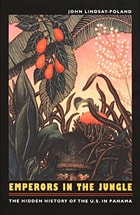
Emperors in the Jungle
The Hidden History of the U.S. in PanamaJohn Lindsay-Poland
Duke University Press, 2003
Analyzing new evidence gathered through interviews, archival research, and Freedom of Information Act requests, Lindsay-Poland discloses the hidden history of U.S.–Panama relations, including the human and environmental toll of the massive canal building project from 1904 to 1914. In stunning detail he describes secret chemical weapons tests—of toxins including nerve agent and Agent Orange—as well as plans developed in the 1960s to use nuclear blasts to create a second canal in Panama.
He chronicles sustained efforts by Panamanians and international environmental groups to hold the United States responsible for the disposal of the tens of thousands of explosives it left undetonated on the land it turned over to Panama in 1999. In the context of a relationship increasingly driven by the U.S. antidrug campaigns, Lindsay-Poland reports on the myriad issues that surrounded Panama’s takeover of the canal in accordance with the 1977 Panama Canal Treaty, and he assesses the future prospects for the Panamanian people, land, and canal area. Bringing to light historical legacies unknown to most U.S. citizens or even to many Panamanians, Emperors in the Jungle is a major contribution toward a new, more open relationship between Panama and the United States.
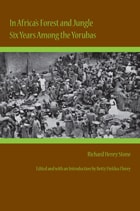
In Africa's Forest and Jungle
Six Years Among the YorubasRichard Henry Stone, edited by Betty Finklea Florey
University of Alabama Press, 2009
Stone served in Africa with his wife and successfully learned the Yoruba language. He was an intelligent, self-reflective, and reliable observer, making his works important sources of information on Yoruba society before the intervention of European colonialism. In Africa's Forest and Jungle is a rare account of West African culture, made all the more complete by the additional journal entries, letters, and photographs collected in this edition.
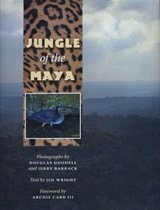
Jungle of the Maya
Photographs by Douglas Goodell and Jerry Barrack, Text by Jim Wright
University of Texas Press, 2006
The Selva Maya (Jungle of the Maya) is one of the world's most magical yet least appreciated places—an enormous tropical forest that encompasses much of Belize, Guatemala, and Mexico's Yucatan Peninsula. At 9,000,000 acres, it is the largest contiguous tropical forest north of the Amazon in the Western Hemisphere. Within its borders, the Selva Maya provides habitat for an astonishing diversity of plants and animals—more than 500 species of birds alone. The forest also contains the fascinating ruins of ancient Maya cities, which attract visitors and researchers from all over the globe.
Jungle of the Maya presents a stunning photographic portrait of this irreplaceable natural treasure. Nature photographers Douglas Goodell and Jerry Barrack capture the living wonders of the jungle—jaguars and other cats; spider and howler monkeys; hummingbirds and butterflies; and snakes, amphibians, and insects—as well as the region's hallmark Maya sites, including Tikal, Chichen Itza, Uxmal, and Tulum. Environmental writer Jim Wright invitingly describes the Selva Maya's natural and human history, helping visitors and residents appreciate the riches to be found in the forest and the need to protect and preserve them for generations to come.
Because human activities are encroaching more and more on the Mayan forest, Jungle of the Maya is a beautiful book with a timely message. As renowned naturalist Archie Carr III sums it up in his foreword, "Today, the Selva Maya is at risk again. As modern beings, can we manage the forest better than we believe the ancient Maya did? We should. We have the archaeological record to draw from. We have modern science. And we still have inspiration whispered to us by spirits in the great plazas of Tikal and beyond. Turn the pages, and witness."

Liberalism in the Jungle
Race, Rubber, and the State in the Ecuadorian AmazonMatthew Ford
University of Texas Press, 0
The untold story of how liberal reform, Indigenous resistance, and the rubber trade transformed Ecuador’s Amazon.
Ecuador’s 1895 Liberal Revolution was a turning point for the nation. Along with crippling the power of the Catholic Church, the new Liberal government expanded the ranks of political participation, spearheaded projects to soften endemic regionalism, integrated the national economy into global markets through an export-oriented economic strategy, and launched a program of “Indian Redemption” aimed at “civilizing” what elites deemed as the “backward” Indigenous masses. The cacao economy was essential to the Liberal state reform, as it facilitated infrastructure modernizatoin and the ability to provide unprecedented public goods and services.
East of the Andes, the Liberal state launched the first attempt to incorporate the Amazonian frontier (the “Oriente”) and expand state power into the region. But, as Matthew Ford shows, a very different global commodity was transforming the Oriente. Unlike most economic booms, the global demand for rubber debilitated state efforts in the region. Liberalism in the Jungle traces how local, national, and global forces shaped the contours of Liberal efforts in the Amazon. By the end, readers will understand how the region transformed from an isolated outpost to the heart of the national economy and home to one of the world’s most powerful social movements.
On This Modern Highway, Lost in the Jungle
Tropics, Travel, and Colonialism in Czech PoetryJan Mrázek
Karolinum Press, 2022
In 1926, the Communist avant-garde poet Konstantin Biebl (1898–1951) traveled from Czechoslovakia to the Dutch East Indies. In the writings from his journal—texts simultaneously poetic and comic—both landlocked Bohemia and the colonized tropical islands are seen in disorienting new perspectives, like “mirrors looking at themselves in each other.”
Jan Mrázek’s On This Modern Highway, Lost in the Jungle takes us on a journey of our own, crisscrossing Biebl’s life and work—with particular attention to his travel writing—as they mirror Mrázek’s own experiences as a multinational academic: a Prague conservatory graduate, educated at Michigan and Cornell, and now a scholar of Indonesia living in Singapore. Biebl’s writings are also the book’s point of departure for a broader exploration of the intersections of travel and poetry, issues of colonial and social injustice, and the representation of otherness in the Czech literary and visual imagination. In its attention to how poetic travel reflects the Czech historical experience in the shadow of imperial nations, Mrázek’s book elevates scholarly reflection on literary travel, modernity, and colonialism to a new level.

Out Of The Jungle
Jimmy Hoffa And The Remaking OfThaddeus Russell
Temple University Press, 2003
The Jungle
Upton Sinclair
University of Illinois Press, 1988
The Ordeal of the Jungle
Race and the Chicago Federation of Labor, 1903–1922David Bates
Southern Illinois University Press, 2019
By organizing workers into neighborhood locals, which connected workplace struggles to ethnic and religious identities, the CFL facilitated a surge in the organization’s membership, particularly among African American workers, and afforded the federation the opportunity to aggressively confront employers. The CFL’s innovative structure, however, was ultimately its demise. Linking union locals to neighborhoods proved to be a form of de facto segregation. Over time union structures, rank-and-file conflicts, and employer resistance combined to turn the union’s hopeful calls for solidarity into animosity and estrangement. Tensions were exacerbated by violent shop floor confrontations and exploded in the bloody 1919 Chicago Race Riot. By the early 1920s, the CFL had collapsed.
The Ordeal of the Jungle explores the choices of a variety of people while showing a complex, overarching interplay of black and white workers and their employers. In addition to analyzing union structures and on-the-ground relations between workers, Bates synthesizes and challenges previous scholarship on interracial organizing to explain the failure of progressive unionism in Chicago.
The Rumble in the Jungle
Muhammad Ali and George Foreman on the Global StageLewis A. Erenberg
University of Chicago Press, 2019
TheRumble in the Jungle orbits around Ali and Foreman, placing them at the convergence of the American Civil Rights movement and the Great Society, the rise of Islamic and African liberation efforts, and the ongoing quest to cast off the shackles of colonialism. With his far-reaching take on sports, music, marketing, and mass communications, Erenberg shows how one boxing match became nothing less than a turning point in 1970s culture.
The Sea and the Jungle
H.M. Tomlinson
Northwestern University Press, 1996
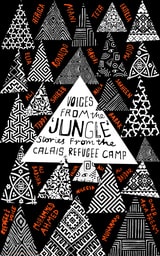
Voices from the "Jungle"
Stories from the Calais Refugee CampCalais Writers
Pluto Press, 2017
In this moving collection of individual testimonies, Calais refugees speak directly in powerful and vivid stories, offering their memories up with stunning honesty. They tell of their childhood dreams and struggles for education; the genocides, wars, and persecution that drove them from home; the simultaneous terror and strength that filled their extraordinary journeys; the realities of living in the Calais refugee camp; and their deepest hopes for the future.
Through their stories, these refugees paint a picture of a different kind of Jungle—a powerful sense of community that has grown despite evictions and attacks and a solidarity that crosses national and religious boundaries. Interspersed with photos taken by the camp's inhabitants, taught by award-winning photographers Gideon Mendel and Crispin Hughes, original artwork by inhabitants, and powerful poems, Voices from the “Jungle” must be read by anyone seeking to understand the human consequences of our current world crisis.

Work and Community in the Jungle
Chicago's Packinghouse Workers, 1894-1922James R. Barrett
University of Illinois Press, 1987