Results by title
17 books match the query 'Jury'
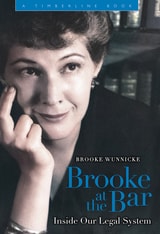
Brooke at the Bar
Inside Our Legal SystemBrooke Wunnicke
University Press of Colorado, 2023
Brooke shares vignettes of her early life—California in the Great Depression, college at Stanford, law school in Colorado during World War II, and the 1946 opening of her Cheyenne law office, a precedent for women in law. She vividly describes memorable and amusing experiences with clients, witnesses, lawyers, juries, and judges and explains some significant cases. She recounts important and dynamic events from her twelve years as Denver’s chief appellate deputy district attorney, an era during which she was an inestimable mentor to many young lawyers who became prominent in the private and public sectors.
Brooke passionately believed “the law has been and will continue to be civilization’s hope.” In her book’s final part, she demystifies many legal terms and procedures and describes the parts of a civil jury trial—including information for jurors and witnesses—and provides an enthusiastic and clear refresher on the US Constitution and Bill of Rights.
Brooke at the Bar is a unique and historically important contribution that will be of interest to general readers, scholars, and students interested in US law, political science, government, women’s history, twentieth-century western history, civil rights, and legal communities, including those in Wyoming and Colorado, where Brooke was “at the Bar.”
Cross Purposes
Pierce v. Society of Sisters and the Struggle over Compulsory Public EducationPaula Abrams
University of Michigan Press, 2009
"A definitive study of an extremely important, though curiously neglected, Supreme Court decision, Pierce v. Society of Sisters."
---Robert O'Neil, Professor of Law Emeritus, University of Virginia School of Law
---Richard W. Garnett, Professor of Law and Associate Dean, Notre Dame Law School
"A well-written, well-researched blend of law, politics, and history."
---Joan DelFattore, Professor of English and Legal Studies, University of Delaware
In 1922, the people of Oregon passed legislation requiring all children to attend public schools. For the nativists and progressives who had campaigned for the Oregon School Bill, it marked the first victory in a national campaign to homogenize education---and ultimately the populace. Private schools, both secular and religious, vowed to challenge the law. The Catholic Church, the largest provider of private education in the country and the primary target of the Ku Klux Klan campaign, stepped forward to lead the fight all the way to the U.S. Supreme Court.
In Pierce v. Society of Sisters (1925), the court declared the Oregon School Bill unconstitutional and ruled that parents have the right to determine how their children should be educated. Since then, Pierce has provided a precedent in many cases pitting parents against the state.
Paula Abrams is Professor of Constitutional Law at Lewis & Clark Law School.
Her America
“A Jury of Her Peers” and Other StoriesSusan Glaspell
University of Iowa Press, 2010
One of the preeminent authors of the early twentieth century, Susan Glaspell (1876–1948) produced fourteen ground-breaking plays, nine novels, and more than fifty short stories. Her work was popular and critically acclaimed during her lifetime, with her novels appearing on best-seller lists and her stories published in major magazines and in The Best American Short Stories. Many of her short works display her remarkable abilities as a humorist, satirizing cultural conventions and the narrowness of small-town life. And yet they also evoke serious questions—relevant as much today as during Glaspell’s lifetime—about society’s values and priorities and about the individual search for self-fulfillment. While the classic “A Jury of Her Peers” has been widely anthologized in the last several decades, the other stories Glaspell wrote between 1915 and 1925 have not been available since their original appearance. This new collection reprints “A Jury of Her Peers”—restoring its original ending—and brings to light eleven other outstanding stories, offering modern readers the chance to appreciate the full range of Glaspell’s literary skills.
Glaspell was part of a generation of midwestern writers and artists, including Sherwood Anderson, Sinclair Lewis, Willa Cather, and F. Scott Fitzgerald, who migrated first to Chicago and then east to New York. Like these other writers, she retained a deep love for and a deep ambivalence about her native region. She parodied its provincialism and narrow-mindedness, but she also celebrated its pioneering and agricultural traditions and its unpretentious values. Witty, gently humorous, satiric, provocative, and moving, the stories in this timely collection run the gamut from acerbic to laugh-out-loud funny to thought-provoking. In addition, at least five of them provide background to and thematic comparisons with Glaspell’s innovative plays that will be useful to dramatic teachers, students, and producers.
With its thoughtful introduction by two widely published Glaspell scholars, Her America marks an important contribution to the ongoing critical and scholarly efforts to return Glaspell to her former preeminence as a major writer. The universality and relevance of her work to political and social issues that continue to preoccupy American discourse—free speech, ethics, civic justice, immigration, adoption, and gender—establish her as a direct descendant of the American tradition of short fiction derived from Hawthorne, Poe, and Twain.
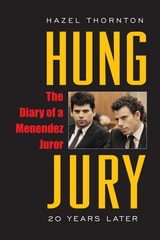
Hung Jury
The Diary of a Menendez JurorHazel Thornton
Temple University Press, 2017
More than two decades after serving as a juror on the high-profile seven-month murder trial People v. Erik Galen Menendez, Hazel Thornton updates her book Hung Jury with a new preface and a postscript essay of observations about the Menendez brothers’ second trial. Includes psychological commentary by Lawrence S. Wrightsman and Amy J. Posey, and legal commentary by Alan Scheflin.
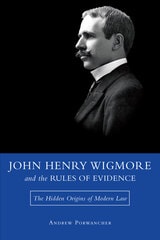
John Henry Wigmore and the Rules of Evidence
The Hidden Origins of Modern LawAndrew Porwancher
University of Missouri Press, 2024
Honorable Mention, 2017 Scribes Book Award, The American Society of Legal Writers
At the dawn of the twentieth century, the United States was reeling from the effects of rapid urbanization and industrialization. Time-honored verities proved obsolete, and intellectuals in all fields sought ways to make sense of an increasingly unfamiliar reality. The legal system in particular began to buckle under the weight of its anachronism. In the midst of this crisis, John Henry Wigmore, dean of the Northwestern University School of Law, single-handedly modernized the jury trial with his 1904-5 Treatise onevidence, an encyclopedic work that dominated the conduct of trials. In so doing, he inspired generations of progressive jurists—among them Oliver Wendell Holmes, Jr., Benjamin Cardozo, and Felix Frankfurter—to reshape American law to meet the demands of a new era. Yet Wigmore’s role as a prophet of modernity has slipped into obscurity. This book provides a radical reappraisal of his place in the birth of modern legal thought.
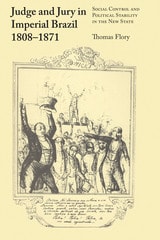
Judge and Jury in Imperial Brazil, 1808–1871
Social Control and Political Stability in the New StateBy Thomas Flory
University of Texas Press, 1981
In nineteenth-century Brazil the power of the courts rivaled that of the central government, bringing to it during its first half century of independence a stability unique in Latin America. Thomas Flory analyzes the Brazilian lower-court system, where the private interests of society and the public interests of the state intersected.
Justices of the peace—lay judges elected at the parish level—played a special role in the early years of independence, for the post represented the triumph of Brazilian liberalism’s commitment to localism and decentralization. However, as Flory shows by tracing the social history and performance of parish judges, the institution actually intensified conflict within parishes to the point of destabilizing the local regime and proved to be so independent of national interests that it all but destroyed the state.
By the 1840s the powers of the office were passed to state appointees, particularly the district judges. Flory recognizes these professional magistrates as a new elite who served as brokers between the state and the poorly articulated landowner elite, and his account of their rise reveals the mechanisms of state integration.
In focusing on the judiciary, Flory has isolated a crucial aspect of Brazil’s early history, one with broad implications for the study of nineteenth-century Latin America as a whole. He combines social, intellectual, and political perspectives—as well as national-level discussion with scrutiny of parish-level implementation—and so makes sense of a complicated, little-studied period. The study clearly shows the progression of Brazilian social thought from a serene liberal faith in the people as a nation to an abiding, very modern distrust of that nation as a threat to the state.

Jurors' Stories of Death
How America's Death Penalty Invests in InequalityBenjamin Fleury-Steiner
University of Michigan Press, 2004
-David Cole, from the Foreword
"Perhaps the most powerful, routinely enacted civic ritual in American public life is that of capital punishment. This state-sanctioned extirpation of human life in the collective pursuit of justice is a searing act of civic pedagogy, made legitimate only by the deliberative endorsement of a small group of ordinary citizens-the jury. In Jurors' Stories of Death, Benjamin Fleury-Steiner has taken a cold, hard look at how these ordinary citizens come to terms with their extraordinary role, and how they rationalize their irreversible decisions. The result is a chilling portrait of how we---that is, all of us Americans---constitute ourselves as a political community."
-Glenn Loury, Director, Institute on Race and Social Division
"This illuminating and insightful examination of jury deliberations makes a terrific contribution to the study of capital punishment. Fleury-Steiner's synthesis of sociological, legal and theoretical concepts with vivid juror narratives and statistical data, thoughtfully animates and details how race and class consciousness continue to shape America's death penalty."
---Bryan Stevenson, Professor of Clinical Law, NYU School of Law, Executive Director, Equal Justice Initiative of Alabama
Jurors' Stories of Death is more than just another book on the death penalty; it is the first systematic survey of how death penalty decisions are made.
Benjamin Fleury-Steiner draws on real-life accounts of white and black jurors in capital punishment trials to discuss the effect of race on the sentencing process. He finds that race is invariably a factor in sentencing, with jurors relying on accounts that deny the often marginalized defendants their individuality and complexity, while reinforcing the jurors' own identities as superior, moral, and law-abiding citizens-a system that punishes in the name of dominance. This biased story of "us versus them" continues to infuse political rhetoric on crime and punishment in the United States even today.
Jurors' Stories of Death concludes with an original argument for abolition of the death penalty: If America values multiculturalism and cultural diversity, it must do away with institutions such as state-sanctioned capital punishment in order to begin to free itself from the racism and classicism that so insidiously plague social relations today.
Medical Malpractice and the American Jury
Confronting the Myths about Jury Incompetence, Deep Pockets, and Outrageous Damage AwardsNeil Vidmar
University of Michigan Press, 1997
Written in a thoroughly inviting, jargon-free style, Medical Malpractice and the American Jury places those cases that go to trial in the broader context of litigation, noting that only about ten percent of malpractice cases ever result in trials. Of those that do go to trial, the author notes, more than two out of three cases are decided in the doctor's favor--repudiating the view that jurors are inherently biased against doctors and are motivated more by sympathy for the plaintiff than by the facts of the case.
Neil Vidmar comprehensively addresses all the claims that have been leveled against the performance of malpractice juries. For example, he compares actual jury decisions on negligence with neutral physicians' ratings of whether negligence occurred in the medical treatment and finds a remarkable consistency--repudiating the view that jurors are unable to understand experts or uncritically defer to their opinion.
"Medical Malpractice and the American Jury is quite simply the most compelling, comprehensive examination of the American jury system yet written. It brings reason and fact to the debate in a way that puts the lie to the many myths surrounding medical negligence cases. For anyone genuinely interested in just solutions, this book should be required reading. To act in ignorance of its findings invites disaster." --Trial
"For anyone really interested in the evidence about the daily grind of the courthouse mill, Neil Vidmar's Medical Malpractice and the American Jury is a good place to start." --Washington Post Book World
Neil Vidmar is Professor of Social Science and Law, Duke Law School, and Professor of Psychology, Duke University.
Punitive Damages
How Juries DecideCass R. Sunstein, Reid Hastie, John W. Payne, David A. Schkade, and W. Kip Viscu
University of Chicago Press, 2002
But how do juries actually make decisions about punitive damages? To find out, the authors-experts in psychology, economics, and the law-present the results of controlled experiments with more than 600 mock juries involving the responses of more than 8,000 jury-eligible citizens. Although juries tended to agree in their moral judgments about the defendant's conduct, they rendered erratic and unpredictable dollar awards. The experiments also showed that instead of moderating juror verdicts, the process of jury deliberation produced a striking "severity shift" toward ever-higher awards. Jurors also tended to ignore instructions from the judges; were influenced by whatever amount the plaintiff happened to request; showed "hindsight bias," believing that what happened should have been foreseen; and penalized corporations that had based their decisions on careful cost-benefit analyses. While judges made many of the same errors, they performed better in some areas, suggesting that judges (or other specialists) may be better equipped than juries to decide punitive damages.
Using a wealth of new experimental data, and offering a host of provocative findings, this book documents a wide range of systematic biases in jury behavior. It will be indispensable for anyone interested not only in punitive damages, but also jury behavior, psychology, and how people think about punishment.
Radical Enfranchisement in the Jury Room and Public Life
Sonali Chakravarti
University of Chicago Press, 2019
With Radical Enfranchisement in the Jury Room and Public Life, Sonali Chakravarti offers a full-throated defense of juries as a democratic institution. She argues that juries provide an important site for democratic action by citizens and that their use should be revived. The jury, Chakravarti argues, could be a forward-looking institution that nurtures the best democratic instincts of citizens, but this requires a change in civic education regarding the skills that should be cultivated in jurors before and through the process of a trial. Being a juror, perhaps counterintuitively, can guide citizens in how to be thoughtful rule-breakers by changing their relationship to their own perceptions and biases and by making options for collective action salient, but they must be better prepared and instructed along the way.
Radical Enfranchisement in the Jury Room and Public Life
Sonali Chakravarti
University of Chicago Press, 2019
This is an auto-narrated audiobook edition of this book.
With Radical Enfranchisement in the Jury Room and Public Life, Sonali Chakravarti offers a full-throated defense of juries as a democratic institution. She argues that juries provide an important site for democratic action by citizens and that their use should be revived. The jury, Chakravarti argues, could be a forward-looking institution that nurtures the best democratic instincts of citizens, but this requires a change in civic education regarding the skills that should be cultivated in jurors before and through the process of a trial. Being a juror, perhaps counterintuitively, can guide citizens in how to be thoughtful rule-breakers by changing their relationship to their own perceptions and biases and by making options for collective action salient, but they must be better prepared and instructed along the way.
Reconstructing Justice
An Agenda for Trial ReformFranklin Strier
University of Chicago Press, 1996
Franklin Strier brings this critical look at trial reform up to date with a new preface in which he discusses how the inordinate amount of public attention of the O. J. Simpson trial, and the power the attorneys had over the court in that case, shed new light on the trial system's weaknesses and inequities.
"Anyone with an interest in courtroom trials will be fascinated by Strier's analysis of the game of law and suggestions for reforming the trail system to provide justice in a greater number of cases. . . . Highly recommended."—Choice
The Jury in Lincoln’s America
Stacy Pratt McDermott
Ohio University Press, 2012
In the antebellum Midwest, Americans looked to the law, and specifically to the jury, to navigate the uncertain terrain of a rapidly changing society. During this formative era of American law, the jury served as the most visible connector between law and society. Through an analysis of the composition of grand and trial juries and an examination of their courtroom experiences, Stacy Pratt McDermott demonstrates how central the law was for people who lived in Abraham Lincoln’s America.
McDermott focuses on the status of the jury as a democratic institution as well as on the status of those who served as jurors. According to the 1860 census, the juries in Springfield and Sangamon County, Illinois, comprised an ethnically and racially diverse population of settlers from northern and southern states, representing both urban and rural mid-nineteenth-century America. It was in these counties that Lincoln developed his law practice, handling more than 5,200 cases in a legal career that spanned nearly twenty-five years.
Drawing from a rich collection of legal records, docket books, county histories, and surviving newspapers, McDermott reveals the enormous power jurors wielded over the litigants and the character of their communities.
The Law of the Other
The Mixed Jury and Changing Conceptions of Citizenship, Law, and KnowledgeMarianne Constable
University of Chicago Press, 1994
The "mixed jury" doctrine allowed resident foreigners to have law suits against English natives tried before juries composed half of natives and half of aliens like themselves. As she traces the transformations in this doctrine from the Middle Ages to its abolition in 1870, Constable also reveals the emergence of a world where law rooted in actual practices and customs of communities is replaced by law determined by officials, where juries no longer strive to speak the truth but to ascertain the facts.
Unreasonable Doubt
Circumstantial Evidence and an Ordinary Murder in New HavenNorma Thompson
University of Missouri Press, 2006

Verdict According to Conscience
Perspectives on the English Criminal Trial Jury, 1200-1800Thomas Andrew Green
University of Chicago Press, 1985
Western Law, Russian Justice
Dostoevsky, the Jury Trial, and the LawGary Rosenshield
University of Wisconsin Press, 2005