Results by title
11 books match the query 'Kabbalah & Mysticism'
Ascensions on High in Jewish Mysticism
Pillars, Lines, LaddersMoshe Idel
Central European University Press, 2005
Games of Inheritance
Kabbalah, Tradition, and Authorship in Jorge Luis BorgesYitzhak Lewis
Rutgers University Press, 2025
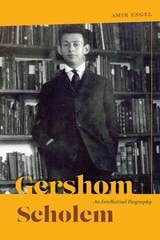
Gershom Scholem
An Intellectual BiographyAmir Engel
University of Chicago Press, 2017
As Engel shows, in his search for the truth of Jewish mysticism Scholem molded the vast literature of Jewish mystical lore into a rich assortment of stories that unveiled new truths about the modern condition. Positioning Scholem’s work and life within early twentieth-century Germany, Palestine, and later the state of Israel, Engel intertwines Scholem’s biography with his historiographical work, which stretches back to the Spanish expulsion of Jews in 1492, through the lives of Rabbi Isaac Luria and Sabbatai Zevi, and up to Hasidism and the dawn of the Zionist movement. Through parallel narratives, Engel touches on a wide array of important topics including immigration, exile, Zionism, World War One, and the creation of the state of Israel, ultimately telling the story of the realizations—and failures—of a dream for a modern Jewish existence.
Kabbalistic Revolution
Reimagining Judaism in Medieval SpainLachter, Hartley
Rutgers University Press, 2014
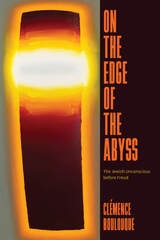
On the Edge of the Abyss
The Jewish Unconscious before FreudClémence Boulouque
University of Chicago Press, 2025
When Sigmund Freud published his theory of the unconscious, in 1899, he popularized an idea that had fascinated generations of Jewish philosophers before him. In this book, Clémence Boulouque charts the development of the pre-Freudian unconscious from subcultural inquiry to dominant discourse during the long nineteenth century. Although Freud’s scientific notion differed from Schelling’s mythical description of the abyss from which creation springs, its resonance with older ideas was celebrated as an opportunity to express specifically Jewish contributions to modernity. Indeed, Boulouque shows that the pre-Freudian unconscious emerged from conversations in Jewish mysticism about otherness and coexistence. In the hopeful years before World War I, Boulouque argues, such reflections offered the possibility of emancipation not only to Jews but to all.
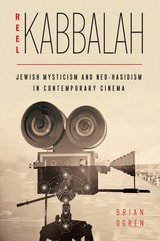
Reel Kabbalah
Jewish Mysticism and Neo-Hasidism in Contemporary CinemaBrian Ogren
Rutgers University Press, 2024
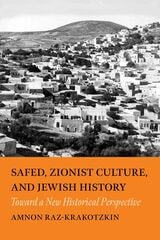
Safed, Zionist Culture, and Jewish History
Toward a New Historical PerspectiveAmnon Raz-Krakotzkin
Brandeis University Press, 2026
Brings the legacy of sixteenth-century Safed into modern scholarship on Zionism to propose a new model of Jewish existence.
Sixteenth-century Safed was one of the most important centers of thought and learning in Jewish history, yet Zionist historical narratives, which emphasize the continuity of Jewish presence in Palestine, have consistently downplayed or ignored it. Amnon Raz-Krakotzkin investigates this strange contradiction. His new book argues that Safed articulates a model of early modern Jewish national revival, one closely connected to the land and its material geography, yet radically different from the Zionist model that emerged in the late nineteenth century. While Zionism set out to restore Biblical Jewish sovereignty, rabbinic Safed’s emphasis on the Mishnah proposed a non-sovereign Jewish connection to the land.
As much a polemic as a historical and theological analysis, Safed, Zionist Culture, and Jewish History offers a provocative new perspective on questions related to nationalism, Judaism, and Israel.
Sepher Ha-Razim
The Book of MysteriesMichael A. Morgan
SBL Press, 1983
Shamanic Trance in Modern Kabbalah
Jonathan Garb
University of Chicago Press, 2011
Bringing to light a hidden chapter in the history of modern Judaism, Shamanic Trance in Modern Kabbalah explores the shamanic dimensions of Jewish mysticism. Jonathan Garb integrates methods and models from the social sciences, comparative religion, and Jewish studies to offer a fresh view of the early modern kabbalists and their social and psychological contexts.
Through close readings of numerous texts—some translated here for the first time—Garb draws a more complete picture of the kabbalists than previous depictions, revealing them to be as concerned with deeper states of consciousness as they were with study and ritual. Garb discovers that they developed physical and mental methods to induce trance states, visions of heavenly mountains, and transformations into animals or bodies of light. To gain a deeper understanding of the kabbalists’ shamanic practices, Garb compares their experiences with those of mystics from other traditions as well as with those recorded by psychologists such as Milton Erickson and Carl Jung. Finally, Garb examines the kabbalists’ relations with the wider Jewish community, uncovering the role of kabbalistic shamanism in the renewal of Jewish tradition as it contended with modernity.
Tormented Master
A Life of Rabbi Nahman of BratslavWritten by Arthur E. Green
University of Alabama Press, 1979
“If Hasidism begins in the life-enhancing spirituality of the Baal Shem Tov, it concludes in the tortuous, elitist and utterly fascinating career of Nahman of Bratslav (1722–1810) whose biography and teaching Arthur Green has set forth in his comprehensive, moving, and subtle study, Tormented Master.
“Arthur Green has managed to lead us through the thickets of the Bratslaver discourse with a grace and facility thus far unequaled in the English language literature on Hasidism. Tormented Master is a model of clarity and percipience, balancing awed respect and honor for its subject with a ruthless pursuit of documented truth. . . . Tormented Master is sufficiently open to the agonies of religion in general and the issues of modern religion in particular to make Nahman a thinker utterly relevant to our time.
“Nahman of Bratslav is unique in the history of Judaism, Green emphasizes, for having made the individual’s quest for intimacy with God the center of the religious way. He was a Kierkegaard before his time, believing in the utter abandon of the life of faith and the risk of paradoxicality. . . . He was, more than all others, the predecessor of Kafka, whose tales, like Nahman’s, have no explicit key and rankle, flush and irritate the spirit, compelling us—even in our failure to understand—to acknowledge their potency and challenge.”
—New York Times
Yearnings of the Soul
Psychological Thought in Modern KabbalahJonathan Garb
University of Chicago Press, 2015
Garb follows the gradual disappearance of the soul from modern philosophy while drawing attention to its continued persistence as a topic in literature and popular culture. He pays close attention to James Hillman’s “archetypal psychology,” using it to engage critically with the psychoanalytic tradition and reflect anew on the cultural and political implications of the return of the soul to contemporary psychology. Comparing Kabbalistic thought to adjacent developments in Catholic, Protestant, and other popular expressions of mysticism, Garb ultimately offers a thought-provoking argument for the continued relevance of religion to the study of psychology.