Results by title
3 books match the query 'Katz, Jack'
How Emotions Work
Jack Katz
University of Chicago Press, 1999
Many of the ways in which we express and react to emotions make very little sense. From the tears that mark both the best and worst moments in our lives to the rages sparked by the most trivial of traffic annoyances, emotions surprise us-they lead us to act in ways contrary to our better judgment, and they always seem to lie just beyond our control. In How Emotions Work, Jack Katz observes situations ranging from a criminal's interrogation-room breakdown to a child's temper tantrum, and offers new approaches to understanding our emotions, their sources, and the behavior they lead to, all with unprecedented clarity.
[more]
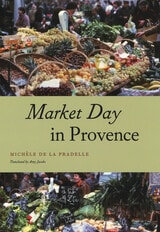
Market Day in Provence
Michèle de La Pradelle
University of Chicago Press, 2006
At farmers’ markets, we expect to see fruit bursting with juicy sweetness and vegetables greener than a golf course. For Michèle de La Pradelle these expectations are mostly the result of a show performed by merchants and sustained by our propensity to see what we want to see there. Hailed upon its release in France, the award-winning Market Day in Provence lays bare the mechanisms of the contemporary outdoor market by providing a definitive account of the centuries-old institution at Carpentras, a city near Avignon in the south of France famous for its quintessential public street market.
The renewal and celebration of the outdoor market culture in recent years, argues de La Pradelle, artfully masks a fierce commitment to modern-day free-market economics. Responding to consumer desire for an experience that recalls a time before impersonal supermarket chains and mass-produced products, buyers and sellers alike create an atmosphere built on various fictions. Vendors at the market at Carpentras, for example, oblige patrons by acting like lifelong acquaintances of those whom they’ve only just met as they dispense free samples and lively, witty banter. Likewise, going to the market to look for “freshness” becomes a way for the consumer to signify the product’s relation to nature—a denial of the workaday reality of growing melons under plastic sheets, then machine-sorting, crating, and transporting them.
Offering captivating descriptions of goods and the friendly and occasionally piquant exchanges between buyers and sellers, Market Day in Provence will be devoured by any reader with an interest in areas as diverse as food, ethnography, globalization, modernity, and French culture.
[more]

Poor People's Lawyers in Transition
Katz, Jack
Rutgers University Press, 1982
Jack Katz has written the first case study of legal assistance lawyers—commonly known as poverty lawyers—and their agencies. Focusing on legal services for the poor over the last 100 years in Chicago, the city with the most experienced large staff of poverty reform lawyers in the nation, Katz examines what organizational and personal experiences make these lawyers either passive or entrepreneurial in their drive for equal justice for the poor. This historical and participant-observation study traces the social foundations of the aspiration for equal justice. In the 1880s, when lawyers were first hired by organizations specifically to assist the poor, the legal status of poverty was virtually non-existent. Today the legal status of the poor is defined affirmatively in scores of statues, in masses of highly differentiated administrative regulations, and in a rich case law of judicial decisions made in the last 20 years. During the rise and fall of the Progressive era, throughout the Depression and the New Deal, in the midst of the explosive public activism of the Sixties, and even after the internment of the War on Poverty, legal assistance lawyers have worked progressively toward the legalization of poverty. Recently, a disturbing irony has appeared in this progress. Legal assistance lawyers, especially the most aggressive and professionally creative, have proven less successful in eliminating poverty than in reorganizing the poor into a formal social category. This category is systematically, comprehensively, and predictably defined by law, and administratively maintained by the state in segregation from the working and middle classes.
[more]